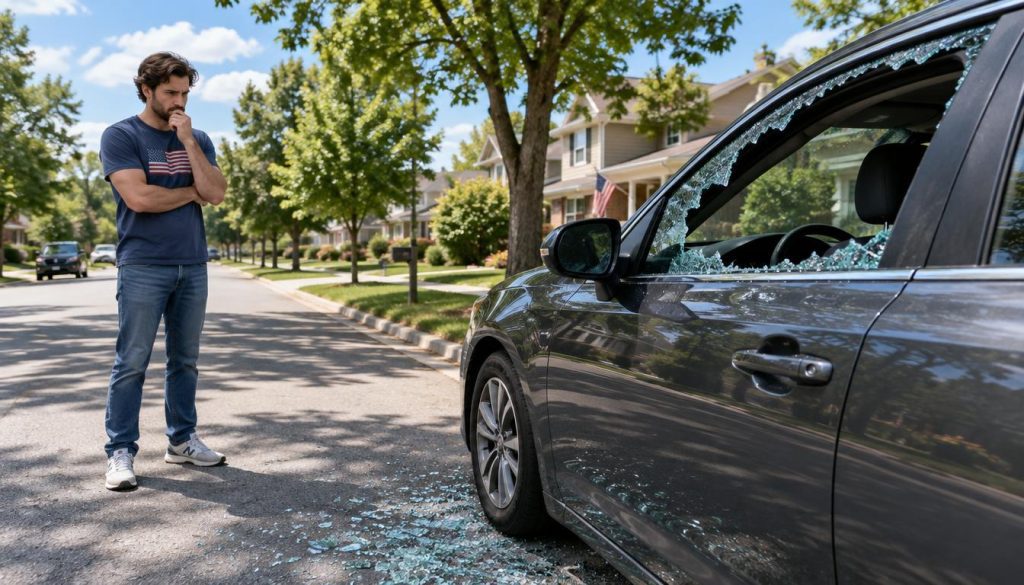

Side Window Smashed? What to Do in the First 24 Hours

Repair or Replace? How to Tell When a Windshield Crack Is Past Saving
A car window that won’t go up usually points to a faulty switch, motor, regulator, fuse, wiring connection, or obstructed track. A window left open needs prompt attention, since weather can enter and vehicle security drops. Some faults come and go, but a lasting fix requires finding the cause.
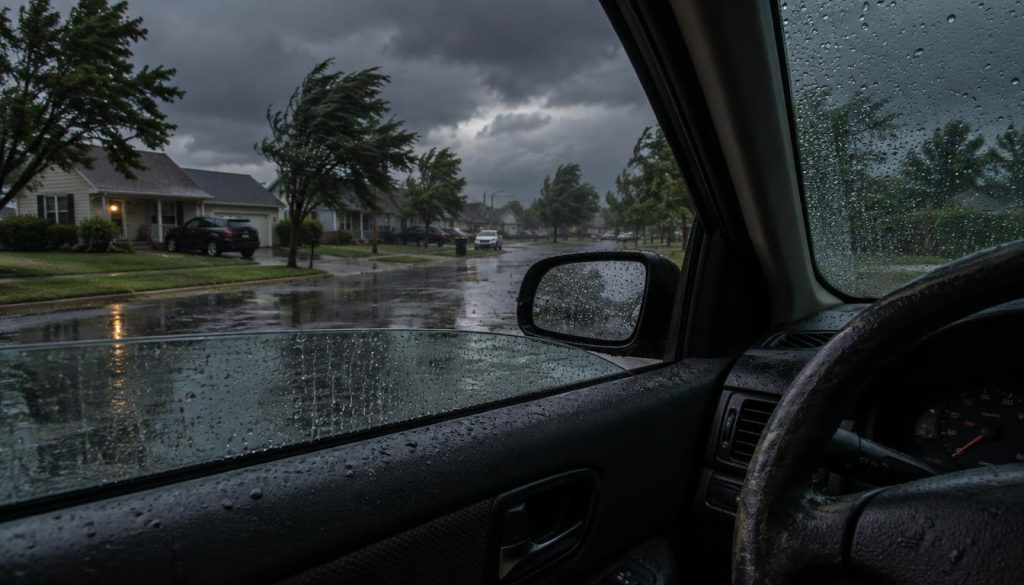
An open window can expose the seats and electronics to rain, dust, and unwanted access. Act soon if you cannot close it, especially before leaving the vehicle parked. Safe checks may help you narrow down the problem without taking apart the door.
Until you can close the glass or protect the opening, avoid leaving belongings inside. Treat a window that remains open as a security and weather-exposure problem until you can close it or protect the opening.
Key Takeaways
- A faulty control, electrical circuit, motor, regulator, or track can stop the glass.
- Check the ignition setting, child lock, switches, and fuse before opening the door panel.
- Use gentle palm assistance only when some glass remains visible and moves freely.
- A tilted pane, grinding sound, or repeated blown fuse calls for professional diagnosis.
- Keep an open vehicle secure and protect the opening from weather.
Why a Car Window Won’t Go Up: Common Causes
A window stops moving when the power circuit fails or the mechanism can no longer move the glass freely. Most faults fall into two groups: electrical problems and mechanical resistance. The window regulator is the mechanical assembly that supports the glass and moves it up or down.
A pane that tilts or jams partway up points more strongly to a regulator or track problem than to a simple control issue. Other clues can help you narrow down which group needs attention.
Electrical faults in the controls and circuit
A power window has four core parts: the switch, wiring, motor, and regulator. The switch sends a 12-volt signal through the wiring to the motor, so a break at any point can stop movement.
A worn switch may work only when you press it at a certain angle. A blown fuse can cut power, while damaged wiring can interrupt the signal.
The motor can also fail as its internal parts wear. A weak or failing motor may move the glass slowly, work now and then, or stop altogether.
Mechanical failures and track resistance
The regulator can bend, break, or lose a cable, leaving the glass loose or unable to rise. A glass panel that slips or tilts may catch against the frame rather than following its usual path.
Debris in the tracks can block the pane, and dry tracks add friction. Either problem can make a window move slowly or bind. A manual crank can fail too, often through stripped gears or a damaged regulator.
Pay attention to how the pane moves, not just whether it moves. A change in its angle or position suggests the glass may no longer have steady support.
How the Power Window System Moves the Glass
Pressing the switch sends a signal to the motor, which turns the regulator and moves the glass. Each part has a separate job, so a fault in one can affect the whole power window system.
The switch controls the motor’s direction by reversing the electrical signal. The motor then turns the regulator, which carries the glass up or down inside the vehicle door.
Regulator designs include scissor arms and cable-driven mechanisms. Both support the pane, but they move it in different ways. A manual window uses a hand crank instead of an electric motor.
Some vehicles have an auto-up function. One press and release can send the glass through its full travel without holding the switch.
A dead battery can erase the system’s anti-pinch or travel-limit memory. Anti-pinch is a safety feature that may stop or reverse the glass when it senses resistance.
The reset procedure for lost memory varies by vehicle, so check the owner’s manual. Use the owner’s manual for any window relearn procedure because the steps differ by vehicle.
Safe Checks to Try Before Opening the Door Panel
Start with the controls and power supply before removing any trim or door panel. These basic checks can narrow down a power window fault without exposing wires or clips.
A quick fix starts with the simple checks, not an assumed motor failure. A car window that won’t roll up or down needs its power supply and fuse checked before you blame the motor.
- Set the ignition to the position required for power windows, or turn the vehicle on.
- Check the child lock, which may disable switches on passenger doors.
- Try the driver’s master switch and the individual door switch.
- Use the owner’s manual to find the fuse box and identify the correct window fuse.
- Check whether other electrical items work, then look for visible damage at the flexible wiring boot between the door and vehicle body.
A blown fuse may point to an electrical fault, but replacing it will not fix damaged wiring or a failing motor. Use a replacement with the same amperage rating specified for your vehicle.
Wiring often flexes inside the rubber boot between the door and the vehicle body. Look for cuts or pinching, but do not pull the boot apart or tug on wires.
If the same fuse blows again, stop replacing it and arrange diagnosis. Never install a fuse with a higher amperage rating than the vehicle specifies.
Temporary Ways to Raise or Protect the Glass
If some glass remains visible, a helper can operate the switch while you gently guide the pane upward with flat palms. This is temporary assistance, not a way to repair a window stuck inside the door.
Keep your hands away from the glass’s closing edge. The pane may move suddenly, even when it seemed stuck a moment earlier.
Lift the glass with a helper
Turn the vehicle on, then place flat palms on both sides of the visible glass. Ask a helper to hold the button in the up position while you give the pane gentle upward support.
This method cannot work if the glass has dropped fully inside the door. Do not put your fingers into the door opening to reach it.
When you need to know how to roll up a car window that won’t roll up, use only gentle palm assistance. Do not force the glass or strike the door; either action can cause injury or more damage.
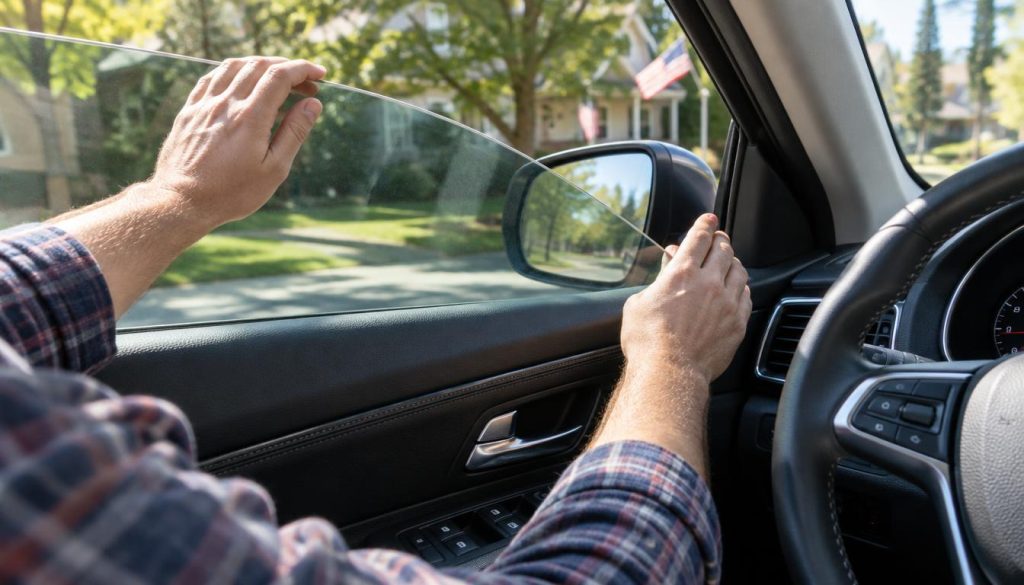
If the power window stops working, gently guiding the glass up can help protect it temporarily while you address the problem.
Protect the opening if the glass will not stay up
Remove belongings from the vehicle and park in a secure location. If you must drive, use a temporary window cover that does not block your view.
Choose a cover that stays in place without restricting your ability to see or operate the vehicle. A loose sheet can flap or come away while driving.
Stop if the glass tilts, resists, or begins to bind instead of continuing to pull.
What the Window’s Behavior Can Tell You
The pattern of movement and sound can narrow the fault, but it cannot confirm which part has failed. One clear clue is whether the window moves from some controls but not others.
Only one car window failing points first toward that window’s switch, wiring, motor, regulator, or track. If several windows fail, a shared power supply or fuse becomes more likely.
The glass goes down but not up
A car window that goes down but not up may have a switch fault in one direction. Try the other control if available, since different controls can help show where the signal stops.
If the glass responds from one control but not another, the working control shows that at least part of the window system can still operate. The table gives other useful patterns.
| Observed behavior | Likely area | What the clue means |
|---|---|---|
| One control works, another does not | Switch or wiring | Compare control response |
| Window goes down, not up | Directional switch circuit | One direction may have failed |
| Motor hums or grinds, glass stays still | Regulator, attachment, or track | Motor runs without moving pane |
| No movement or sound from one or more windows | Power supply, fuse, or circuit | Check whether other windows work |
The motor runs, or the window will not move either way
A humming or grinding window motor with no glass movement suggests a regulator, attachment, or track issue rather than a silent electrical circuit. The sound does not prove which part has failed.
If one window has no movement or sound, its local circuit may be at fault. If several windows stop together, a shared power source deserves attention. Stop operating the switch if grinding continues or the glass begins to lean.
When Professional Repair Is the Safer Choice
Seek professional diagnosis when the pane is crooked, drops into the door, repeatedly trips a fuse, or remains stuck after safe checks. These signs can point to damage that is hard to inspect without opening the door.
Ask for a diagnosis and estimate before authorizing repair. A symptom alone does not identify the failed part or set a reliable car window repair cost.
What a technician may need to inspect
A technician may check the switch, wiring, motor, regulator, tracks, and glass. Reaching internal window mechanisms may require removing the door panel.
Clips and wiring can be damaged during unskilled disassembly. For glass replacement, a technician removes the existing pane, installs replacement glass, tests the regulator, and restores the seals and vapor barrier.
| Component | What is checked | Possible repair action |
|---|---|---|
| Switch | Control response | Replace faulty switch |
| Wiring | Power and connections | Repair damaged wire |
| Motor | Operation and movement | Replace failed motor |
| Regulator or track | Glass support and travel | Repair or replace part |
What affects the repair estimate
The estimate depends on the diagnosed fault, vehicle make and model, parts, and labor. Local car window repair near you should begin with diagnosis of the affected window and its symptoms, not a price guessed from a short description.
Have these details ready when you contact a repair provider:
- Vehicle year, make, and model
- Which controls you tried
- Any sounds or intermittent behavior
- Whether the battery was recently disconnected
Ask what fault was confirmed and what the estimate includes before approving the repair.
Preventing Future Window Jams
Clean tracks and intact seals help the glass move without unnecessary friction or debris buildup. Simple upkeep can reduce track resistance, though it cannot prevent every electrical or mechanical failure.
Use silicone-based lubricant in the window tracks, not petroleum-based products. Petroleum products can damage rubber seals, while silicone lubricant can reduce friction when used as directed.
- Brush debris from the window tracks before it builds up.
- Apply silicone-based lubricant according to its product instructions.
- Inspect weatherstripping for wear and replace damaged seals.
- Operate all windows periodically and avoid slamming doors.
Weatherstripping helps keep debris out of the tracks. Check the rubber seals along the glass for gaps, tears, or loose sections that could let dirt enter.
Lubrication will not repair a failed motor, switch, or regulator. Persistent slow movement or unusual noise still needs diagnosis, even after you clean and treat the tracks.
Treat a window that is becoming slow or noisy as an early warning rather than waiting for it to stop.
Conclusion
If your window remains stuck after safe checks, arrange an inspection instead of forcing the glass. Gentle checks can help you identify a likely fault, but persistent or crooked glass needs a proper inspection.
An open pane also leaves your vehicle exposed to weather and unwanted access. Keep the vehicle secure while you arrange service, and do not drive with a cover that blocks your view.
For help with damaged vehicle glass, contact Miracle Auto Glass in San Antonio. Hire Miracle Auto Glass to fix your windshield or other glass damage; call (210) 680-2551 or visit 6730 Poss Rd, San Antonio, TX 78238.