Can a Windshield Chip Be Repaired Before It Spreads? What San Antonio Drivers Should Know
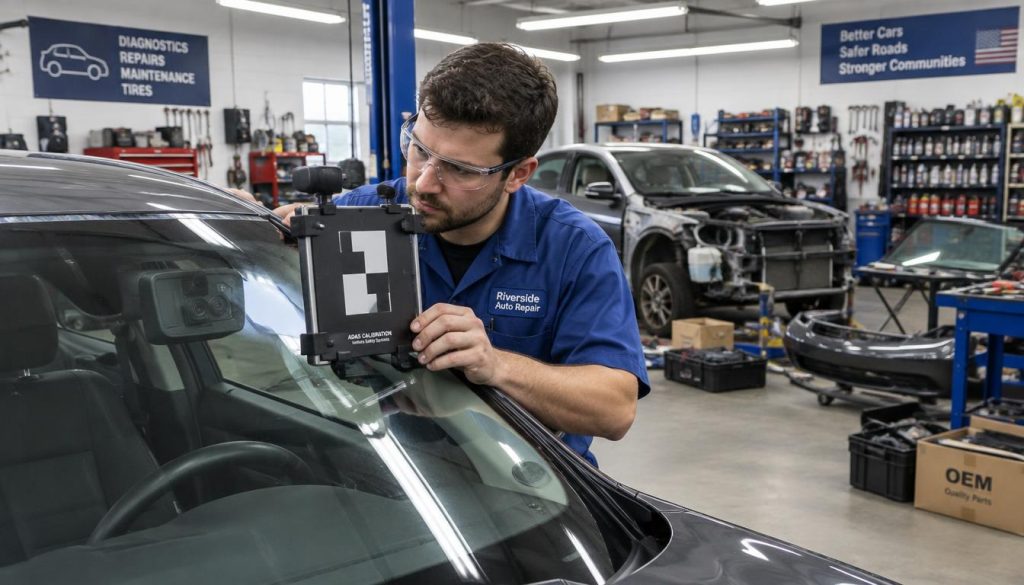
If windshield replacement disturbs your vehicle’s forward-facing camera, the required ADAS calibration restores its reference so driver-assistance features can interpret the road correctly. ADAS calibration after windshield replacement is needed when the work disturbs the camera or its view. Your vehicle’s make, model, year, trim, and required procedure determine the exact work.
A camera may sit behind the rearview mirror, where you might not notice changes during a glass repair. Your driver aids can still depend on its view, so confirm the required work before relying on them. Safety comes first when you decide whether the repair is complete.
Treat calibration as part of completing the safety repair, not as an optional add-on.
Key Takeaways
- Calibration may be required if windshield work disturbs a camera or its view.
- Your exact vehicle details and OEM procedures set the required work.
- Driver-assistance features may use camera input along with other sensors.
- A dashboard warning alone cannot confirm accurate camera alignment.
- Ask for a record of completed calibration and its result.
What Does the Windshield Camera Control?
The small camera near your rearview mirror can provide the road information several driver-assistance features use. ADAS means Advanced Driver Assistance Systems, the vehicle technologies that use cameras and other sensors to help warn you about hazards or support actions such as braking and steering.
The camera’s images feed vehicle software and may work alongside radar and other sensors. Forward-facing ADAS cameras commonly read lane markings, road signs, nearby vehicles, and pedestrians. The software uses those images to help assess what is happening ahead.
Examples include lane departure warning, which can alert you when you drift from a lane. Lane keep assist may help steer you back, while forward collision warning can alert you to a possible crash.
Automatic emergency braking may use camera input to help detect a possible collision and apply the brakes. Adaptive cruise control can use camera information to help track traffic ahead and manage speed or following distance.
NHTSA’s automatic emergency braking requirement for new passenger vehicles starts with the 2029 model year. That rule does not mean every vehicle has the same camera, sensors, or features.
Your vehicle may use a camera for some functions and other sensors for others. Check your own equipment before assuming a feature works in a particular way. Check your owner’s manual or vehicle feature display to identify the systems installed on your specific vehicle.
Why Is ADAS Calibration After Windshield Replacement Necessary?
A camera can end up looking at the road from a slightly different angle after its windshield is removed and replaced. Calibration resets the camera’s reference to match the vehicle’s required specifications. Even a small change can matter to software that reads road position from an image.
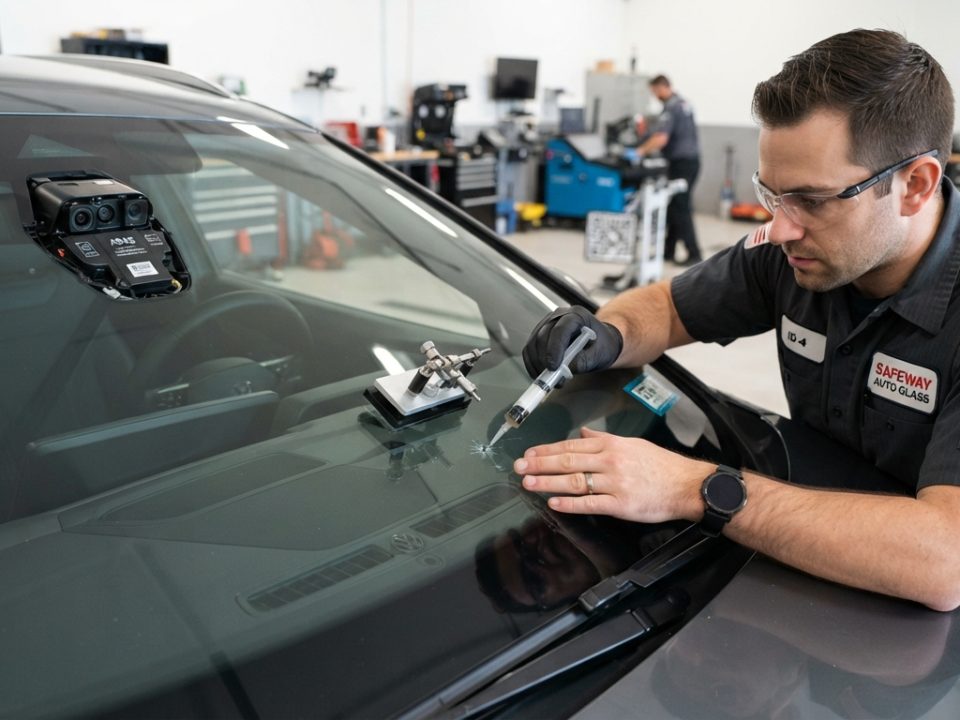
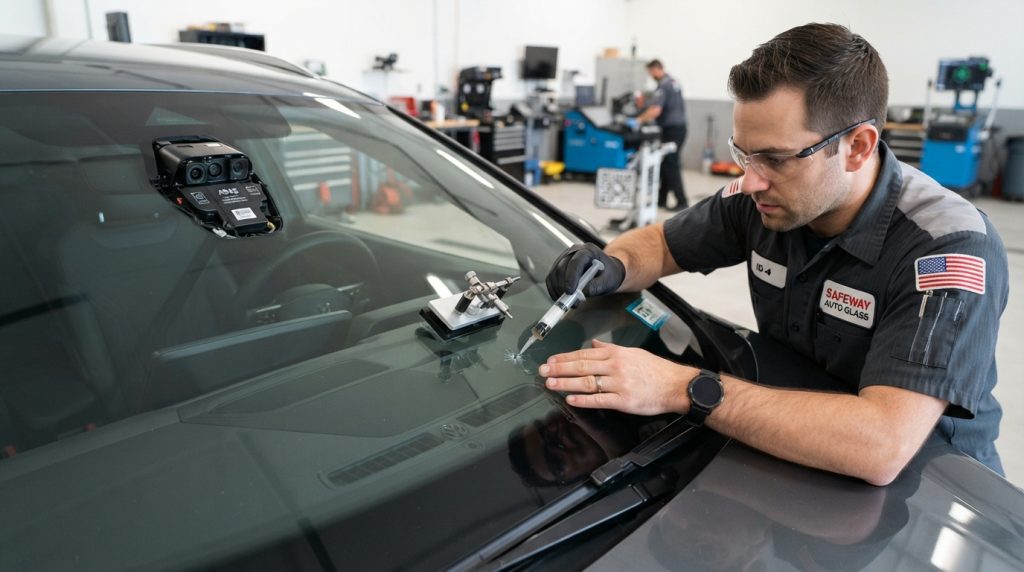
The technician may need to remove and remount the camera during windshield replacement. The glass can also differ in curvature, thickness, or optical properties, while a bracket may fit differently. Those changes can affect what the camera sees, even when the replacement glass looks identical.
The camera’s position and view relate to the vehicle itself, not just the glass. Its software interprets the image as road geometry, so the camera must meet precise manufacturer specifications. An inaccurate reference can affect how the system judges lanes or objects ahead.
Appearance alone is not enough to confirm that the camera view matches its design. A vehicle’s OEM procedures explain which glass, bracket, and calibration steps apply to that specific model and equipment.
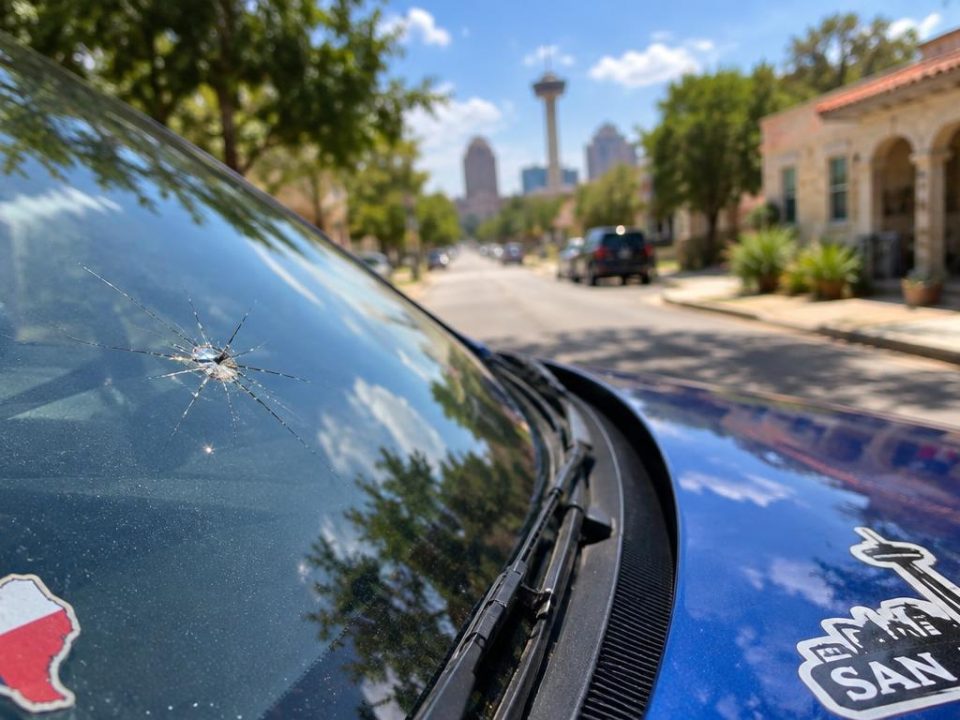
A chip repair that keeps the original windshield generally does not require recalibration if the camera position remains undisturbed. The vehicle’s OEM procedures determine any exception, including whether related work calls for a check.
Confirm that the replacement glass and camera mounting are compatible with your vehicle’s specifications.
Which Safety Features Depend on the Forward Camera?
One windshield camera can support several features that use the same view of traffic and lane markings. Camera input may help each system identify a different kind of road information.
Inaccurate input can affect how a feature reads the scene, though the exact effect varies by vehicle. Some systems combine camera information with radar or other sensors, so the camera may not be their only input.
| Feature | What the camera helps identify | Possible effect of inaccurate input |
|---|---|---|
| Lane departure warning | Lane markings and vehicle position | An alert may come late or seem misplaced |
| Lane keep assist | Lane edges and the vehicle’s path | Steering help may respond at the wrong time |
| Forward collision warning | Vehicles or other objects ahead | A warning may be delayed or unexpected |
| Automatic emergency braking | Objects and possible collision paths | Braking may not match the situation |
Lane departure warning and lane keep assist use lane information to assess the vehicle’s position. The first can alert you, while the second may offer steering help, depending on your vehicle’s design.
Forward collision warning can use the camera to help detect a vehicle or object ahead. Automatic emergency braking may use that information to support braking if a collision seems likely.
Adaptive cruise control may combine camera input with radar to track traffic and help manage following distance. Another sensor does not make camera alignment irrelevant, since the system may use both inputs together.
Use your vehicle’s feature list to understand which systems may rely on the windshield camera.
What Can Happen If Required Calibration Is Skipped?
A vehicle can still feel normal to drive while its camera-based safety features are using an inaccurate view. Required calibration matters even when the dashboard shows no warning. A system may not flag every change in camera geometry.
Inaccurate input can lead to alerts or actions that come late, do not happen, or happen at the wrong time. You could also notice unexpected steering or braking behavior. That can make it harder to judge how much help a feature can provide.
Possible effects include:
- Automatic emergency braking may respond late or fail to respond as expected.
- Lane departure warnings or lane assistance may misread your vehicle’s position.
- Adaptive cruise control may misjudge traffic or following distance.
These features assist you, but they do not replace your attention or judgment. Keep control of the vehicle and respond to road conditions, even when a driver assistance system is active.
A quiet dashboard is not proof that the system has the right camera reference. Some camera issues may not trigger a warning light, and a normal drive does not show that calibration is complete.
Do not rely on the absence of a dashboard warning as proof that required calibration was completed.
Static, Dynamic, and Combined Calibration
Your vehicle’s manufacturer specifies whether its camera needs a stationary target procedure, a road-based procedure, or both. OEM procedures decide which calibration your vehicle needs. These methods are not options for you to choose based on convenience.
The exact steps can change with model year and equipment. A technician checks the vehicle’s required procedure rather than applying one method to every car.
Static Calibration Uses Targets in a Controlled Setting
Static calibration takes place while the vehicle remains stationary. A technician uses targets, measurements, and diagnostic equipment to set the camera’s reference.
The work area must suit the procedure. It may need to be level, with enough room to place targets at precise distances and positions. A target set in the wrong place can affect the result.
Static calibration is a technical process, not a visual adjustment. The technician follows the vehicle’s specifications for target placement and diagnostic steps.
Dynamic Calibration Uses Prescribed Road Conditions
Dynamic calibration uses a technician-led drive under conditions set by the manufacturer. The vehicle may need suitable roads and visible lane markings for the camera to read.
The technician follows the prescribed route or driving conditions while the system completes its process. Poor visibility, unclear markings, or road conditions that do not meet the procedure may prevent completion.
A road test is not simply a drive around the block. The required conditions depend on the vehicle, and the technician must follow its specific directions.
Some Vehicles Require Both Procedures
Some makes and models require static calibration, dynamic calibration, or both. The procedure can also vary by model year, trim, and installed equipment.
When both steps are required, completing only one does not meet the full procedure. The shop should follow the required sequence and confirm that each part completes successfully.
Neither method is a substitute for the other when the manufacturer calls for both. The vehicle’s system and its documented procedure determine the correct work.
Ask the technician to identify the required procedure for your exact year, make, model, and trim.
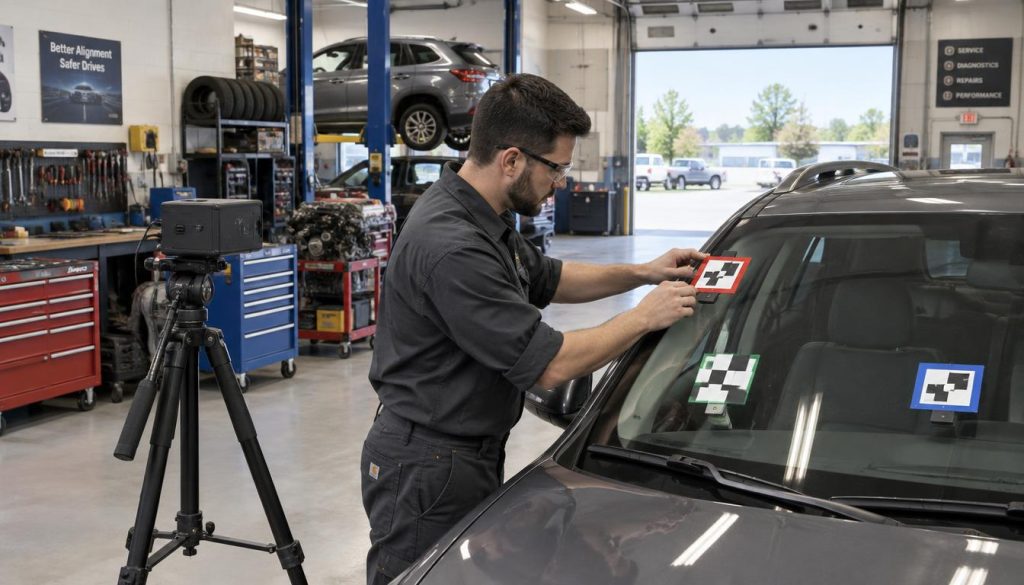
Static calibration aligns windshield targets with a fixed camera, while dynamic or combined methods may also be used to recalibrate safety cameras after replacement.
How to Confirm Your Vehicle Needs Calibration
The dependable way to know is to check your vehicle’s installed equipment and its manufacturer-specific procedure. Make, model, year, trim, and equipment matter more than vehicle age alone. Honda, Subaru, Toyota, and Volvo are examples of automakers with procedures that specify recalibration after windshield replacement.
Do not assume that every vehicle has the same camera or calibration requirement. Collision damage, front-end work, wheel alignment, suspension work, and camera removal or replacement may also call for a calibration check.
| Service or event | What may be affected | What to confirm |
|---|---|---|
| Windshield replacement | Windshield camera and mount | Whether OEM procedures require calibration |
| Collision or front-end work | Sensor position | Whether affected sensors need calibration |
| Wheel alignment, suspension work, or camera removal | System geometry | Whether the work triggers a calibration check |
You can look for signs that your vehicle has ADAS:
- Look for a camera housing near the rearview mirror.
- Review the owner’s manual for driver assistance features.
- Check the feature list for lane departure warning or adaptive cruise control.
- Ask the shop to verify your equipment using your vehicle details.
A camera housing can suggest that your vehicle has a forward camera, but it does not show which systems use it. Your manual and feature display can help identify installed driver assistance systems.
Have the repair shop confirm the requirement for your exact vehicle rather than relying on model year alone.
What Happens During Calibration After Replacement?
A proper appointment starts by confirming what equipment your vehicle has and which procedure its manufacturer requires. A complete visit includes checks before calibration and a record of the result afterward.
The work depends on your vehicle, so the steps may differ from another car’s appointment. The technician uses OEM procedures for your exact equipment and repair.
Vehicle Preparation and Diagnostic Checks
The technician identifies the installed driver assistance systems and checks relevant diagnostic information. Diagnostic codes can show whether the vehicle has a fault that needs attention before calibration.
The technician then prepares the vehicle and work area for the required procedure. This may include checking conditions the vehicle needs for calibration and arranging a suitable space for the work.
These checks help the technician follow the correct process. A calibration attempt cannot replace diagnosis of a separate system fault.
Camera Calibration to the Vehicle Procedure
The technician follows the vehicle-specific procedure using targets, a prescribed road test, or both. Static calibration uses targets, while dynamic calibration uses a required drive under set conditions.
Some vehicles require both procedures, so the technician must complete each step the manufacturer specifies. The correct approach depends on the model, year, trim, and equipment.
Calibration is professional work that calls for specialized tools and training. It is not a do-it-yourself adjustment, even if the camera appears to sit straight.
System Verification and Records
After calibration, the technician checks whether the procedure completed successfully. A post-calibration diagnostic check can confirm the system’s status and show whether more work is needed.
Ask for a written record that names the procedure and its result. Keep it with your windshield repair paperwork in case you need to discuss the work later.
Windshield adhesive safe drive-away time is separate from calibration time. The adhesive and installation conditions determine how long the vehicle must wait before you drive.
Request a record showing which calibration procedure was completed and whether the system verified successfully.
What to Check After Windshield Replacement
Before relying on camera-based driver aids, check your service record and note any new warning or unusual behavior. No dashboard warning does not prove that calibration succeeded.
Use the repair record to confirm what work the shop completed. Then compare the vehicle’s messages and behavior with what you noticed before the glass replacement.
| Check | What to confirm | What to do if it is unclear |
|---|---|---|
| Camera housing and mounting area | Housing appears secure | Ask the repair shop to inspect it |
| Work record | Completed calibration and result are listed | Request the missing details |
| Driver assistance messages or behavior | No new issue is present | Contact the shop for professional verification |
Unusual lane warnings, unexpected steering or braking, or a new ADAS message call for prompt contact with the repair shop. A trained technician can check the system instead of relying on a brief road test.
Follow the installer’s instructions for adhesive care, tape, and washing. When you can remove installation tape depends on the installer’s materials and procedure.
Leave installation tape in place for the period the installer specifies. Many installers recommend about 24 hours, but the product and procedure instructions take precedence.
If an ADAS feature behaves differently after the replacement, contact the shop and avoid treating the feature as dependable until it has been checked.
What to Ask About Cost, Coverage, and Glass Compatibility
Ask for a vehicle-specific quote that separates the glass work from any required calibration or related procedure. The vehicle’s procedure and affected systems shape the calibration cost.
There is no single quote that fits every vehicle. Your price depends on the vehicle requirements, the calibration method, and any added diagnosis or sensor work.
Factors That Affect the Calibration Quote
A vehicle may need static calibration, dynamic calibration, or a combination of both. The required method and the tools or work involved can change the quote.
Additional sensors or diagnosis may add work beyond the camera procedure. Ask the provider to explain which parts of the estimate cover glass replacement and which cover calibration or related services.
Comprehensive insurance coverage may include required calibration with a covered glass replacement. Coverage depends on your policy, so confirm the terms with your insurer before approving the work.
Replacement glass must meet your vehicle’s specifications for its camera and mounting system. OEM-equivalent glass means the glass meets those vehicle specifications, not simply that it carries a certain label.
Questions to Ask Before Approving the Work
Get clear answers about the procedure, glass, and records before you approve the repair:
- Which OEM procedure applies to my exact vehicle?
- Will you perform calibration in-house or use a qualified partner?
- Does the replacement glass meet my camera and bracket specifications?
- Will you provide pre- and post-calibration documentation?
The answers help you understand what the provider plans to do. A quote should identify whether the vehicle needs calibration and how the shop will confirm its result.
Your insurer can explain whether your policy covers the glass, calibration, or related work. Ask how your deductible and claim terms apply to this repair.
Confirm the insurer’s coverage and the provider’s written scope before authorizing the work.
Conclusion
Before relying on windshield-camera safety features after replacement, confirm that any required calibration was completed and documented. Your vehicle’s OEM procedure, not a generic rule, determines the required calibration.
If your windshield or other vehicle glass is damaged, contact Miracle Auto Glass in San Antonio. The team can help with glass repair or replacement and explain the work your vehicle needs.
Call (210) 680-2551 or visit 6730 Poss Rd, San Antonio, TX 78238. Hire Miracle Auto Glass to fix your windshield or other glass damage.