
Static vs. Dynamic ADAS Calibration: What’s the Difference?
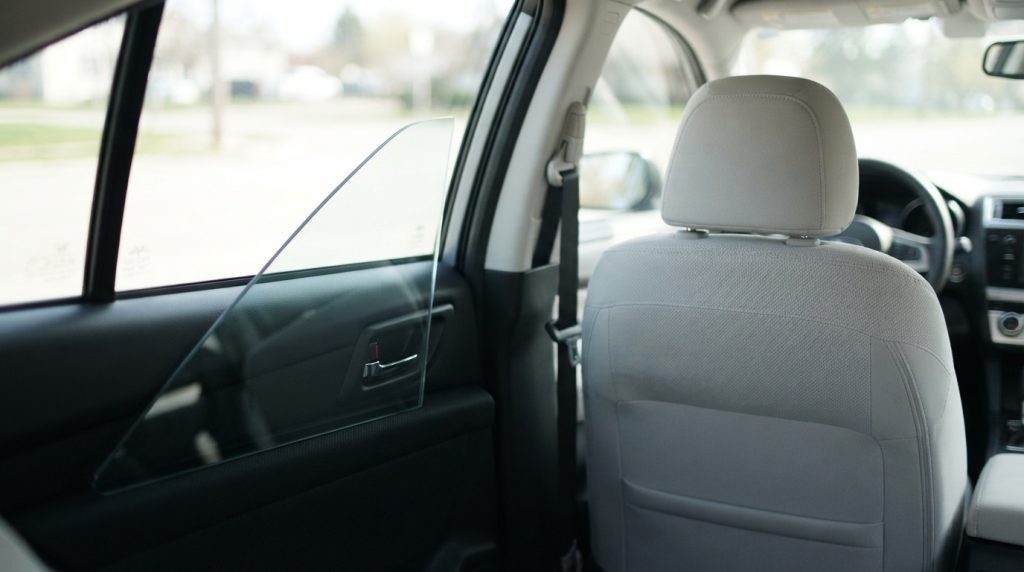
After broken side window cleanup, you find a new pane in place and wonder if every shard is gone. Small pieces can scatter beyond the seat and floor, so a clean-looking cabin does not prove the vehicle is clear. Safe cleanup reaches visible surfaces and less obvious areas. This guide covers the period around replacement, not cracked-glass repair.
Knowing where fragments can collect helps you judge what needs attention. The first useful distinction is between loose glass removed from the cabin and pieces trapped inside the door.
Key Takeaways
- Glass can land on seats, carpets, and hidden surfaces.
- A technician may need to clear fragments inside the door.
- Wear thick gloves when handling loose pieces.
- A vacuum and careful surface checks help remove small shards.
- A temporary cover protects the opening only for a short time.
What Does Broken Side Window Cleanup Involve?
Broken glass can end up inside the cabin and inside the door. Tempered glass is auto glass that, when shattered, breaks into many small pieces rather than remaining as one pane. Those pieces can fall into the door cavity and window track.
The visible shards on a seat or floor are only part of the cleanup. During replacement, a technician checks areas that ordinary cabin cleaning cannot reach.
Where the technician looks for glass
A side window can shatter into hundreds of small pieces. Some land on the seat, carpet, or door pocket, while others slip through gaps around the window.
Fragments may settle inside the door and collect in the window track. Glass left there can interfere with the window regulator, the part that moves the window up and down.
The technician may also check the frame and the area around the window opening. The exact cleanup steps can vary with the vehicle and the damage.
How the door panel is handled during replacement
To reach the door cavity, a technician may remove the inner door panel. That gives access to glass behind the trim and near the moving parts.
The technician clears remaining debris before fitting the new pane. The panel is then put back, and the window may be checked for proper movement.
Not every shop follows an identical procedure, since door designs differ. A professional replacement addresses fragments inside the door, not just pieces on the cabin floor.
Loose glass on accessible surfaces is different: you can handle that carefully yourself, as long as you protect your hands.
How Can You Clean Loose Glass Safely?
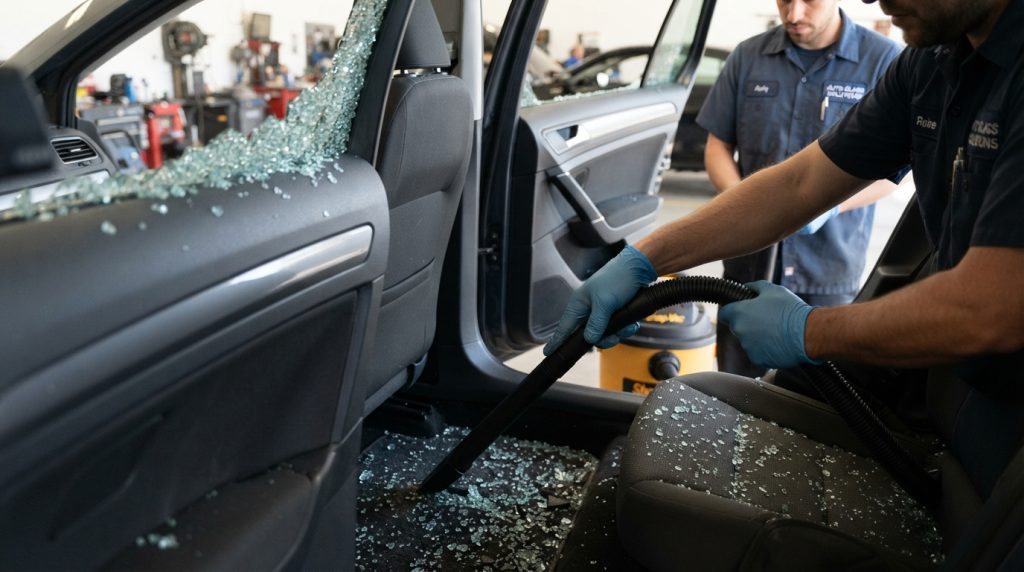
Put on thick protective gloves before touching any glass. Never use bare hands to collect shards, even if a piece looks small. A shop vacuum is usually better than a broom for small fragments.
Work slowly and keep children and pets away from the car. The steps below cover accessible areas, not fragments inside an unsecured door mechanism.
Remove visible pieces before vacuuming
Pick up larger loose pieces first, then vacuum the places where tiny fragments settle. A broom can move big pieces, but it often misses small glass on carpet and fabric.
Use the crevice tool along seat folds, door pockets, and the gap beside the center console. Check the floor mats, too, since glass can cling to their edges.
Pick up fine fragments from fabric and hard surfaces
Tape or a lint roller can lift fine pieces from fabric after vacuuming. On hard surfaces, a damp paper towel can collect fragments that remain.
To clean the other side of a window, carefully check and wipe the accessible frame and glass-contact area. Do not reach into an unsecured door mechanism.
A clean damp cloth followed by a dry cloth can help clean a window without leaving marks. Focus on removing shards before polishing for looks.
- Put on thick gloves before you start.
- Collect larger loose pieces without touching them with bare hands.
- Vacuum seats, carpet, floor mats, and crevices.
- Press tape or a lint roller over fabric to lift fine pieces.
- Wipe hard surfaces with a damp paper towel.
| Method | Best area | What it can collect | Limitation |
|---|---|---|---|
| Shop vacuum | Carpet and crevices | Small loose fragments | May miss pieces stuck to fabric |
| Tape or lint roller | Seats and fabric | Fine surface pieces | Does not reach deep folds |
| Damp paper towel | Hard surfaces | Small surface shards | Not suited to carpet |
| Broom | Open floor areas | Larger loose pieces | Less effective on small glass |
Do not shake floor mats inside the car, since pieces may scatter again. Empty the vacuum before storing it, and repeat vacuuming after driving because vibration can dislodge missed shards.
Even a careful pass through the cabin cannot clear every place fragments can hide.
Where Can Broken Glass Hide After the First Cleanup?
A seat can look clean while glass remains in a seam or buckle recess. Check beyond the visible surface, because fragments can collect in several less obvious parts of a vehicle. Keep children and pets away until you have checked the affected areas.
Glass can remain inside the door cavity or window track, where a cabin check will not find it. A technician can reach those spaces during replacement.
Check seat seams, door pockets, and nearby gaps. Look over any child car seat, including its padding and buckle recesses, before a child uses it again.
Fragments may also enter HVAC areas, including heat, AC, or defroster outlets. Do not assume a clean-looking seat means the whole vehicle is shard-free.
A small tool may help you inspect narrow spaces, but do not push shards farther into an opening. Focus on visible, reachable areas and ask a technician about hidden debris.
Once you have checked the cabin and its less visible spots, look around the ground where fragments may have landed outside the car.
How Should You Clean Up Broken Glass Outside the Car?
When a window breaks, shards can scatter beside the vehicle and farther across the ground. Keep children and pets clear while you check the area. Wear thick gloves and handle larger pieces carefully.
Pick up visible pieces without using your bare hands. For a suitable hard outdoor surface, a vacuum can collect small fragments; use equipment suited to that surface.
If you do not have a suitable vacuum, a broom and dustpan can gather pieces from a hard outdoor area. Sweep gently so you do not scatter the shards farther.
Inspect the immediate area again after collecting the visible pieces. Glass may have traveled beyond the spot beside the door, so check nearby ground before anyone walks there.
Do not use a household vacuum outdoors. Once the loose glass is handled, protect the open window from rain and debris while you arrange replacement.
How Can You Cover a Broken Window Until Replacement?
Heavy plastic can keep rain out better than cardboard, which can break down when wet. Choose plastic for wet weather and cover the full window opening. A temporary cover protects the cabin, but it is not a lasting repair.
A garbage bag or heavy plastic tarp can work if it spans the opening. Overlap clear packing tape vertically and horizontally to close gaps.
Choose a cover that can keep out rain
For how to cover a broken car window from rain, stretch plastic across the full opening and secure it around the frame. Choose broken car window tape that you can remove, and use vehicle-safe tape where possible.
Duct tape can be hard to remove and may leave residue. Try to keep tape off the paint, especially if you are unsure how it will come off.
| Cover | Rain protection | What secures it | Main drawback |
|---|---|---|---|
| Heavy plastic tarp | Good when fitted tightly | Overlapping tape | Can be bulky to trim |
| Garbage bag | Useful for a short-term cover | Suitable tape around frame | May tear or flap |
| Cardboard | Poor in rain | Tape around edges | Gets wet and breaks down |
Secure the cover without damaging paint
Follow these steps to make a temporary cover for a broken car window:
- Check and dry the accessible frame.
- Cut plastic to cover the entire opening.
- Secure it with overlapping tape, avoiding paint where possible.
Clear packing tape can be overlapped in both directions to cover gaps. Cardboard is a poor rain barrier, even when its edges fit the opening.
A makeshift cover buys time while you arrange proper replacement. It is not a reason to drive for an extended period with impaired visibility or protection.
After the opening is covered, arrange a lasting replacement rather than relying on the temporary barrier.
When Should You Arrange Professional Side Window Replacement?
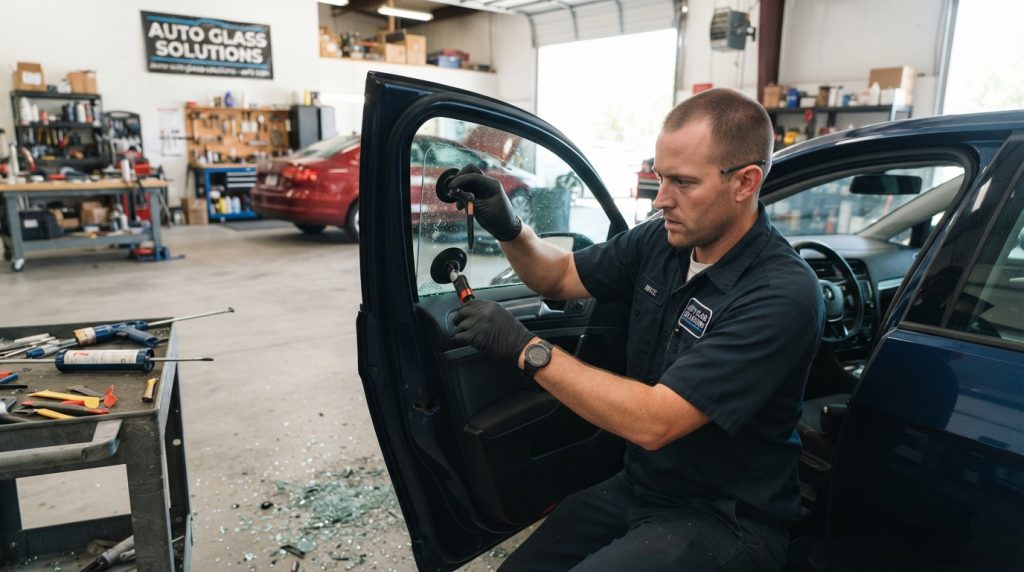
A broken side pane needs prompt replacement, not a lasting DIY repair. Do not treat a broken pane like a crack; a hairline crack is a different condition that needs separate assessment. A side-window replacement can take as little as one hour, but timing varies by vehicle and job.
A replacement may involve removing the door panel, clearing remaining glass, fitting a new pane, testing its operation, and reinstalling the panel. The work depends on the vehicle and damage.
Contact a local auto glass shop to discuss the car window and the needed work. If you search for a temporary cover for broken car window near me, consider that a local professional can also help arrange replacement.
Do not expect the one-hour estimate to fit every job. A vehicle with hard-to-reach fragments or a complex door may need more time.
If you suspect theft, contact police before disturbing possible evidence. You may also want to check your insurance coverage when relevant.
A broken windshield is a separate glass issue, but an auto glass shop can advise you where to turn. Call a professional if you are unsure whether damage needs replacement or assessment.
A short-term cover cannot restore the protection or normal use of a side window. Contact a local shop to discuss replacement, then use the details below to reach Miracle Auto Glass.
Conclusion
Check beyond the visible cabin, since glass can remain inside the door or in seat gaps after obvious shards are gone. A temporary cover only buys time, and hidden debris deserves attention during replacement.
For glass help in San Antonio, contact Miracle Auto Glass at Bandera Rd & Grissom. Call (210) 680-2551 to discuss your next step.
Hire Miracle Auto Glass to fix your windshield or other glass damage at Bandera Rd & Grissom. Call (210) 680-2551.