Why Your Car’s Safety Cameras Need Recalibration After a Windshield Replacement
Why Your Car Window Won’t Go Up (and What It Usually Means)
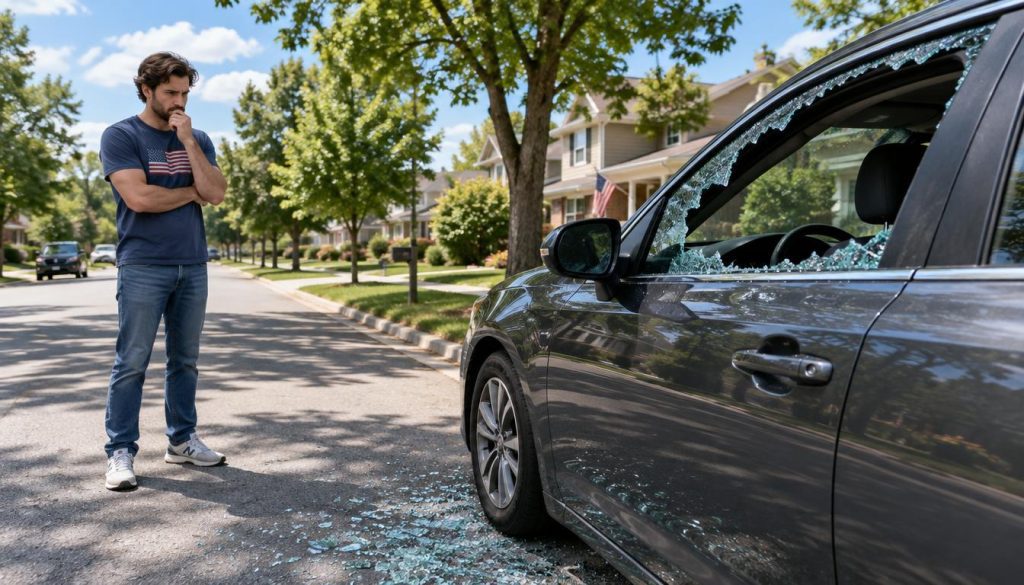
If your car’s side window is smashed, get yourself safe, document the scene, secure the opening and arrange replacement while notifying your insurance company promptly. Your first priority is people, not salvageable belongings. Tempered glass is vehicle glass designed to break into small, blunt-edged pieces rather than large shards.
A smashed window can leave you exposed to weather and unsure what to do next. Take each step in order, and avoid rushing back into an unsafe area for personal items.
Key Takeaways
- Move to a safe place before inspecting the vehicle.
- Record the scene before moving belongings or glass.
- Contact police if you suspect theft or vandalism.
- Clear loose glass with care and cover the opening temporarily.
- Arrange replacement and notify your insurance company promptly.
Keep children and pets away from the damaged area until the glass is cleared.
Broken Car Side Window: What to Do
If you find the damage in an unsafe place, move to a secure location before inspecting the vehicle. Choose a well-lit, populated area, or wait somewhere secure if the scene feels unsafe. At night, personal safety still comes first, followed by a clear record of what happened.
Do not disturb a suspected crime scene before documenting it. Common causes include vandalism, theft, road debris, a crash and hail. If someone smashed your car window, check for missing items only when it is safe to approach.
If your car window is smashed and nothing was stolen, document the damage and contact police if you suspect vandalism. A police report can help record the incident, though your insurer may have its own claim steps.
Check whether payment cards or other sensitive items are gone. Contact your financial institution promptly if a card is missing, and ask it to block or replace the card.
A broken car can feel especially exposed when you discover it after dark. Use your phone light from a safe spot, and avoid reaching through the opening to access the cabin. If anyone may be hurt, call emergency services before handling the vehicle.
Document the Scene and Make the Right Calls
Before moving belongings or cleaning up, take clear photos of the damage and the surrounding scene. Good records can help explain what happened and support an insurance claim. Contact your insurance company as soon as possible, even if you are still waiting for an estimate.
Photograph the Damage and List Missing Items
Take wide photos that show the vehicle’s location, then close-up photos of the broken glass and damage. Do I need to file a police report for a broken car window? Whether you need one depends on the incident and what your insurer requests.
Keep these six details together for your records:
- Incident date
- Incident time
- Incident location
- Wide and close-up photos
- Witness contact information
- A list of missing belongings
Report the Incident and Contact Your Insurer
Contact police when you suspect theft or vandalism, and ask how to make a report. A police report is not always required for an insurance claim, so ask your insurance company what it needs.
Tell the company what happened, share the information you gathered and write down the claim number. Coverage depends on your policy and the cause of the damage, so check both before choosing a repair shop.
Broken car window repair cost should be weighed against your policy deductible after you get an estimate. Keep the claim number and the name of the person you spoke with.
Clear Broken Glass Without Creating Another Hazard
Put on gloves and keep passengers away before approaching the broken-glass area. Loose pieces can cut skin, while tiny fragments may hide in fabric or inside the door. Visible cleanup does not mean the vehicle is fully clear.
Use these six steps to remove only glass you can reach safely:
- Put on sturdy gloves and eye protection before handling glass.
- Keep children and pets away from the vehicle and cleanup area.
- Remove only loose, accessible pieces; do not reach into gaps.
- Vacuum the seats and floor areas where fragments may have fallen.
- Check the door area and heat, AC and defroster outlets without forcing glass deeper.
- Empty the vacuum before putting it away.
Work slowly around seat seams, where small pieces can catch between cushions. A vacuum can collect fragments too small to pick up by hand.
Some glass may fall into the door cavity, beyond the area you can see. The heat, AC and defroster outlets can also hold fragments that shift when air flows through them.
Do not force anything into a vent or door gap to reach hidden pieces. Stop if fragments are trapped inside a door or another component you cannot safely reach.
Cover the Opening Until Replacement
A clear plastic sheet secured around the opening is a better short-term barrier than cardboard. Plastic can keep rain and debris out while leaving some visibility through the side window. A temporary cover protects the cabin but does not repair the window.
Choose a Short-Term Barrier
A broken car window temporary fix should cover the entire opening with clean plastic sheeting or a heavy plastic tarp. Cardboard can block wind, but it is not waterproof and can soak through in rain.
| Material | Rain protection | Visibility | Limitation |
|---|---|---|---|
| Clear plastic sheeting | Good for temporary use | Some visibility remains | Needs secure attachment |
| Cardboard | Poor, absorbs moisture | Blocks the view | Can soften in rain |
| Tape alone | Does not close the opening | Opening stays exposed | Cannot act as a cover |
Without tape, do not rely on loose plastic as a window cover. Park in a sheltered, secure place, or use a purpose-made cover only as directed.
Secure the Cover Without Blocking Your View
Lay the sheet over the opening and attach it around the frame, keeping the material taut. Clear packing tape or duct tape may leave residue or affect paint, so avoid placing adhesive directly on painted surfaces when possible.
Keep tape out of the window track, where it could interfere with the glass or moving parts. Do not operate the window switch while fragments may remain inside the door.
Check the cover from the driver’s seat before moving the vehicle. Keep the cover clear of mirrors, latches and the driver’s view.
Deciding Whether the Vehicle Is Safe to Drive
Drive only if the vehicle is otherwise safe and you can maintain a clear view of the road. A side window opening can let wind, rain and debris into the cabin. Loose glass, blocked vision or a door that will not close securely means you should not drive.
A broken windshield can create a separate forward-visibility problem. A side window is not the same visibility issue, yet wind and flying debris can distract you or affect passengers.
| Condition | Safer choice | Reason |
|---|---|---|
| Driver’s view clear, door secure | Move only a short distance to safety | Vehicle can be controlled |
| Glass still falling or loose in cabin | Do not drive | Pieces may injure people |
| View blocked, door will not latch, or collision damage may extend beyond glass | Park and arrange assistance | Control or structure may be unsafe |
If the vehicle is otherwise safe to move, avoid highways and take the shortest calm route. A cover does not make a vehicle safe if the driver cannot see or the door cannot stay shut.
Do not drive just to reach a shop if glass is shifting inside the cabin. If you are unsure whether the door or surrounding structure is damaged, leave the vehicle parked.
Replacement, Cost, and Insurance Decisions
A shattered side window usually needs replacement, with the exact glass matched to your vehicle. Tempered glass breaks into small pieces, so an auto glass technician generally replaces the whole pane rather than repairing it. The right part depends on your vehicle year, make, model and body style.
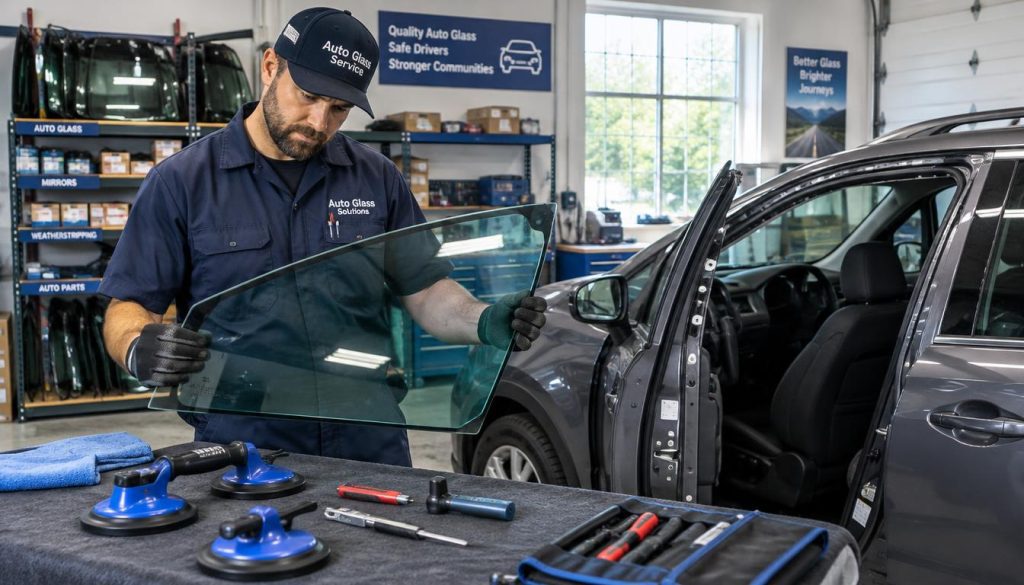
A replacement side window requires careful fitting, and an auto glass technician can help you weigh repair costs and insurance decisions.
What a Side-Window Replacement Involves
The auto glass technician may remove the door panel to reach the window system. The technician clears fragments, installs the new glass, tests its movement and reinstalls the panel.
Some replacements can take as little as one hour, though the vehicle and specific job affect appointment time. Ask the shop how long your vehicle’s service should take, and whether it can work at your location.
The replacement professional needs the correct glass for your vehicle, not just a pane that looks close. Share the year, make, model and body style when you book the service.
How to Compare an Estimate With Your Coverage
Broken car side window what to do cost, car side window repair cost and driver side window replacement cost depend on the vehicle, glass type, labor and location. Request an estimate for your specific model instead of relying on a generic price.
Compare the estimate with your deductible before deciding whether to make an insurance claim. Your coverage depends on the policy, the cause of the damage and the deductible that applies.
Ask whether the estimate includes glass removal, cleanup inside the door and any panel work. Confirm the glass specification, cleanup and expected completion time before approving the work.
Conclusion
Keep the vehicle protected and arrange replacement before a temporary cover is exposed to more weather. Prompt auto glass service can restore the side window and help keep the cabin clear of outside debris.
For windshield or other glass damage, Miracle Auto Glass offers service at 6730 Poss Rd, San Antonio, TX 78238. Call to discuss the vehicle and the work it needs.
Hire Miracle Auto Glass to fix your windshield or other glass damage at (210) 680-2551 or 6730 Poss Rd, San Antonio, TX 78238.