
What Happens to the Broken Glass Inside Your Car After Side Window Replacement?
Why Your Car’s Safety Cameras Need Recalibration After a Windshield Replacement
Yes, many small chips can be repaired before spreading; windshield chip repair San Antonio drivers need depends on location and depth. A prompt assessment can help preserve repair as an option, but no chip can be judged by size alone.
San Antonio roads, daily driving, and changes in temperature can all affect damaged glass. ADAS recalibration means checking and adjusting a vehicle’s cameras or sensors so its advanced driver assistance systems work correctly after glass work. The right choice depends on the damage, not just how it looks from outside.
A technician can inspect the impact and explain whether a repair or replacement makes sense for your vehicle. That gives you a practical next step without assuming every chip can be fixed.
Key Takeaways
- Small chips may be repairable, but location and depth matter.
- Temperature shifts, road bumps, and vibration can make damage spread.
- Repair uses clear resin, and a faint mark may remain.
- Long cracks or damage through the glass may call for replacement.
- Texas drivers generally use comprehensive coverage for non-collision glass damage.
- Miracle Auto Glass is located at 6730 Poss Rd in San Antonio.
A quick assessment can help you decide whether a repair is still an option.
Windshield Chip Repair San Antonio: Why Timing Matters
A chip that looks unchanged in your driveway can spread after temperature shifts or a rough stretch of road. Small damage can change quickly, and prompt repair can help keep a chip from growing into damage that requires replacement.
Glass expands in heat and contracts as it cools. These shifts can put stress on the weakened spot, especially when the temperature changes fast. The force may cause a tiny chip to grow into a crack.
Driving adds other forms of stress. A pothole, speed bump, or rough road can jolt the vehicle and flex the windshield. Engine and road vibration can also affect the damaged area over time.
That is why a delay can change the kind of glass work your vehicle needs. A chip that was once a repair candidate may spread into damage that calls for replacement. Acting early can help you avoid that change, though no repair can be promised before an inspection.
Until you can arrange an assessment, a few temporary steps may help protect the spot from dirt and extra stress:
- Cover the impact with clear tape to limit dirt and moisture.
- Park in shade to limit sharp temperature swings.
- Drive gently over potholes and speed bumps.
These steps are stopgaps, not repairs. Tape cannot restore the glass, and careful driving cannot stop every crack from spreading. Keep the damaged area clear enough for a technician to inspect.
The sooner you have the windshield checked, the sooner you can learn whether repair remains suitable. Do not treat a chip’s unchanged appearance as proof that the damage is stable; a small change can be hard to see from the driver’s seat.
Arrange an assessment promptly even if the chip still looks small.
Can Your Windshield Chip Be Repaired?
A small chip is often a repair candidate when it is outside your sightline and has not damaged the inner glass layer. Those conditions matter together, and only an expert assessment can confirm whether windshield repair is suitable.
A windshield has two glass layers separated by a plastic interlayer. The laminated design helps hold the glass together, but it does not make every impact repairable. Damage to the inner layer or deeper parts of the glass can change the decision.
Conditions That Often Suit Repair
Chips smaller than a quarter are often repairable when the damage affects only the outer glass layer. A single crack under about 6 inches may also qualify when it stays outside the driver’s sightline.
The driver’s view is important because a repair may leave a visible mark. A mark in the direct sightline can be a concern even when the damage seems small. A technician needs to judge the spot in relation to your view from the seat.
Details That Affect Repairability
The size and type of damage provide useful clues, not a final answer. A chip can have hidden branches, while a crack may extend farther beneath the surface than it first appears. The technician checks the full impact, its depth, and its position.
The table gives common repair-friendly signals, but each one still needs a close assessment. The outer layer must be the only glass layer affected for these patterns to often suit repair.
| Damage clue | Repair-friendly signal | What still needs checking |
|---|---|---|
| Chip under a quarter | Smaller than a quarter; repair often possible if only the outer layer is affected | Expert assessment must confirm size, depth, and suitability |
| Single crack under about 6 inches | One crack under about 6 inches; repair often possible if only the outer layer is affected | Expert assessment must confirm its full length and depth |
| Damage outside the driver’s sightline | Impact sits outside the driver’s direct view; repair often possible if only the outer layer is affected | Expert assessment must confirm location and suitability |
A measurement alone cannot show whether the glass has damage below the visible surface. A technician can inspect the chip or crack from different angles and assess how it affects the laminated windshield.
Have a technician assess damage that sits near your line of sight or has an unclear depth.
What Happens During Windshield Chip Repair?
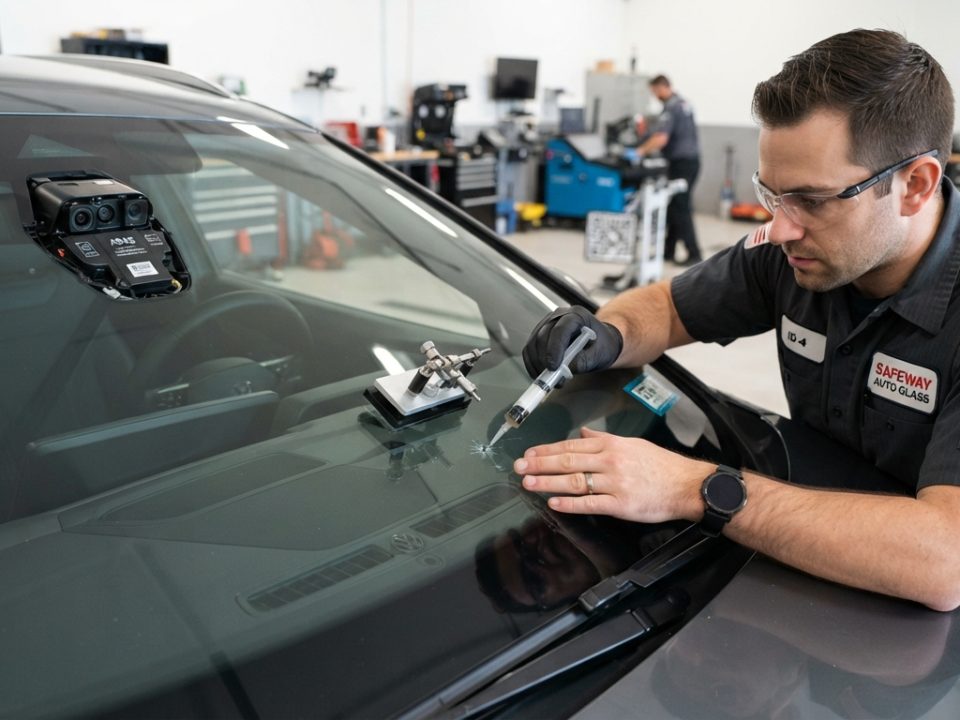
Chip repair fills the damaged area with clear resin, then cures it with ultraviolet light. The resin supports the repair, and the process can improve the glass without making every mark disappear.
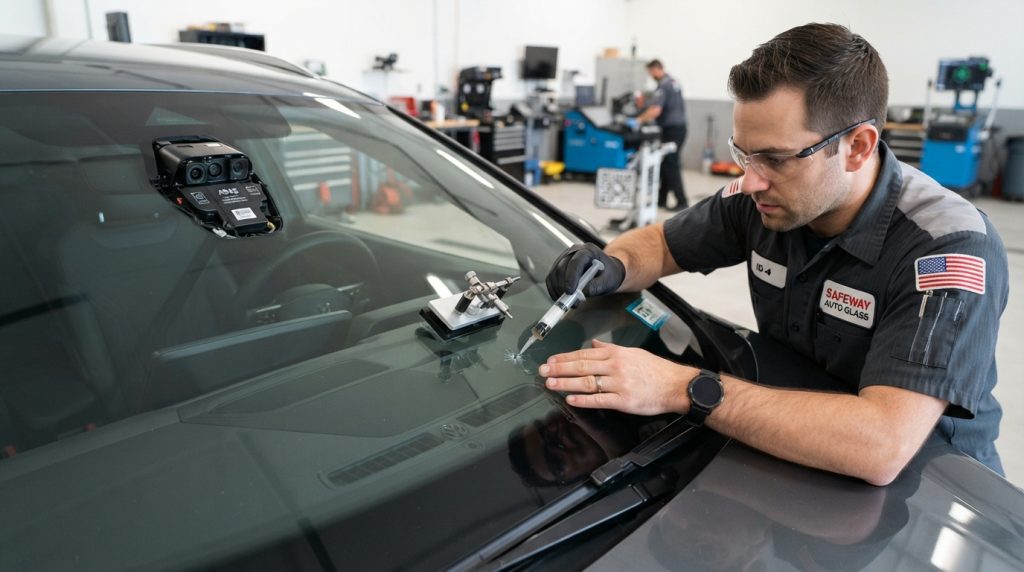
A technician first prepares the spot for the repair service. The damaged area is filled with resin, which flows into the chip’s small gaps. The technician then uses ultraviolet light to cure the resin.
How Resin Repair Works
The resin fills open space in the damaged glass. Curing it with ultraviolet light hardens the material. This repair process is meant to address the damaged area, rather than replace the full windshield.
The exact work depends on the impact. The technician can explain what the repair service involves for your glass and answer questions before starting. Ask how the work will be carried out on your vehicle.
What You May Still See Afterward
A repaired chip can remain visible as an outline. The result depends in part on where the impact occurred and how much glass is missing. A small mark may remain even when the technician completes the repair.
That difference matters if you expect the glass to look untouched. The repair may improve the appearance, but the cosmetic result is not always a clear, invisible surface. The point of repair is not a promise that the original mark will vanish.
Ask the technician to describe the likely appearance before approving auto glass repair. The impact point and the amount of missing glass help shape that expectation. You can then decide whether the proposed work matches what you want from the repair.
Clear resin and ultraviolet light are central parts of this repair method. They do not erase the fact that glass was damaged, so a faint outline may still catch the light from some angles.
Ask what cosmetic mark may remain before authorizing the work.
When Is Windshield Replacement the Safer Choice?
Replacement is usually the safer choice for a long or branching crack, edge damage, or damage that reaches the inner laminate. More extensive damage changes the decision, and a technician should assess the full area before choosing repair or replacement.
A star break in the driver’s direct view may also call for a new windshield. Damage that affects the inner laminate or runs through the full glass thickness usually needs replacement. A quick look at the surface may not show how far the damage reaches.
Damage near an edge can affect a different part of the glass than an impact in the middle. Long cracks and branching patterns also make a simple chip repair less likely to suit the vehicle. The technician should inspect the full extent rather than rely on a fast visual guess.
Replacement involves fitting new glass in place of the damaged windshield. The correct choice depends on the damage and the vehicle, so a technician should explain why replacement is recommended. That gives you a reasoned decision instead of a guess based on one visible mark.
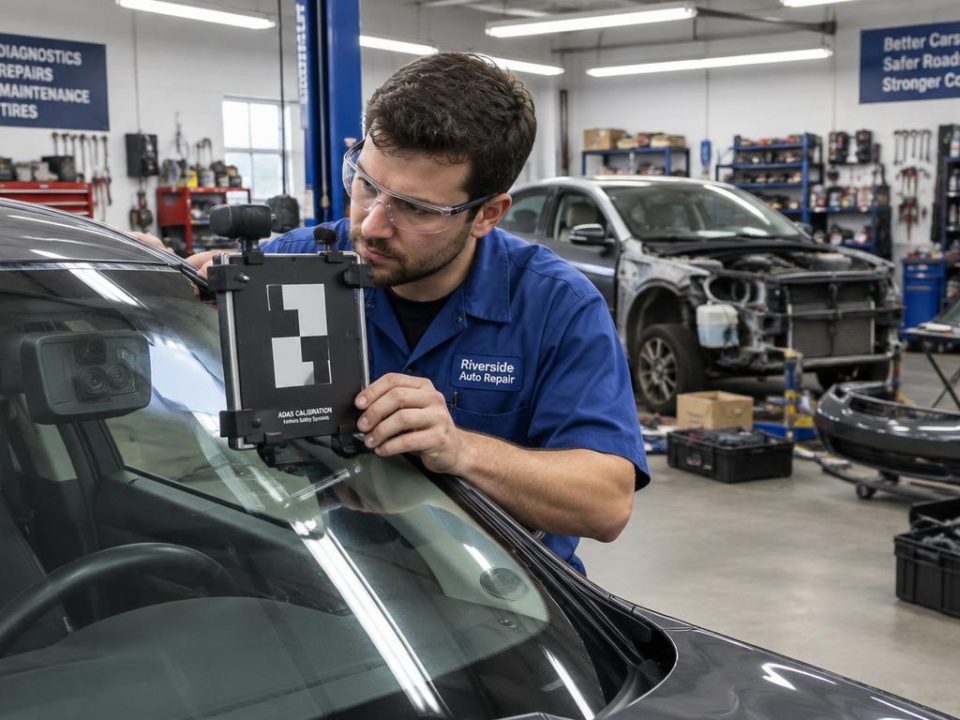
Some vehicles have cameras or sensors mounted at the windshield. After replacement, those vehicles may need ADAS recalibration. This process checks and adjusts the systems so they can work correctly after the glass work.
Ask whether your vehicle’s cameras or sensors affect the work plan. Their position can matter when the windshield comes out and new glass goes in. Mention any windshield-mounted equipment when you speak with the technician.
Tell the technician if your vehicle has cameras or sensors mounted at the windshield.
What Does Texas Insurance Cover for Windshield Damage?
In Texas, a rock striking your windshield is generally handled by comprehensive coverage because it is a non-collision event. Comprehensive coverage is non-collision first-party coverage, and Texas does not require insurers to waive the deductible for windshield damage.
Collision coverage generally applies to damage from a crash, while liability coverage pays for certain harm you cause to others. Road debris and other non-collision glass damage usually fall under comprehensive coverage instead.
When Comprehensive Coverage Applies
If you have comprehensive coverage, your policy may cover a rock impact under its terms. Without comprehensive coverage, you generally have no first-party insurance coverage for windshield damage caused by a rock or another non-collision event.
An optional $0 glass deductible can change what you pay for a glass claim. It is not required by Texas law, so the policy terms matter. Check whether your plan includes this feature before you file.
How Deductibles and Claims Affect You
Without a glass-deductible waiver, a Texas windshield claim generally uses your comprehensive deductible. Common amounts include $250 and $500, but your own policy may set a different amount.
| Policy situation | Likely first-party coverage | Deductible outcome |
|---|---|---|
| Comprehensive, no glass waiver | Comprehensive coverage for non-collision damage | Comprehensive deductible generally applies; $250 and $500 are common |
| Comprehensive with optional $0 glass deductible | Comprehensive coverage with an optional glass feature | $0 glass deductible may apply under the policy terms |
| No comprehensive coverage | Generally no first-party cover for rock damage | No comprehensive deductible applies to a first-party claim |
A single windshield glass claim is unlikely to significantly increase your premium. Repeated claims could affect your rates, depending on your insurer and policy. No claim outcome is the same for every driver.
Compare the expected claim payment with the deductible you would owe. If the repair cost is close to that amount, paying out of pocket may be a choice to consider. Your policy details and claim history can affect the decision.
Read the glass terms in your policy or ask your insurer about the claim before filing. Check whether a separate glass deductible applies and how the insurer handles a claim under your plan.
Confirm your deductible and glass-waiver terms with your insurer before deciding whether to file.
What Changes a Windshield Repair Quote?
The first detail that changes a windshield quote is whether the damage can be repaired or requires replacement. The type of work matters, and the vehicle’s glass and fit also affect the estimate.
A quote for windshield chip repair is not the same as an estimate for a full windshield replacement. The work differs, so the estimate should state which service it covers. Ask for a current quote based on your vehicle and the damage.
Auto glass is made to fit particular vehicle models and options. A provider commonly needs your vehicle’s year, make, and model to prepare a quote. The VIN can help identify the correct glass when trim or options affect the fit.
When you compare estimates, check that each one describes the same type of work. Ask what the quote includes before you approve the service. A clear written scope helps you understand what the provider plans to do.
Drivers looking up windshield chip repair prices in San Antonio or windshield chip repair cost in San Antonio should request a current estimate for their vehicle and damage. A general figure may not match the glass or work your vehicle needs.
Comparing written estimates is a safer way to identify a low-cost windshield chip repair in San Antonio than choosing by an advertised starting price alone. A low starting figure may not describe the full work needed for your vehicle.
The quote should identify whether it covers repair or replacement and which glass work the provider plans to perform. If two estimates seem far apart, ask what differs in the written scope before making a choice.
Share your vehicle details and describe where the damage sits when requesting an estimate.
Mobile and In-Shop Auto Glass Service in San Antonio
Mobile service can save you a trip when a provider serves your location and conditions allow the work. Availability depends on the job, so confirm whether mobile chip repair or mobile replacement is offered for your situation.
Mobile auto glass work may take place at home or an office. In-shop service is another option if you prefer to bring the vehicle to a shop. The provider’s service area and appointment conditions determine which choice is practical.
Mobile Windshield Repair in San Antonio
Mobile windshield chip repair in San Antonio can be convenient when the provider travels to your location. Mobile replacement is different, since weather can affect the work. A provider may postpone mobile replacement in wet weather.
Confirm availability for the specific work you need. Do not assume that a provider who offers mobile chip repair also offers mobile replacement at your address. Ask about the service area and any conditions that could change the appointment.
When In-Shop Service May Fit Better
An in-shop appointment may suit you when the provider recommends work at its shop or when weather affects mobile replacement. Ask which setting fits the planned work. The answer may depend on the service and the location.
The best windshield chip repair in San Antonio for your situation explains the repair decision, confirms service logistics, and gives you a clear written scope. These checks help you judge the service rather than rely on a broad claim about being the best.
Before choosing an auto glass service, ask:
- Does mobile service reach your location?
- Does the provider handle both repairs and replacements?
- Are evening appointments available?
- Can the provider explain any relevant calibration needs?
The answers can clarify whether the provider’s services fit your schedule and vehicle. Evening appointments and calibration support should be confirmed directly, since availability can differ by provider.
Confirm the appointment location and weather-related conditions before setting aside time.
What to Have Ready Before You Book
A useful appointment inquiry starts with your vehicle details and a clear description of the damaged area. Specific details help the conversation, and Miracle Auto Glass is located at 6730 Poss Rd, San Antonio, TX 78238.
If you need windshield chip repair near you in San Antonio, call the business to confirm service availability. The location is a starting point for your inquiry, not a promise that every service or appointment is available.
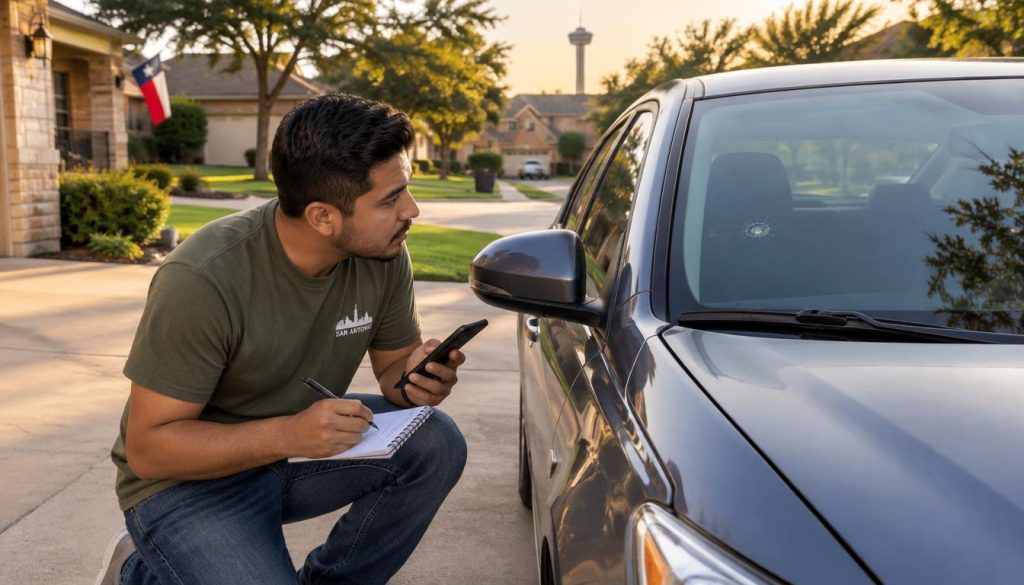
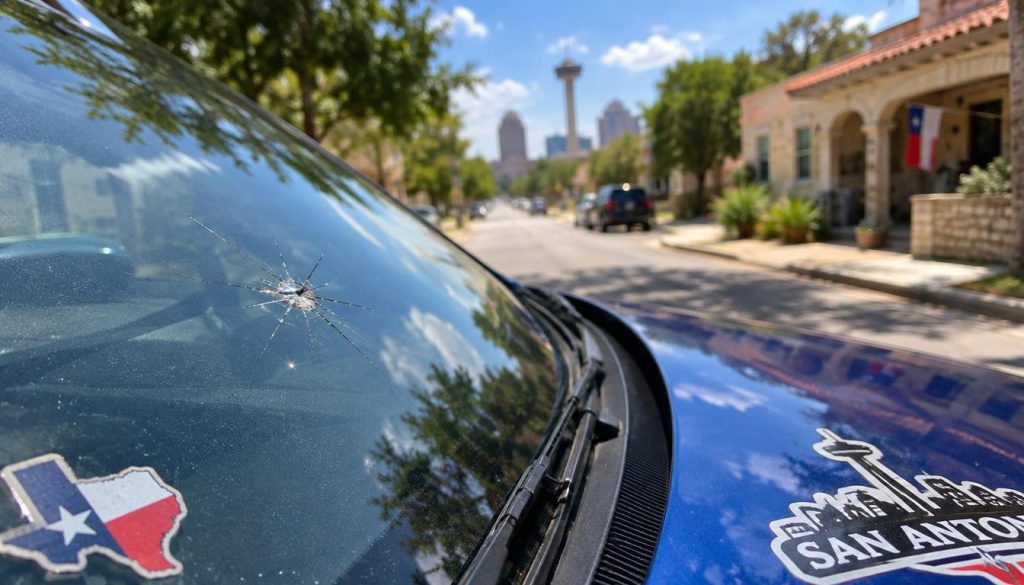
Before booking windshield chip repair, note the damage and have your vehicle details ready, as this San Antonio driver does.
Finding Windshield Chip Repair Near You
Miracle Auto Glass provides a local point of contact for glass repair in San Antonio. You can call (210) 680-2551 to ask about the next step for your vehicle. Confirm the service details directly when you call.
Give a clear account of the damage, including where it sits on the windshield. If you are not sure how large it is, describe what you can see without guessing at the repair outcome. A technician can discuss assessment options.
Details to Share When Booking
Have these three details ready when you call or make an appointment inquiry:
- Your vehicle’s year, make, and model.
- The damage’s location and approximate size.
- The location where you want the vehicle assessed.
These details give the business a useful starting point for your question. The vehicle information can help identify the glass, while the damage description helps explain what you need assessed.
Ask what the next step involves and whether the business can assess your vehicle at the location you have in mind. Do not assume a mobile visit or appointment time until the business confirms it.
Keep the phone number handy if you need to follow up about your inquiry. A concise description of your vehicle and the damaged area can make that call more useful.
Call (210) 680-2551 to ask about the next step for your vehicle.
Conclusion
A prompt assessment helps show whether your windshield can be repaired or needs replacement. The damage itself guides the choice, so a small appearance alone cannot settle the question.
Have a technician review the glass and explain the recommended work before you decide. If you are ready to discuss your vehicle, contact Miracle Auto Glass. Hire Miracle Auto Glass to fix your windshield or other glass damage.