
What Happens If You Ignore a Rock Chip in Your Windshield?
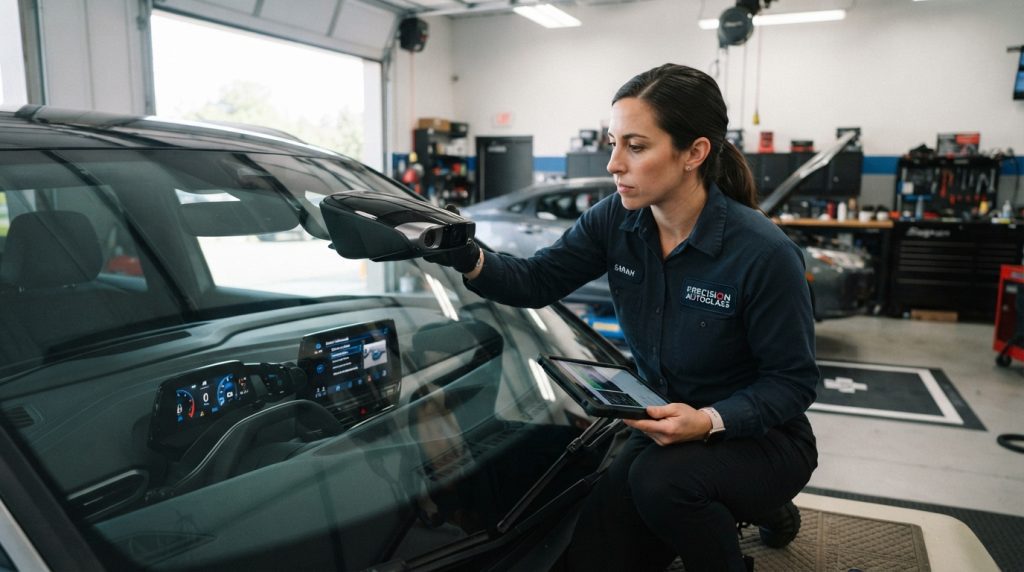
A vehicle can seem ready to drive after glass work while its camera-based safety features still need attention. ADAS recalibration after windshield replacement may be required because the camera can shift during the work. Check the requirement for your exact vehicle instead of assuming calibration is unnecessary.
If alignment is off, driver-assistance features may give false alerts, miss warnings, or respond in ways you do not expect. A quiet dashboard does not always mean the camera is aimed correctly. The vehicle may still drive normally, which can make the issue hard to spot.
Before you rely on those features, find out whether your vehicle needs calibration and how the shop confirmed it. The camera’s job explains why even a small alignment change matters.
Key Takeaways
- Windshield work can disturb the ADAS camera.
- Calibration needs depend on your vehicle and its manufacturer’s procedure.
- A clear dashboard does not prove the camera is aligned.
- Ask for a record of the required work and its result.
- Get a professional check if a driver aid acts differently afterward.
How Does a Windshield Camera Support ADAS?
Near the rearview mirror, a small camera can supply information that several driver aids use at once. ADAS means Advanced Driver Assistance Systems, vehicle technologies that use cameras and other sensors to monitor the road and support the driver with alerts or corrective actions. The camera’s view helps the vehicle respond to road information.
Forward-facing ADAS cameras are commonly mounted inside the windshield near the rearview mirror. They capture lane markings, road signs, and other road conditions. Software analyzes the images and turns them into information the vehicle can use.
The process has four basic steps:
- The camera captures images of the road ahead.
- Software interprets road markings, signs, and objects.
- The vehicle evaluates possible hazards using that information.
- Driver aids alert you or support a response.
Some vehicles use more than one forward camera, and other sensors may add information. That is why ADAS requirements can vary between vehicles, even when their windshields look similar. Your make, model, and equipment matter.
The windshield helps set the camera’s view, so glass work can affect what it sees. Small changes in that view are one reason alignment needs a check when the manufacturer calls for it. If the camera is not checked, its information may not match the road.
What Can Happen If ADAS Recalibration After Windshield Replacement Is Skipped?
A camera that points slightly off its intended view can give the vehicle the wrong picture of the road. If the vehicle requires calibration after windshield work, skipping it can leave connected safety systems unreliable. The vehicle may still seem normal during an ordinary drive.
Safety systems may miss or misread hazards
An incorrectly aimed camera may misread a lane marking, sign, or object ahead. The software uses the camera’s view to judge what is happening around your vehicle. A changed view can affect that judgment.
The result may be a missed warning, a false alert, or driver assistance that does not behave as expected. A lane marking could appear to be in a different place, for example. The system might respond to a risk that is not there or fail to flag one that is.
A camera moved from its original position does not necessarily recalibrate itself. Driving normally does not guarantee that it will return to its intended alignment. The vehicle’s procedure must guide the check.
These are possible effects, not a prediction that a particular event will happen. The key concern is that you may not get the support you expect when a feature reads the road incorrectly. Do not treat an unchecked camera as accurate just because the vehicle runs.
Why a clear dashboard does not prove alignment
A dashboard without a warning light does not prove that the camera is correctly aimed. Some alignment problems may not create an obvious fault message. A warning can show a fault, but no warning cannot confirm accurate camera input.
The system may still turn on while giving unreliable information. A driver might see no message and assume every feature is ready. That assumption does not replace a vehicle-specific calibration check.
If a warning does appear, take it seriously and ask the shop what it means. If no warning appears, rely on the service record and the manufacturer’s stated procedure instead. The camera’s accuracy matters because several driver-assistance features may use its input.
Which Driver-Assist Features Can Be Affected?
One misaligned camera can matter to more than one feature because driver aids may share road information. Camera input can support several driver-assistance systems, though equipment and system design differ by vehicle. The exact mix depends on your vehicle.
| Feature | What it helps with | Possible effect of incorrect camera input |
|---|---|---|
| Lane departure warning | Identifying unintended lane drift | A missed or false warning |
| Forward collision warning | Alerting to a possible forward hazard | A late or false alert |
| Automatic emergency braking | Supporting braking when a collision risk is detected | A delayed or inappropriate response |
| Adaptive cruise control | Helping manage speed and following distance | Inconsistent distance or speed behavior |
Lane departure warning uses road information to help identify unintended lane drift. If the camera reads a marking incorrectly, you could receive a warning when you are centered or miss one during drift.
Forward collision warning and automatic emergency braking can use information about the road ahead. Incorrect camera input may affect when a warning comes or how the braking system responds. These features support the driver, but they do not replace your attention.
Adaptive cruise control can use camera data along with other vehicle sensors. If the camera input is off, speed or following distance may feel inconsistent. This does not mean every vehicle uses the same sensor mix or reacts in the same way.
Use your owner’s manual and the shop’s vehicle-specific information to identify the equipment your car has. A feature name alone does not show which sensors support it. Technicians use the vehicle’s requirements to restore and check alignment.
How Is ADAS Calibration Performed?
A technician follows the vehicle’s specified procedure rather than aiming the camera by eye. The manufacturer’s requirements determine which calibration to perform, and some vehicles need more than one method. The right procedure depends on the vehicle and the work done.
Static calibration uses targets in a controlled shop
Static calibration checks alignment while the vehicle remains stationary. The technician positions the vehicle and specialized targets with care, following the vehicle-specific instructions. The setup may need a level floor, set distances, controlled lighting, and clear space.
Targets give the camera a known reference. Calibration equipment and vehicle software help the technician check whether the camera reads that reference as intended. Even small setup errors can affect the procedure, so the technician must follow the specified steps.
Each vehicle has its own requirements for target placement and shop conditions. A target placed at the wrong height or distance may not meet those instructions. The shop should use equipment suited to the vehicle’s calibration needs.
Dynamic calibration checks the camera on the road
Dynamic calibration checks the camera during a prescribed drive. The technician drives under the conditions set by the vehicle maker, which may include suitable roads and clear markings. During the drive, the system collects real-world data.
This is not the same as taking an ordinary drive and expecting the camera to fix itself. The procedure may call for specific speed, distance, or road conditions. The vehicle’s instructions determine what the technician must do.
Some vehicles require static calibration, dynamic calibration, or both. A windshield replacement may call for a different procedure from camera removal or another repair. Follow the vehicle’s instructions for the work that occurred, not a general rule for every car.
Ask the shop which method applies and whether the procedure finished successfully. The vehicle’s requirements and the way the camera was disturbed guide that answer. That link between the work and the vehicle also explains when a calibration check may be needed.
When Is Recalibration Needed After Glass or Vehicle Work?
Windshield replacement is a common trigger, but it is not the only service that can disturb ADAS alignment. Check the manufacturer’s procedure after work that may affect a camera, sensor, or vehicle angle. The need varies by vehicle and repair.
| Service or event | Why it may affect ADAS | What to verify |
|---|---|---|
| Windshield replacement | Camera position or glass setup may change | Check the manufacturer procedure |
| Collision or front-end impact | Sensors or mounting points may shift | Request an inspection, even without visible damage |
| Wheel alignment or suspension work | Vehicle geometry or sensor angles may change | Confirm whether calibration is specified |
| Camera removal or replacement | The camera has been disturbed | Verify calibration before relying on the feature |
Minor chip repair generally does not call for calibration when the camera remains undisturbed. A repair near the camera or its mount may be different, so ask the provider to check your vehicle’s procedure.
Do not use a model year by itself to decide. ADAS recalibration after windshield replacement in 2021 depends on the exact vehicle and manufacturer procedure. The same is true for ADAS recalibration after windshield replacement in 2022.
Give the shop the exact year, make, and model, then ask which procedure applies. A similar vehicle may have different camera equipment or instructions. Once the work is done, changed warnings or feature behavior can help show when you should request a check.
What Warning Signs Should You Watch For After Replacement?
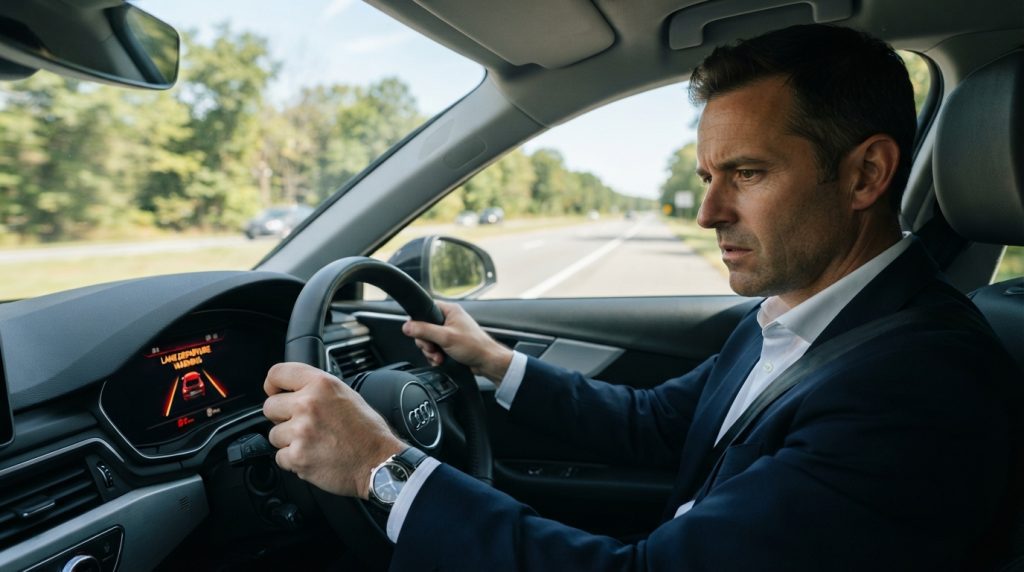
A driver may first notice a problem as a changed warning or an unfamiliar response from a feature. Take a new ADAS message or unusual system behavior seriously after windshield work, but remember that symptoms alone do not identify the cause. Pay attention to what changes.
Dashboard messages can flag a system fault
Your dashboard may show messages such as “Lane Departure Unavailable,” “Forward Collision Warning Disabled,” or “Cruise Not Available.” The wording differs by vehicle, but a new ADAS fault message deserves attention. Check the owner’s manual for its meaning.
A warning message may mean a feature is limited or unavailable. Do not assume the glass work caused it, since other faults can also affect driver aids. Tell the shop what the display says and when it appeared.
Some issues may not create a message, so keep an eye on how features behave. A quiet dash cannot confirm alignment by itself. Compare any new behavior with what you experienced before the service.
Changes in driving behavior can point to misalignment
Lane departure warning might activate while you are centered, or fail to activate when you drift toward a lane line. Either change can feel confusing, especially on a familiar road. Do not rely on the warning as a substitute for checking your position.
Adaptive cruise control may keep an inconsistent distance or change speed in a way you have not seen before. Emergency braking could occur unexpectedly or fail to respond as expected. These examples call for a professional check, not repeated testing in traffic.
Lane-keeping assistance may also pull the steering on a straight road. If a feature behaves differently, describe the setting and conditions to the shop. These signs can point to a calibration issue, but they do not diagnose its cause.
A technician can review the vehicle and check its stored faults and alignment. Record the message or behavior, along with when it happened. Then ask the provider to document the procedure and its result.
How Can You Check That Calibration Was Done Properly?
Before leaving a glass appointment, ask for a clear record of what calibration was required and completed. You should be able to see which procedure the shop used and its result. Clear records make it easier to address a concern later.
Use this checklist with the shop:
- Ask which calibration your vehicle requires.
- Confirm the shop used suitable targets and equipment.
- Ask whether pre-scan and post-scan results are available.
- Request written confirmation of successful calibration.
- Return for a code and alignment check if alerts or unusual behavior continue.
A pre-scan checks for faults before work, while a post-scan checks afterward. These results can help show whether the vehicle had stored or pending codes. Ask the shop to explain any code that remains or returns.
A verification may include checking stored or pending fault codes and comparing alignment with manufacturer specifications. The shop can repeat the required procedure if needed. Suitable conditions may include a level floor, controlled lighting, and enough space for target placement.
An extremely short service time does not prove poor work by itself. If your vehicle needs both static and dynamic calibration, ask how the shop completed both procedures. Match the record to the vehicle’s stated requirements, then keep it with your glass service paperwork.
Ask who performed the check and whether the result was successful. If a warning remains or a feature behaves oddly, report it instead of assuming the issue will clear on its own. Good records also help you understand the service estimate and possible insurance share.
What Affects Calibration Cost and Insurance Coverage?
The final bill depends on the vehicle’s procedure and the way the glass work is paid for. No dependable universal calibration price can be given, because vehicles may require different work. Your estimate should show what the shop plans to do.
| Situation | Possible cost components | What to confirm |
|---|---|---|
| Replacement paid out of pocket | Glass installation and any required calibration | Request an itemized estimate |
| Insurance-covered replacement | Policy terms and deductible may affect your share | Confirm whether required calibration is included |
| Vehicle requiring both methods | Static and dynamic procedures may both be needed | Confirm the quoted scope matches manufacturer requirements |
Calibration cost can depend on the vehicle and whether it needs static calibration, dynamic calibration, or both. Glass type and the work included in the estimate can also affect the total. Ask for an itemized quote that separates glass work from calibration when possible.
Some policies may cover required calibration as part of approved glass work, but coverage is not guaranteed. Your policy terms and deductible can affect what you pay. Call your insurer to confirm what the claim includes before approving work.
Compare the estimate with the vehicle’s required procedure, not just the glass price. Ask whether the quoted amount includes every needed calibration step and any related scan. Confirm the scope and payment details before authorizing the service.
What Should You Do Before Driving Away?
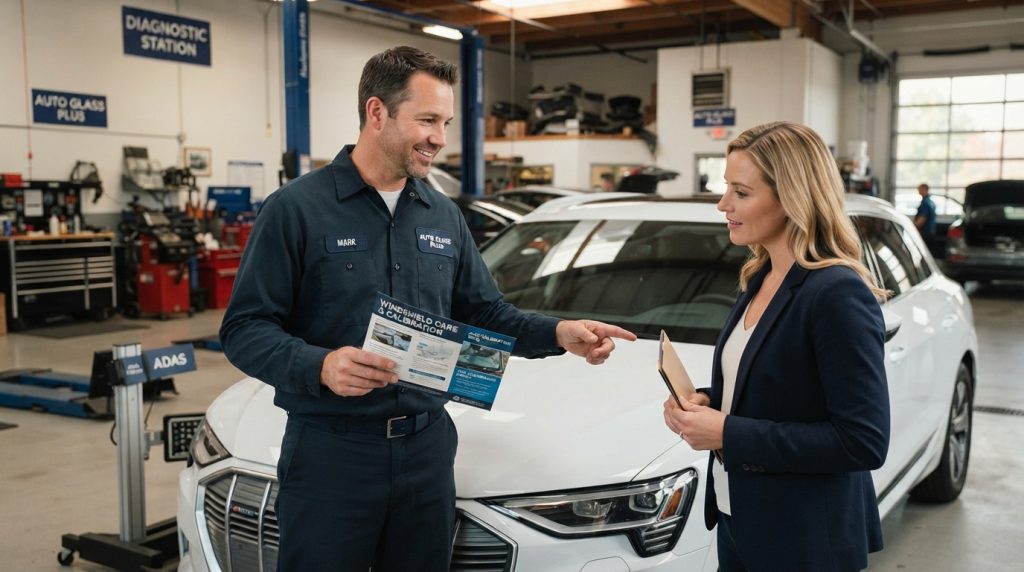
Before you accept the keys, make sure you know whether your vehicle required calibration and how completion was confirmed. Get the vehicle-specific plan and service record before relying on the camera-based features. A few direct questions can clear up what the shop did.
Take these four actions before and after service:
- Share your vehicle’s year, make, and model with the glass provider.
- Ask whether the manufacturer requires calibration and who will perform it.
- Confirm the estimate includes the required work and request documentation.
- Check for warnings or unusual feature behavior afterward, and arrange verification if needed.
Rain immediately after replacement is not, by itself, a reason to recalibrate. Follow the installer’s instructions for safe driving and care after installation. No universal wait time applies to every vehicle or installation.
Keep the service record with your vehicle paperwork, including any scan results or calibration confirmation. If a feature acts differently, report the change and ask the provider to check the vehicle. Do not try to correct camera alignment yourself.
Miracle Auto Glass is at Bandera Rd & Grissom and can be reached at (210) 680-2551. You can hire Miracle Auto Glass to fix windshield or other glass damage and ask for a vehicle-specific service plan. Call with your vehicle details and ask what the work includes.
Conclusion
Treat camera alignment as part of completing glass work, not as an optional guess. If your vehicle’s procedure calls for calibration after windshield replacement, make sure the shop completes and documents it. A missing warning light does not guarantee correct alignment.
Before relying on driver-assistance features, ask what your exact vehicle needs and keep the service record. If the camera or other glass is damaged, contact Miracle Auto Glass and hire the team to fix your windshield or other glass damage.