
How San Antonio Hailstorms Damage Auto Glass

How Auto Glass Insurance Claims Work in Texas

Condensation on glass can turn a calm drive into a safety issue in seconds. You need fast, practical steps to restore clear sight and stay safe in your car.
Windshield Fog Prevention means controlling cabin humidity, improving airflow, and keeping the glass clean so moisture can’t cling. Quick actions—turning on the defroster, running A/C to dry the air, or cracking a window—work immediately.
Longer-term habits also help. Clean your windows with a microfiber cloth, use anti-fog sprays or film, and maintain your climate system and cabin filter. These things cut down on repeat problems and save time on the road.
Fogging shows up in cold mornings, rainy commutes, and sudden temperature shifts. This short guide will explain why moisture forms, give driving techniques you can use now, and list simple products and DIY fixes that don’t need special tools.
If your glass has chips or cracks, they worsen visibility and the overall risk. For reliable repair or replacement, consider hiring Miracle Auto Glass to restore safe sight in your vehicle.
Key Takeaways
- Condensation reduces visibility fast—act quickly with defroster, A/C, or fresh air.
- Control humidity, boost airflow, and keep glass clean to prevent repeats.
- Short-term fixes and simple products work without special tools.
- Fogging can occur in any season but peaks with temperature swings.
- Repair cracked or chipped glass to maintain safe driving; contact Miracle Auto Glass for help.
Why Your Windshield Fogs Up in the First Place
Moisture builds when warm, damp air inside the cabin meets colder glass surfaces. This simple change of state—condensation—happens because water vapor turns into tiny droplets the instant it hits a cool surface.

Remember a simple rule: the larger the temperature difference between the air inside and the outside, the faster condensation appears. If you warm the cabin quickly while the glass stays cold, fogging spikes.
- Common humidity sources: wet jackets, umbrellas, damp shoes, and soaked floor mats release moisture steadily into air inside the car.
- Recirculate trap: using recirculated air keeps reusing the same humid air, so moisture builds instead of leaving the vehicle.
- Dirty glass worsens fogging: film, smoke residue, and grime give moisture more surface to cling to, so the same humidity produces heavier condensation.
To reduce repeat problems, you can: (a) dry the air, (b) warm the glass, (c) exchange humid cabin air for fresh outside air, or (d) remove wet items that add moisture. Understanding why the issue occurs helps you pick the right fix fast.
Windshield Fog Prevention Techniques You Can Use While Driving
A few quick controls on your car’s climate system will stop most interior condensation fast. Start with the defrost setting, raise fan speed, and direct airflow at the glass. Give the system 30–60 seconds to stabilize before making more changes.
Use your defroster the right way for fast, clear visibility
Set defrost + A/C on even in cold weather. The A/C pulls vapor from the air so the glass clears faster. Increase fan speed and let warm, dry air reach the window.
Turn on the air conditioner to pull water vapor out of the air
Run the A/C as a dehumidifier whenever the inside air feels damp. This simple way dries cabin air without special tools and speeds up clearing foggy windows.
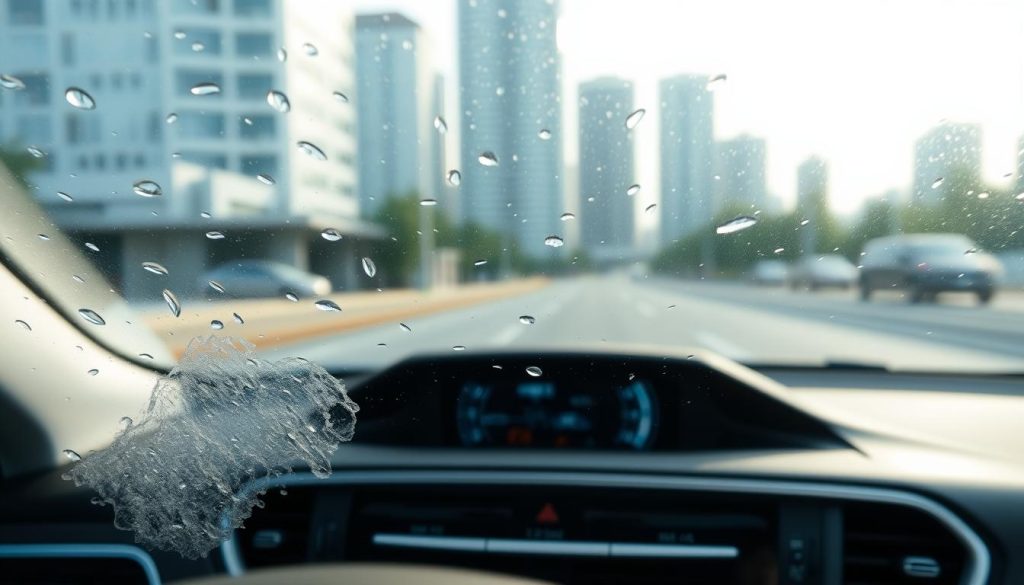
Switch from recirculate to fresh air
If the cabin smells or feels wet, toggle off recirculate. Fresh outside air pushes humid inside air out and reduces repeat condensation quickly.
Crack the windows and keep a microfiber cloth handy
Open a window about an inch or two to balance humidity without soaking the interior. Keep a clean microfiber cloth in the glove box for brief, streak-free wipes when it’s safe to do so.
Winter adjustments and quick troubleshooting
On cold mornings, start with defrost + fresh air. Remove snow and wet boots before driving to cut ongoing moisture. If condensation is inside, dry the cabin; if it’s outside, use wipers and washer fluid.
- Step-by-step fast clear: defrost → fan high → direct air → wait 30–60 sec.
- Use A/C to dehumidify, even in winter.
- Switch to fresh air when cabin feels damp.
- Crack windows slightly to equalize humidity.
For more tips on how to keep car windows clear on your daily commute, see ways to prevent your car windows from fogging.
Cleaning, Anti-Fog Products, and Long-Term Habits That Keep Windows Clear
Regular cleaning, targeted treatments, and moisture control form the best long-term strategy. Start by cleaning the inside of the glass with an ammonia-free cleaner and a lint-free microfiber. Interior film and oily residue make windows fog faster and stay smeared longer.
Practical cleaning and DIY anti-fog
Look for streaks, smoker’s film, or greasy spots and remove them first. For a simple anti-fog layer, mix 2 parts water with 1 part vinegar in a spray bottle or use a 1:1 water and isopropyl alcohol blend. Apply lightly, then buff dry.
Products, hacks, and system upkeep
Store-bought anti-fog sprays and interior film offer predictable results when used per label. Common hacks—shaving cream, Vaseline, or kitty litter in a sock—can help but use caution to avoid residue or scratches.
Ongoing habits that matter
Replace the cabin air filter and keep HVAC airflow strong to move drier air across the glass. Remove wet gear, use silica packs or compact dehumidifiers, and park in a garage or under a carport when possible.
Clean first, add a thin anti-fog layer, then maintain airflow and moisture control for clear windows over time.
Conclusion
Clear sight starts when you control cabin humidity, temperature, and airflow. Condensation forms when warm, moist air meets cold glass, so your goal is to dry the air, warm the pane, and boost ventilation.
Fast playbook: engage defrost, run the A/C to dehumidify, switch to fresh air intake, and crack a window slightly when safe. These steps clear visibility within a minute or two.
For long-term results, clean interior glass regularly, apply a thin anti-mist layer if desired, and replace the cabin filter to keep HVAC airflow strong. Remove wet shoes, coats, and damp mats to cut moisture at the source.
Safety note: consistent care reduces sudden fog and keeps visibility stable in rain, cold mornings, and rapid weather shifts. If your glass is chipped or cracked and affects sight, hire Miracle Auto Glass to repair or replace your windshield and other vehicle glass so you can drive with confidence.