
Why a Lifetime Warranty Matters for Auto Glass Repair

Texas Laws About Driving with a Cracked Windshield
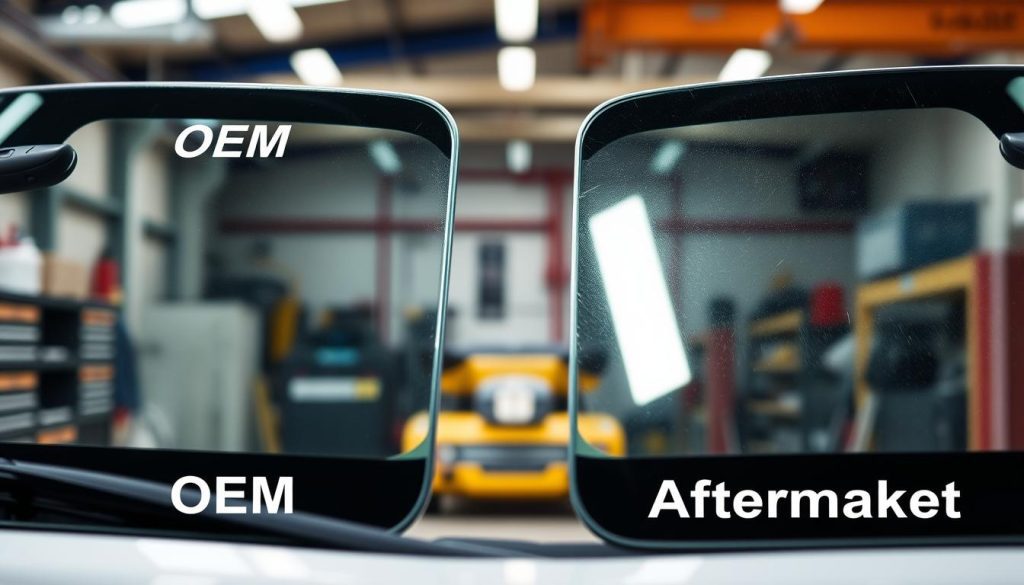
You’re choosing between OEM Windshield Glass and aftermarket options, and the right pick depends on your vehicle, budget, and safety needs.
We’ll compare the two main types and explain the key things to weigh in the United States: cost, quality, availability, and safety outcomes after installation.
Remember: the material matters, but the installation and ADAS calibration often decide the real-world result.
Use this simple framework as you read: (1) what each option means, (2) how they stack up on price, fit, and clarity, and (3) how driver-assist systems and safety standards change the choice.
We’ll also clear up common myths — like “one is always safer” or “aftermarket never fits” — and note that reputable products and skilled installers can meet the same specs.
Next, you’ll find clear definitions so you know what you’re buying before comparing price tags and insurance impacts.
Key Takeaways
- Decide based on your vehicle’s safety systems, budget, and availability.
- Installation quality and ADAS calibration often matter more than the part label.
- Reputable aftermarket parts can match OEM fit and clarity when sourced correctly.
- Insurance coverage frequently affects which option you can afford.
- Use the three-step framework to compare price, fit, and safety before you choose.
OEM Windshield Glass vs Aftermarket Glass: What They Mean for Your Vehicle
Start by learning what each replacement option actually means for your car and why that matters.
What “original equipment manufacturer” really means when you get windshield replaced
Original equipment manufacturer refers to the same supplier that provided the part when your vehicle left the factory. When you choose this route, the part is branded and distributed through the automaker’s channels. Dealerships and their suppliers commonly order this original equipment for repairs.
What aftermarket windshields are and who makes them
Aftermarket parts are made by independent manufacturers and distributors who specialize in replacement auto parts. Big global suppliers and specialty producers both supply aftermarket glass, and some firms produce components for automakers and for the replacement market.
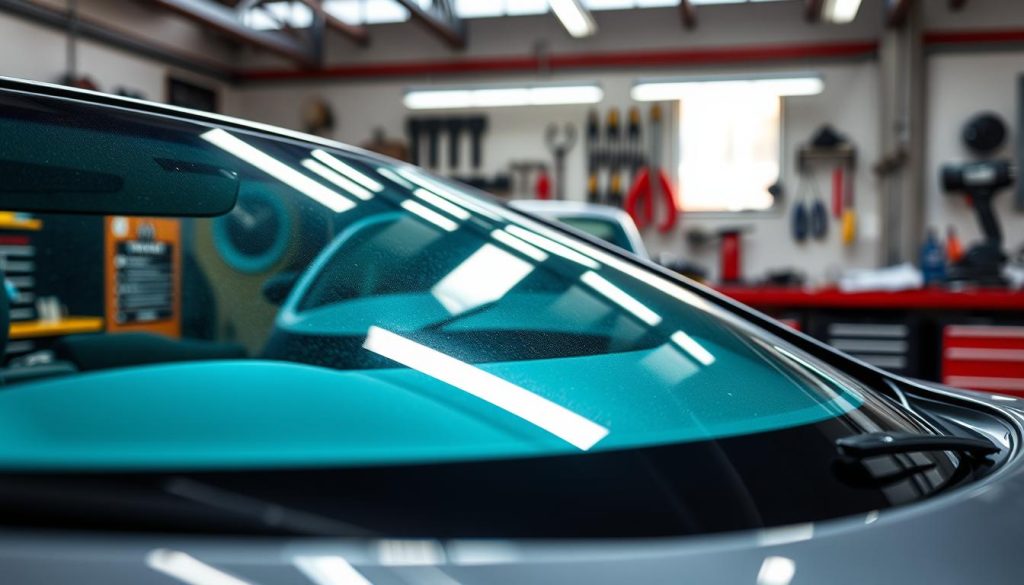
How both types of glass can be built to the same specifications
Many aftermarket products meet the same dimensional and optical specs as original equipment. That includes curvature, thickness, and clarity. In practice, quality depends on whether the part was made to the right standard and whether installers follow safe procedures.
- Key build point: most windshields are laminated—two glass layers bonded with a PVB interlayer.
- Typical thickness: ranges roughly 4.76mm to 6.35mm, which affects strength and sound damping.
- Takeaway: the label matters less than correct specs, certified suppliers, and proper installation.
How OEM and Aftermarket Compare on Cost, Quality, and Availability in the United States
Your outlay, timeline, and installer quality usually decide whether a factory part is worth the premium. Expect a real-world price gap: factory-brand replacements commonly run about 25%–100% higher than aftermarket options. That gap reflects branding, dealer channels, and logistics—not just the raw part cost.
Price and what you actually pay for
You’re paying for sourcing, limited supply for some trims, and dealer markup when you choose a factory option. Aftermarket parts often lower your upfront price and cut lead times because they’re stocked widely.
Quality factors that matter most
Focus on clarity, thickness, curvature, and precise fit. Optical distortion, wrong curvature, or imperfect sealing affects sightlines and noise. Fit influences structural support and water sealing more than a label does.
Safety standards, installation, and insurance
Materials can meet federal safety standards whether factory or aftermarket, but adhesive choice, cure time, and proper bonding are critical to safety outcomes.
- Availability: dealer ordering can delay repairs; aftermarket often speeds replacement.
- Insurance: your policy may require factory parts, allow aftermarket, or make you pay the difference—check coverage before you commit.
- Provider matters: a skilled service company with documentation and warranty beats a label if installation is poor.
Next: the technical factors like ADAS sensors and recognized safe-replacement standards often outweigh brand choice for newer vehicles; learn more about those details in the next section or by visiting a detailed guide.
Read the full guide to compare options and match your insurance coverage to the best replacement path for your vehicle.
ADAS, Safety Standards, and the Installation Details That Decide the Outcome
For cars with forward-facing cameras, small alignment errors after replacement can disrupt safety functions.
ADAS cameras and sensors: these systems rely on tight tolerances. After any windshield replacement, recalibration is critical whether you choose oem or aftermarket parts.

Why recalibration matters
Recalibration verifies camera and sensor alignment so lane-keeping, collision warnings, and adaptive cruise controls work as designed.
Even when a replacement matches specs, removing or reinstalling equipment can shift mounts by tiny amounts. Those shifts matter for performance and safety.
Standards and safe replacement practices
The Auto Glass Safety Council (AGSC), formerly AGRSS, created the AGRSS Standard (ANSI/AGSC/AGRSS 003-2015) to reduce risks from poor replacement.
- Process discipline: correct materials, prep, adhesive choice, and cure time.
- Technician training: documented steps and post-install checks.
- Provider proof: ask what standards the service follows and how ADAS steps are handled.
Bottom line: the better option is the replacement that matches specs and is installed to recognized standards with ADAS handled correctly. Ask suppliers and service shops for calibration records and written procedures before you get windshield work done.
Conclusion
Choose the part and process that best protect your car’s safety systems and sightlines.
OEM glass can make sense when you want automaker-channel parts or branding. High-quality aftermarket glass can match performance if it meets the right specs.
Remember: the most important factors are correct fit and optical clarity, proper installation practices, and ADAS recalibration when your vehicle needs it.
Quick how-to checklist: verify the glass meets specs, confirm the shop follows safe-replacement steps, and ask for written ADAS calibration records.
Ready for a safe, reliable repair? Hire Miracle Auto Glass to fix your windshield or other auto glass damage with professional installation and documented calibration.