
Why Proper Windshield Installation Matters for Vehicle Safety
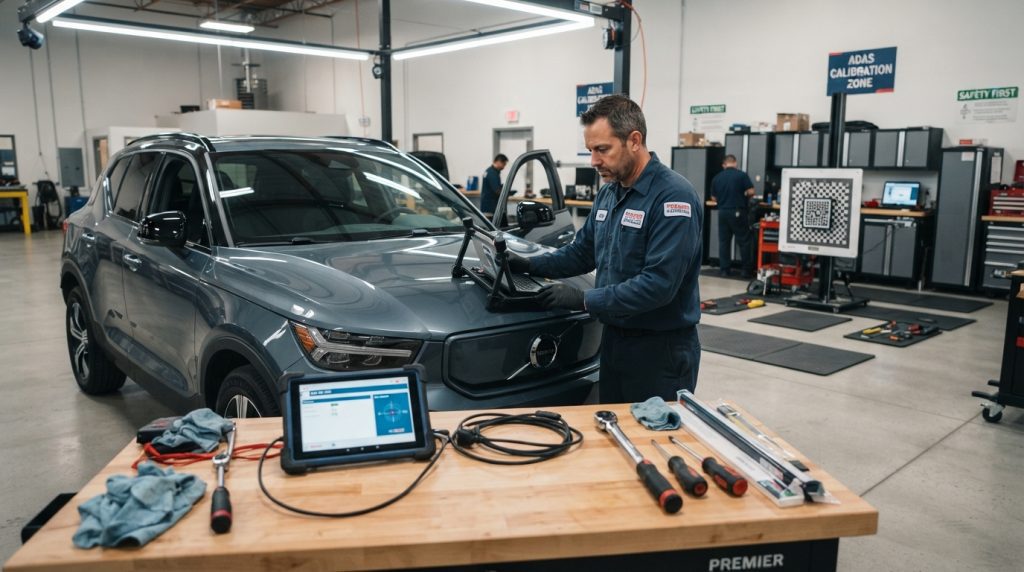
A windshield replacement can leave you with a second decision beyond where to get the glass repaired: where the vehicle should be calibrated. The choice between mobile ADAS calibration vs in shop service is about more than convenience. The vehicle’s needs and the work site can affect which option fits.
You may want service at home or work, especially when damaged auto glass has disrupted your day. Yet some procedures need a setting that a driveway or parking lot cannot provide. Your vehicle’s calibration needs should guide the choice.
Key Takeaways
- Calibration aligns cameras and sensors with the vehicle’s requirements.
- Not every repair disturbs the parts that need calibration.
- Site conditions can affect whether mobile service is suitable.
- A controlled in-shop calibration center may suit complex procedures.
- Ask about vehicle compatibility, price, and expected appointment time.
- Choose a setting that supports the required work, not convenience alone.
First, it helps to know what calibration corrects and which repairs can make it necessary.
What Does ADAS Calibration Correct, and When Is It Needed?
A camera or sensor that has shifted from its required position may no longer provide the information its safety feature depends on. ADAS calibration means adjusting a vehicle’s sensors and cameras so they are correctly aligned and function as intended. Calibration may be needed when service disturbs those parts.
That matters because driver assistance systems use sensor data to guide features such as lane-keeping assistance, adaptive cruise control, and automatic emergency braking. If a camera points off course, a feature may respond to the wrong lane or distance. Correct alignment supports vehicle safety.
What calibration checks and adjusts
A technician checks whether the vehicle’s cameras and sensors sit in the positions set for that model. The required calibration can also check how the system reads targets or road features. The goal is to help the driver assistance features use accurate information.
Calibration is not a repair for every warning light or system fault. A damaged part, wiring issue, or other problem may need diagnosis first. The vehicle’s procedure and the parts affected determine the right next step.
Repairs and service that can shift sensors
Calibration may follow work that moves, removes, or replaces a camera or sensor. Examples include:
- Windshield replacement
- Collision damage repair
- Bumper repair
- Suspension work
- Wheel alignment
- Maintenance that disturbs sensors or cameras
The repair name alone does not decide whether calibration is needed. A windshield replacement, for example, can affect a camera mounted near the glass, while unrelated work may leave sensors untouched. The technician should follow the vehicle’s procedure and check which parts the repair disturbed.
That need leads to the work-site conditions that can affect calibration accuracy.
Mobile ADAS Calibration vs In Shop Calibration: Which Conditions Matter?
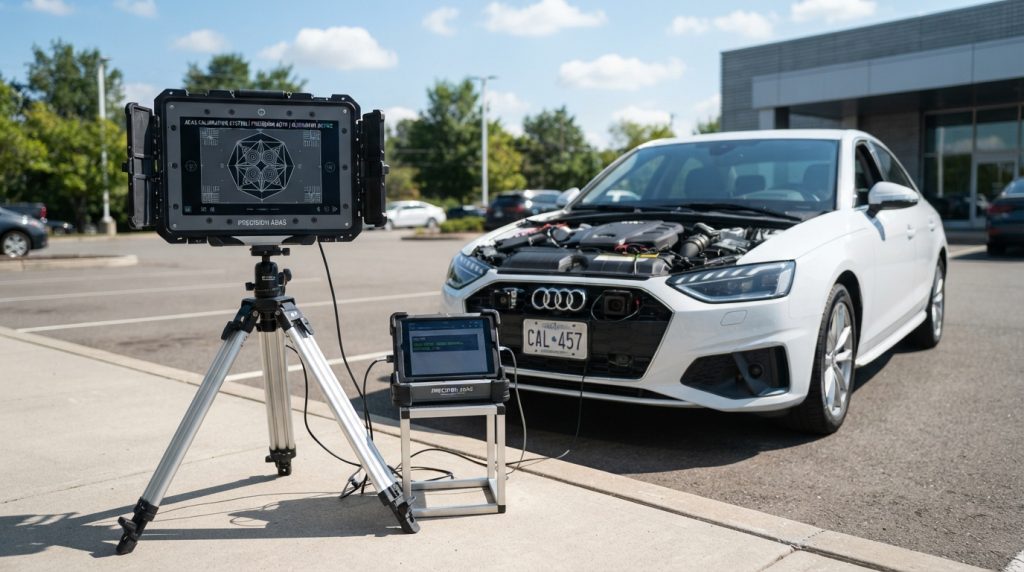
A mobile appointment is only practical if the place where the vehicle is parked meets the calibration procedure’s requirements. The work may need enough space, good lighting, and a clear area around the vehicle. Applicable procedures require a completely level surface.
Actual site conditions matter more than the service label. A technician can assess whether a driveway or workplace lot suits the procedure, but the location must meet its rules. Mobile ADAS service is not automatically inaccurate.
Conditions a mobile technician must manage
Calibration equipment may need a set amount of clear space in front of or around the vehicle. The procedure may also rely on steady lighting so cameras can read targets as intended. Parked cars, walls, or other obstacles can limit the setup.
Outdoor work can face changing temperature, wind, uneven pavement, or shifting light. These conditions can interfere with precision when they affect the required setup. A technician should not treat a convenient parking spot as suitable without checking the procedure.
Some procedures also include a road test. A route with clear lane markings and suitable weather may be needed, so the road conditions matter as well as the parking area.
What a controlled calibration bay provides
A properly equipped in-shop calibration center offers a repeatable work area. Its certified level floor can meet the surface needs of applicable calibrations, while the fixed setup helps keep the vehicle and targets in position.
That does not mean every shop can handle every vehicle. The center still needs compatible calibration equipment and the right procedure for the vehicle’s systems. Ask whether the facility can support the specific work required.
When a mobile site cannot meet the rules, a controlled bay may be the better choice. The same conditions also shape what each service appointment looks like in practice.
How Do Mobile and In-Shop Services Differ in Practice?
The clearest everyday difference is whether the technician travels to your vehicle or you take the vehicle to a calibration facility. Mobile calibration brings the service to a home or workplace, while in-shop service takes place at a shop, dealership, or dedicated center. Mobile service avoids a trip to the facility.
The choice also changes how the work area and calibration equipment are arranged. The table compares the basic service details, not whether a specific setting suits a procedure. That depends on your vehicle and its calibration needs.
| Service detail | Mobile calibration | In-shop calibration |
|---|---|---|
| Where the vehicle is serviced | Home or workplace | Shop, dealership, or dedicated facility |
| Customer travel | No trip to the facility | You bring the vehicle in |
| Workspace arrangement | Set up at the appointment site | Permanent work area |
| Calibration equipment position or storage | Equipment brought to the job | Setup kept in the facility |
With mobile service, the technician brings tools and equipment to the appointment and arranges them at the site. That can save you a drive, but the work still depends on a suitable location and a compatible setup.
At a shop or center, the vehicle stays in a permanent work area. The facility keeps its calibration equipment there, and you arrange to bring the vehicle in. A dealership or repair shop may also offer related vehicle service.
Use these practical differences as background for deciding which option fits your vehicle’s specific calibration needs.
Which Calibration Option Fits Your Vehicle and Repair?
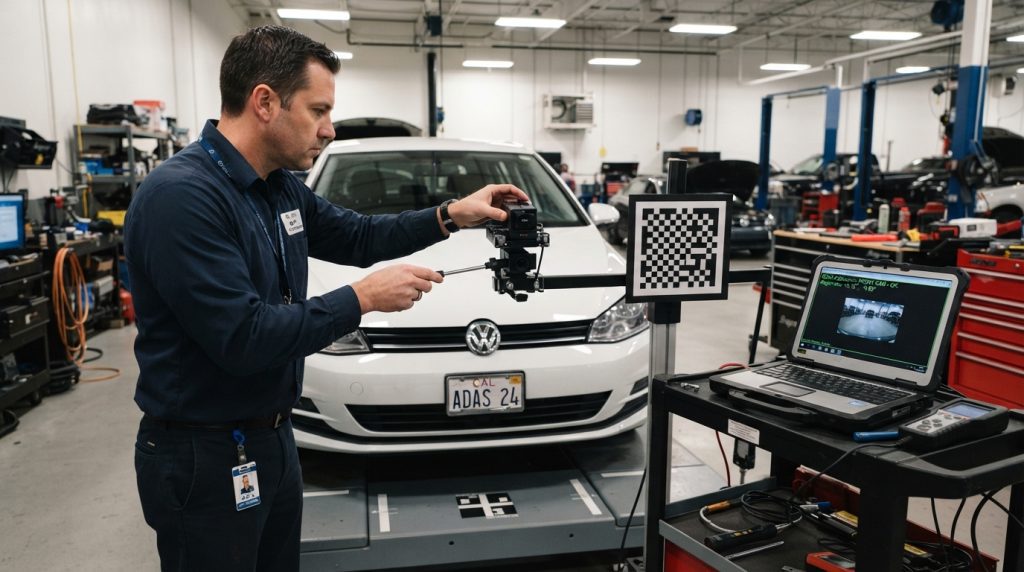
A vehicle that needs a road-based dynamic check may be a different case from one requiring a complex static procedure and specialized targets. The required procedure should guide your choice. Some basic static and dynamic procedures can be done on-site when the vehicle, equipment, and conditions allow it.
Static calibration uses targets or other set points while the vehicle stays in place. Dynamic calibration may include a road test. The vehicle’s instructions decide which method applies and what the service provider needs.
When a mobile appointment may be suitable
Mobile calibration may work when the technician has compatible tools and the site meets the procedure’s requirements. Some technicians use diagnostic tools, target boards, or laser systems at the appointment. They may also road-test the vehicle when the procedure calls for it.
A road test needs suitable conditions and clear lane markings. Ask whether the provider can complete the required check for your vehicle, rather than assuming every mobile setup handles every system.
When an in-shop center is the safer choice
Some newer or high-end vehicles need equipment that a mobile setup cannot accommodate. Complex ADAS systems may call for a specialist facility with more diagnostic resources. Repeated calibration failures can also point to an issue that needs deeper testing.
A failed attempt does not always mean the vehicle needs another appointment in the same setting. A damaged sensor bracket, diagnostic fault, or network issue may be the cause. A technician may need to find and repair that problem before calibration can succeed.
Once the procedure and service setting fit, compare the likely cost and appointment time.
What Affects Calibration Cost and How Long It Takes?
There is no single price or appointment length that applies to every vehicle’s calibration. Mobile ADAS calibration vs. in-shop cost depends on the vehicle and required procedure. Mobile service is often less expensive, but no reliable dollar amount applies to every job.
Specialized equipment and labor can make an in-shop appointment cost more. A vehicle-specific quote is the best way to learn the price for your repair and calibration services. Ask what the quoted work includes.
Why prices vary between mobile and in-shop service
Mobile service providers often have lower overhead, which can make their service less expensive. Shops and centers may have higher costs for equipment and labor. Those general patterns do not set the price for a particular vehicle.
Ask the provider to explain the work included in the quote. The estimate may change if the vehicle needs diagnosis or repair before calibration. These factors can affect the price:
- Vehicle make and model
- Required calibration procedure
- Whether the site meets procedure requirements
- Whether diagnostics or repairs are needed
What can change the appointment time
One estimate for some mobile appointments gives a typical duration of 30 minutes to 1 hour. That estimate is not a guarantee for every vehicle or procedure. The required calibration and any extra checks can extend the visit.
Diagnostics or repairs may add time before the calibration can be completed. Ask the provider how long the planned procedure usually takes for your vehicle, and whether the estimate includes troubleshooting. Confirm the procedure, price, and expected duration before choosing a provider.
What Should You Verify Before the Technician Starts?
Before work begins, confirm that the provider can perform the procedure your specific vehicle requires. Compatibility comes first, since not every mobile setup supports every vehicle or ADAS system. The equipment and software must match both the vehicle and the required procedure.
Calibration centers may use specialized targets, laser systems, diagnostic tools, and software. Trained technicians follow manufacturer-specific procedures, but there is no single best ADAS calibration system for every vehicle. Ask about the exact tools and support available.
| What to check | Why it matters | What to confirm |
|---|---|---|
| Vehicle and procedure compatibility | Systems and procedures vary by vehicle | Provider supports your model and required procedure |
| Technician experience and diagnostic capability | Faults may need diagnosis before calibration | Technician can run needed diagnostics |
| Site or facility conditions | Calibration depends on procedure conditions | Work area meets the vehicle’s requirements |
Ask whether the provider has the tools to check for faults if calibration does not pass. A failed result may call for diagnosis, not repeated attempts with the same setup. The right answer should fit your vehicle’s system and the work involved.
Choose the setting that meets your vehicle’s needs, then contact a glass service provider to plan the repair and calibration.
Conclusion
Choose the calibration setting that can meet your vehicle’s requirements, even if that means prioritizing a facility over a more convenient appointment. The right procedure and suitable conditions matter more than location alone.
Before arranging auto glass service, ask whether the provider can handle your vehicle’s calibration needs. Miracle Auto Glass can fix your windshield or other glass damage. Contact the team at (210) 680-2551 for service at Bandera Rd & Grissom.