Rear Defroster Lines Not Working: Is It the Glass or the Grid?
Car window wind noise usually means air is moving through a gap around the glass, seal, or door, but the sound alone cannot identify which part needs attention. The window glass run channel is the lined track that guides and cushions the side glass as it moves. A gap, compressed weatherstrip, or poor fit can turn airflow into an unexpected whistle or rush. The sound may seem to come from another part of the cabin, especially at higher speeds.
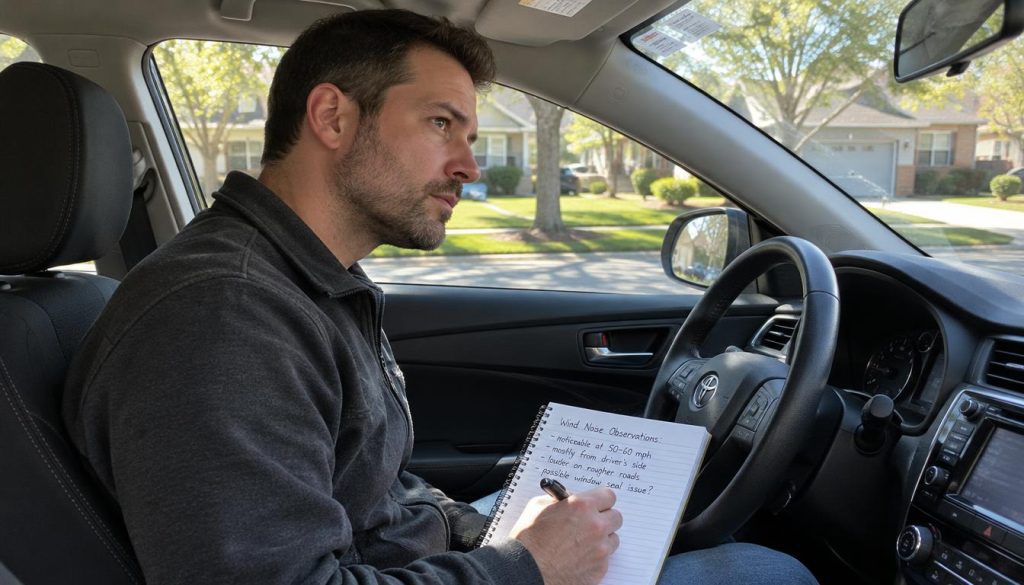
As the driver, you can start by noticing when the sound changes, not by guessing from where it seems loudest. Air can travel inside and outside the door before you hear it. Use the sound and the conditions together to narrow down the likely area, then inspect only when parked. Note the speed and conditions when you first hear the sound, and make any observations after you have stopped.
Key Takeaways
- A new whistle or hiss can mean air is passing through a gap.
- A loud sound may seem to come from the wrong area.
- Road speed and crosswinds can change how noticeable the noise feels.
- Park before checking the door, glass, or weatherstrip.
- Ask a shop to identify the opening before replacing parts.
What Causes Wind Noise at Higher Speeds?
A new whistle or rushing sound at higher road speeds often means airflow is finding a gap, while buffeting can come from pressure pulsing through an open window. The sound pattern can help you sort likely causes, though it cannot name a failed part. A steady background whoosh can be normal, but a new whistle or hiss deserves attention.
A car making wind noise when accelerating may simply be gaining road speed, which raises air pressure around the vehicle. Acceleration itself does not prove that a vehicle part has failed. A car that sounds like a wind tunnel may have a large opening, an unseated panel, or strong buffeting from an open window.
How Seals and Glass Create a Whistle
Weatherstripping can harden, crack, flatten, or pull loose over time. Heat, cold, UV light, and repeated compression can wear it down. Air then slips past the seal and creates a hiss or whistle.
Glass that does not seat fully against the door frame can leave a narrow gap. A distorted window glass run channel can also keep the side glass from moving or resting evenly. These gaps may be small, yet airflow can make them easy to hear.
Why Wind Noise Changes at Speed
Higher road speed pushes more air against the vehicle, so a small leak can become louder. Crosswinds can shift airflow across the body and make the sound appear or disappear. That change is a clue, not a diagnosis.
An open window can create rhythmic buffeting as pressure pulses inside the cabin. A small opening in an opposite or rear window may reduce that pulsing. Do not mistake this effect for a seal failure.
How to Compare Cars for Low Wind Noise
Compare vehicles on similar roads, at similar speeds, and with similar wind and window conditions. A quiet drive on a calm road does not predict how another car will sound in a crosswind. Roof accessories and loose exterior parts can also add a hum or whistle.
Body style alone cannot promise a quiet cabin. Even cars of the same model can sound different if their seals, glass fit, or accessories differ. Treat a sound that changes with crosswinds as a clue to repeat the observation in comparable conditions, not proof of a particular defect.
How to Diagnose Car Window Wind Noise
A whistle or hiss that changes with window position is more useful than guessing from where the sound seems loudest. Window position can narrow the area, but it does not guarantee a diagnosis. Sound can travel through the cabin, so the loudest spot may not mark the air entry point.
How to Locate Wind Noise in a Car
Ask a passenger to listen from the front and rear seats while you keep your attention on driving. Have them note when the sound starts and whether it changes with road speed or wind. A passenger can compare sides without distracting you.
In 2026, if noise remains when you lower a window slightly, the mirror base, A-pillar trim, or roof ditch molding may be involved. If the sound disappears, the glass run channel or upper door-frame seal is more likely. Treat either result as a clue, not proof.
Distinguishing Airflow From Road and Mechanical Noise
A whistle or hiss often points to moving air. Tire noise tends to change with the road surface, while a failing wheel bearing can grow louder when turning one direction. Exhaust noise remains when you roll down a window.
A low roar can point to a larger leak or an unseated panel. Buffeting is a rhythmic pressure change, often tied to an open window. Compare the clues before deciding which area to inspect.
| Sound or test | Likely clue | What it helps distinguish |
|---|---|---|
| Whistle or hiss | Air passing through a gap | Airflow noise from tire or exhaust sound |
| Low roar or buffeting | Large leak, loose panel, or pressure pulse | Steady air noise from rhythmic cabin pressure |
| Noise changes when window lowers slightly | Glass run channel or nearby trim may be involved | Window-area noise from other speed-related sound |
Have a passenger record the sound’s location and changes while you keep your attention on driving.
Which Checks Can You Do Safely at Home?
Park the vehicle, switch off the engine, and inspect the closed door and window edges before trying any adjustment. Visual checks can reveal damage or uneven contact without taking anything apart. These observations are clues, not proof that a part must be replaced.
| Parked check | What to observe | What the result may suggest |
|---|---|---|
| Inspect door and window edges | Torn or displaced weatherstrip | Seal damage or poor placement |
| Look at closed edges in daylight | Light showing through a closed edge | A gap or uneven fit |
| Paper-slip test around opening | Paper slides out with little resistance | Weak seal compression in that area |
In 2026, close the door on a thin strip of paper at intervals around the opening. Resistance should feel consistent; a section that releases easily may have weak seal compression. Daylight can help reveal light at closed door or window edges.
Keep a short record of the conditions:
- Note the speed range when the noise starts.
- Note whether the wind is calm or gusty.
- Record which windows or roof panels are closed.
- Note any recent glass or door work.
Stop at visual and paper-contact checks if anything appears bent, loose, or difficult to latch.
Fixing a Door Seal or Window Fit
If dirt or residue is stopping a weatherstrip from contacting evenly, cleaning and drying the seal and its painted contact surface is a sensible first step. Gentle care can restore contact when grime is the only problem. A clean seal will not correct glass or door misalignment.
How to Fix Wind Noise From a Car Door
Use mild soap and water on the weatherstrip and the painted surface it touches. Dry both areas before closing the door. Dirt or residue can keep the seal from making even contact.
A torn, crushed, displaced, or persistently weak seal may need reseating or replacement. Weatherstripping is made for a specific vehicle, and some seals are bonded in place. A universal part or household adhesive may not fit or hold properly.
Do not use petroleum-based products on the seal. Do not force the door or glass into position. Those steps can damage parts without fixing the cause.
When Window Glass Needs Adjustment
Glass that does not sit correctly may need attention from an auto glass or body professional. A worn window regulator, the part that moves the glass, can also affect how it seats. A shop can check the fit before changing the seal.
Vehicle-specific seals may differ in shape and attachment. A bonded seal may require a repair method made for that vehicle. Do not assume a seal that looks similar will fit.
A noise near the door does not show which part has failed. Do not replace a seal solely because the noise sounds as if it comes from that door.
When the Sound Comes From Trim, Mirrors, or Alignment
A whistle near a side window can come from the mirror base, nearby trim, an accessory, or door fit, even when the glass and seal look intact. Nearby parts can change airflow and mimic a window leak. Visible looseness or poor door fit calls for a parked check, not a road-side adjustment.
Mirror Bases, Trim, and Roof Accessories
A gap around a mirror base can make a whistle or hum near the front side glass. Loose A-pillar trim or roof ditch molding can make a similar sound. Roof racks, crossbars, cargo boxes, bike carriers, and antennas can also disturb airflow.
Check for visible looseness only while parked. Follow the vehicle or accessory instructions before removing or tightening anything. An accessory that sits differently can change the sound at speed.
Door and Body Alignment
Uneven panel gaps, a door edge that sits proud, or a door that needs extra force to latch can point to a fit issue. Ask a body technician to assess those signs. Do not bend a door, hinge, or frame to change the fit.
In 2026, a passenger’s gentle pressure on the door during a safe road test may change the noise. That can point to hinge, striker, or latch adjustment rather than a failed seal. The driver must not press on the door while driving.
Comparing Cars for Low Wind Noise
Compare cars at similar speeds on the same kind of road and in similar wind conditions. A calm test drive cannot fairly compare with a gusty one. Keep windows and roof panels in the same positions during each drive.
Listen for steady whoosh, a sharp whistle, or a low hum. Note whether roof accessories are fitted, since they can affect the result. No body style or model guarantees a quiet cabin in every condition.
A door that needs force to latch should not be treated as a seal problem alone. Leave hinge, striker, latch, and body adjustments to a qualified technician.
When Should a Shop Inspect the Glass or Door?
Ask for a specific finding if the noise persists, a door will not latch properly, or you also notice water entry. Professional testing can find an opening that is hard to see. Seek an assessment after an accident or glass work if the noise began afterward.
Give the shop details that help recreate the sound:
- Approximate speed when the noise begins.
- Wind conditions during the sound.
- Window position when you hear it.
- Recent door or glass work.
- What you already checked.
In 2026, a shop can use a water test or smoke test to find an opening hidden from view. After a seal adjustment, a repeat road test on the same road and at the same speed helps check the result. Turning off the climate fan reduces variables, while crosswinds can make the noise come and go.
Before approving a replacement, ask which opening or part the diagnosis identified and how the repair result will be checked.
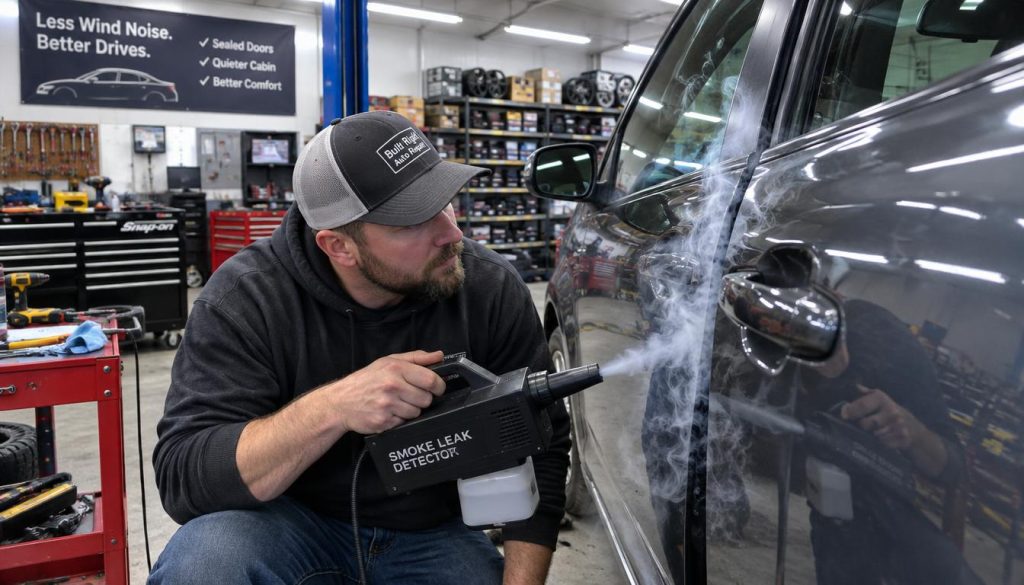
A smoke test can reveal leaks around the door seal or alignment. Have a shop inspect the glass and door if wind noise persists.
FAQ
Why does my car sound like it’s whistling?
Can wind damage a car door?
Why does my window make noise when the wind blows?
Why is my windshield making noise while I’m driving?
Is wind noise normal at highway speeds?
Does wind noise mean water is leaking into the car?
Conclusion
A repeatable symptom and a specific finding are more useful than replacing parts based on where the noise seems loudest. Note the conditions and ask a shop to explain what opening or part its inspection found. That keeps the repair tied to evidence, not a guess about which door sounds loudest.
If the sound began after glass work, mention that timing when you ask for an inspection. For a door that will not latch, seek help before driving farther. A clear finding gives you a better basis for deciding what repair to approve.
Hire Miracle Auto Glass to fix your windshield or other glass damage. Call (210) 680-2551 or visit 6730 Poss Rd, San Antonio, TX 78238.