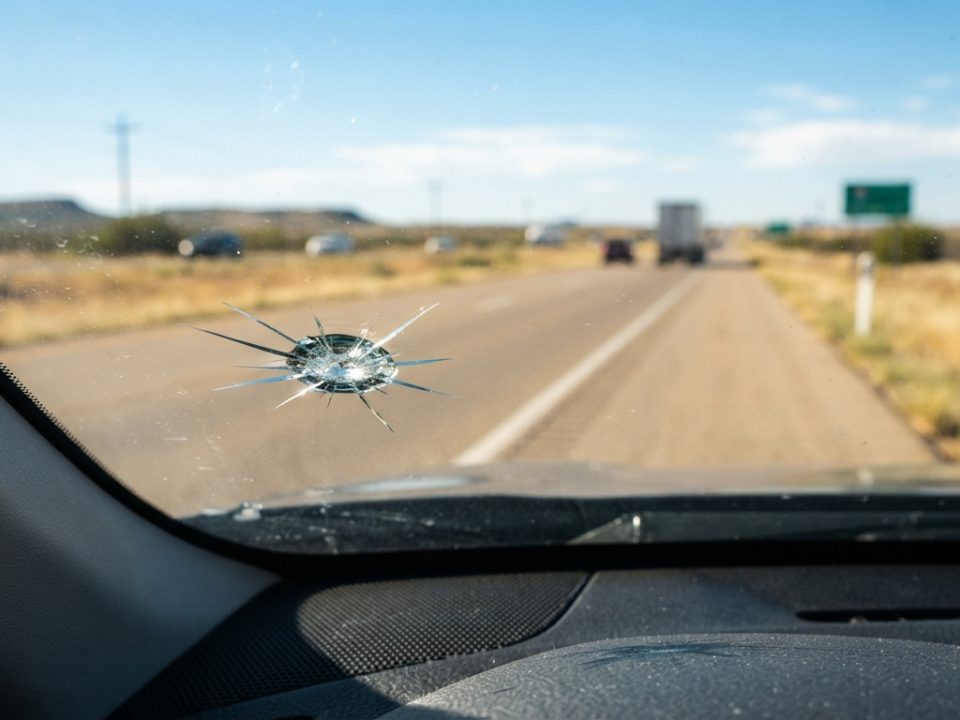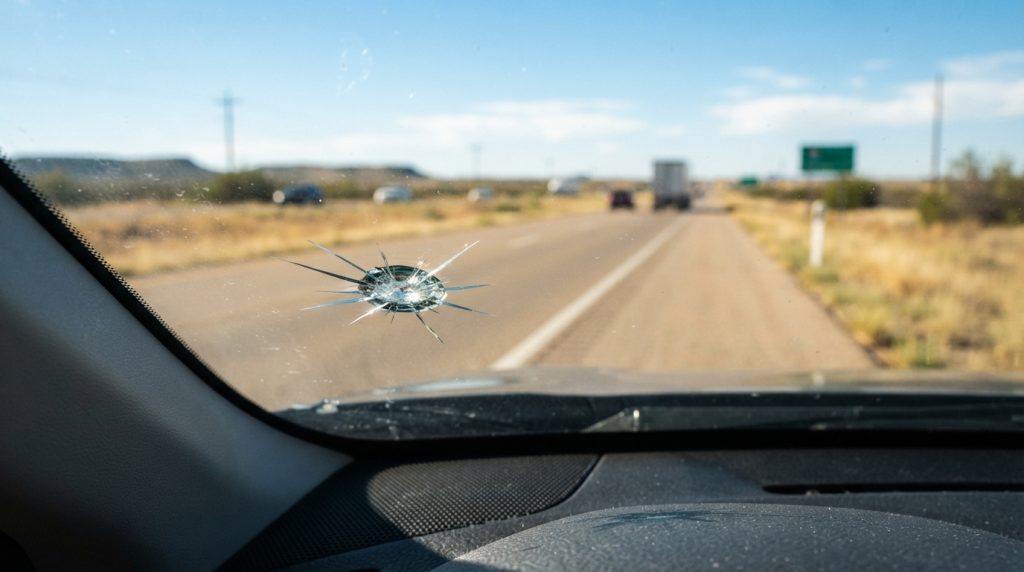
Why You Should Check Your Windshield Before a Texas Road Trip
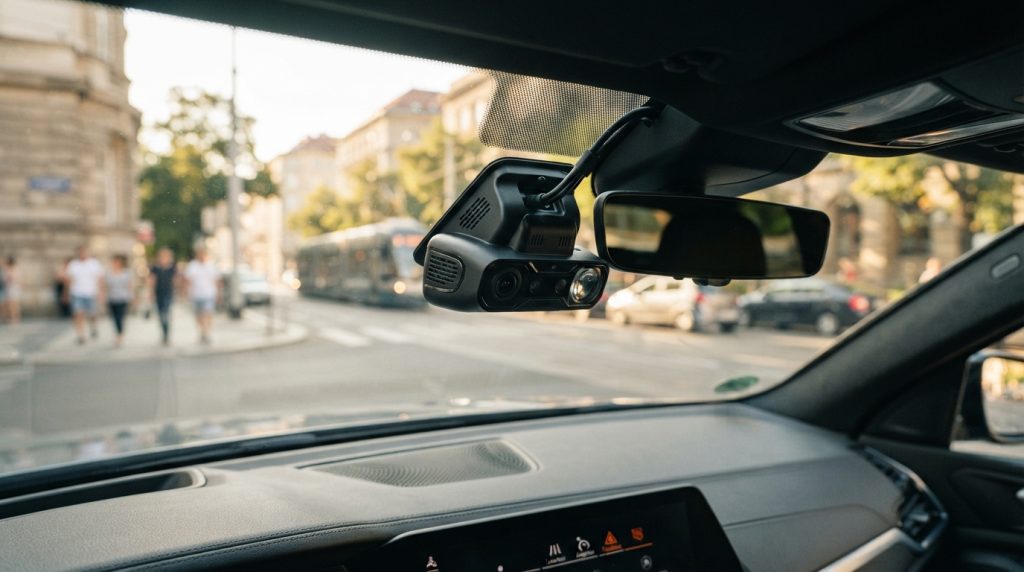
Recent glass, body, or suspension work can make an ADAS check necessary, even if your vehicle still seems normal. A windshield camera or radar sensor may shift during repair, changing how your driver assistance features read the road. Some ADAS calibration warning signs are subtle, and a dashboard may stay quiet even when sensor aim is off.
A warning can point to a fault, but a misaligned system may not show one. A changed alert or unexpected response deserves attention, though no single symptom proves the cause. You can note what changed, consider recent work, and ask for an inspection that follows your vehicle maker’s procedure. Start with what calibration checks, then use the signs you notice to decide what to do.
Key Takeaways
- Recent glass, body, or suspension work may affect sensor aim.
- A warning message is useful, but a quiet dashboard does not rule out an issue.
- Changes in alerts or feature behavior call for inspection, not guesswork.
- Your vehicle maker’s procedure determines whether calibration is needed.
- Keep a record of repairs and unusual driver assistance behavior.
What Is ADAS Calibration, and When Is It Needed?
ADAS calibration is the process of aiming and validating a vehicle’s cameras and sensors so driver assistance features operate within the vehicle maker’s specifications. It helps check systems such as automatic emergency braking and lane keeping. Accurate sensor aim matters because the vehicle uses these parts to read the road.
Calibration may be needed when a repair or change affects a sensor, its mount, or the vehicle’s geometry. The vehicle maker’s procedure determines when calibration is required, not a general rule that fits every model.
What ADAS calibration checks
ADAS uses cameras, radar, and other sensors to support driver assistance systems. A windshield camera may sit behind the glass, a radar sensor may sit behind a bumper, and parking sensors may sit in body panels.
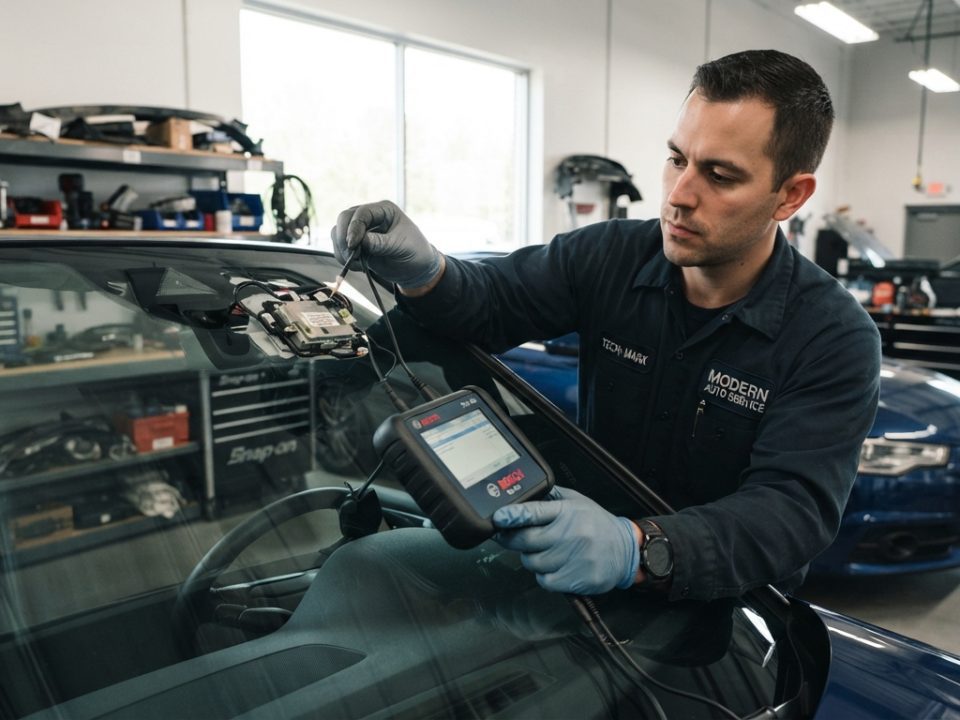
The calibration procedure checks whether sensors point and respond as the vehicle maker specifies. That aim helps the vehicle judge lane position, following distance, and nearby obstacles. A diagnostic scan can identify a fault, but it cannot physically aim a camera or radar sensor.
Why sensor position matters
A small change in sensor position can affect the information the vehicle receives. If a camera points slightly off center, the system may read a lane line or nearby object from the wrong angle.
Some vehicles need calibration after a specific repair; others may not. A scan alone does not replace physical calibration when the vehicle maker calls for it. Once you understand what the procedure checks, the signs you can observe offer the next clue.
ADAS Calibration Warning Signs to Watch For
A driver-assistance feature may switch off after vehicle work, or the dashboard may display an alert. Those signs are clues, not proof of a calibration fault. A system can also be out of aim without a warning light or hard fault code.
A quiet dashboard cannot confirm that sensors point correctly. Watch for changes in alerts and feature use, then share what you notice during an inspection.
Dashboard alerts and disabled features
A dashboard message can identify a fault or tell you that a feature is unavailable. Check the owner’s manual for the message’s meaning and the next step for your vehicle.
Four electronic signs deserve attention:
- A driver-assistance warning light or message appears.
- A feature switches off or will not engage.
- An alert appears without a clear hazard nearby.
- A safety feature fails to alert when you expect it to.
False alerts, missing alerts, and no warning light
A false alert may draw your attention to a lane or object that is not a threat. A missing alert can be harder to spot, since you may not know a system failed to respond.
Lane departure warning and automatic emergency braking rely on sensor information to make decisions. A warning message can help identify a problem, but it is not a complete test of sensor aim.
Road dirt, weather, or a blocked sensor can also affect what the system sees. A shop can check for faults and follow the vehicle maker’s calibration procedure when needed. Driving behavior can offer another useful clue.
How Can Miscalibration Change the Way ADAS Behaves?
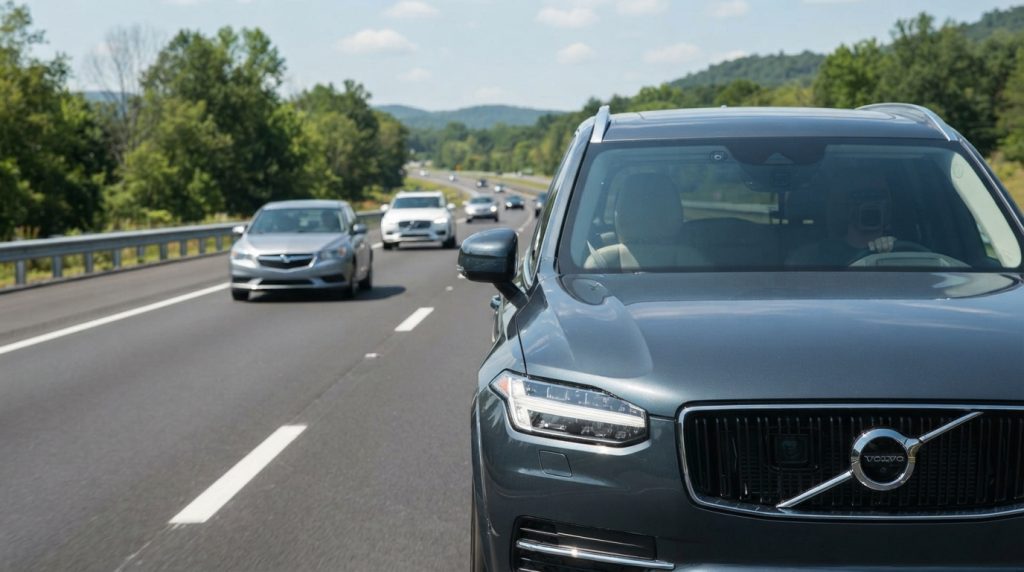
Adaptive cruise control may follow too closely, brake later than you expect, or change speed unevenly. Unusual behavior deserves a check, but it does not prove that calibration caused the change.
Weather, blocked sensors, or a failed part can also affect ADAS behavior. The feature and sensor involved can help narrow down what a technician should inspect.
| Feature | Sensor basis | Behavior to notice |
|---|---|---|
| Adaptive cruise control | Forward camera and radar | Uneven following distance or braking |
| Lane departure warning | Windshield camera | Late or false lane alerts |
| Blind spot monitoring | Rear or side radar | Uneven detection of vehicles alongside |
Adaptive cruise control, also called adaptive cruise, may disengage or adjust speed inconsistently. Traditional cruise control holds a set speed, while adaptive cruise adjusts to traffic ahead. A change in following distance or braking can have more than one cause.
Lane departure warning and adaptive cruise control can share a windshield camera. A camera problem may affect both features, though each system behaves differently.
Blind spot monitoring uses separate rear or side radar sensors. If blind spot alerts seem inconsistent, a technician can check those sensors and their mounts.
A forward collision warning or unexpected braking response also calls for an inspection. Weather, a blocked sensor, or a failed component may explain the behavior. Repair history and any impact can help show when a calibration check makes sense.
Which Repairs and Impacts Can Trigger an ADAS Calibration Check?
A low-speed bump or routine repair can affect sensor position, even when your vehicle looks nearly undamaged. Visible damage does not tell the whole story, since a mount or vehicle reference can shift beneath the surface.
Check the vehicle maker’s calibration requirements after work that removes or changes a sensor or its mounting area. The events below are common reasons to ask.
Glass, bumper, and mirror work
OEM procedures commonly call for calibration after windshield replacement or after certain parts are removed and reinstalled. Even careful repair work can change how a camera or radar sensor sits.
| Event | Component or reference | Reason to check calibration |
|---|---|---|
| Windshield replacement | Windshield camera | Changed camera-to-glass relationship |
| Bumper removal and reinstallation | Bumper-mounted radar | Changed sensor mount or radar path |
| Side mirror removal | Mirror camera or blind spot system | Changed mounting position |
| Suspension or steering work | Ride height or steering geometry | Changed vehicle direction reference |
| Minor collision or alignment/frame work | Sensor mount or vehicle thrust line | Possible shift in aim or geometry |
Suspension, alignment, and minor impacts
Suspension work, wheel alignment, subframe repair, or frame straightening can change vehicle geometry or its thrust line. That shift can affect how a sensor’s aim lines up with the vehicle’s path.
A minor collision can move a sensor or its mounting point without leaving a large dent. Ask about calibration after impacts, especially when the bumper, glass, suspension, or frame needs repair.
Costs depend on the damage and work involved. In some minor collisions, ADAS-related sensor repair and calibration can add up to $3,000. Total repair costs for an ADAS-equipped vehicle can reach about $5,300 in some front or rear impacts. These figures are not a standard calibration price.
Once you know why a check may be needed, the vehicle’s required calibration method becomes the next question.
What Are the Two Main Types of ADAS Calibration?
Static calibration uses fixed shop references, while dynamic calibration uses a prescribed drive. The vehicle maker sets the method, and some vehicles require both.
An ADAS calibration tool is part of a vehicle-specific setup, not a universal reset device. Targets, measurements, and other tools vary by vehicle and procedure.
Static calibration in a controlled shop
Static calibration takes place with the vehicle positioned in a shop. A technician uses targets and measurements to check the camera, radar, or other system against set references.
The vehicle’s position and the target setup matter. A floor that is not level or a target placed at the wrong distance can affect the procedure. A camera radar setup may need specific equipment for that model.
Dynamic calibration on the road
Dynamic calibration uses a drive under conditions named by the vehicle maker. The vehicle may need clear road markings, a set speed range, or other road conditions for the system to learn and validate sensor aim.
A road test alone does not count as calibration unless it follows the required procedure. Some systems require static and dynamic calibration, so a technician must check the vehicle’s instructions.
If you wonder, “How do I calibrate my lane keep assist camera?” the camera should follow the vehicle maker’s procedure. A properly equipped professional should handle it rather than guessing at the camera’s aim.
Both methods depend on correct vehicle setup, which leads to the checks needed before calibration begins.
How Is ADAS Calibration Done After Windshield Replacement?
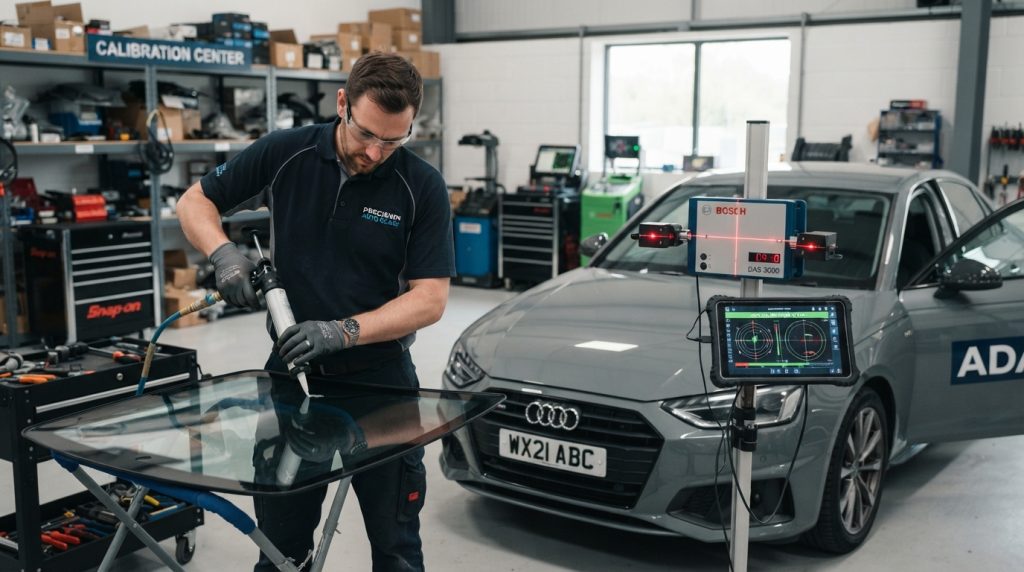
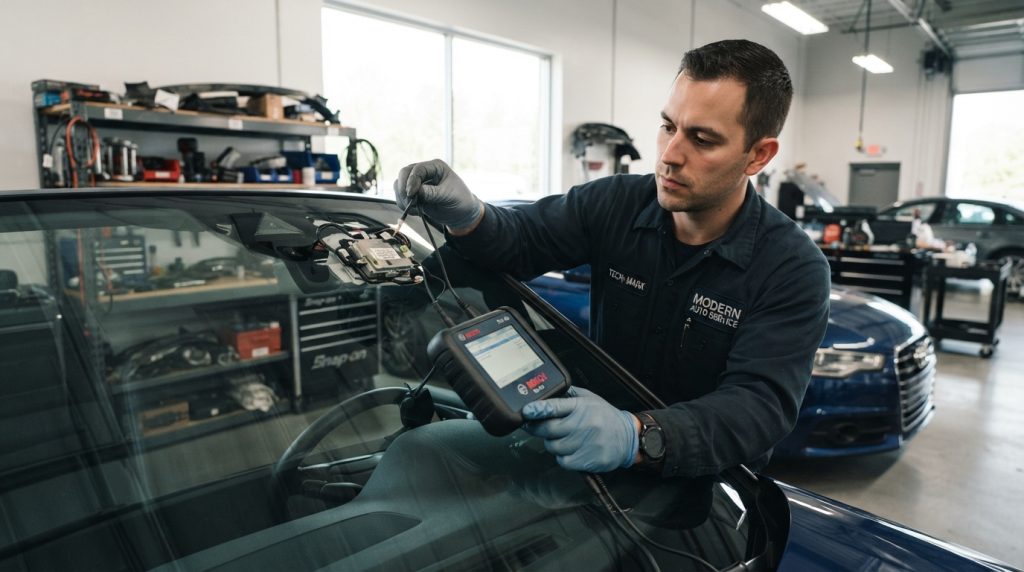
If your vehicle has a windshield camera and the windshield was just replaced, the camera may need calibration. Correct glass fit is only part of the job, since the camera must also meet the vehicle maker’s aim and setup rules.
After windshield replacement, confirm the vehicle’s equipment, install the right glass and mounts, meet setup conditions, calibrate, then scan and document the work.
Checks before the procedure
Before the procedure, a technician identifies the vehicle’s systems and the calibration steps required for that model. The work may call for static calibration, dynamic calibration, or both.
Setup can affect the result. A checklist may include:
- Set tire pressure to the specified level.
- Use a level floor or alignment bay.
- Check ride height against vehicle-maker limits.
- Remove cargo when the procedure specifies an unloaded vehicle.
- Complete wheel alignment before radar calibration when required.
Scanning, calibration, and documentation
A pre-repair scan can record existing faults before the glass work begins. The technician then installs the correct windshield and camera mounting components.
The vehicle must meet the specified setup conditions before calibration. The technician performs the required procedure and completes a post-repair scan to check for faults.
A correctly reinstalled camera may still point outside its required range. The calibration confirms aim, while the scan and records document what work was done.
Ask how the shop completed the procedure and what it recorded. The answer can help you judge whether the service followed the vehicle-specific steps.
What Should You Ask Before Choosing an ADAS Calibration Provider?
Before accepting a low quote, ask which exact calibration procedure your vehicle requires. A clear process matters, since the work may involve more than a scan or reset.
No universal ADAS sensor calibration price or appointment time applies to every vehicle. The estimate depends on the vehicle, required procedure, and related repair work.
Confirm procedure, equipment, and documentation
Ask these questions before you book:
- Does the shop check the vehicle maker’s procedure?
- Are pre-repair and post-repair scans included?
- Can the shop meet the required target, floor, and alignment setup?
- Will it complete the required static or dynamic calibration?
- Will it document the procedure and result?
The answers should match your vehicle’s needs. A shop should explain which steps apply, not promise the same process for every model.
Understand what affects the estimate
Calibration cost can vary with the sensor, setup, and work already completed. Wheel alignment, glass work, or sensor repair may affect the estimate when your vehicle’s procedure calls for them.
Collision costs are different from a standalone calibration quote. In some minor collisions, sensor repair and calibration can add up to $3,000. Total repair costs for some ADAS-equipped vehicles after front or rear impacts can reach about $5,300.
Those figures describe repair costs in some collision cases, not a standard fee for calibration. Ask the provider to separate calibration, diagnosis, alignment, and repair charges when they apply.
Once you understand the process and estimate, decide what to do if a warning or unusual response appears.
What Should You Do If You Suspect an ADAS Issue?
Do not treat a quiet dashboard or a brief reset as proof that the system is correctly aimed. Arrange an inspection if a feature behaves differently or recent work may have affected a sensor.
Ask for a check that follows your vehicle’s procedure. A warning light, changed response, or recent repair can help the technician focus the inspection.
Take these steps before contacting a repair shop:
- Note the warning or feature behavior and when it occurs.
- List recent repairs, glass work, or impacts.
- Check the owner’s manual for system guidance.
- Arrange an inspection using vehicle-specific procedures.
When you search for “ADAS calibration near me,” ask whether the shop can diagnose the system and coordinate needed glass, body, or alignment work. Do not assume every repair shop performs calibration.
A technician can explain whether a scan, repair, calibration, or more than one step is needed. Share the vehicle’s repair history and any message you saw.
If you have windshield or other glass damage, contact Miracle Auto Glass for that repair need. The priority is confirming whether the repair left the safety system ready to operate.
Conclusion
Correct sensor aim matters as much as the visible repair on your vehicle. Work that affects a camera, radar sensor, or vehicle geometry should prompt a check of the required procedure.
A quiet dashboard does not replace that check. Keep repair records and ask the shop to explain how it confirmed the system’s aim.
If you have windshield or other glass damage, hire Miracle Auto Glass for the repair. Miracle Auto Glass is located at Bandera Rd & Grissom; call (210) 680-2551.