Windshield Replacement With Rain Sensors: What Drivers Need to Know
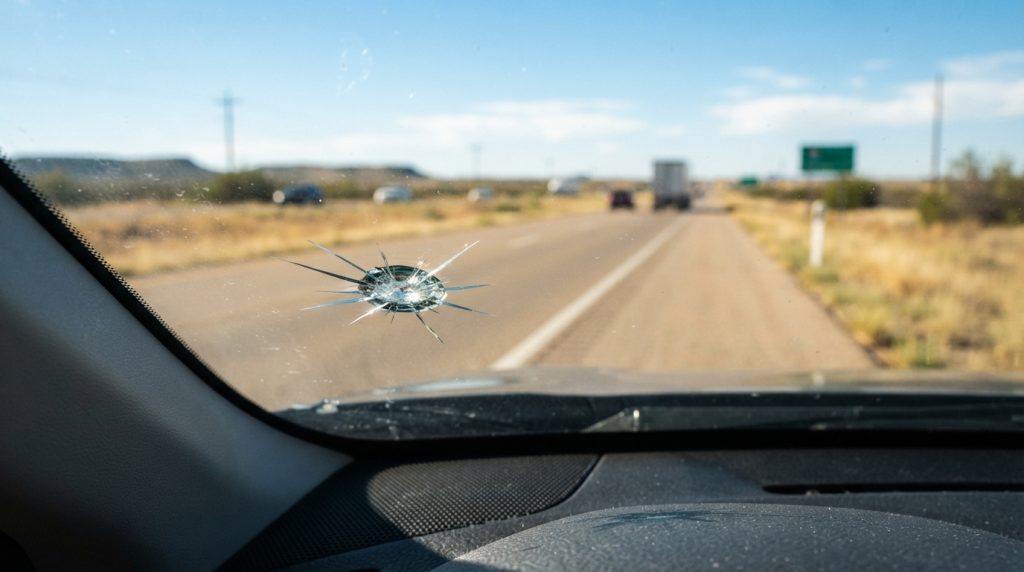
A windshield repair before road trip plans may start with a chip you barely noticed at home. Now, with hours of Texas highway ahead, that small mark catches your eye. The long drive can expose unnoticed glass damage to hours of vibration, road debris, and changing temperatures.
Clear visibility matters when you drive for hours, especially in bright sun or at night. A small chip does not mean the windshield will fail, but it deserves attention before departure. A quick check is a practical first step, and early repair can help protect your view.
Key Takeaways
- Check the full windshield before a long drive.
- Small chips do not always spread, but deserve a closer look.
- Damage location and pattern help guide a professional assessment.
- Heat, air conditioning, vibration, and debris can stress damaged glass.
- Ask a local provider what an inspection includes before booking.
- Check wipers, washer fluid, tires, lights, signals, and clean glass.
Why Windshield Repair Before Road Trip Matters
A damaged windshield can affect your view and your vehicle’s safety. Early attention can help keep a small flaw from becoming a larger problem during your trip.
The windshield contributes to vehicle structural support and, in some vehicles, proper airbag deployment. Cracks can block part of your view, while glare from damaged glass can make driving harder.
Visibility and structural support
Your windshield is more than a barrier against wind and rain. It helps support the vehicle’s structure, though the exact role depends on the vehicle’s design.
In some vehicles, the windshield also helps an airbag deploy as intended. That is one reason auto glass damage deserves attention before a long trip, not just when it becomes hard to see.
How small damage can spread
A chip may stay small, but damage can spread across the glass. A repairable chip can become a crack or other damage that calls for replacement.
Repairing a chip early may help preserve the original glass and keep the damage from growing. No single outcome is certain, so a professional assessment can help you understand the condition of your windshield.
Before you decide on service, you need to spot any damage across the full glass surface.
How to Inspect Your Windshield Before Leaving
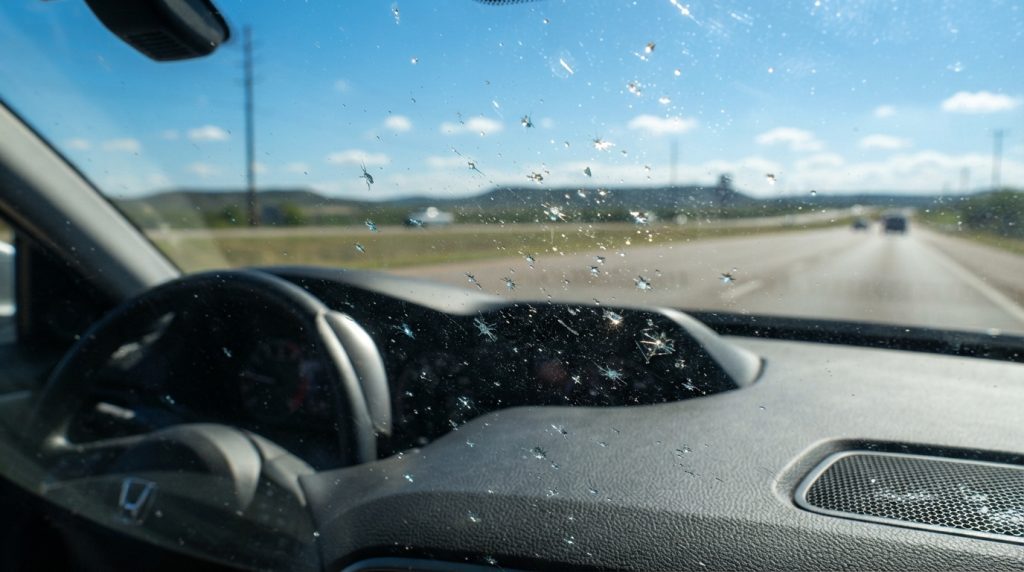
Inspect the windshield in good light, rather than relying on a quick glance from the driver’s seat. Direct sunlight can make small chips and other marks easier to see.
Check the full surface, including the edges, for damage that could affect visibility. Windshield pitting is a pattern of tiny surface marks that can scatter light and cause glare.
Check the full surface in direct sunlight
Stand outside and scan the glass from several angles. Look across the whole windshield, not only the area in front of the driver.
Bright light can reveal small chips, star breaks, long cracks, and distortion. If sunlight makes one spot look unusually hazy or bright, check it from another angle.
Look for pitting, edge damage, and glare
Use this short road trip checklist to check common trouble spots before you leave:
- Scan the full surface from several angles.
- Look closely for chips and star breaks.
- Trace cracks and inspect the windshield edges.
- Check for windshield pitting across the glass.
- Look for glare or distortion in bright sunlight.
Small marks can be hard to judge from inside the vehicle. A car checklist before road trip preparation should include a closer look at the windshield, not just a check of the view from the driver’s seat.
If you are unsure what you see, arrange a professional assessment. A glass professional can evaluate the damage and help identify the right service.
Which Windshield Damage Needs a Professional Assessment?
Damage location and pattern matter alongside size when deciding whether to repair or replace a windshield. Size alone does not settle the question.
Small chips and short cracks are often repair candidates, while larger cracks or damage in a critical location may need replacement. A professional can assess the damage and determine which service is appropriate.
| Damage pattern | Common service consideration | Why an assessment matters |
|---|---|---|
| Small chip, smaller than a quarter | Often a repair candidate | Location and pattern still affect the choice |
| Crack shorter than three inches | Often a repair candidate | Length alone cannot confirm repair suitability |
| Large crack, driver’s line of sight, or damage near an edge | Replacement may be needed | Position and extent can affect safety and visibility |
A chip smaller than a quarter or a crack shorter than three inches may qualify for repair, but those sizes are not guarantees or legal thresholds. The glass professional also considers the damage pattern and where it sits.
State rules can vary, so check current Texas requirements if you have questions about windshield condition. Do not use a size guide alone to decide that damaged glass is safe for a long drive.
A prompt professional assessment is especially useful before highway driving adds more stress to the glass.
How Texas Road Conditions and Temperature Changes Affect Damage
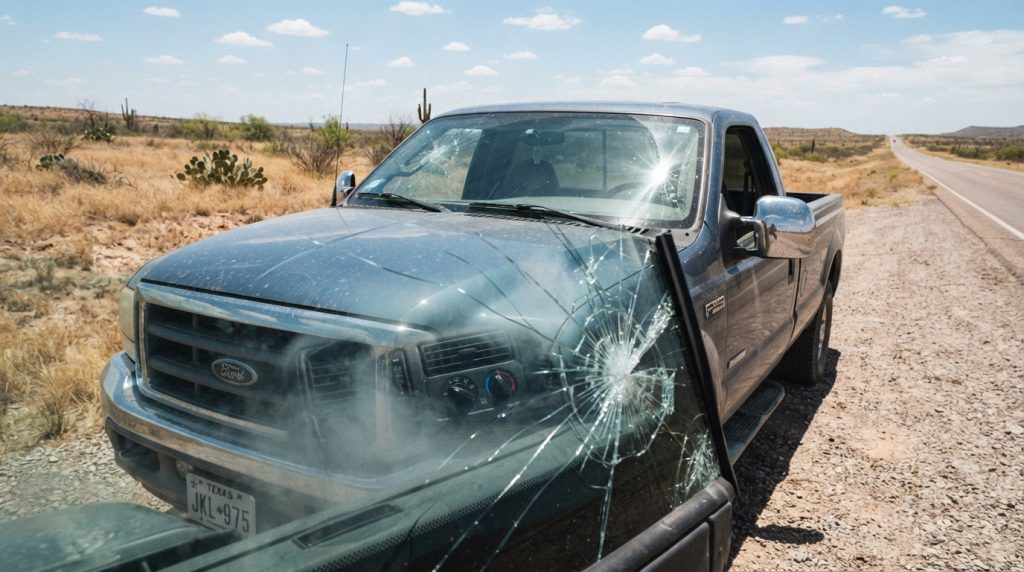
A small chip can sit in a hot parked vehicle, then face cool air from the cabin vents. That shift can stress existing damage, though it does not mean the chip will spread.
Heat, air conditioning, vibration, and road debris can put added stress on damaged glass. A long drive exposes a chip to more stress than a short daily trip.
Heat, cold, and direct air conditioning
Temperature changes can affect a chip or crack. Summer heat warms the windshield, while cool air from the air conditioning can create a sharp change across the glass.
You can reduce one source of stress by directing vents away from the damaged area. Avoid sudden temperature shifts when possible, but remember that no step can guarantee the damage will remain unchanged.
Highway vibration and road debris
Road vibration, potholes, and rough conditions can add repeated stress to damaged glass. Road debris may also cause a new impact, even if your windshield had no damage before the trip.
| Trip stressor | Effect on existing damage | Practical response |
|---|---|---|
| Temperature changes | Heat and air conditioning can stress a chip or crack | Direct vents away from the damaged area |
| Road vibration and potholes | Rough roads add repeated stress to damaged glass | Use care on rough roads and around potholes |
| Road debris | Debris can cause a new impact | Leave space behind vehicles when practical |
A small chip is not certain to spread, and road conditions do not affect every windshield in the same way. Still, limiting avoidable stress can help you manage the risks before departure.
Once you have reduced those risks, it helps to know what to do if a new impact happens during the trip.
What to Do if Your Windshield Cracks During the Trip
If a rock strikes your windshield, keep the damaged spot clean and dry. Act calmly and arrange a professional assessment as soon as practical.
Cover a chip with clear tape if available, and keep hot or cold air from blowing directly on it. Tape can help keep out moisture and dirt until a professional can check the glass.
Protect the damaged area and limit temperature stress
Avoid touching the damaged area more than needed. Keep the glass dry, and do not wash it until you know how the damage should be handled.
Arrange a professional assessment as soon as you can. A mobile chip repair may take about 30-45 minutes, depending on the service and the damage.
Windshield replacement may require at least a day or two for the adhesive to cure before a long drive. Follow the installer’s instructions, since the safe wait time can vary by product and conditions.
Ask what a free road trip car check near me includes
If you search for a free road trip car check near me, ask a local provider whether the inspection is actually free. Confirm which checks it covers, since a general vehicle check may not include auto glass.
Do not assume a free check includes a full professional assessment of windshield damage. Confirm the inspection’s scope and any fee before booking, then finish the other vehicle checks before departure.
What Else Should You Check Before a Long Drive?
Once the windshield is clear, test whether the wipers leave a smear across your view. Small checks can help you spot problems before you depend on the vehicle for hours.
Check the tires, lights, signals, wipers, washer fluid, and glass before a long drive. A road trip car maintenance checklist can keep these basic tasks easy to track.
Use a car checklist before driving long distance
Use this car checklist before driving to cover practical items that affect visibility and control:
- Check wiper blades for wear or smearing.
- Top off the washer-fluid level.
- Check tire pressure and tread.
- Test lights and signals.
- Clean the interior and exterior glass.
Use the vehicle maker’s recommended tire pressure, which is usually listed on the driver’s door label or in the manual. Check all tires, including the spare if your vehicle has one.
What a road trip ready package can and cannot cover
A road trip ready package can bundle several vehicle checks into one visit. The name does not tell you which services it includes, so ask what the provider will inspect.
Some packages may cover basic maintenance checks but leave out a detailed windshield review. If the glass is damaged, arrange a separate auto glass assessment rather than assuming the package covers it.
Deciding what to check before driving long distance also means knowing what a service package leaves out. Ask for its full list of checks before you book.
Finish your checks before departure, then contact a local glass provider if you found damage that needs attention.
Conclusion
Do not leave a concerning chip or crack unchecked before a Texas road trip. Early attention to visible damage can help protect your view and prepare you for the drive.
Have a professional assess the glass if you are unsure about its condition. Clear visibility matters throughout a long drive, and timely service can help you make a sound choice about repair.
Miracle Auto Glass is located at Bandera Rd & Grissom. Call (210) 680-2551 to hire Miracle Auto Glass to fix your windshield or other glass damage.