
Why Replacing a Broken Side Window Quickly Matters for Vehicle Security
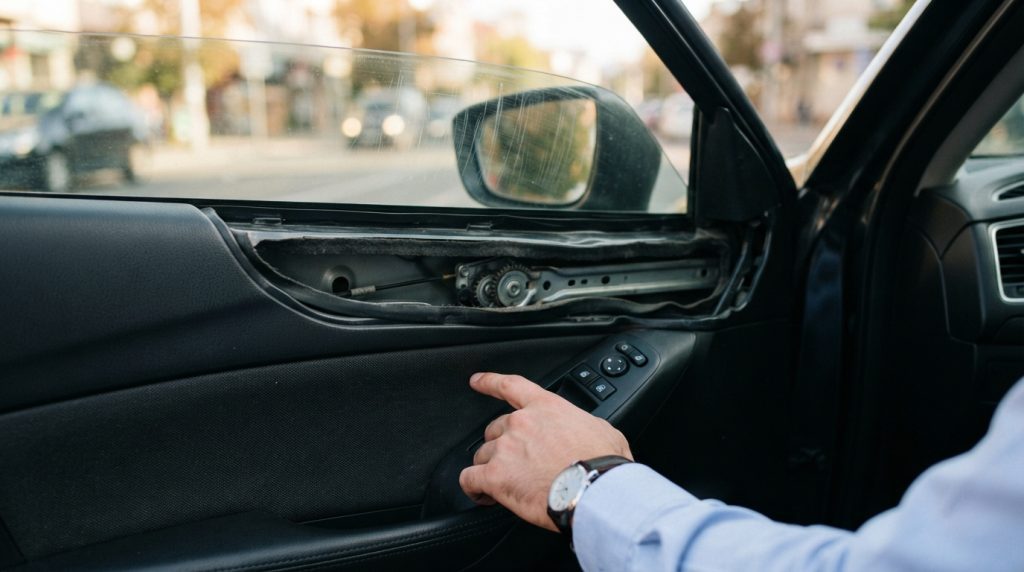
A window that suddenly grinds or clicks as you press its switch needs attention, even if the glass still moves. The sound may come from friction in the window track or a failing part inside the door.
Cold weather can put extra strain on a vulnerable linkage. Stop operating the window if it grinds, clicks repeatedly, or moves unevenly. Continued use can worsen a mechanical problem and leave the glass stuck.
Pay attention to how the sound changes as the glass moves. That detail, along with whether the window rises evenly, can help narrow down the cause.
Key Takeaways
- Grinding or repeated clicking calls for caution.
- Stop if the glass moves unevenly or the noise continues.
- Cold weather can strain a weak linkage.
- The sound and movement pattern help point to the cause.
- A failing part inside the door may need inspection.
Why Is Your Power Window Making Noise?
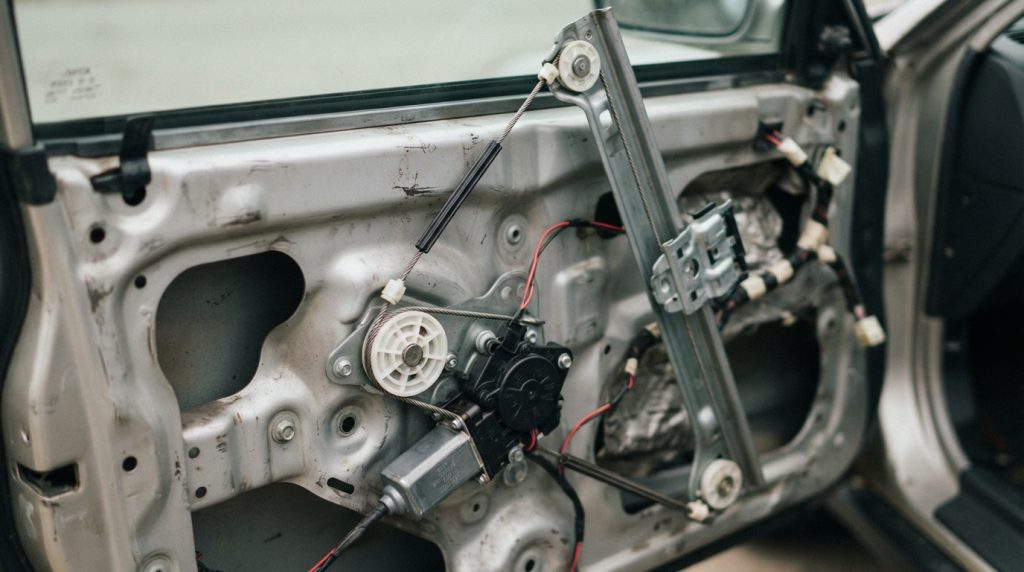
A squeak that follows the glass up or down often points to friction, while a grind usually warrants a closer mechanical inspection. The window regulator is the mechanical assembly that guides and lifts or lowers the window glass.
The power window motor turns one way to raise the glass and the other way to lower it. If the glass makes noise but does not move, suspect a jammed or broken linkage or another failed part, not just a dirty track.
Why Does Your Car Window Squeak as It Moves?
The regulator connects to the motor and moves the glass along a track. Depending on the vehicle, it uses a cable, geared arm, or lift plate inside the door.
Grit or debris in the window channels can slow movement and cause squeaking or grinding. Dry channels and friction at the rubber seals can also make the glass squeak.
Searches like “why my car window squeaks when I open and close it” often describe friction during travel. The same applies to “why my car window squeaks when I roll it down” or “why my car window squeaks when I roll it up.”
What Grinding or Clicking Can Mean
Grinding or crunching can point to a binding cable, damaged regulator, or worn motor gear. A worn motor or regulator may grow louder as it struggles to move the glass.
Clicking or rattling may come from loose hardware, a misaligned track, or a mechanism pushing against stuck glass. A broken, jammed, or rusty linkage can make noise without moving the window.
| Sound | Possible cause | Movement clue |
|---|---|---|
| Squeaking during travel | Grit, dry channel, or seal friction | Glass moves, often slowly |
| Grinding or crunching | Binding cable or damaged regulator gear | Glass slows, jerks, or stops |
| Clicking or rattling | Loose hardware or misaligned track | Glass may shift or catch |
| Shuddering or popping | Binding linkage or uneven lift | Glass shakes or jumps |
Cold weather can make an already weak linkage more likely to fail. Use the sound and movement pattern to judge whether simple track care is safe, and stop testing if the window binds or the noise persists.
How Can You Stop a Noisy Car Window?
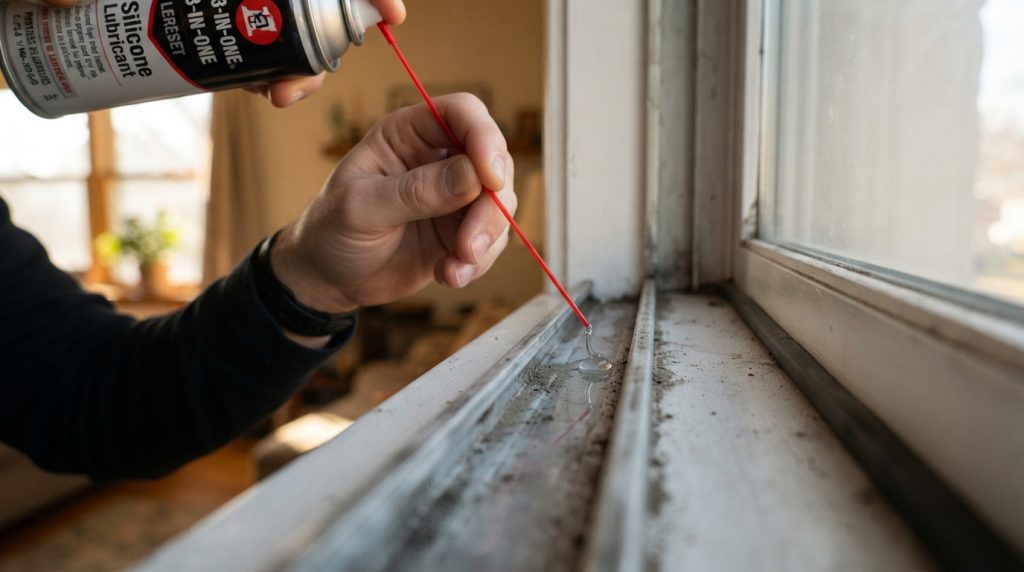
If the glass moves smoothly but squeaks, cleaning the side channels and using a suitable silicone lubricant is a reasonable first check. Lubrication can ease mild friction, but it cannot repair a damaged mechanism.
How Do You Stop a Car Window From Squeaking?
The best lubricant for a squeaky car window is a silicone-based product made for rubber and window channels. WD-40 for a squeaky car window is not the default choice, since greasy or petroleum-based products can affect rubber and collect dirt.
Try these steps only if the glass moves without grinding:
- Lower the glass only if it moves smoothly.
- Wipe dust and grit from the accessible vertical channels and seals.
- Apply a small amount of dry silicone lubricant to the channels.
- Cycle the window gently, then stop if noise or resistance remains.
Keep the product on the channels rather than soaking the door. Excess lubricant can attract dirt and add friction over time.
When Should You Stop Using the Window?
Stop if the window grinds, clicks repeatedly, moves crookedly, or shudders. A window that drops or will not move also needs an inspection, not more button presses.
Lubrication is for squeaking or mild friction, not a clicking motor, grinding cable, crooked glass, or a window that drops. Persistent noise, a window that will not move, or faults affecting several windows need diagnosis instead of repeated switch use.
What Should You Check When a Power Window Fails?
If one window is silent or stuck while the others work, start by checking the control and child lock before assuming the motor has failed. A power window not working on the driver side, or only one power window not working, may point to a switch, motor, wiring, or regulator issue at that door.
For a rear window, check whether the child lock is on. You can also try the individual door switch, if the window has one. Do not remove the door panel or force the glass.
If several windows fail together, a fuse or wider electrical fault may be involved. If a replacement fuse blows again, further diagnosis is needed because a short circuit or failing module may be present.
A voltage check can help separate a bad switch, motor, or wiring fault. Wiring can also fail in the bundle between the door and door jamb.
A broad motor-and-regulator replacement estimate is $150-$500, depending on the vehicle. A reported replacement time is one to two hours, while labor rates vary by shop. Do not force a stuck window; arrange a qualified inspection if checks reveal no obvious control issue.
Conclusion
If a window grinds, clicks, or drops, stop testing it and have the mechanism checked before the problem worsens. Forcing the switch can strain the parts that lift and guide the glass.
Power window mechanism repair is separate from fixing a windshield or other glass damage. If your vehicle has glass damage, hire Miracle Auto Glass at Bandera Rd & Grissom, (210) 680-2551. Contact Miracle Auto Glass for windshield or other glass damage at Bandera Rd & Grissom, (210) 680-2551.