
What Affects Windshield Replacement Cost in San Antonio?

After a drive on a gravel-strewn road, you spot a small rock mark near the edge of your windshield. That little impact can grow into a crack, even if the glass looked fine when you parked. Prompt attention can matter because delay may make the damage harder to repair.
A clear view helps you stay safe on the road, and your windshield also supports the car’s structure. You may not know how serious the mark is just by looking at it. Do not assume a tiny chip will stay tiny.
This guide explains how damage can grow, what you can do while arranging help, and when a professional should assess it. The forces that turn a small weak point into spreading damage are the right place to start.
Key Takeaways
- A small chip can grow into a crack, and the timing is hard to predict.
- Clear tape may keep water and dirt out, but it cannot repair glass.
- A technician can assess whether specialized resin or replacement is needed.
- Damage in your line of sight or near the windshield edge needs prompt attention.
- Check your insurance coverage and deductible before assuming a repair is covered.
Why Do Small Chips Turn Into Cracks?
A rock impact creates a weak point in the windshield’s outer glass layer. A windshield is laminated glass, meaning two layers of glass bond to a plastic interlayer. Stress can turn that weak point into a crack.
Each layer responds to pressure and movement, and the damaged area may not share that force evenly. The result can change with the weather, the road, and the car’s movement.
Temperature Swings and Road Vibration
Glass expands as it warms and contracts as it cools. A sudden temperature change can make one part move faster than another, placing stress around the impact damage.
Turning on a hot defroster against cold glass can create a sharp change. So can blasting air conditioning onto a hot windshield. Potholes, speed bumps, and rough pavement send vibration through the car and its glass.
Even a hard door closure can flex the body. That movement may pass through the windshield and strain the damaged area, especially when the glass is already under pressure.
Moisture, Dirt, and Body Flex
Water can enter the chip and expand when it freezes. The added pressure may push the damaged edges apart. Dirt can also enter the opening and make a later resin repair harder.
The windshield bonds to the vehicle frame and carries structural load. When the body flexes over a dip or during a sharp turn, that load can transfer to damaged glass.
These forces may act unevenly across the same windshield. Damage location and driving conditions affect how quickly the mark changes, so the next question is how much time you have.
How Fast Can a Windshield Crack Spread?
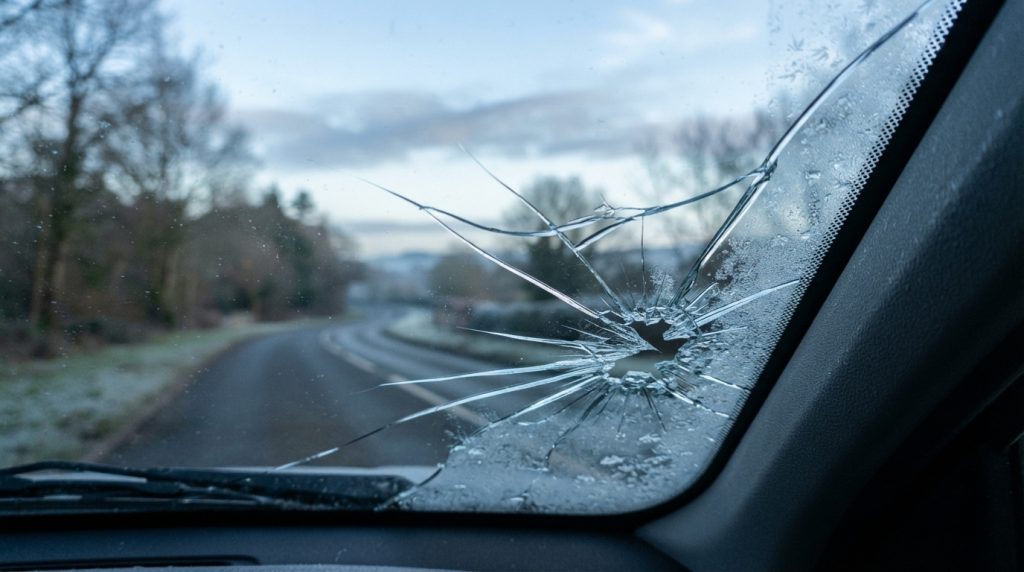
A windshield crack can change slowly or extend several inches in a short time, with no dependable timetable. A chip may sit unchanged for weeks, then lengthen several inches during a cold morning. The timing varies, and no exact countdown can be promised.
Winter freeze-thaw cycles and extreme summer heat often bring faster change. A mark near the edge tends to spread faster than damage near the center. Vibration during a drive can also affect an existing crack.
These three factors can shape the risk:
- Temperature swings between hot and cold conditions.
- Damage located near the windshield edge.
- Vibration from rough roads during a drive.
Windshield chip spreading while driving is possible because vibration repeats as your tires cross the road. That does not mean every trip will make the damage grow. You cannot predict when a change will happen, but careful handling may reduce stress while you arrange repair.
What Can You Do to Slow Crack Spreading?
Careful handling can slow crack spreading, but it cannot repair the glass. Keep water and dirt away from the damaged area, and avoid sudden stress. These steps buy time, not a lasting fix.
If the damage is clean and dry, clear packing tape can cover it and keep out moisture and dirt. Do not tape over damage in your direct line of sight. Clear tape does not hold the glass together.
Protect the Damaged Area From Contamination
Handle the area gently if you need to remove loose dirt before covering it. Do not press on the crack or try to force anything into it. A cleaner opening can help a technician assess the glass and perform a repair.
Rain, road spray, and grime can get into exposed damage. Tape may help shield the opening during a short wait, but it will not restore the windshield’s strength.
Reduce Temperature and Impact Stress
Use gradual heating or cooling in the cabin rather than directing a strong blast at the glass. Park in the shade or under cover when possible, and close the doors gently.
To stop windshield crack spreading in the winter, warm the cabin gradually and avoid pouring warm water on ice. A high-pressure automatic car wash can add water pressure and quick temperature changes, so wait until the glass is assessed.
| Risk or situation | Why it can worsen damage | Safer temporary response |
|---|---|---|
| Sudden defroster or AC | Fast temperature change stresses glass | Adjust cabin temperature gradually |
| Rough roads or potholes | Repeated bumps add vibration | Choose a smoother route if possible |
| Hard door closures | Body flex transfers pressure | Close doors gently |
| Automatic car washes | Pressure and water temperature can shift | Skip high-pressure washes for now |
Temporary precautions cannot tell you which repair method will work. Arrange an assessment rather than treating tape or gentle driving as a substitute for professional care.
Can DIY Steps Stop a Windshield Crack From Spreading?
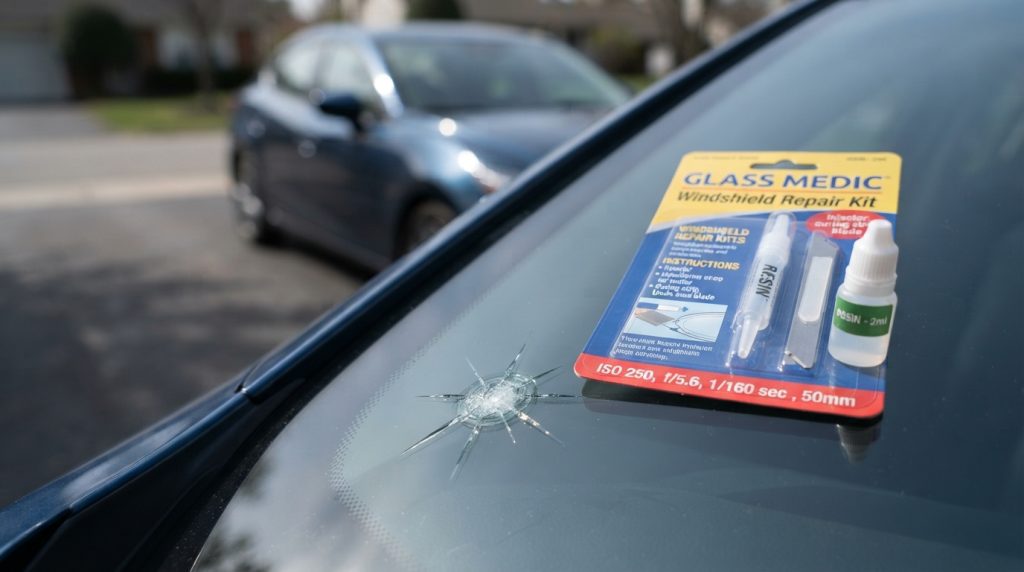
Home measures cannot permanently stop a spreading crack. A DIY product may help in limited cases, but it does not replace a lasting professional repair. Ask a glass professional before using a kit if you plan to seek repair.
A kit can leave trapped air or material inside the damage. That may make later work harder, so the choice is best made with the planned repair in mind.
When a Repair Kit May Help
If you are wondering how to stop a windshield crack from spreading DIY, a store-bought windshield crack repair kit may help with a small, fresh chip. These kits inject resin into the opening, but results depend on careful use and clean damage.
Trapped air, dirt, or poor technique can affect the result. Repair kits are not effective on cracks longer than a few inches, and a kit cannot promise to repair a crack.
A professional can check whether the damage suits resin work before you try a product. That call can help avoid making a later repair more difficult.
Home Fixes That Can Complicate Repair
Super glue and clear nail polish are poor fixes for windshield glass. They can contaminate the damaged area and interfere with professional work.
Neither product makes a durable optical repair. The mark may still distort your view, and the glass remains damaged beneath the coating.
DIY measures only buy time; they do not settle whether resin is suitable. A technician’s assessment helps decide between windshield crack repair and replacement.
When Can Windshield Chip Spreading Be Repaired?
Small, fresh damage can often be repaired, but size alone does not decide. For windshield crack repair, a technician injects specialized resin into suitable damage, bonding the glass and restoring much of its strength. Location, cleanliness, and damage type matter too.
General guidance can help you understand what a technician may recommend. It is not a guarantee that a chip or crack qualifies for repair.
Damage That May Qualify for Resin Repair
A clean chip smaller than a quarter may qualify for resin repair. A crack shorter than about six inches may also be repairable when its condition and location allow it.
The technician checks the full damage, not just the visible length. Dirt, age, and the shape of the mark can affect the result.
When Windshield Replacement Is More Likely
Replacement is generally more likely for cracks longer than roughly six inches, damage at the windshield edge, multiple chips or cracks, or damage to the inner glass layer.
Even a successful repair can leave slight distortion. Damage in the driver line of sight may be a poor repair candidate because a small visual change can affect your view.
| Damage | Common guidance | Important caveat |
|---|---|---|
| Chip smaller than a quarter | May qualify for resin repair | Fresh, clean condition helps |
| Crack shorter than about six inches | May qualify for resin repair | Location and type still matter |
| Edge, driver-line-of-sight, multiple, or inner-layer damage | Replacement is more likely | A technician must assess the damage |
These are broad guidelines, not a promise of repair. An auto glass technician can assess size, location, cleanliness, and type, then recommend the next step. That assessment also helps you judge the safety of driving before service.
What Makes Driving With a Crack Riskier?
A small chip outside your view is different from a long or spreading crack in your sight line. Visibility matters, and a crack can weaken the windshield. Avoid driving if damage blocks your view or is extensive.
The windshield contributes to vehicle structure in a rollover and supports passenger airbag deployment. A long crack may weaken that support, while damage near your view can refract light, cause glare, or block part of the road.
Before driving, check these four things:
- Does the damage obstruct the driver’s view?
- Is the crack long or branching?
- Does the damage reach the windshield edge?
- Does road vibration make visibility worse?
Crack in windshield spreading while driving can happen as vibration acts on existing damage. Windshield chip spreading while driving is also possible, but not every trip will make it grow.
If you drive cracked glass, keep in mind that a change in visibility can make a familiar road harder to read. Avoid driving when your view is obstructed or the damage is extensive, and arrange prompt professional assessment.
How Do You Arrange Repair and Check Coverage?
A prompt call to an auto glass professional and your insurer can clarify the repair route and possible out-of-pocket cost. Suitable resin repair usually costs a fraction of windshield replacement, but the quote depends on the damage and vehicle.
There is no single price for every job. The auto glass repair cost depends on the type and extent of damage, your vehicle, and whether the glass needs replacement.
Ask Your Insurer About Repair Coverage
Many insurance policies cover chip repair with no deductible. Coverage depends on your policy, so check your comprehensive coverage and deductible before assuming insurance will pay.
Ask whether glass repair falls under a separate rule in your policy. Compare any repair quote with your deductible before deciding whether to file a claim.
Get a Professional Assessment
A technician can inspect the location and extent of the damage, then recommend repair or replacement. Professional resin injection is the lasting repair method for suitable damage.
Newer vehicles may have driver assistance camera systems, called ADAS, mounted on the windshield. Ask the repair provider whether replacement would require ADAS camera recalibration.
These steps can help you prepare for the call:
- Photograph the damage in clear light.
- Ask your insurer about glass coverage and your deductible.
- Ask the repair provider whether replacement needs ADAS recalibration.
Keep the photo and your policy details nearby when you call. With the damage details in hand, you can ask Miracle Auto Glass about an assessment and the best next step.
Conclusion
Prompt attention is the practical response when you find new windshield damage. A quick assessment can help keep suitable damage in the repair category, while tape or a kit cannot serve as a permanent fix.
For windshield or other glass damage, contact Miracle Auto Glass at Bandera Rd & Grissom. Call (210) 680-2551 to ask about your repair.