
Your Insurance Covers It. You Still Choose Who Fixes It.
The Windshield’s Second Job: Holding Up the Roof
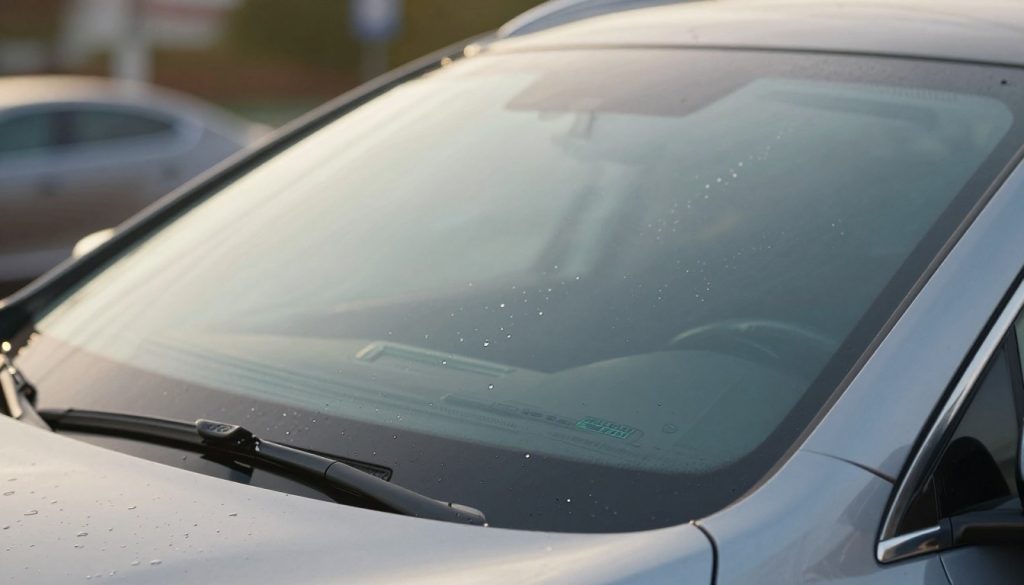
Your Sportage uses a small optical sensor behind the rearview mirror to support automatic wiper control. It reads internally reflected light through the glass. As drops collect, less light returns, so the vehicle estimates the amount of rain and adjusts wiper speed.
This technology sits in a special bracket, with wiring routed through the roof. Because it remains inside windshield glass, a chip or crack near this area may need more than a basic repair. A rain sensor windshield replacement must protect the optical connection, coupling gel, and driver assistance features.
This guide explains inspection, removal, testing, and calibration. You will also learn how weather conditions, glass damage, and careful auto service affect visibility and safety. Miracle Auto Glass provides trusted windshield and auto-glass service when your car needs expert care.
Key Takeaways
- The optical system reads reflected light, not a mechanical gauge.
- A bracket behind the mirror holds the technology in place.
- Damage near the sensor area can affect automatic wiper operation.
- Proper gel handling helps preserve accurate readings.
- Miracle Auto Glass can inspect your Sportage before service.
How Your Sportage’s Rain Sensor and Light Sensor Work
Your Sportage combines optics and vehicle electronics to support automatic wiper control. A module behind the mirror reads changes at the glass surface, then sends useful information to the wiper control system.
How Infrared Light Detects Rain on the Windshield
An infrared light beam travels through the windshield and returns to the module. When drops cover the sensing area, less light reflects back. The sensor detects this change and estimates the amount of rainfall.
Newer designs can operate within tinted glass areas. Miracle Auto Glass protects the optical path and mounting area during service, helping the system read weather conditions correctly.
How the Sensor Adjusts Wiper Speed and Vehicle Lighting
With the intermittent or automatic setting selected, the system changes wiper speed as rainfall grows stronger. Manual stages still let you choose a steady pace when conditions require direct control.
Snow and ice can look like large drops to the sensor. Turn automatic operation off, clear the windshield, and use the wiper by hand. Careful service helps preserve reliable lighting and wiper performance.
| System action | What you notice | Service focus |
|---|---|---|
| Light reflection changes | Automatic wiping begins | Clean optical contact |
| Rainfall grows stronger | Wiper speed increases | Secure module fit |
| Snow or ice covers glass | Readings may be inaccurate | Clear glass before driving |
Where the Sensor Is Located Behind the Rearview Mirror
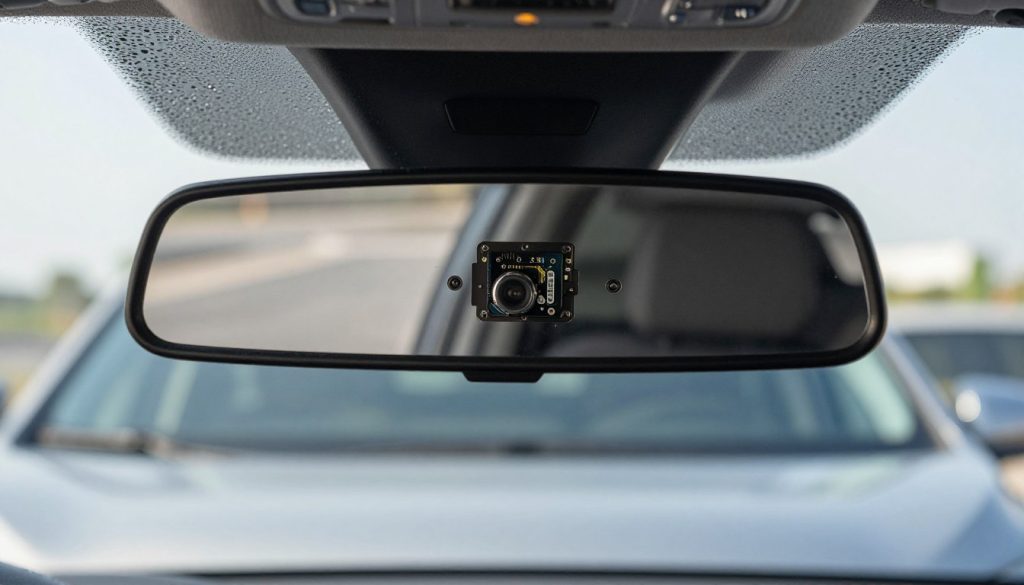
Look near the base of your Sportage’s rearview mirror. The primary module sits on the inside windshield, outside your direct view. Coupling gel connects it to the glass and forms a clear optical path for a light beam.
This placement keeps the rain sensor protected while allowing quick readings. Miracle Auto Glass can inspect the area and service glass with care when driver assistance features are present.
The Sensor Area and Its Coupling Gel
The gel must remain clean and evenly fitted. Air gaps can distort information, while a loose mount may affect the wiper system. A trained technician checks the bond before returning the vehicle to you.
Additional Functions in Combined Rain-Light Systems
A combined rain sensor can also include a light sensor. With the correct switches active, it manages automatic wiping and vehicle lighting. Current modules may combine up to five functions.
Comfort Sensors That Support the Cabin
Humidity and temperature readings help climate electronics limit fog inside the windshield. Solar readings guide cabin cooling, while HUD readings adjust display brightness. A small heater helps prevent false readings in changing weather conditions.
- Supports auto wiper and lighting control
- Helps manage interior comfort
- Protects clear information for drivers
| Function | What It Measures | Vehicle Benefit |
|---|---|---|
| Rain-light module | Moisture and ambient light | Wipers and lamps respond automatically |
| Condensation function | Humidity and temperature | Ventilation reduces interior fog |
| Solar and HUD functions | Sunlight and forward brightness | Improves comfort and display clarity |
What to Check Before Rain Sensor Windshield Replacement
Before booking service, inspect the Sportage area behind the mirror. Look for chips, cracks, scratches, dirt, or other damage near the module. Even small flaws can affect readings and driver safety.
Tell Miracle Auto Glass that your vehicle has an intact sensor. This detail helps the technician plan careful removal and reattachment, rather than treating the glass like a standard panel.
Software may adjust for age-related signal changes from scratches or contamination. However, it cannot compare the hidden sensing area with the wider view seen by you or your passenger. Clear and green tints may also require adaptation or coding, based on the vehicle maker’s specifications.
- Confirm that the new glass matches the original tint and optical design.
- Ask for an inspection of the bracket, coupling gel, connector, and retaining hardware.
- Discuss repair options when damage remains outside the main viewing zone.
- Verify wiper control after service, especially in changing weather conditions.
Choosing the right auto-glass team protects useful information from the module. Miracle Auto Glass can help with this work and other glass damage, giving you a clear path to safe service.
What Happens During Rain Sensor Windshield Replacement
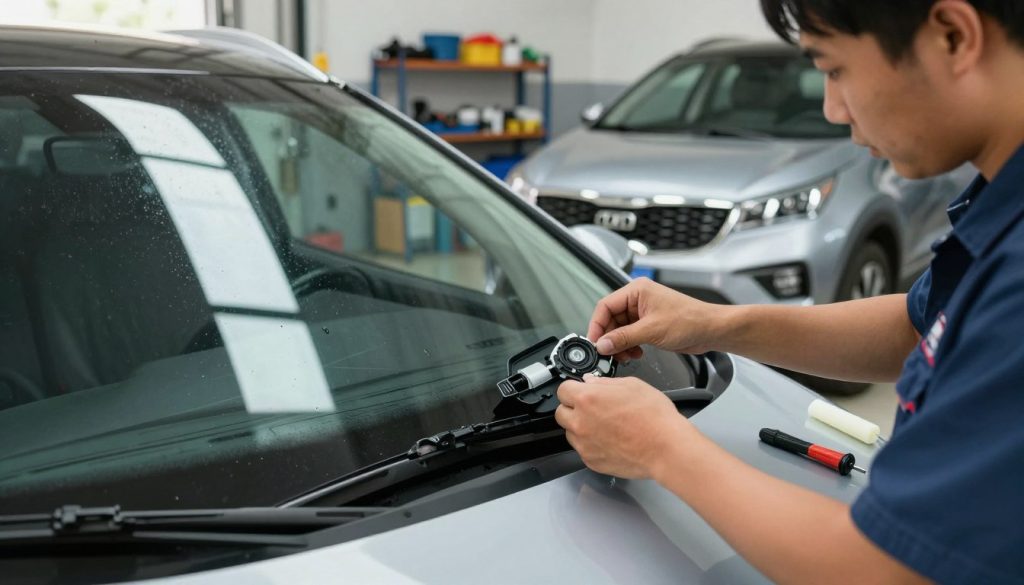
Professional glass service protects the optical module from start to finish. Miracle Auto Glass follows a fourth-generation rain-light procedure, so your vehicle keeps its automatic wiper control and clear view.
How the Module Is Removed, Protected, and Reattached
The technician removes the vehicle cover, disconnects the electronics, and releases the retaining spring. After about 30 minutes at 20°C, gel pressure relaxes. The module then comes away with slow, repeated pulls from the plug side.
Clean, dry plastic film covers the coupling gel during replacement. The part rests in a dry plastic box while the new windshield is fitted. Its mounting area must be free of fibers, grease, moisture, and other contamination.
Reattachment uses one spring arm at a time. The technician avoids tilting the unit, checks the catch, locks the connector, and inspects the glass. Air inclusions up to 1 millimeter may appear immediately after assembly.
- Protects the existing module and coupling gel
- Supports reliable light readings and wiper response
- Helps prevent damage during auto glass repair
Choose Miracle Auto Glass when glass damage affects your Sportage. Careful handling supports safety for you and every driver nearby.
| Service stage | Required care | Result |
|---|---|---|
| Removal | Relax gel pressure before lifting | Lower risk of module damage |
| Storage | Use film and a dry box | Clean coupling surface |
| Assembly | Keep the area dry and level | Stable automatic operation |
How to Test and Calibrate the Sensor After Glass Service
A quick post-service check confirms that your Sportage responds before you return to changing weather conditions. Turn on the ignition and choose automatic intermittent wiper control. Then spray clean water over the sensing area to imitate rain.
The windshield wipers should start and change frequency as you vary the water flow. A stronger spray should produce faster wiper speed. This test confirms that the optical path, module, and wiper control work together. Never test while driving; complete it while the vehicle remains parked.
Using Diagnostics After Service
If automatic operation fails but manual stages work, the motor may not be the cause. Miracle Auto Glass can check the system with a suitable diagnostic unit. The tool can read or clear fault codes and show current measurements from the sensor and related electronics.
Initialization is needed after windshield replacement or module replacement. Coding may also apply when glass tint or optical features differ. Miracle Auto Glass can complete post-service testing, address glass damage, and help protect your safety.
Conclusion
Your Sportage’s rain sensor uses reflected infrared light, coupling gel, and electronic control. It helps the wiper respond as weather conditions change.
Correct windshield service protects the optical interface, electrical connector, and mounting bracket. It also preserves automatic control functions and keeps useful information clear for the driver.
After service, a water test checks system response while the vehicle remains parked. Diagnostic testing may reveal stored faults or measured-value concerns.
Initialization or coding may be needed when the glass has a different tint or optical design. These steps help the system read signals correctly and support safety over time.
Hire Miracle Auto Glass to repair your vehicle’s glass damage. Skilled care helps preserve visibility, reliable technology, and confident driving in every season.