
What to Do When Your Car Side Window Shatters
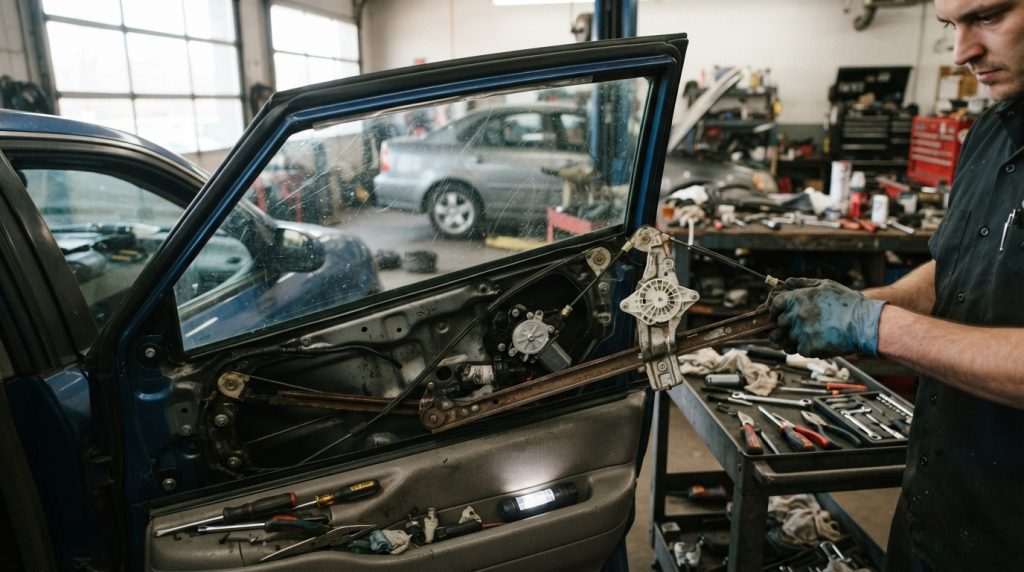
A side window that suddenly stops moving can turn a routine drive-through or parking stop into a frustrating problem. Car window regulator repair may help, but the same issue can come from other parts. A window that moves unpredictably can also leave your vehicle exposed to weather or theft.
The window regulator is the mechanism inside a door that supports the window glass and moves it up or down. A technician can tell regulator trouble apart from an electrical fault or a problem with the window motor. The symptoms alone do not confirm failure.
Prompt care can help you avoid leaving a window open or relying on a stuck pane. A repair shop can inspect the vehicle and find which component needs attention. Start by noticing how the window behaves, including any changes that happen over time.
Key Takeaways
- Window movement changes can point to a mechanical problem.
- A symptom is a clue, not a confirmed diagnosis.
- The motor and regulator are separate in some vehicles.
- A technician can inspect electrical and mechanical parts.
- Ask for a quote based on your vehicle and diagnosis.
What Are the Warning Signs of a Failing Window Regulator?
A regulator problem often becomes noticeable through a change in the window’s movement before the glass stops working altogether. Watch for changes in speed, position, and sound. These signs can point to a failing part, but they do not prove which one needs repair.
One window acting up while the others work is useful information to report to a repair shop. It does not confirm that the regulator is at fault. Describe what happens when you press the power window button.
Changes in how the window moves
A window that moves more slowly than usual may have trouble traveling along its path. It may also stick, pause, or move in fits and starts. Note whether the problem happens every time or only now and then.
The glass may stop before it opens or closes all the way. It may also move unevenly, with one side rising faster than the other. These changes can make the window hard to position for fresh air or a drive-through.
Sometimes the window will not respond at all. If it works only from one switch, or only after several presses, mention that detail. The way it responds helps a technician narrow down the problem.
Noises, crooked glass, or a window that drops
Listen for unusual sounds as the window moves, such as scraping, clicking, or grinding. A new noise is worth reporting, even if the glass still travels. Avoid running the power window repeatedly just to hear the sound again.
Glass that slips or falls inside the door may no longer have proper support. A crooked window can also suggest that the glass is not moving evenly. Do not force the glass back into place.
You may hear the window motor running while the glass stays still. That sound alone does not show whether the regulator, its connection, or another part has failed. Tell the technician what you heard and whether the other windows still work.
These details help describe the problem, but they do not identify its cause. The next step is to consider the possible faults and the checks that can separate them.
What Can Cause These Window Problems?
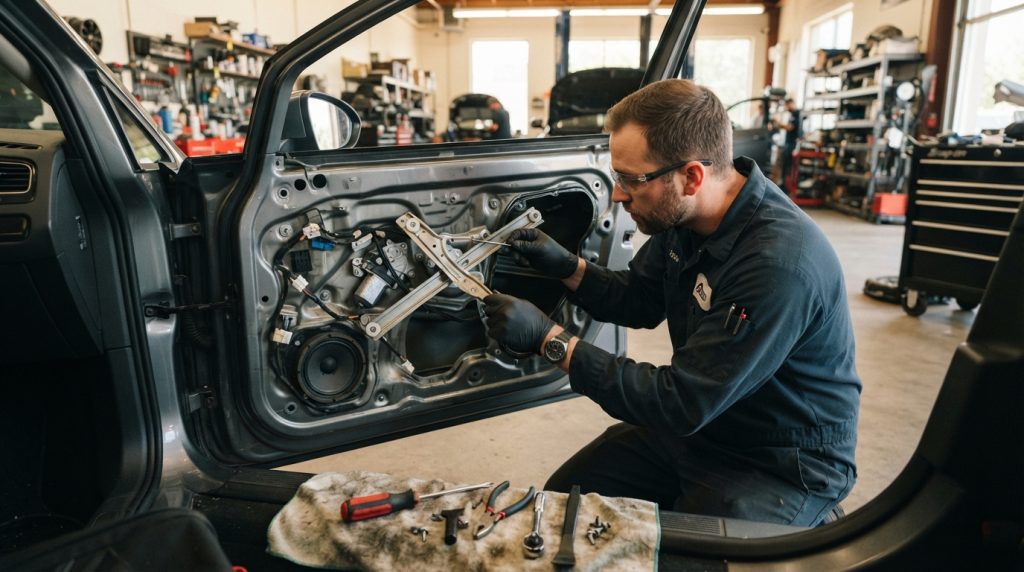
A window that acts up may have a mechanical, electrical, or weather-related cause. More than one part can create similar problems. A technician should check the full system before naming the failed component.
Wear, overuse, and weather
Repeated use can strain a power window system, and frequent operation can overheat its components. Extreme cold can also add stress, especially when snow or ice affects the glass. Forcing a frozen window to move can place extra strain on the mechanism.
A faulty switch can stop the system from getting the right signal. Damaged tracks, worn pulleys, or broken and frayed cables can also interfere with movement. These parts sit within the door and support the window as it travels.
The window motor may overheat or fail, too. A motor problem can resemble a regulator fault because both can leave the glass unable to move. The correct check depends on how the power window responds.
How a technician narrows down the fault
A technician checks how the window reacts when you use its switch. The repair shop can then inspect the electrical parts and the mechanical components inside the door. The goal is to find the fault, rather than assume the regulator failed.
For example, a motor sound with no glass movement points to one set of parts to inspect. No response at all leaves several possible causes. The observed behavior guides the checks, but it cannot confirm the answer by itself.
| Observed behavior | Possible source to check | Why the symptom is not conclusive |
|---|---|---|
| Motor runs but glass stays still | Regulator or glass connection | Motor sound does not confirm mechanism movement |
| No movement when button is pressed | Switch, motor, or regulator fault | Several parts can prevent movement |
| Slow or stuck travel | Track, cable, pulley, or motor issue | More than one part can restrict movement |
| Crooked or fallen glass | Regulator or window support issue | Glass position needs inspection |
The sound is one clue, not a final answer. Once the fault is identified, the next question is what the repair involves and whether the motor is part of the same assembly.
What Does Car Window Regulator Repair Involve?
The repair usually begins by accessing the window assembly inside the door, not by replacing glass automatically. The repair scope depends on which parts have failed. A window motor may be separate from the regulator or included in the assembly.
That difference affects which components the repair shop checks and lists in its estimate. A power window regulator can use different designs, so the parts are not the same for every vehicle.
The regulator types and motor arrangement
A cable-operated regulator uses cables to move the glass. Most modern cars use this type. A scissor-shaped, gear-driven regulator uses gears to guide the window instead.
The window motor can sit apart from the regulator, or it can come as part of the window assembly. A technician can assess separate parts on their own. With an integrated unit, the replacement may include both.
| Component or design | How it works or is arranged | What that can mean for the repair |
|---|---|---|
| Cable-operated regulator | Cables move the window | Cable or regulator damage may need attention |
| Scissor-shaped regulator | Gears move the window | Mechanism differs from a cable design |
| Separate motor | Motor is distinct from regulator | Technician can assess the two parts separately |
| Integrated motor and assembly | Motor is included in window assembly | Replacement may include both |
What happens during repair or replacement
After the repair shop confirms the fault, it can remove the damaged part and fit the right replacement. The door cover must come off to reach the assembly. Careful handling helps protect the parts and avoid breaking the glass.
- Remove the door cover to access the assembly.
- Inspect the system and identify the faulty component.
- Remove the damaged part and install the appropriate replacement.
- Reassemble the door and check the window’s operation.
A car window regulator repair kit may include only certain components. Ask a technician to check the kit’s fit for your vehicle and confirm what it contains. Do not assume one kit suits every power window repair.
Some power window repairs take an hour or less. A more complex job or one that needs several replacement parts can take longer. One regulator replacement estimate describes about four hours, so that figure is not a guaranteed appointment time.
Repair time depends on the vehicle and the work required. The parts and labor involved also determine what a quote should account for.
How Much Does Car Window Regulator Repair Cost?
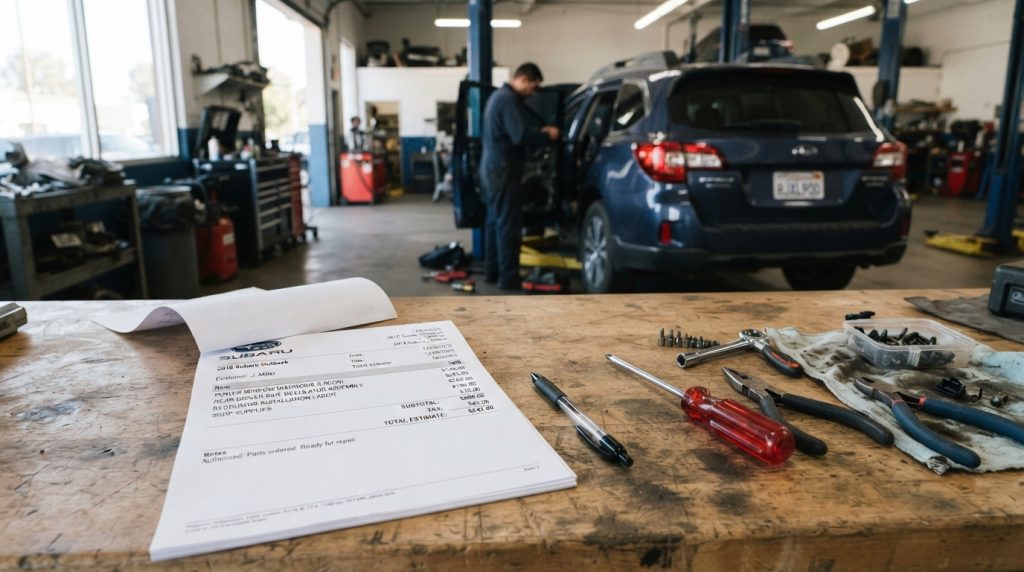
There is no single dependable U.S. price for this job because the vehicle and failed parts change the scope. Your quote depends on the repair, parts, vehicle make and model, and regulator type. Request an estimate for your specific vehicle and confirmed repair.
The amount can change if the diagnosis points to the window motor as well as the regulator. Some vehicles use separate components, while others have an integrated assembly. That can affect which parts the repair shop needs to replace.
A quote may also change when more than one component has damage. Ask whether the estimate covers diagnosis, replacement parts, and labor. Those details help you compare the same type of work across repair shops.
Use the phrase car window regulator repair cost when asking a local repair shop for a quote. A search for car window regulator repair cost near me can help you find nearby options. Still, the price for another vehicle may not match yours.
Before approving work, ask the shop to explain how its diagnosis connects to the proposed repair. Find out whether the quote includes a separate motor, if needed. If the motor is part of the assembly, ask which components the replacement covers.
Searches for cheap power window repair near me can bring up different prices. Compare what each estimate includes, rather than choosing based on the lowest number alone. A lower quote may cover fewer parts or less work.
Ask how the shop will handle a change in scope if it finds another damaged part. The shop should explain the added work and cost before proceeding. Clear terms make it easier to decide whether the service fits your needs.
Keep the vehicle details handy when you request an estimate. Make, model, and year can help the repair shop identify the right parts. Share what the window does and any sounds you noticed, too.
A written estimate can help you see which parts and labor it covers. If the diagnosis is not yet complete, ask what the estimate assumes. That way, you can tell whether the final repair matches the quoted work.
Price expectations are only one part of the decision. Next, confirm that the repair shop can explain the fault, the work, and the expected time.
How Do You Choose a Repair Shop and Arrange Service?
Before approving a repair, ask the shop to connect its diagnosis to the parts and labor in the estimate. Clear answers help you understand what the power window repair covers. Choose a repair shop that can explain both the fault and the proposed work.
The best car window regulator repair means finding a shop that can identify the issue and describe the work plainly. The lowest advertised price alone does not show whether the diagnosis or parts fit your vehicle.
What to confirm before approving the work
Use these questions to understand the planned service and timing:
- Which component tests identified the fault?
- Does the quoted work include the window motor?
- Which parts and labor does the estimate cover?
- How long does the shop expect the job to take?
Ask the repair shop to explain any line you do not understand. That can help you compare estimates without guessing what each service includes.
Getting a local estimate
For car window regulator repair near me, look for a nearby shop and ask for an estimate tied to your vehicle. Searching car window regulator repair service near me can help you find local options. Call to ask whether the shop can assess your issue.
Miracle Auto Glass is located at Bandera Rd & Grissom. Call (210) 680-2551 to discuss your window repair and request a vehicle-specific answer. Share your vehicle details and describe the problem when you call.
A direct call can clarify what the local shop needs to assess your vehicle and prepare an estimate.
Conclusion
If your window is stuck, crooked, or moving unusually slowly, arrange a diagnosis rather than forcing it. Do not guess which part failed from the symptom alone. Your quote should reflect your vehicle and the diagnosed problem.
Miracle Auto Glass can help you discuss a repair for your vehicle’s glass. Call (210) 680-2551 to ask about service at Bandera Rd & Grissom. Hire Miracle Auto Glass to fix your windshield or other glass damage.