
Texas Windshield Laws Every San Antonio Driver Should Know
OEM vs Aftermarket Auto Glass: Which Is Better for Your Vehicle
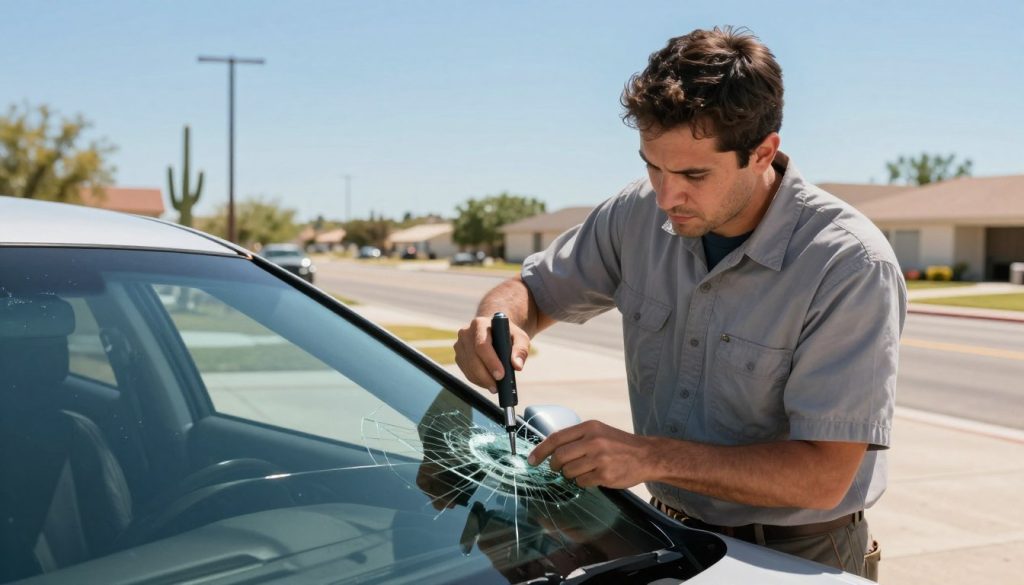
Have you ever wondered whether your policy will pay when a small chip appears on your car’s front glass, or if you must pay out of pocket?
You should know two quick facts up front. Coverage often depends on whether you have comprehensive or collision benefits. If another driver caused the damage, their policy may apply.
Policy language matters. Deductibles, exclusions, and the exact cause determine what your plan covers. File a claim before any work begins to avoid denied benefits.
In this article you will learn how to match your policy type to the damage you have now. You will also get a quick preview of repair versus replacement and why acting fast can save money and keep you safe.
Need help deciding? Miracle Auto Glass can assess your auto glass damage, explain your options, and handle the job if you choose to hire a pro.
Key Takeaways
- Coverage depends on your specific policy language, not general rules.
- Comprehensive often covers non-collision chips; collision may apply after accidents.
- File a claim promptly and before any service to protect potential benefits.
- Small chips can grow into big cracks—act quickly to save money and risk.
- Miracle Auto Glass is a local option to inspect and fix your glass properly.
How Texas auto insurance can cover windshield and auto glass damage
Begin with a quick guide to how different coverages handle auto glass claims. This helps you know what to check on your declarations page and what to tell your agent.
When comprehensive coverage applies to cracks and rock chips
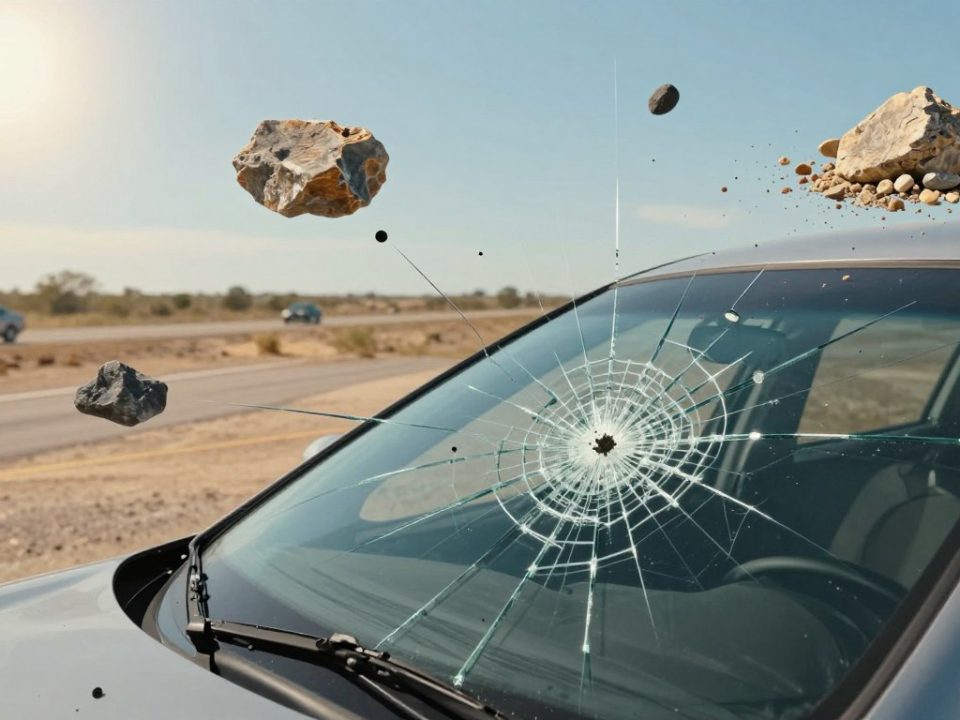
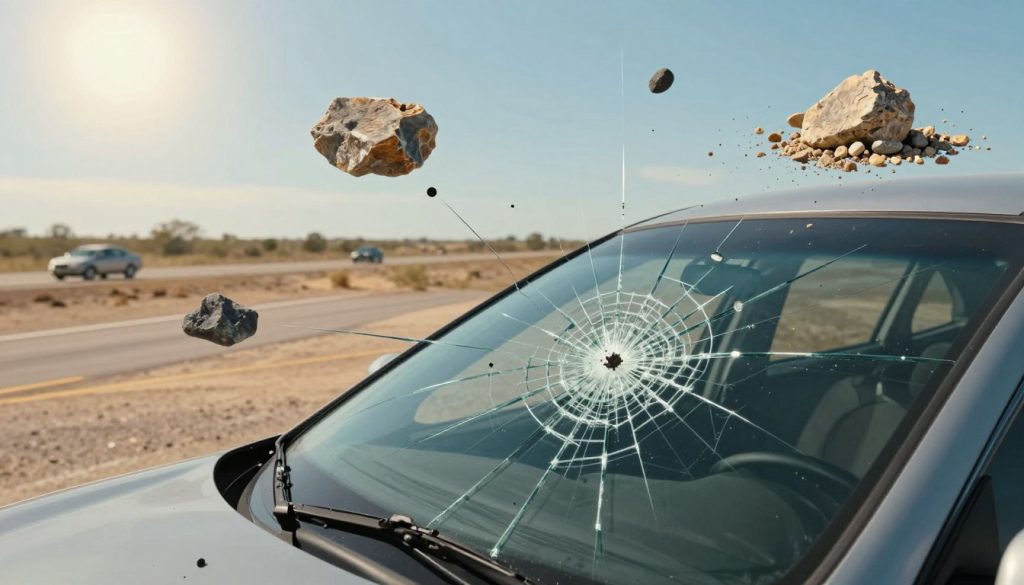
Comprehensive usually covers non-collision events. Think hail, falling debris, a rock hitting your glass, or an animal strike.
Typical scenario: a highway chip from a tossed stone or storm damage is often paid under comprehensive.
When collision coverage applies after a car accident
If damage occurs during a crash with another vehicle or fixed object, collision is the likely coverage to use. That applies even when the glass itself is the main loss.
When you can file against the other driver’s insurance policy
If another driver caused the crash, you can pursue their liability coverage so you avoid your deductible. Your insurer or the at-fault carrier will review fault and claim details.
Next step: once you confirm which coverage applies, Miracle Auto Glass can document the loss, schedule service, and supply insurer-ready paperwork to help close the claim quickly.
Windshield repair insurance Texas coverage: what to look for in your policy
Look closely at the contract language—small words can change what gets paid.
First, find these terms:
- “Comprehensive” or “other than collision”
- “Glass coverage,” “full glass,” or “safety glass” endorsements
- Exclusions, claim conditions, and any separate glass deductible
Key policy language that determines glass claim approval
Your actual policy controls whether a chip is repaired or the whole windshield glass is replaced. Even if a carrier commonly covers glass, your contract sets limits on labor, calibration, and parts.
Glass-only options, repair waivers, and when a deductible may be $0
Some companies waive a deductible for small repairs. Others offer a glass-only option with different out-of-pocket rules. Verify with your insurer before work starts.
How coverage varies by insurance company and by state rules
Carriers and states set different practices. What one state allows for a $0 deductible may not apply where you live. Miracle Auto Glass can gather photos, vehicle info, and an estimate to help you confirm coverage with your insurance company.
Repair vs replacement decisions for a cracked windshield
Start by inspecting how big the break is and where it sits—those facts usually decide the outcome.
Signs your damage is typically repairable
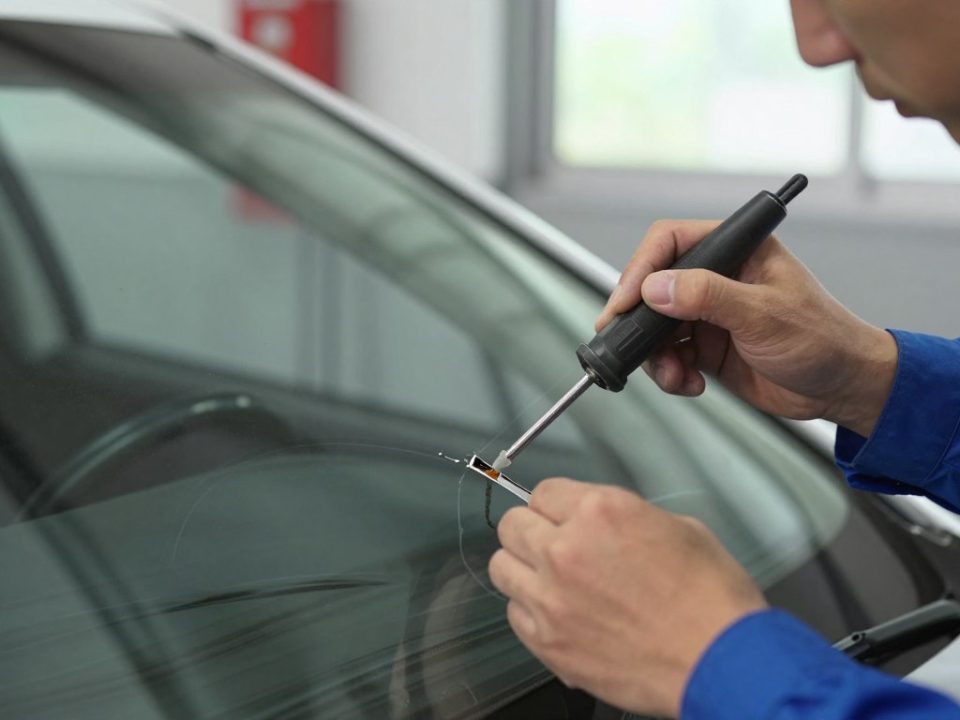
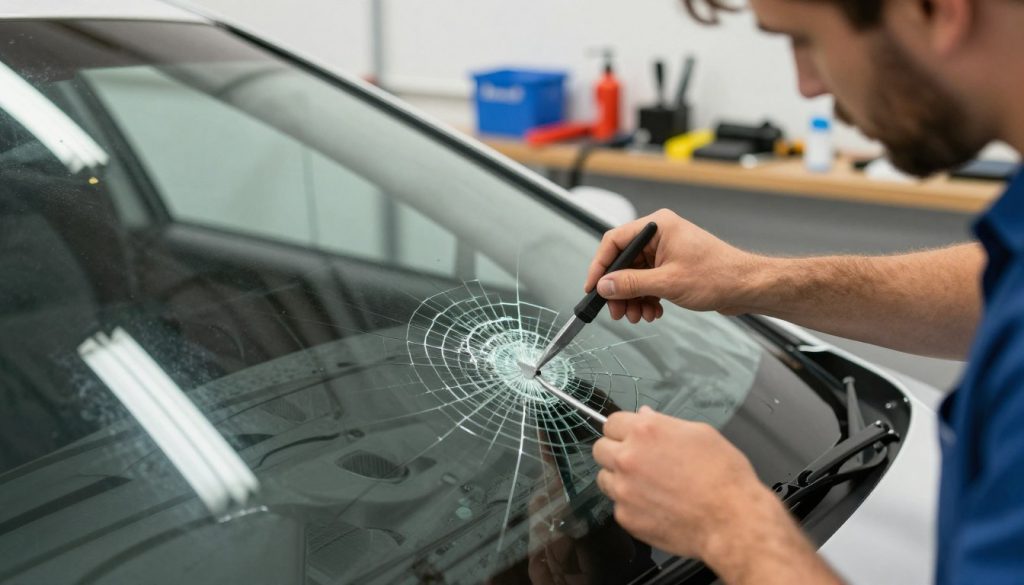
Small chips, short cracks, and marks that do not block your sight are often fixed rather than replaced. Insurers commonly use a six-inch guideline: if the chip or crack is under about six inches, repair may be possible.
When replacement is more likely
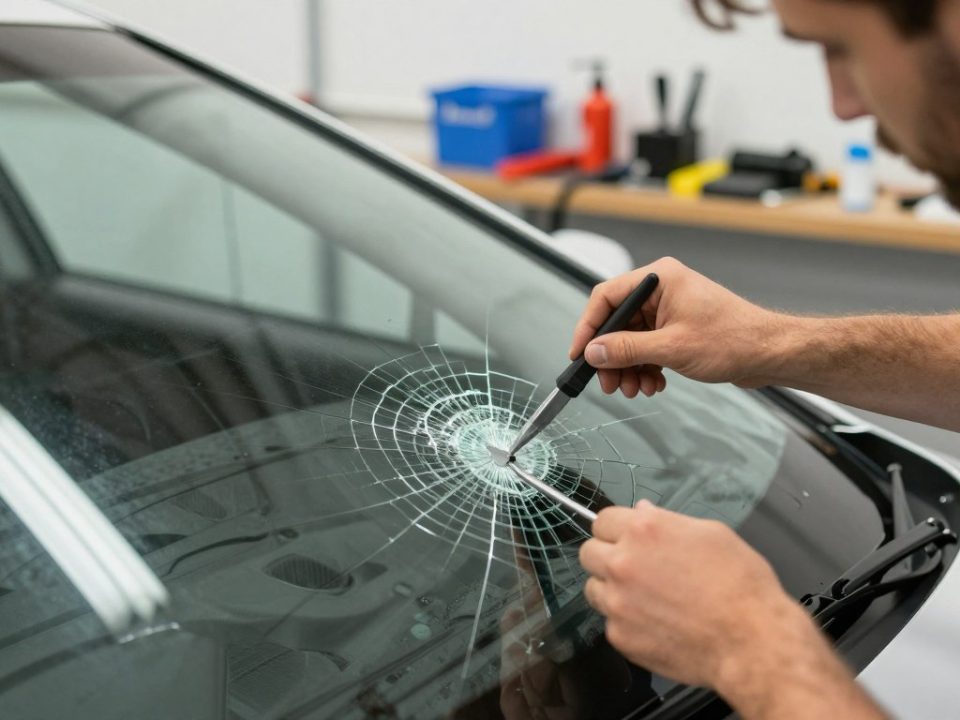
Long cracks, damage that reaches the edge, multiple impact points, or severe star breaks usually call for replacement. Damage in camera or sensor sight lines can also require a new pane for safety and calibration.
Why small chips can spread
A tiny rock strike can grow into larger cracks with heat, vibration, or potholes. Left alone, a minor break can force a full swap later, raising cost and risk.
How to decide
- Repairable: under ~6 inches, single impact, away from edges and sensors.
- Replace: long or edge-reaching cracks, multiple breaks, obstructed sight line.
| Option | When appropriate | What it means for you |
|---|---|---|
| Repair | Small chip/short crack, center of pane, single impact | Lower cost, preserves original glass, quick service |
| Replacement | Long cracks, edge damage, multiple impacts, sensor area | New pane, possible sensor calibration, longer time |
| Assessment | Uncertain breaks or safety concerns | Expert evaluation from Miracle Auto Glass to advise and act |
Need help? Miracle Auto Glass will assess your damage, recommend whether to repair or replace, and explain costs and timing so you can choose safely.
What you’ll pay: deductible, out-of-pocket cost, and value of filing a claim
A simple math check helps you decide if filing a claim makes financial sense.
Compare the estimated cost to your deductible before you call a provider. If the service price is lower than your deductible, paying out of pocket is often simpler.
Example: a full replacement around $400 with a $250 deductible usually means you pay $250 and your insurance covers the remaining $150, assuming the claim qualifies.

How to compare cost to your deductible
Step through the numbers: list the quoted cost, subtract your deductible, and see what the insurer would pay. If the net benefit is small, you may choose to pay yourself.
What “insurance covers the rest of the bill” means in practice
It usually covers approved labor and materials. You may still owe non-covered upgrades, a separate glass deductible, or costs outside policy limits.
Will a glass claim affect your car insurance premium?
Whether a claim raises your car insurance rate varies by insurance company and your history. Ask your insurer before filing if you’re worried about premium impact.
| Scenario | Typical out-of-pocket | When to file |
|---|---|---|
| Minor chip under deductible | Pay cash | Skip claim if cost < deductible |
| Replacement cost above deductible | Pay deductible, insurer pays rest | File a claim |
| Extensive damage or multiple breaks | Large out-of-pocket without claim | File to protect from bigger expense |
Next step: once you know whether you’ll pay deductible or pay out of pocket, Miracle Auto Glass can quote a repair or replacement and help you pick the most cost-effective route.
How to file an auto glass claim in Texas without delays
Immediate steps after a break can keep your claim straightforward and preserve evidence.
If your windshield breaks while driving: pull over safely. If your view is blocked, turn on hazard lights and stop until it’s safe to continue.
File the claim before any work starts. Report the loss as soon as possible and do not authorize repairs until your provider opens a claim. Carriers often require documentation before approving service.
Information to have ready
- Vehicle year, make, and model
- VIN and current mileage (if available)
- Photos, date/time, and location of the incident
- A short description of how the glass was damaged
Choosing a shop and network programs
Some insurers route glass claims through network administrators and issue a referral number. You still have the right to choose the place that performs service. Call your insurance company first so you understand approvals, guarantees, and billing.
Use Miracle Auto Glass as your execution partner: bring your claim details and Miracle Auto Glass will help schedule service, document the loss, and manage repair vs replacement based on what your claim supports. For more on smooth claim handling, see how we coordinate claims.
Safety, legal, and inspection considerations when driving with windshield damage
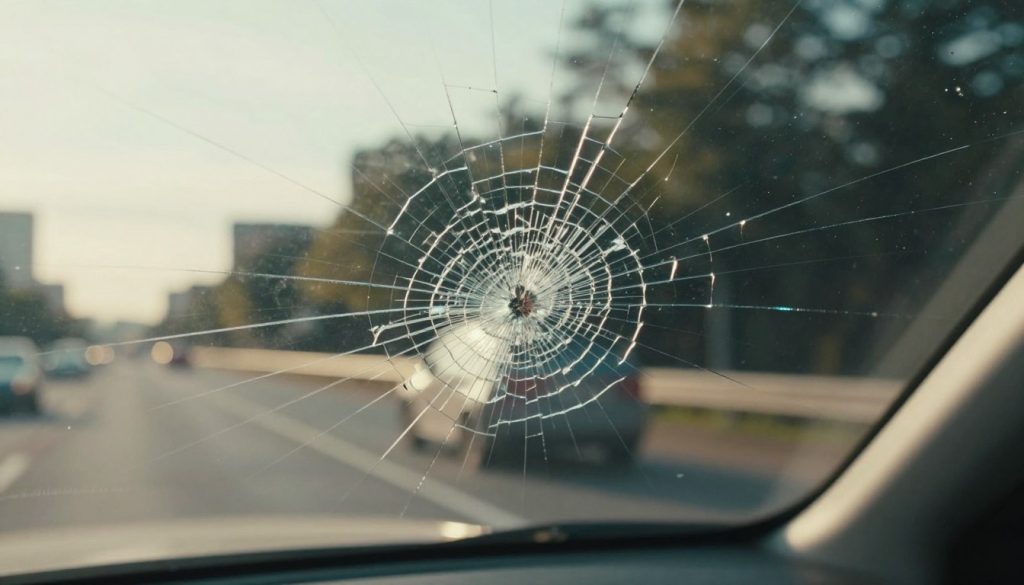
Driving with visible glass damage raises real safety and legal questions you should not ignore. A cracked windshield can blur or distort your view, create glare at night, and slow your reaction time in bad weather.
Structural support matters. The front pane helps keep your vehicle roof stable in a rollover. If glass fails, roof collapse and occupant injury risk rise.
Delaying fixes lets small chips spread. Potholes, bumps, temperature swings, and normal vibration can turn a minor mark into a full break that needs replacement and raises cost.
Inspection reality and legal variability
State rules differ. Some states pass minor damage; others reject certain chip sizes. Passing an inspection does not mean the glass is safe tomorrow.
Keep in mind that legal thresholds are not the same as best safety practice. You should choose safety over simply meeting minimum standards.
What to do next
- Assess how the damage affects your view and vehicle structure.
- Avoid delay—small fixes often prevent full replacement and lower overall cost.
- Schedule an auto glass repair assessment with Miracle Auto Glass to restore visibility and safety quickly.
Conclusion
, Start by pinpointing the cause of the break and checking which part of your policy applies. Match the event to comprehensive, collision, or the at-fault driver’s coverage, and verify your deductible and any glass options listed in your policy.
File your claim before any work begins so the insurer can document the damage and avoid delays. Small chips and short cracks are often repairable and cost less than full replacement. Bigger or edge-reaching breaks usually need a new pane for safety.
If you remain unsure about premium impact or coverage details, call your insurer. Then hire Miracle Auto Glass for a fast, expert assessment and quality auto service for your windshield and other glass needs.