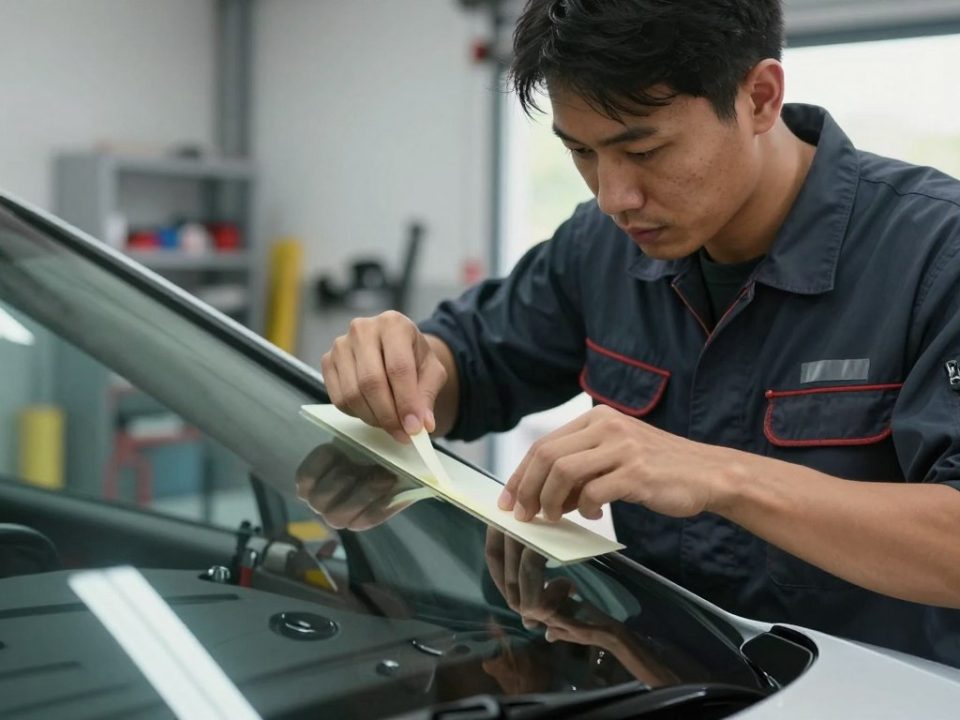
What to Expect From a Quality Windshield Replacement Warranty
Have you ever wondered whether a small chip will stay small or balloon into a bigger problem overnight?
If you live in San Antonio, you want clear facts fast. Miracle Auto Glass is a local option you can call for a quote and service when you’re ready to act.
Typical local ranges: rock chip fixes often run about $50–$150, crack work commonly starts near $120 and rises with length, and full replacements usually begin around $200–$400 for standard cars and can top $1,000 for luxury or tech-heavy models.
This buyer’s guide explains price ranges, the biggest quote factors, how to choose between fixing or replacing, and how safety systems and calibration can change what you pay. Acting quickly on small damage usually saves you money, and the goal is safe visibility and proper structural performance—not just making the blemish look better.
Later, you’ll learn what shops mean by “repairable” — size limits in inches, edge location, and driver sight-line concerns — plus when extra steps can affect your out-of-pocket total.
Key Takeaways
- Local price ranges: chips ~$50–$150, cracks from ~$120, replacements from ~$200–$400+
- Quick action on minor damage often keeps your expense low
- “Repairable” depends on size, location, and driver view
- Advanced driver tech can add calibration steps and extra charges
- Miracle Auto Glass can provide on-site estimates when you’re ready
Why windshield damage pricing in San Antonio depends on more than the crack
Even a tiny flaw in the front glass can change how safely you see the road.
An undamaged windshield keeps occupants in place during a crash and supports roof strength. Shops evaluate whether the glass can be returned to that safe state, not just made to look better.
How a defect changes your view:
- Even a short crack can scatter light and distort your line of sight, especially at night or under bright Texas sun.
- Cracks near the driver’s view often prompt more conservative recommendations or replacement to preserve clear vision.
- Waiting usually makes things worse—spread reduces the chance of a successful repair and often forces replacement.
Real-life triggers for spread in San Antonio include heat, road vibration, and pressure changes. Acting quickly is usually faster and cheaper than replacing the whole pane later.
Next: price ranges are predictable, but your final number depends on the specific factors we’ll review in the following section.
Average windshield crack repair cost ranges you can expect today
A clear price baseline makes comparing local estimates much easier.
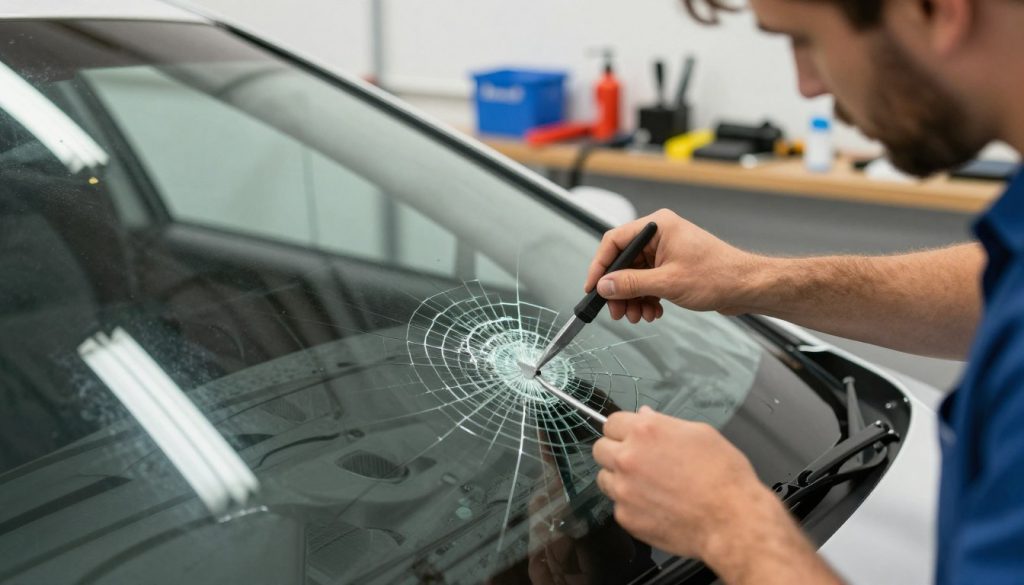
Typical chip work: Most San Antonio shops list chips from about $50–$150, with many quoting $80–$150. That usually covers resin injection, curing, and finishing. Mobile service fees, taxes, or rush appointments may add to the final bill.
Short crack starting prices: Simple repairs commonly begin near $120 and rise with length. Many shops cap repair attempts at roughly 12 inches; longer damage takes more time and has lower success odds, so the price climbs and replacement becomes likelier.
When replacement begins: Standard replacement often starts around $200–$400. Forbes-style averages sit near $350–$550, and non-ADAS jobs frequently range $210–$500. Luxury or tech-heavy models can exceed $1,000 due to special glass and calibration.
- Use these ranges as a shopping baseline to spot fair quotes.
- Ask for an itemized estimate from your local repair shop to compare apples to apples.
windshield crack repair cost factors that most influence your quote
Price estimates hinge on a few clear technical and logistical details the shop will check first.
Severity first: Technicians separate chips, short cracks, and full breaks. A small chip often needs little time and simple resin work. Longer breaks or shattered glass require replacement and add material and labor hours.
Repairable size and pattern: Many shops consider chips under a quarter and cracks under about 3–6 inches more likely repairable. Depth, branching, and contamination also change success odds, so length alone isn’t the whole story.
Why location and vehicle matter
Damage near the edge or in the driver line sight often leads shops to recommend replacement. Edge flaws can spread faster and weaken structure.
Your vehicle year, model, and trim affect parts availability. Rare or newer vehicles may need special glass and longer wait times, which raises price variability between shops.
Labor, service type, and supply
Shop installs usually cost less than mobile service, but mobile saves you a risky drive. Supply delays and shipping can push lead times and increase quotes week to week.
| Factor | Typical impact | What to ask | When it raises price |
|---|---|---|---|
| Severity (chip vs break) | Low to high | Is this repairable or needs replacement? | Long breaks or full pane failure |
| Size & pattern | Medium | How many inches and is there branching? | Deep, branching, or contaminated damage |
| Vehicle & parts | Medium to high | Is OEM glass needed and what’s lead time? | Luxury models or rare trims |
| Service type & time | Low to medium | Is mobile service available and included? | Same-day mobile calls or rush appointments |
Ask during the estimate: what steps are included, whether calibration is required, and if warranty covers spread. Those answers help you compare shops and the full process behind the quote.
Types of cracks and chips and what they usually mean for repair vs. replacement
Knowing the type of damage helps you set expectations for service and budget.
Chips from rocks and road debris
Small chips from a rock on the road are the most common scenario in San Antonio. These impacts often stay shallow and are usually repairable if caught early.
Action: Get them sealed quickly to stop spreading and to keep prices lower.
Starburst and bull’s-eye patterns
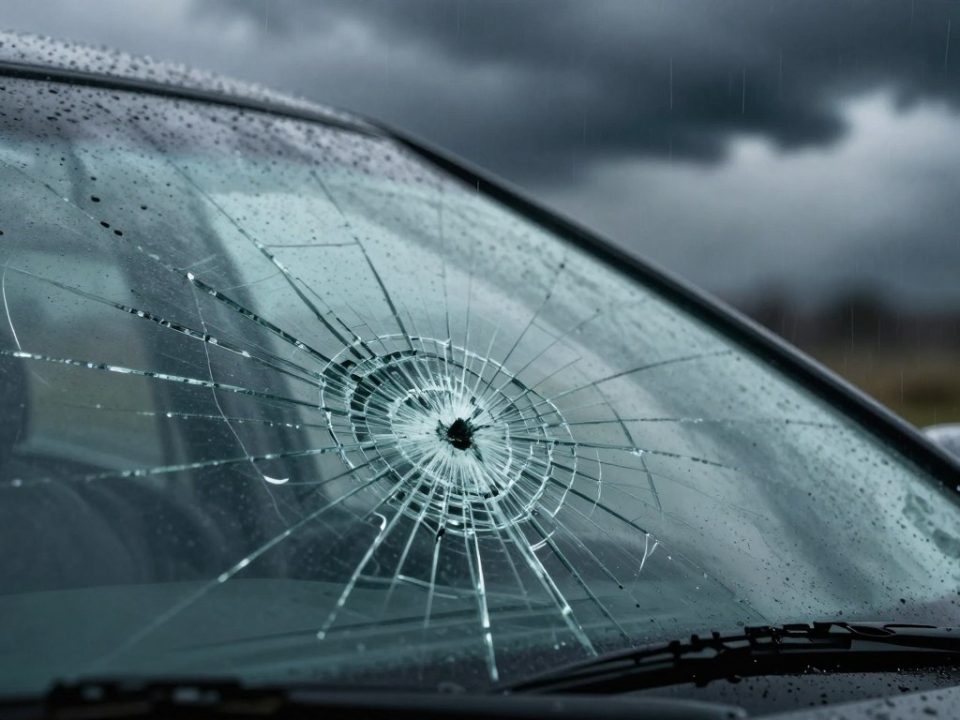
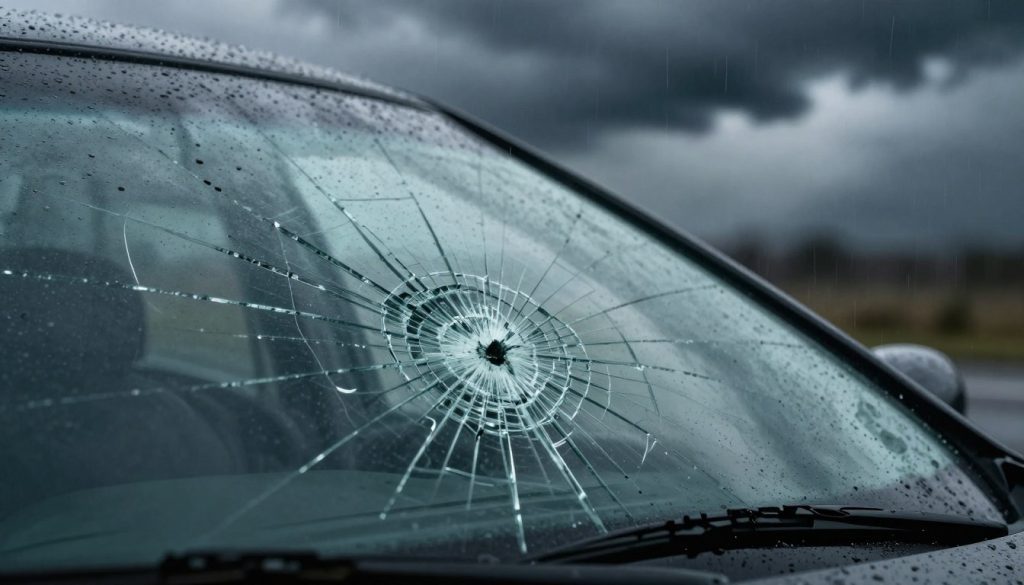
Starburst damage sends tiny lines outward. If the spread is under about three inches, many shops will attempt a fix.
Bull’s-eye looks like a circular crater. It can deepen if dirt or moisture enters the impact point, which lowers repair success.
Edge breaks that spread faster
Damage at the perimeter sees more stress. Edge breaks often grow quickly and commonly lead shops to recommend replacement rather than a patch.
Angel wing-style breaks and DIY kits
Angel wing marks have short, wing-like branches from a point. Some small cases respond to a good kit, but DIY results vary and optical clarity may not return fully.
| Damage type | Usual outcome | Why it matters |
|---|---|---|
| Rock chip | Often repairable | Shallow impact, quick seal prevents spread |
| Starburst | Repair if ≤ ~3 in. | Multiple radiating lines raise spread risk |
| Bull’s-eye | Repair or replace | Contamination can deepen the hole |
| Edge break | Usually replacement | Perimeter stress makes spreading likely |
| Angel wing | Possible DIY or professional | Small branches may accept resin but clarity varies |
Next step: Location, depth, and number of cracks—not just the pattern name—determine the safest path forward.
When windshield repair is enough and when windshield replacement is the safer buy
Deciding whether to fix or replace your glass comes down to safety, not looks.
Quick checklist:
- If damage is shallow and under about 3 inches, a professional fix is often enough.
- If a deep break reaches inner layers, replacement is the safer option.
- Multiple breaks or a run that reaches an edge usually means replace.
- Contamination from dirt or road debris weakens bonding and lowers fix success.
- Older glass or heavy pitting can make repairs less effective over time.
Depth vs. length
Depth matters as much as inches. A deep split that penetrates layers can harm structural strength even when short.
Multiple runs and edge hits
Several breaks, or one that goes edge-to-edge, raises spread risk and commonly triggers replacement for your vehicle.
Contamination and age
Dirt and debris inside a break prevent resin from bonding well. Older glass—about five years or more—may not accept a seal reliably.
| Condition | Usual outcome | Why |
|---|---|---|
| Shallow ≤3 inches | Repair likely | Good resin bonding, low spread risk |
| Deep or layered break | Replacement | Compromises strength and safety |
| Multiple breaks / edge hit | Replacement | Higher spread and vision risk |
| Contaminated or aged glass | Replacement preferred | Bonding poor; long-term clarity low |
Goal: restore clear sight and structural integrity for your car, not just a quick cosmetic fix.
For more on when to choose full replacement, see our replace vs repair guide before you decide.
Modern windshield technology that can increase replacement and recalibration costs
Today’s vehicle glass often supports safety systems, so swapping it out can go beyond simple installation.
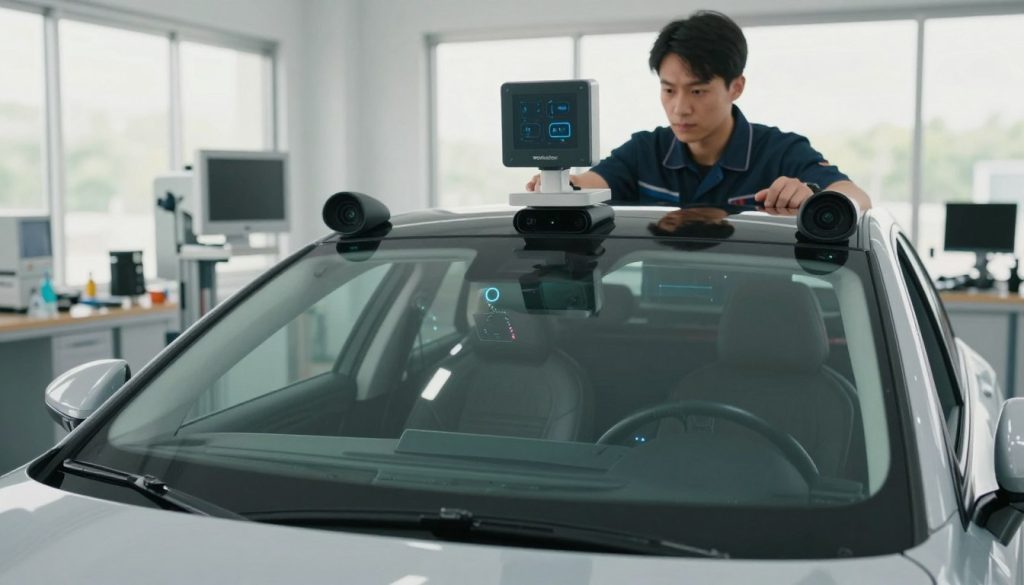
Advanced driver assistance and calibration explained
ADAS stands for features like lane keep, automatic braking, and adaptive cruise that rely on cameras and sensors mounted near the front pane.
If those mounts move during a replacement, the sensors need recalibration so the systems work reliably.
What to expect for budgeting
Calibration can add hundreds to your bill and, for complex setups, can reach into the thousands.
Plan for a realistic total by asking whether the quote covers both glass and electronic setup.
Common embedded features that raise complexity
- Heads-up displays that require precise alignment
- Rain sensors and camera modules tied to ADAS
- Heated glass, tinting films, and acoustic laminates
Why some vehicles exceed four figures
Luxury and tech-heavy models use pricier glass, special adhesives, and multi-step calibrations. That combination pushes the final replacement price higher.
| Feature | Why it adds price | Typical extra range |
|---|---|---|
| ADAS calibration | Special tools, static or dynamic testing | $250–$1,500+ |
| Heads-up display | Precise alignment and testing | $150–$600 |
| Heated / acoustic glass | Higher part and labor complexity | $200–$800 |
Ask the shop: is calibration included, is it static or dynamic, and will you get documentation? Compare total replacement numbers, not just glass price.
Next: choosing OEM or aftermarket glass affects fit, features, and final price.
OEM vs aftermarket auto glass choices and how they affect total cost
Choosing original or aftermarket glass affects fit, function, and what you pay at the counter.
Original equipment (OEM) means glass made or approved by your vehicle maker. OEM panes carry brand marks, match factory fit, and usually support all built-in features without surprises.
Advantages: better odds for perfect fit, known optics, and straightforward sensor alignment. Expect a higher price and sometimes longer lead times.
Aftermarket options and safety standards
Aftermarket glass is built to meet DOT safety standards and can be a reliable alternative. Many insurers accept aftermarket parts for coverage-based replacements.
Aftermarket often costs less and ships faster. But check feature compatibility—some aftermarket panes lack exact trims for ADAS mounts or heads-up displays.
Supply, availability, and what to ask
Availability affects final price and schedule. Rare or newly released vehicle panes can raise both price and wait time.
| Choice | Typical impact | When to pick |
|---|---|---|
| OEM (original equipment) | Higher price, exact fit | If you want factory branding or perfect sensor fit |
| Aftermarket | Lower price, faster delivery | If budget or timing is a priority and features match |
| Supply-limited | Higher price, longer wait | Rare models or specialty glass |
Before you decide, ask the shop what brand they use, whether the part affects warranty or optics, and if ADAS calibration is included. Also review your policy—your insurer may influence which option your coverage will allow.
For pricing guidance and local options, see our budget-friendly service guide.
Insurance and coverage: how to know if your policy will cover windshield repair
Not all auto policies treat glass the same—reading the fine print can save you time and money.
Comprehensive vs. liability
Comprehensive coverage usually handles non-collision damage from road debris or weather. Liability protects others if you cause damage and rarely covers your glass.
Full glass coverage and deductibles
Some plans add full glass coverage that reduces or eliminates your deductible. That can lower your out-of-pocket amount for a small fix or a full pane swap.
What insurers look for
- Size and location: many companies use clear size limits and driver-obstruction rules.
- Preference to repair: if damage meets “repairable” guidelines, insurers often approve a fix to save money and time.
- Documentation: take photos, note measurements, and save shop estimates before filing a claim.
| Question to ask | Why it matters | What to expect |
|---|---|---|
| Do you cover aftermarket glass? | Parts affect price and timing | Some insurers allow it; others require OEM |
| Is calibration included? | ADAS or camera work can add charges | May be extra unless listed in coverage |
| Can I pick the shop? | Choice affects service and warranty | Some policies let you choose; others limit vendors |
Local note: Texas rules and San Antonio practices can vary, so confirm state-specific standards before you file. Even with coverage, compare estimates if your deductible exceeds the likely cost.
How to save money without sacrificing safety or visibility
Smart shopping and quick action are the simplest ways to keep your out‑of‑pocket total low while preserving safe sight lines.
Compare quotes and ask what’s included
Get at least three local quotes so you can compare glass type, adhesives, moldings, disposal, mobile service, calibration, and warranty.
Ask whether the price covers ADAS alignment and parts like trims or sensor mounts. That detail separates a fair price from a bargain that skips critical steps.
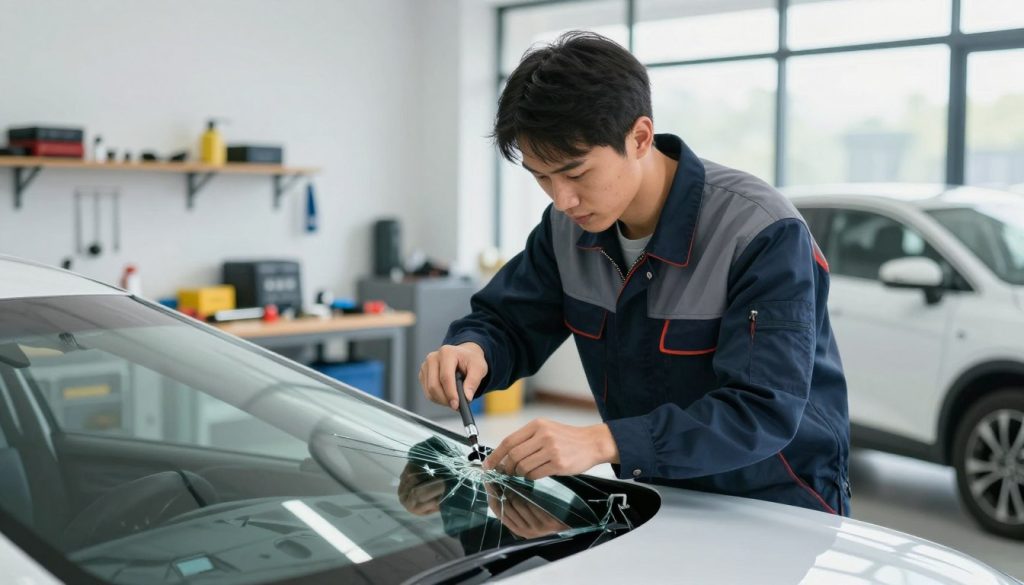
Act quickly to avoid spread and larger bills
Fast action often means a simple fix instead of a full replacement. A timely visit lowers the odds of more complex work and higher labor charges.
Ask about discounts and bundle pricing
Check for bundled pricing for multiple chips, seasonal promos, fleet rates, or membership deals. Local shops sometimes beat national chains on small jobs.
Why DIY replacement can backfire
Improper installation can weaken structural integrity, cause leaks or wind noise, and void warranties.
On vehicles with safety systems, skipping professional calibration can make sensors misread the road and cost you more later.
| Item | Ask | Included? | Why it matters |
|---|---|---|---|
| Glass type | OEM or aftermarket? | Yes/No | Affects fit and features |
| Calibration | Static or dynamic? | Yes/No | Ensures systems work |
| Mobile service | Extra fee? | Yes/No | Saves you driving risk |
| Warranty | Spread coverage? | Yes/No | Protects against failures |
Simple decision rule: if the estimated price for a small fix is near your deductible, paying out of pocket often makes sense. Prioritize clear sight and structural safety over the lowest sticker price.
Conclusion
What matters most is restoring safe sight and structure, not just hiding the blemish. Your final price depends on the damage type, size, location, and any vehicle technology that needs calibration.
Act early: small chip fixes often run about $50–$150, simple crack work commonly starts near $120, and replacement typically begins around $200–$400 for standard models but can exceed $1,000+ for tech-heavy panes with ADAS needs.
Compare quotes, confirm whether calibration and parts are included, and weigh your deductible against the estimate before you file with insurance.
Safety first: choose replacement when depth, edge hits, or multiple breaks threaten vision or structure. If you have a cracked windshield or any glass damage on your car, hire Miracle Auto Glass to inspect it, explain options, and complete the repair or replacement the right way.