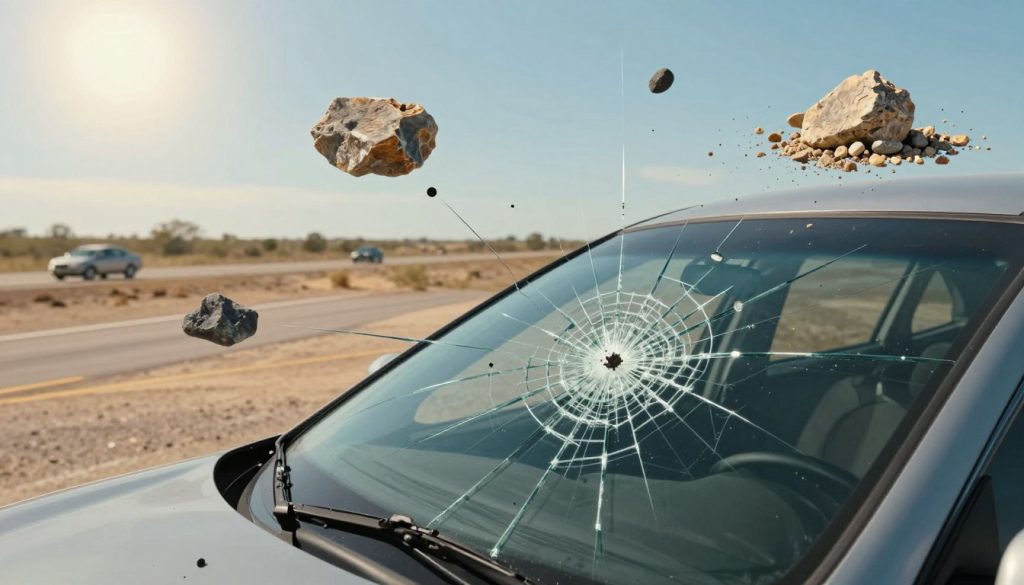

Common Causes of Windshield Damage in Texas

Same Day Windshield Repair Services in San Antonio
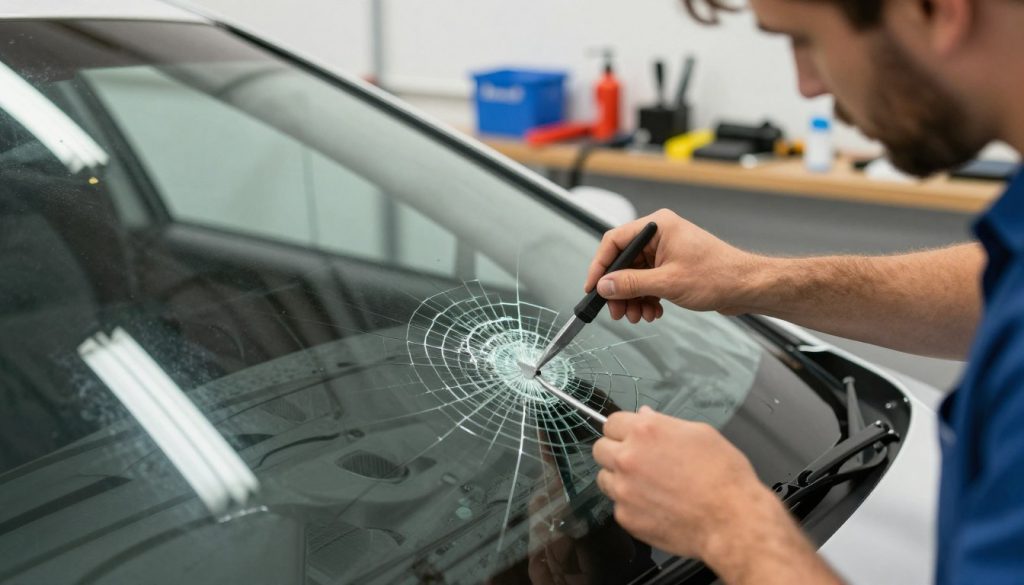
Can a dime-sized impact really stay in place, or will it turn your drive into a safety risk? This guide helps you decide when a simple fix is enough and when you should consider a full replacement.
You will learn a clear decision framework used across the industry: type of damage, diameter and depth, location, and time since the break. Most pros use a quarter benchmark—about one inch—as a practical test, but other factors matter.
This is not just cosmetic. The glass is part of your vehicle’s safety system, so choosing between a patch and a replacement affects strength and visibility. Miracle Auto Glass can evaluate your specific damage and tell you whether a fix will hold or a replacement is safer.
Key Takeaways
- Use the quarter test as a quick rule of thumb, but check depth and location too.
- Damage near edges or in the driver’s view often needs replacement.
- Combine diameter, type, and time since impact to decide the next step.
- Miracle Auto Glass offers fast assessments to confirm if a fix will work.
- Safety and structural integrity matter more than cost when you decide.
Why Chip Size Matters for Safety, Visibility, and Structural Integrity
A tiny break may seem harmless, but it can grow quickly under stress. Even minor damage can become a longer crack from road vibration, potholes, or sharp temperature swings.
If you wait, dirt and moisture collect and reduce the chance a resin fix will bond properly. Acting within 24–48 hours improves outcomes and keeps small problems from becoming unsafe ones.
How surface marks can spread into larger cracks
Repeated flexing makes radiating lines lengthen. Edge defects and older marks are most likely to run. Watch for short lines that appear after a cold morning or after hitting a bump.
Why growing damage reduces strength and view
As the damaged area grows, the glass loses its ability to help support the roof and to work with airbag deployment. Larger breaks also bend and refract light, harming your visibility and increasing distraction.
| Risk Factor | Why It Matters | Early Signs | Recommended Action |
|---|---|---|---|
| Minor damage near edge | Edges spread faster and threaten structural integrity windshield | Short radiating lines, darker appearance | Contact Miracle Auto Glass within 24–48 hours |
| Stress from road use | Vibration and bumps extend cracks | Lines lengthen after driving | Avoid rough roads; get prompt service |
| Contamination over time | Dirt and moisture block bonding for resin fixes | Repair looks cloudy or fails to hold | Book service quickly to preserve options |
| Large or branching breaks | Reduces overall integrity; affects safety and visibility | Multiple branches or a long crack | Professional assessment; replacement may be needed |
You’re not guessing for fun. Spotting early spreading behavior and acting fast lowers risk and helps you choose the right fix based on measurable factors.
Know What You’re Looking At: Common Types of Windshield Damage
Knowing how breaks differ helps you judge risk and describe the issue accurately.
Types fall into three clear groups. Each behaves differently and affects fixability.
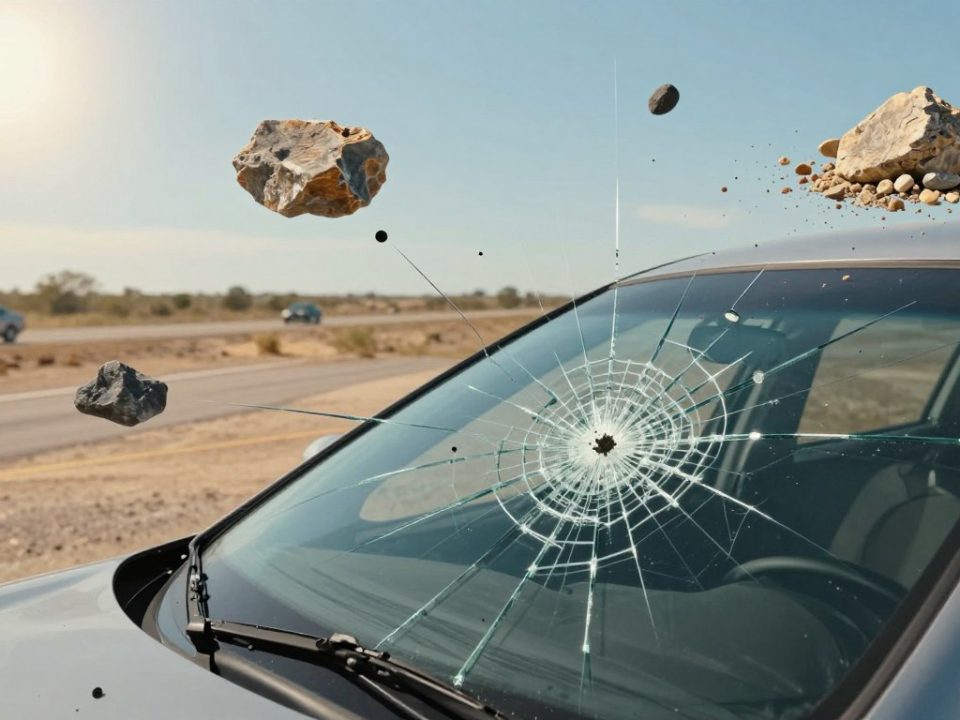
Chips from rocks and debris impacting the glass surface
Chips are localized impacts where debris removes glass and leaves a small crater.
They may show tiny legs or be a clean round pit. A compact chip often holds better than one with long splits.
Cracks and hairline line damage that can extend across the windshield
Cracks are linear breaks that start small and can run with temperature or stress.
Hairline cracks may look faint at first but can grow quickly after driving or a cold start.
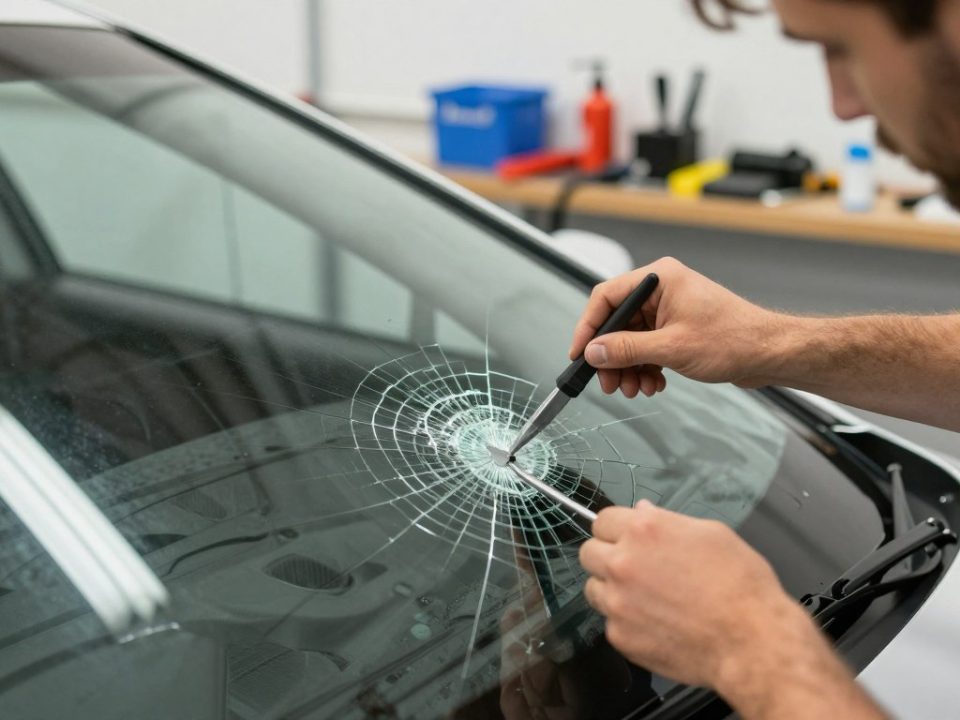
Combination breaks like bull’s-eye and star patterns (chip crack)
Combination breaks mix a central impact with radiating lines or rings.
A star pattern spreads faster than a compact bull’s-eye even if the same apparent diameter.
- Visual cues: dark separation lines usually mean a real break; a tiny white nick may be surface-level.
- Describe the mark (chip vs crack vs combination) when you book service so Miracle Auto Glass can set accurate expectations.
- Miracle Auto Glass can confirm the type quickly from a clear photo or in person to help you avoid waiting until the damage spreads.
Windshield Chip Size Repair: The Practical Size Limits You Can Use
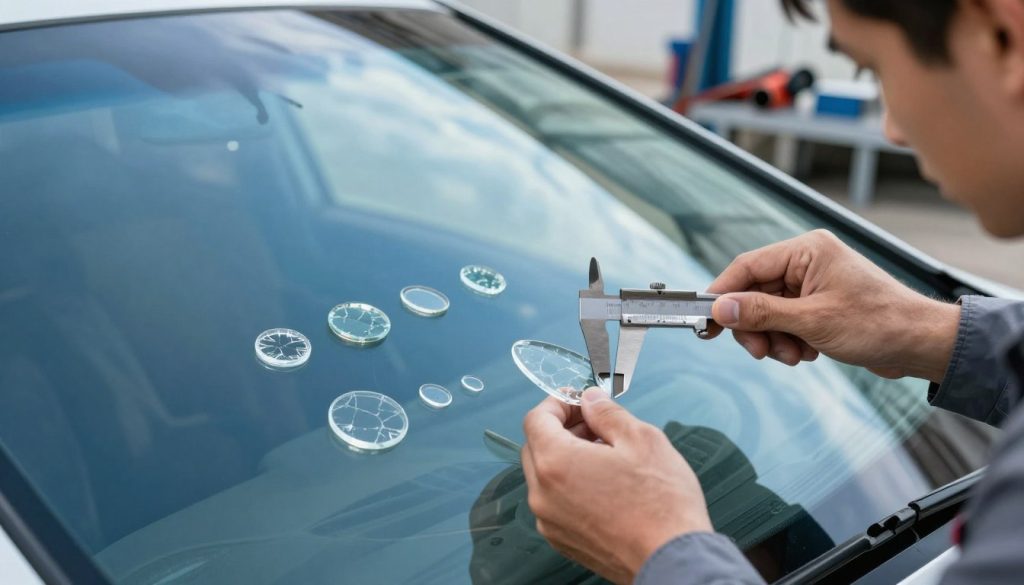
A neat rule of thumb helps you tell which small breaks can be fixed and which need closer inspection. Use a quick coin test, then check depth, branches, and cleanliness before you decide.
Quarter-size baseline
If the mark fits under a quarter (about 1 inch), most services can fill it when the location and depth cooperate. That gives a fast, practical threshold for many common fixes.
Bull’s-eye and star impacts
Round impacts with radiating legs can sometimes be treated up to about 1.5 inches. The length and number of legs matter more than the outer circle alone.
Depth, surface, and resin results
- Shallow pits accept resin more easily; deep breaks that reach inner layers are harder to fill fully.
- Grime, loose glass, or moisture blocks resin flow and lowers clarity and strength.
- Larger or dirty damage rarely disappears completely after work; expectations should be realistic.
| Threshold | Typical Outcome | When to Call a Pro |
|---|---|---|
| Under quarter (~1 inch) | Good chance of successful resin fill | Book evaluation if near edge or driver view |
| Up to 1.5 inches (bull’s-eye/star) | Often repairable, depends on legs | Inspection recommended before service |
| Over 1.5 inches | Harder to fully fill every microfracture | Consider replacement or specialist assessment |
Miracle Auto Glass can confirm whether your damaged area falls within these practical limits. If you’re unsure, get a quick evaluation via this guide: windshield chip size repair.
Crack Length Guidelines That Influence Repair vs. Windshield Replacement
Long cracks behave like slow-moving tears that pry open under normal driving stress. Length matters differently than a pit. A long line can spread with bumps and temperature change. That makes outcomes less predictable.
Most providers set a practical cutoff at about 3 inches. Beyond that, success rates for a standard repair drop as the line gains microfractures or branches.
- Why length matters: a long crack can unzip with daily vibration and reduce glass strength for your vehicle.
- Common service cutoff: many shops stop standard fixes around 3 inches to protect safety and clarity.
- Special techniques: in select cases, a single clean crack up to about 12 inches can be treated if it’s stable and out of the driver’s view.
- When replacement is likely: over 12 inches, intersecting lines, or active branching usually mean replacement is safer.
| Crack Length | Typical Outcome | Recommended Action |
|---|---|---|
| Under 3 inches | High chance of successful standard repair | Book service; measure and photograph the line |
| 3 to 12 inches | Possible with specialized repair, depends on location | Professional inspection; consider treatment if stable |
| Over 12 inches | Often weakens glass; harder to restore | Plan for windshield replacement for safety |
Next step: Measure the crack in inches and call Miracle Auto Glass for a yes/no recommendation. Tell them the length and where it sits so they can advise whether a repair or a windshield replacement is best for your vehicle.
Location Rules That Can Override Size (Even for Small Chips)
Where a mark sits can be more important than how big it is. You may have a tiny mark that still needs a full replacement if it sits in a critical area. Location can trump measurements when safety and clarity matter.
Primary vision area: defined practically as roughly 6 inches left and right from the steering wheel center and inside the driver-side wiper sweep. Damage here often carries stricter rules because it affects your view directly.
Why line-of-sight repairs are risky
Resin fills can alter optical clarity slightly. That distortion may distract you or bend headlights at speed. For that reason, many shops discourage fixes that sit in the driver line or close to center line sight.
Edge damage and structural concerns
Marks near the perimeter spread faster because the pane flexes more at the edge. Edge cracks longer than about 2 inches often push technicians toward replacement to protect integrity windshield and overall structural integrity.
- Rule of thumb: small marks in the driver line or wiper path may require replacement, even if the mark is otherwise minor.
- Tell Miracle Auto Glass exactly where the damage sits (center, passenger side, near edge, within wiper sweep) so you get a safety-first recommendation.
Timing, Dirt, and Moisture: When Waiting Makes Repairs Harder
Acting quickly gives you the best chance to restore clarity and strength after a fresh break. Fresh damage is cleaner, so resin can flow in and bond more effectively.
Fresh damage vs. older marks
Within 24–48 hours, a new crack is the easiest to treat. Clean glass takes resin well and yields better clarity.
Over time, debris and moisture settle into tiny gaps. That contamination blocks bonding and can turn a good repair candidate into a poor one.
Simple steps before you book
Avoid slamming doors and sudden temperature swings. Keep the area dry and cover it if you park under sprinklers.
If you can’t get immediate service, do these small things to slow spread and limit dirt.
When a shop may recommend replacement
Older damage often means reduced repair quality and shorter longevity. In those cases, a technician may advise replacement to restore safety.
Book service with Miracle Auto Glass as soon as you notice new damage to improve results and reduce the chance of more costly work later.
How to Assess Your Windshield Damage at Home Before You Book Service
Grab a quarter and a white sheet of paper to run a quick check. These simple tools help you estimate whether a mark is likely fixable or needs closer attention.
Quarter test: step-by-step instructions
Place a quarter over the damaged area and compare the widest points to the coin. If the mark stays within the coin boundary, it often falls under the one-inch common guideline.
If the damage clearly extends beyond the coin, especially with legs or branching lines measured in inches, you may need a pro inspection or replacement option.
White paper check and spotting hidden cracks
Tape a white sheet behind the mark inside the car. The contrast will reveal faint cracks that look like dark or silver lines from outside.
How to tell a nick from a small crack and prior repairs
A nick is usually a tiny white surface spot and may be optional to fix. Any visible line running from that spot is a small crack and is smart to address.
Previously repaired areas often look clearer where cured resin sits and spotty elsewhere. Re-repairs are often not possible because cured resin blocks new resin from penetrating.
| Test | What to look for | Quick decision |
|---|---|---|
| Quarter test | Mark within coin ≈ 1 inch | Likely repair option; photo for confirmation |
| White-paper | Hidden lines visible | Treat or book service soon |
| Visual check | Clear cured resin or surface nick | Seek pro advice; rework may be limited |
Practical rule: fix any mark with legs, any small crack, or any glare. Monitor tiny surface nicks outside critical view areas as an option.
Take a clear photo with white paper behind the damaged area and share measurements with Miracle Auto Glass so they can confirm whether a same-day visit or a replacement is best for your car.
What a Professional Windshield Repair Looks Like Today
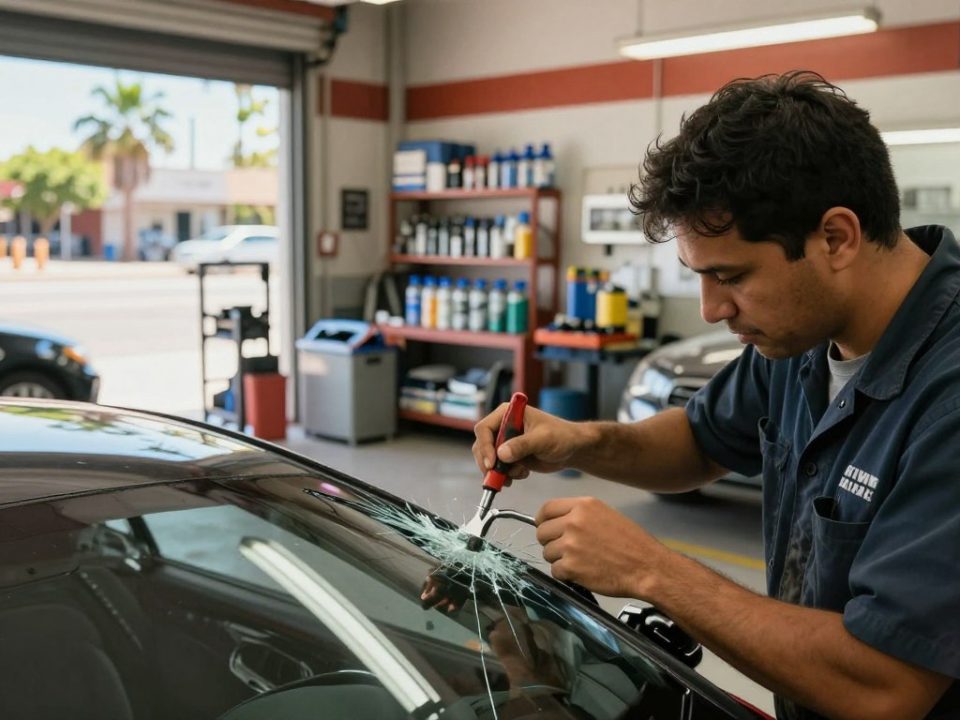
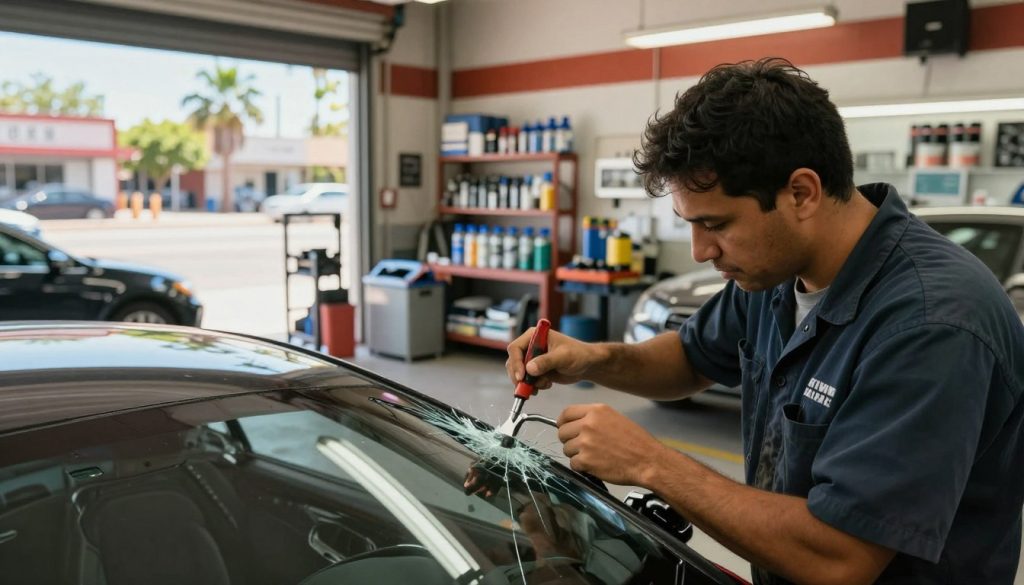
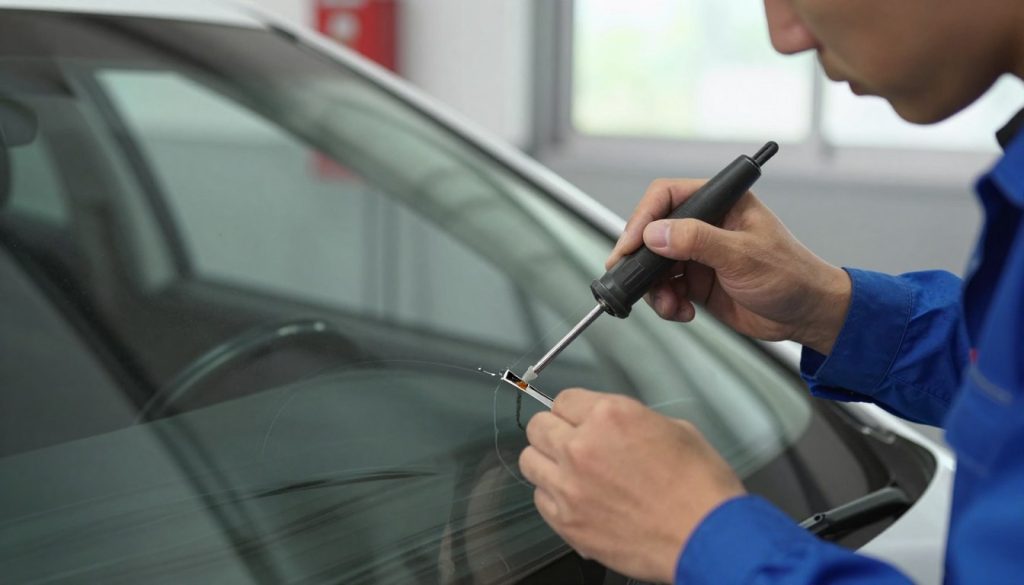
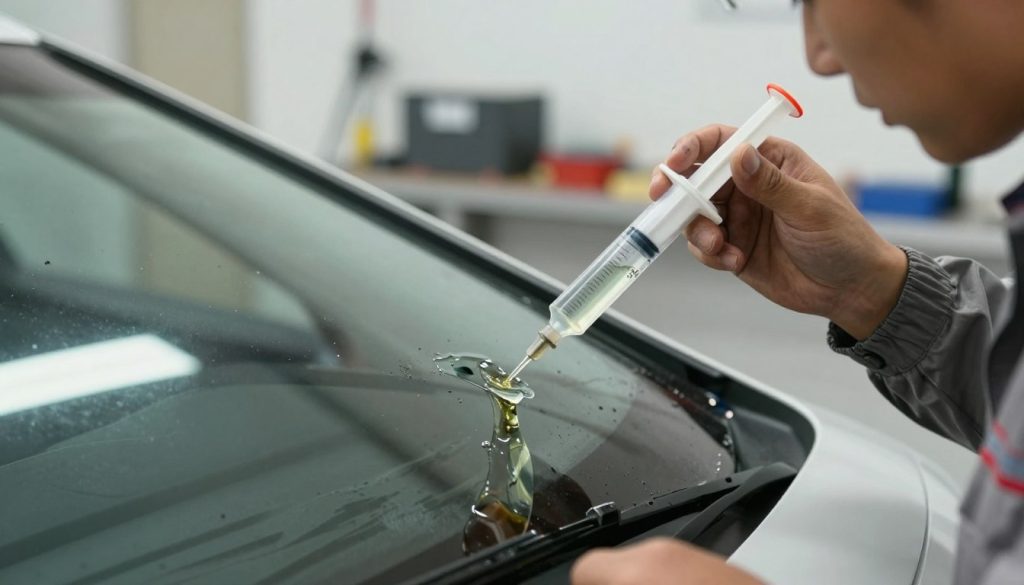
A modern fix uses targeted tools and clear steps to restore strength without guessing. You’ll see technicians use vacuum-assisted gear to pull trapped air out of a break so resin can reach the tiniest paths.
How vacuum-assisted tools help
In plain terms, a vacuum removes air bubbles from the crack so the resin fills tight gaps. That improves bond and makes the work stronger long term.
Core steps you’ll see
- Clean the area to remove dirt and moisture.
- Create a seal, then apply vacuum to clear trapped air.
- Inject resin and use a UV lamp to cure it.
- Polish the surface and perform a final inspection.
Each step is designed to restore structural strength in the glass and reduce visibility of the mark. Some results look nearly invisible; others leave a faint trace depending on contamination and depth.
Time expectations: most chip and small crack repairs take about 30–60 minutes. For clear communication and quality work, choose Miracle Auto Glass so you get honest instructions, a safety check, and a final confirmation before you drive away.
When Replacement Is the Safer Option Than Repair
When damage goes beyond a small blemish, replacement often becomes the safest call. You should treat this as a safety decision, not a cosmetic one. If the glass no longer meets strength or visibility standards, a full replacement restores original performance.
Clear triggers for replacement
If a mark exceeds a quarter, spreads quickly, or several chips sit close together and weaken the same area, replacement is usually recommended. Multiple impacts can act like a single larger flaw and reduce the pane’s load-bearing capacity.
Why intersecting cracks and complex patterns fail fixes
Intersecting cracks and branching patterns are poor candidates for resin fixes. Resin often can’t penetrate every branch, and untreated microfractures can keep moving after a repair attempt.
Deeper-layer damage and optical risks
When a break reaches the laminated layers or shows clear separation, replacement restores structural integrity and long-term performance. Likewise, any mark in your driver line or primary line sight may require a swap even if the apparent size looks repairable. Optical distortion there can endanger your driving.
| Trigger | Why replacement is safer |
|---|---|
| Chips larger than a quarter or clustered chips | Weaken the same area; lowers strength |
| Intersecting cracks or complex patterns | Resin may not stabilize all branches |
| Damage in driver line or primary view | Any distortion can impair visibility |
Previously worked areas often cannot be fixed again. A failed attempt usually leads to windshield replacement to ensure safety for your vehicle and everyone in your car.
When in doubt, contact Miracle Auto Glass. We’ll confirm whether replacement is the safer option and perform windshield replacement to restore clarity and integrity.
Conclusion
Before you schedule service, use these quick rules to judge risk and urgency.
Measure impact diameter with a quarter, note bull’s-eye or star patterns (often treatable up to ~1.5 inches), and measure any linear break in inches. Most standard fixes work well under about 3 inches; select cases extend to 12 inches.
Watch for overrides: damage in your primary view, near the edge, contamination from waiting, or prior work can push you toward replacement even if the mark seems small.
Do the coin and white-paper checks at home to collect clear info before you call. Then hire Miracle Auto Glass to repair windshield or perform a full replacement and handle other auto glass needs so you can drive with confidence.