
Why Rear Windshields Sometimes Shatter Suddenly

Chip Repair vs Replacement: When Each Option Makes Sense

Ever been driving in the rain and your windshield fogged up? It’s not just annoying; it’s also dangerous. The sudden change in temperature and humidity makes your windshield mist up, making it hard to see.
The problem often comes from humidity control inside your car. When the air inside is more humid than outside, it causes condensation on your windshield, worse in the rain.
But there are ways to solve this. In this article, we’ll look at why your windshield fogs up in the rain. We’ll also share tips on how to stop it. For help with windshield damage, consider contacting experts like Miracle Auto Glass.
Key Takeaways
- Understanding the causes of windshield fogging in rain.
- Simple methods to improve humidity control in your vehicle.
- Practical tips to prevent windshield fogging.
- The importance of maintaining clear visibility while driving.
- How to address windshield damage with professional help.
The Science Behind Windshield Fog in Rain
Rainy weather often leads to windshield fogging, a frustrating and dangerous issue. Understanding the science behind it is key to finding solutions.
Understanding Condensation Principles
Condensation happens when air hits its dew point, turning water vapor into liquid. On your windshield, warm, moist air inside meets the cooler surface. This creates a layer of water droplets that block your view.
Key factors influencing condensation include:
- The temperature difference between the inside and outside of your vehicle
- The humidity level inside your car
- The surface temperature of your windshield
Temperature Differentials and Their Effects
Temperature differences are key in windshield fogging. A big difference between inside and outside temperatures makes fogging worse. For example, on rainy days, the outside is cooler, while the inside is warmer.
Adjusting your air direction settings and using your defogger can help. They manage temperature and airflow in your vehicle.
Common Causes of Windshield Fogging During Rainy Weather
Windshield fogging during rain is a common problem. It comes from high humidity, temperature differences, and poor ventilation. Knowing these causes helps find solutions.
High Humidity Levels Inside Your Vehicle
High humidity inside your car causes fogging. Wet clothes or breathing on the cold windshield adds moisture. Controlling humidity is key to avoid fog.
Temperature Differences Between Interior and Exterior
The temperature gap between inside and outside causes fog. On rainy days, the cold outside and warm inside create fog. Adjusting your car’s temperature helps.
Poor Vehicle Ventilation Systems
A bad ventilation system lets moisture build up. It’s important to keep your system clean and working well for visibility safety.
| Cause | Description | Solution |
|---|---|---|
| High Humidity | Moisture from wet clothing or breathing | Use humidity control measures |
| Temperature Differences | Cold exterior, warm interior | Adjust interior temperature |
| Poor Ventilation | Inadequate removal of moisture | Maintain ventilation system |
Why Windshield Fog Creates Dangerous Driving Conditions
Foggy windshields are a big danger on the road, more so in rainy weather. When your windshield fogs up, it makes it hard to see. This makes driving very unsafe.
Reduced Visibility Statistics and Risks
Not being able to see clearly is a big reason for accidents. Many crashes happen because drivers can’t see well.
National Highway Safety Administration Data
The National Highway Safety Administration says poor visibility causes a lot of accidents every year. This shows how important it is to see clearly while driving.
Reaction Time Reduction in Poor Visibility
Poor visibility makes your reaction time slower. This means you can’t react fast enough to road hazards. Studies show that even a little fog can make stopping much harder.
Accident Rates Related to Poor Visibility
Accidents go up when it’s hard to see, like in rain or fog. Keeping your windshield clear is key to accident prevention. Clear visibility means you’re less likely to crash.

To keep your visibility safe, deal with windshield fog fast. Use your defogger right and make sure air flows well. These steps can make driving much safer for you.
Immediate Solutions for Clearing Foggy Windshields
Foggy windshields can be a big problem in rainy weather. But, there are quick fixes you can try. It’s important to act fast to stay safe while driving.
Proper Use of Defogger Settings
Start by using your car’s defogger right. Switch to the defrost setting, shown by a windshield with wavy lines. This setting blows warm air on the windshield to clear the fog. Adjust the temperature to warm or hot for better results.
Air Direction Techniques for Quick Clearing
Changing the air direction can help clear your windshield faster. By adjusting the airflow, you can remove fog more efficiently.
Front Windshield Clearing Methods
For the front windshield, aim the airflow to cover the whole area. This spreads the warm air evenly, speeding up defogging. Using demister vents well can help a lot.
Side Window Defogging Strategies
Don’t overlook the side windows! Adjust the air vents to blow air towards them. This stops fog from forming on the sides, keeping your view clear.
Temperature Adjustment Strategies
Changing your car’s temperature can also help defog your windshield. Try to match the inside and outside temperatures to cut down on fog. This balance can reduce condensation.
Long-Term Prevention Methods for Windshield Fog in Rain
Keeping your windshield clear in the rain involves more than just quick fixes. It’s about regular care of your car’s climate system and managing humidity. These steps can greatly cut down on foggy windshields on wet days.
Regular Maintenance of Vehicle Climate Systems
Preventing fog starts with regular car upkeep. This means keeping an eye on your vehicle’s climate control system.
Air Filter Replacement Schedule
Don’t overlook your car’s air filter. A dirty filter can make the air inside your car worse and raise humidity levels. Look in your car’s manual for when to replace it, usually every 12,000 to 18,000 miles.
Vent Cleaning Procedures
Cleaning your vents is also important. Dust and dirt can block your climate system’s efficiency. Use a soft brush or a vent cleaning tool to clear out these obstructions.
Humidity Control Solutions for Your Car
Managing humidity in your car is key to avoiding fog. Here are some ways to do it:
- Use a Dehumidifier: Portable dehumidifiers made for cars can pull moisture from the air.
- Moisture-Absorbing Products: Items like silica gel packets or mats can soak up extra humidity in your car.
- Regularly Check for Leaks: Make sure your car’s doors, windows, and trunk don’t have leaks that let in moist air.
By sticking to these long-term prevention tips, you can have a clearer windshield and safer drives in the rain.
Products That Help Combat Windshield Fogging
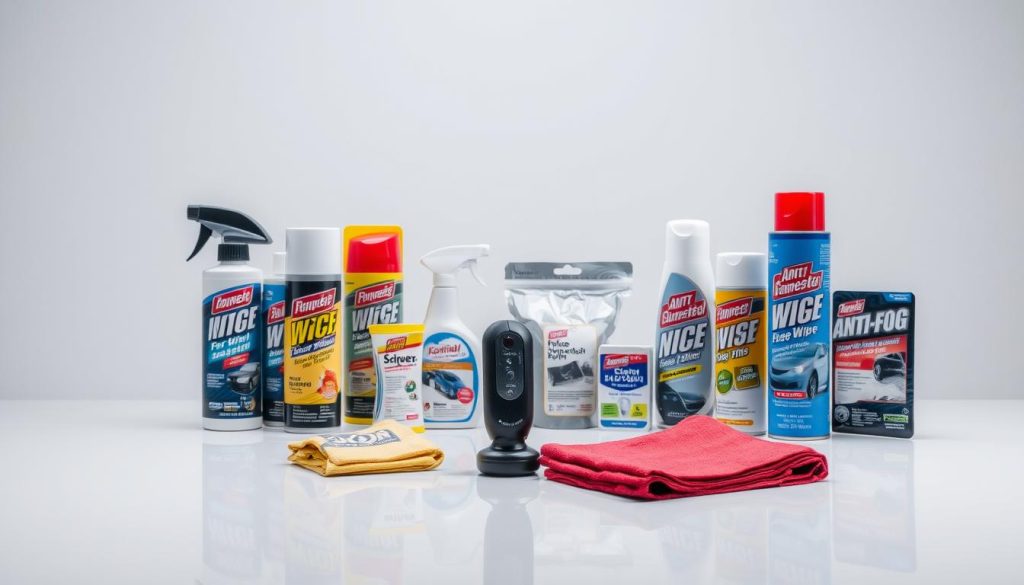
Right products can fight windshield fogging, making driving safer. A clear windshield is key in rainy or humid weather for safety and visibility.
Anti-Fog Sprays and Treatments
Anti-fog sprays and treatments stop windshield fogging. They make the windshield hydrophobic, pushing water away and reducing fog. Many types are available, like those with surfactants for better visibility.
To use these sprays, follow the maker’s guide. Spray on a clean windshield and wipe with a microfiber cloth. Regular use keeps your windshield clear in rain. For more tips, check this resource.
Dehumidifiers and Moisture Absorbers
Dehumidifiers and moisture absorbers also fight fogging. They lower moisture inside your car, reducing fog on the windshield. Dehumidifiers remove moisture, while absorbers like silica gel packets soak it up.
These tools are great in humid weather. They keep your car dry, preventing fog. They’re a good part of your fog-fighting arsenal, along with defoggers and car upkeep.
How Modern Vehicles Address Windshield Fogging Issues
Modern cars have advanced tech to fight windshield fogging. This makes driving safer, even in the rain.
Advanced Climate Control Systems
Modern cars have advanced climate control systems. These systems keep the cabin’s temperature and humidity just right. This helps prevent fog on the windshield. Advanced climate control also controls air flow and temperature precisely, keeping the windshield clear.
- Automatic air conditioning systems that adjust temperature and humidity
- Multi-zone climate control for personalized comfort
- Air quality sensors that detect and respond to external conditions
Sensor-Based Automatic Defogging Technology
Another big step is sensor-based automatic defogging. It uses sensors to find moisture on the windshield. When it finds some, it turns on the defogger. Automatic defogging keeps the windshield clear, making driving safer.
With these techs, modern cars offer a safer and more comfy ride. This is true, even when the weather is bad.
DIY Hacks for Emergency Fog Removal
Emergency fog removal is key for safe driving in sudden rain. Fogging up your windshield can make it hard to see. Luckily, there are DIY hacks to clear the fog and keep you safe.
Household Products That Can Help
Some common household items can defog your windshield. Here are a couple of unusual methods:
Using Shaving Cream as Anti-Fog Treatment
Putting a bit of shaving cream on your windshield and wiping it off can stop fog. The surfactants in shaving cream cut down on condensation, keeping your view clear.
Potato Trick for Emergency Defogging
Wiping a raw potato on your windshield and then cleaning it with a dry cloth is an old trick. The starch from the potato leaves a thin film that stops water from condensing on the glass.
Techniques When Your Defogger Isn’t Working
If your defogger isn’t working, there are other ways to clear your windshield. Opening a window can help balance the temperature inside and outside your car, reducing fog. You can also use your air conditioning to dry out the air inside your vehicle, which can clear the fog faster.
Visibility Safety Measures During Rainy Conditions
Visibility is key during rainy weather. There are several measures you can take to stay safe on the road. Driving in rainy conditions requires extra caution and a good understanding of how to maintain clear visibility.
Maintaining Safe Following Distance
Maintaining a safe following distance is critical during rainy conditions. Increasing the gap between you and the vehicle ahead allows more time to react to unexpected situations. This reduces the risk of accidents.
Using Headlights Properly in Rain
Using your headlights correctly can significantly improve your visibility and make your vehicle more visible to others. Turn on your low-beam headlights when driving in rain. They help illuminate the road without causing glare.
When to Pull Over Due to Poor Visibility
If the rain severely impairs your visibility, it’s important to know when to pull over. Find a safe location to stop and wait for the weather to improve. This decision can be lifesaving, during heavy downpours.
By following these visibility safety measures, you can significantly reduce the risks associated with driving in rainy conditions. Always prioritize safe driving practices to ensure your safety and the safety of others on the road.
When to Seek Professional Help for Persistent Fogging Issues
If your windshield keeps fogging up, it’s time to get help. This could mean a bigger problem with your car’s air system or the seal around the windshield.
Signs of Ventilation System Problems
A bad ventilation system can cause fogging. Look out for weak air from vents, air that doesn’t spread evenly, or odd sounds from the dashboard. If you see these signs, get a pro to check your system.
Potential Windshield Seal Failures
Seal problems can also make your windshield fog up. Here are a couple of signs to watch for:
Detecting Water Leaks Around Windshield
Look for water leaks around the windshield. Check the edges for moisture or water. If you find any, it might mean the seal is failing.
Age-Related Seal Deterioration
The seal around your windshield can wear out over time. If your car is getting old, check the seal as part of your upkeep.
Conclusion: Maintaining Clear Visibility for Safer Driving
Clear visibility is key for safe driving, more so in rainy weather when fog can block your view. Knowing why windshield fog happens and how to fix it helps keep you safe on the road.
Keeping your car’s climate system in check, using defoggers right, and using anti-fog products can help. Also, knowing the dangers of poor visibility and acting to avoid them can lower accident risks.
If your windshield or other glass is damaged, getting it fixed by a pro is vital. Miracle Auto Glass can help repair or replace your glass, making your car safe to drive. By keeping your view clear and fixing any glass issues fast, you’ll drive safer.