A camera may sit behind the rearview mirror, where you might not notice changes during a glass repair. Your driver aids can still depend on its view, so confirm the required work before relying on them. Safety comes first when you decide whether the repair is complete.
Treat calibration as part of completing the safety repair, not as an optional add-on.
Key Takeaways
- Calibration may be required if windshield work disturbs a camera or its view.
- Your exact vehicle details and OEM procedures set the required work.
- Driver-assistance features may use camera input along with other sensors.
- A dashboard warning alone cannot confirm accurate camera alignment.
- Ask for a record of completed calibration and its result.
What Does the Windshield Camera Control?
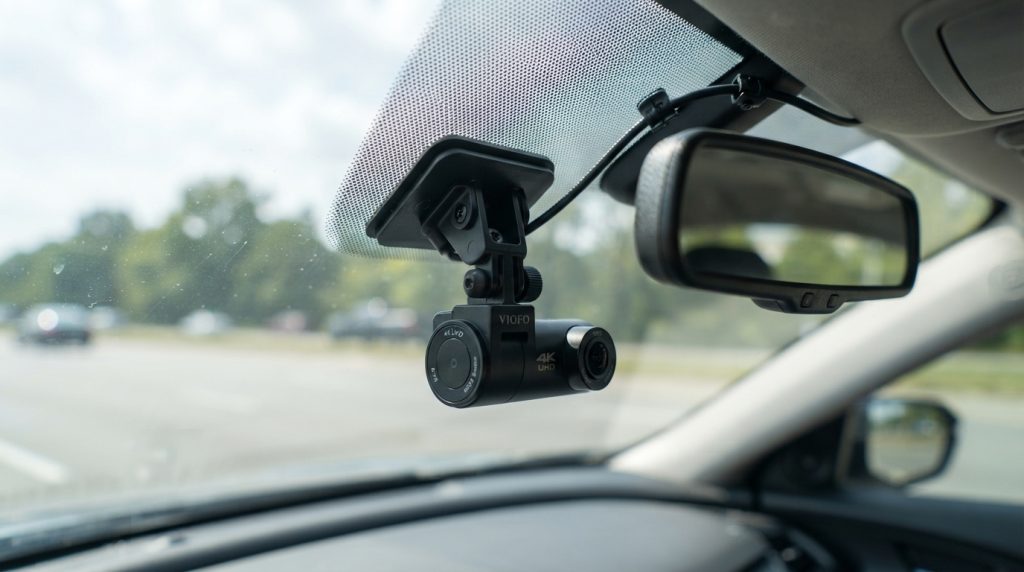
The small camera near your rearview mirror can provide the road information several driver-assistance features use. ADAS means Advanced Driver Assistance Systems, the vehicle technologies that use cameras and other sensors to help warn you about hazards or support actions such as braking and steering.
The camera’s images feed vehicle software and may work alongside radar and other sensors. Forward-facing ADAS cameras commonly read lane markings, road signs, nearby vehicles, and pedestrians. The software uses those images to help assess what is happening ahead.
Examples include lane departure warning, which can alert you when you drift from a lane. Lane keep assist may help steer you back, while forward collision warning can alert you to a possible crash.
Automatic emergency braking may use camera input to help detect a possible collision and apply the brakes. Adaptive cruise control can use camera information to help track traffic ahead and manage speed or following distance.
NHTSA’s automatic emergency braking requirement for new passenger vehicles starts with the 2029 model year. That rule does not mean every vehicle has the same camera, sensors, or features.
Your vehicle may use a camera for some functions and other sensors for others. Check your own equipment before assuming a feature works in a particular way. Check your owner’s manual or vehicle feature display to identify the systems installed on your specific vehicle.
Why Is ADAS Calibration After Windshield Replacement Necessary?
A camera can end up looking at the road from a slightly different angle after its windshield is removed and replaced. Calibration resets the camera’s reference to match the vehicle’s required specifications. Even a small change can matter to software that reads road position from an image.
The technician may need to remove and remount the camera during windshield replacement. The glass can also differ in curvature, thickness, or optical properties, while a bracket may fit differently. Those changes can affect what the camera sees, even when the replacement glass looks identical.
The camera’s position and view relate to the vehicle itself, not just the glass. Its software interprets the image as road geometry, so the camera must meet precise manufacturer specifications. An inaccurate reference can affect how the system judges lanes or objects ahead.
Appearance alone is not enough to confirm that the camera view matches its design. A vehicle’s OEM procedures explain which glass, bracket, and calibration steps apply to that specific model and equipment.
A chip repair that keeps the original windshield generally does not require recalibration if the camera position remains undisturbed. The vehicle’s OEM procedures determine any exception, including whether related work calls for a check.
Confirm that the replacement glass and camera mounting are compatible with your vehicle’s specifications.
Which Safety Features Depend on the Forward Camera?
One windshield camera can support several features that use the same view of traffic and lane markings. Camera input may help each system identify a different kind of road information.
Inaccurate input can affect how a feature reads the scene, though the exact effect varies by vehicle. Some systems combine camera information with radar or other sensors, so the camera may not be their only input.
| Feature | What the camera helps identify | Possible effect of inaccurate input |
|---|---|---|
| Lane departure warning | Lane markings and vehicle position | An alert may come late or seem misplaced |
| Lane keep assist | Lane edges and the vehicle’s path | Steering help may respond at the wrong time |
| Forward collision warning | Vehicles or other objects ahead | A warning may be delayed or unexpected |
| Automatic emergency braking | Objects and possible collision paths | Braking may not match the situation |
Lane departure warning and lane keep assist use lane information to assess the vehicle’s position. The first can alert you, while the second may offer steering help, depending on your vehicle’s design.
Forward collision warning can use the camera to help detect a vehicle or object ahead. Automatic emergency braking may use that information to support braking if a collision seems likely.
Adaptive cruise control may combine camera input with radar to track traffic and help manage following distance. Another sensor does not make camera alignment irrelevant, since the system may use both inputs together.
Use your vehicle’s feature list to understand which systems may rely on the windshield camera.
What Can Happen If Required Calibration Is Skipped?
A vehicle can still feel normal to drive while its camera-based safety features are using an inaccurate view. Required calibration matters even when the dashboard shows no warning. A system may not flag every change in camera geometry.
Inaccurate input can lead to alerts or actions that come late, do not happen, or happen at the wrong time. You could also notice unexpected steering or braking behavior. That can make it harder to judge how much help a feature can provide.
Possible effects include:
- Automatic emergency braking may respond late or fail to respond as expected.
- Lane departure warnings or lane assistance may misread your vehicle’s position.
- Adaptive cruise control may misjudge traffic or following distance.
These features assist you, but they do not replace your attention or judgment. Keep control of the vehicle and respond to road conditions, even when a driver assistance system is active.
A quiet dashboard is not proof that the system has the right camera reference. Some camera issues may not trigger a warning light, and a normal drive does not show that calibration is complete.
Do not rely on the absence of a dashboard warning as proof that required calibration was completed.
Static, Dynamic, and Combined Calibration
Your vehicle’s manufacturer specifies whether its camera needs a stationary target procedure, a road-based procedure, or both. OEM procedures decide which calibration your vehicle needs. These methods are not options for you to choose based on convenience.
The exact steps can change with model year and equipment. A technician checks the vehicle’s required procedure rather than applying one method to every car.
Static Calibration Uses Targets in a Controlled Setting
Static calibration takes place while the vehicle remains stationary. A technician uses targets, measurements, and diagnostic equipment to set the camera’s reference.
The work area must suit the procedure. It may need to be level, with enough room to place targets at precise distances and positions. A target set in the wrong place can affect the result.
Static calibration is a technical process, not a visual adjustment. The technician follows the vehicle’s specifications for target placement and diagnostic steps.
Dynamic Calibration Uses Prescribed Road Conditions
Dynamic calibration uses a technician-led drive under conditions set by the manufacturer. The vehicle may need suitable roads and visible lane markings for the camera to read.
The technician follows the prescribed route or driving conditions while the system completes its process. Poor visibility, unclear markings, or road conditions that do not meet the procedure may prevent completion.
A road test is not simply a drive around the block. The required conditions depend on the vehicle, and the technician must follow its specific directions.
Some Vehicles Require Both Procedures
Some makes and models require static calibration, dynamic calibration, or both. The procedure can also vary by model year, trim, and installed equipment.
When both steps are required, completing only one does not meet the full procedure. The shop should follow the required sequence and confirm that each part completes successfully.
Neither method is a substitute for the other when the manufacturer calls for both. The vehicle’s system and its documented procedure determine the correct work.
Ask the technician to identify the required procedure for your exact year, make, model, and trim.
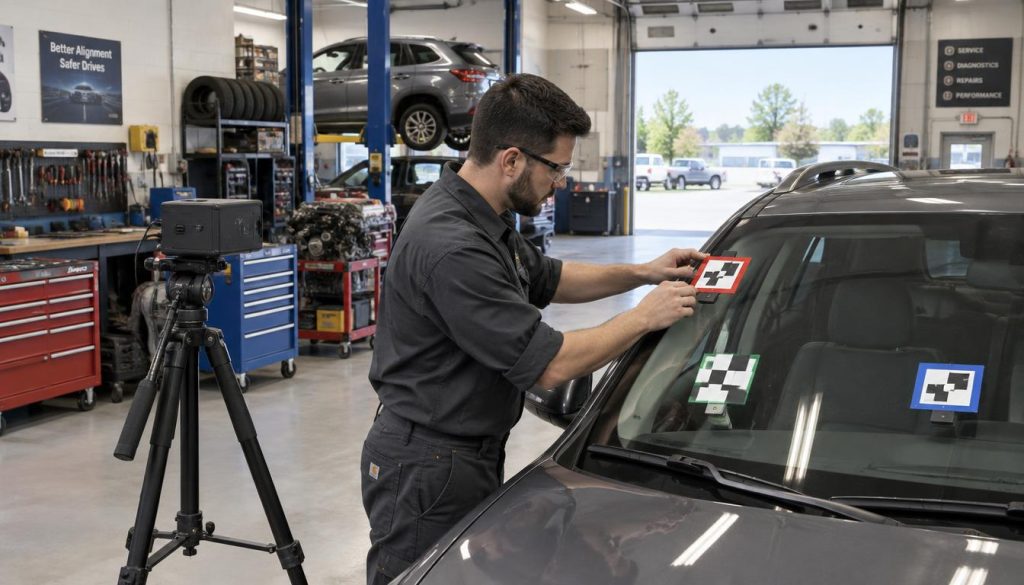
Static calibration aligns windshield targets with a fixed camera, while dynamic or combined methods may also be used to recalibrate safety cameras after replacement.
How to Confirm Your Vehicle Needs Calibration
The dependable way to know is to check your vehicle’s installed equipment and its manufacturer-specific procedure. Make, model, year, trim, and equipment matter more than vehicle age alone. Honda, Subaru, Toyota, and Volvo are examples of automakers with procedures that specify recalibration after windshield replacement.
Do not assume that every vehicle has the same camera or calibration requirement. Collision damage, front-end work, wheel alignment, suspension work, and camera removal or replacement may also call for a calibration check.
| Service or event | What may be affected | What to confirm |
|---|---|---|
| Windshield replacement | Windshield camera and mount | Whether OEM procedures require calibration |
| Collision or front-end work | Sensor position | Whether affected sensors need calibration |
| Wheel alignment, suspension work, or camera removal | System geometry | Whether the work triggers a calibration check |
You can look for signs that your vehicle has ADAS:
- Look for a camera housing near the rearview mirror.
- Review the owner’s manual for driver assistance features.
- Check the feature list for lane departure warning or adaptive cruise control.
- Ask the shop to verify your equipment using your vehicle details.
A camera housing can suggest that your vehicle has a forward camera, but it does not show which systems use it. Your manual and feature display can help identify installed driver assistance systems.
Have the repair shop confirm the requirement for your exact vehicle rather than relying on model year alone.
What Happens During Calibration After Replacement?
A proper appointment starts by confirming what equipment your vehicle has and which procedure its manufacturer requires. A complete visit includes checks before calibration and a record of the result afterward.
The work depends on your vehicle, so the steps may differ from another car’s appointment. The technician uses OEM procedures for your exact equipment and repair.
Vehicle Preparation and Diagnostic Checks
The technician identifies the installed driver assistance systems and checks relevant diagnostic information. Diagnostic codes can show whether the vehicle has a fault that needs attention before calibration.
The technician then prepares the vehicle and work area for the required procedure. This may include checking conditions the vehicle needs for calibration and arranging a suitable space for the work.
These checks help the technician follow the correct process. A calibration attempt cannot replace diagnosis of a separate system fault.
Camera Calibration to the Vehicle Procedure
The technician follows the vehicle-specific procedure using targets, a prescribed road test, or both. Static calibration uses targets, while dynamic calibration uses a required drive under set conditions.
Some vehicles require both procedures, so the technician must complete each step the manufacturer specifies. The correct approach depends on the model, year, trim, and equipment.
Calibration is professional work that calls for specialized tools and training. It is not a do-it-yourself adjustment, even if the camera appears to sit straight.
System Verification and Records
After calibration, the technician checks whether the procedure completed successfully. A post-calibration diagnostic check can confirm the system’s status and show whether more work is needed.
Ask for a written record that names the procedure and its result. Keep it with your windshield repair paperwork in case you need to discuss the work later.
Windshield adhesive safe drive-away time is separate from calibration time. The adhesive and installation conditions determine how long the vehicle must wait before you drive.
Request a record showing which calibration procedure was completed and whether the system verified successfully.
What to Check After Windshield Replacement
Before relying on camera-based driver aids, check your service record and note any new warning or unusual behavior. No dashboard warning does not prove that calibration succeeded.
Use the repair record to confirm what work the shop completed. Then compare the vehicle’s messages and behavior with what you noticed before the glass replacement.
| Check | What to confirm | What to do if it is unclear |
|---|---|---|
| Camera housing and mounting area | Housing appears secure | Ask the repair shop to inspect it |
| Work record | Completed calibration and result are listed | Request the missing details |
| Driver assistance messages or behavior | No new issue is present | Contact the shop for professional verification |
Unusual lane warnings, unexpected steering or braking, or a new ADAS message call for prompt contact with the repair shop. A trained technician can check the system instead of relying on a brief road test.
Follow the installer’s instructions for adhesive care, tape, and washing. When you can remove installation tape depends on the installer’s materials and procedure.
Leave installation tape in place for the period the installer specifies. Many installers recommend about 24 hours, but the product and procedure instructions take precedence.
If an ADAS feature behaves differently after the replacement, contact the shop and avoid treating the feature as dependable until it has been checked.
What to Ask About Cost, Coverage, and Glass Compatibility
Ask for a vehicle-specific quote that separates the glass work from any required calibration or related procedure. The vehicle’s procedure and affected systems shape the calibration cost.
There is no single quote that fits every vehicle. Your price depends on the vehicle requirements, the calibration method, and any added diagnosis or sensor work.
Factors That Affect the Calibration Quote
A vehicle may need static calibration, dynamic calibration, or a combination of both. The required method and the tools or work involved can change the quote.
Additional sensors or diagnosis may add work beyond the camera procedure. Ask the provider to explain which parts of the estimate cover glass replacement and which cover calibration or related services.
Comprehensive insurance coverage may include required calibration with a covered glass replacement. Coverage depends on your policy, so confirm the terms with your insurer before approving the work.
Replacement glass must meet your vehicle’s specifications for its camera and mounting system. OEM-equivalent glass means the glass meets those vehicle specifications, not simply that it carries a certain label.
Questions to Ask Before Approving the Work
Get clear answers about the procedure, glass, and records before you approve the repair:
- Which OEM procedure applies to my exact vehicle?
- Will you perform calibration in-house or use a qualified partner?
- Does the replacement glass meet my camera and bracket specifications?
- Will you provide pre- and post-calibration documentation?
The answers help you understand what the provider plans to do. A quote should identify whether the vehicle needs calibration and how the shop will confirm its result.
Your insurer can explain whether your policy covers the glass, calibration, or related work. Ask how your deductible and claim terms apply to this repair.
Confirm the insurer’s coverage and the provider’s written scope before authorizing the work.
Conclusion
Before relying on windshield-camera safety features after replacement, confirm that any required calibration was completed and documented. Your vehicle’s OEM procedure, not a generic rule, determines the required calibration.
If your windshield or other vehicle glass is damaged, contact Miracle Auto Glass in San Antonio. The team can help with glass repair or replacement and explain the work your vehicle needs.
Call (210) 680-2551 or visit 6730 Poss Rd, San Antonio, TX 78238. Hire Miracle Auto Glass to fix your windshield or other glass damage.
FAQ
How do I know if my car needs ADAS calibration?
Your car needs ADAS calibration when its equipment and OEM procedure call for it. Check the owner’s manual and feature list, and look for a camera housing near the rearview mirror. Lane departure warning or adaptive cruise control can also point to driver assistance equipment. The shop can identify your installed systems using your exact year, make, model, and trim.
How much does it cost to have your windshield recalibrated?
The cost depends on your vehicle, required calibration method, affected systems, and any extra diagnosis. A vehicle may need a static procedure, a road-based procedure, or both. Your insurer’s policy may cover required calibration as part of a covered glass claim, but coverage varies. Ask for a quote that separates glass work from calibration and confirm policy terms with your insurer.
What to check after windshield replacement?
Check the service record for the calibration procedure and its result, then look for new dashboard messages. Note any unusual lane warnings, steering, braking, or other driver assistance behavior. A lack of warning lights does not confirm accurate camera alignment. Contact the repair shop promptly if the feature acts differently or the record does not show whether calibration succeeded.
Do I really need to recalibrate after windshield replacement?
Yes, you need recalibration when your vehicle has an affected windshield-mounted camera and its OEM procedure requires the work. Not every vehicle has the same camera or driver assistance features. A camera may need attention if replacement involves removing it or affects its view. Check the procedure for your exact vehicle rather than assuming every windshield job has the same requirement.
What not to do after getting a windshield replaced?
Do not ignore a required calibration, unusual ADAS behavior, or the installer’s care instructions. Follow the stated safe drive-away time, leave tape in place for the directed period, and wait to wash the vehicle as instructed. These steps depend on the adhesive and installation conditions. Avoid relying on a driver assistance feature that shows a new warning or behaves differently until it has been checked.
Why can’t you wash your car after windshield replacement?
Many installers recommend waiting about 24-48 hours before washing to protect the windshield adhesive. Water pressure, car washes, or other handling can affect the new installation before the adhesive has set enough. The exact wait depends on the installer’s materials and process. Follow the specific washing instructions you receive, since they take priority over a general time range.
How long should I let my car sit after windshield replacement?
Safe drive-away time commonly falls around 1-3 hours after windshield replacement. The adhesive, temperature, humidity, and installer’s minimum time control when you can drive. This wait is separate from any calibration appointment or procedure. Ask the installer for the safe drive-away time for your specific glass and installation, and do not leave before that minimum has passed.
Will my insurance go up if I claim a cracked windshield?
A glass claim does not automatically raise your insurance rate. The effect depends on your insurer, location, policy, and claims history. A claim may be handled differently from other kinds of vehicle damage under your policy. Ask your insurer how a cracked windshield claim could affect your coverage or rate before filing, since only your insurer can explain the terms that apply to you.
A windshield repair before road trip plans may start with a chip you barely noticed at home. Now, with hours of Texas highway ahead, that small mark catches your eye. The long drive can expose unnoticed glass damage to hours of vibration, road debris, and changing temperatures.
Clear visibility matters when you drive for hours, especially in bright sun or at night. A small chip does not mean the windshield will fail, but it deserves attention before departure. A quick check is a practical first step, and early repair can help protect your view.
Key Takeaways
- Check the full windshield before a long drive.
- Small chips do not always spread, but deserve a closer look.
- Damage location and pattern help guide a professional assessment.
- Heat, air conditioning, vibration, and debris can stress damaged glass.
- Ask a local provider what an inspection includes before booking.
- Check wipers, washer fluid, tires, lights, signals, and clean glass.
Why Windshield Repair Before Road Trip Matters
A damaged windshield can affect your view and your vehicle’s safety. Early attention can help keep a small flaw from becoming a larger problem during your trip.
The windshield contributes to vehicle structural support and, in some vehicles, proper airbag deployment. Cracks can block part of your view, while glare from damaged glass can make driving harder.
Visibility and structural support
Your windshield is more than a barrier against wind and rain. It helps support the vehicle’s structure, though the exact role depends on the vehicle’s design.
In some vehicles, the windshield also helps an airbag deploy as intended. That is one reason auto glass damage deserves attention before a long trip, not just when it becomes hard to see.
How small damage can spread
A chip may stay small, but damage can spread across the glass. A repairable chip can become a crack or other damage that calls for replacement.
Repairing a chip early may help preserve the original glass and keep the damage from growing. No single outcome is certain, so a professional assessment can help you understand the condition of your windshield.
Before you decide on service, you need to spot any damage across the full glass surface.
How to Inspect Your Windshield Before Leaving
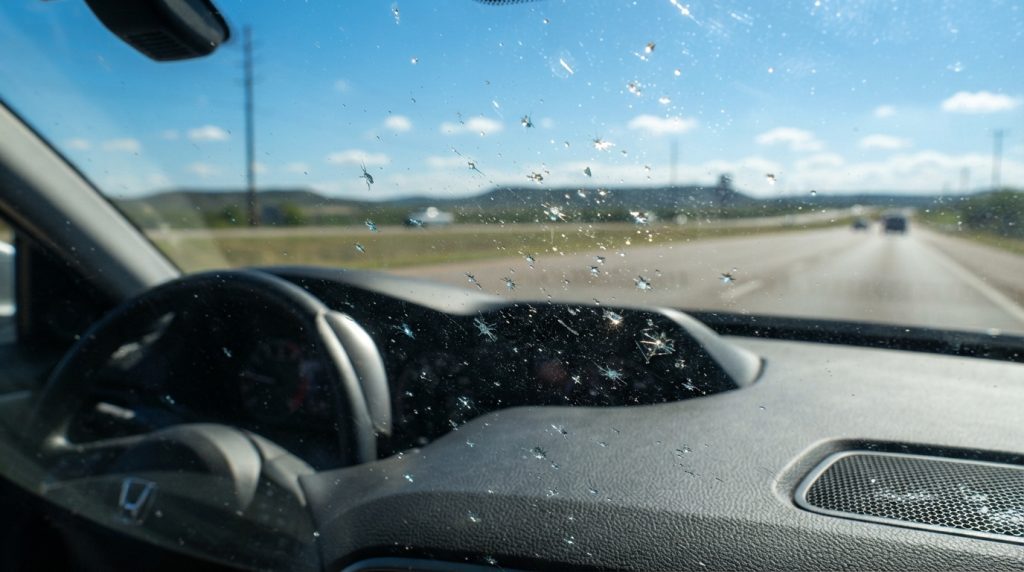
Inspect the windshield in good light, rather than relying on a quick glance from the driver’s seat. Direct sunlight can make small chips and other marks easier to see.
Check the full surface, including the edges, for damage that could affect visibility. Windshield pitting is a pattern of tiny surface marks that can scatter light and cause glare.
Check the full surface in direct sunlight
Stand outside and scan the glass from several angles. Look across the whole windshield, not only the area in front of the driver.
Bright light can reveal small chips, star breaks, long cracks, and distortion. If sunlight makes one spot look unusually hazy or bright, check it from another angle.
Look for pitting, edge damage, and glare
Use this short road trip checklist to check common trouble spots before you leave:
- Scan the full surface from several angles.
- Look closely for chips and star breaks.
- Trace cracks and inspect the windshield edges.
- Check for windshield pitting across the glass.
- Look for glare or distortion in bright sunlight.
Small marks can be hard to judge from inside the vehicle. A car checklist before road trip preparation should include a closer look at the windshield, not just a check of the view from the driver’s seat.
If you are unsure what you see, arrange a professional assessment. A glass professional can evaluate the damage and help identify the right service.
Which Windshield Damage Needs a Professional Assessment?
Damage location and pattern matter alongside size when deciding whether to repair or replace a windshield. Size alone does not settle the question.
Small chips and short cracks are often repair candidates, while larger cracks or damage in a critical location may need replacement. A professional can assess the damage and determine which service is appropriate.
| Damage pattern | Common service consideration | Why an assessment matters |
|---|---|---|
| Small chip, smaller than a quarter | Often a repair candidate | Location and pattern still affect the choice |
| Crack shorter than three inches | Often a repair candidate | Length alone cannot confirm repair suitability |
| Large crack, driver’s line of sight, or damage near an edge | Replacement may be needed | Position and extent can affect safety and visibility |
A chip smaller than a quarter or a crack shorter than three inches may qualify for repair, but those sizes are not guarantees or legal thresholds. The glass professional also considers the damage pattern and where it sits.
State rules can vary, so check current Texas requirements if you have questions about windshield condition. Do not use a size guide alone to decide that damaged glass is safe for a long drive.
A prompt professional assessment is especially useful before highway driving adds more stress to the glass.
How Texas Road Conditions and Temperature Changes Affect Damage
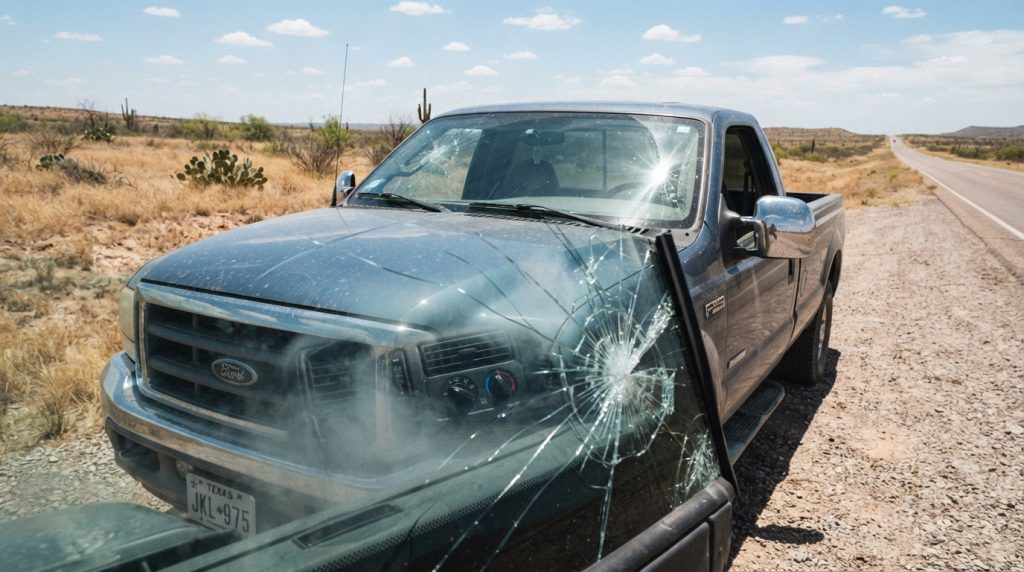
A small chip can sit in a hot parked vehicle, then face cool air from the cabin vents. That shift can stress existing damage, though it does not mean the chip will spread.
Heat, air conditioning, vibration, and road debris can put added stress on damaged glass. A long drive exposes a chip to more stress than a short daily trip.
Heat, cold, and direct air conditioning
Temperature changes can affect a chip or crack. Summer heat warms the windshield, while cool air from the air conditioning can create a sharp change across the glass.
You can reduce one source of stress by directing vents away from the damaged area. Avoid sudden temperature shifts when possible, but remember that no step can guarantee the damage will remain unchanged.
Highway vibration and road debris
Road vibration, potholes, and rough conditions can add repeated stress to damaged glass. Road debris may also cause a new impact, even if your windshield had no damage before the trip.
| Trip stressor | Effect on existing damage | Practical response |
|---|---|---|
| Temperature changes | Heat and air conditioning can stress a chip or crack | Direct vents away from the damaged area |
| Road vibration and potholes | Rough roads add repeated stress to damaged glass | Use care on rough roads and around potholes |
| Road debris | Debris can cause a new impact | Leave space behind vehicles when practical |
A small chip is not certain to spread, and road conditions do not affect every windshield in the same way. Still, limiting avoidable stress can help you manage the risks before departure.
Once you have reduced those risks, it helps to know what to do if a new impact happens during the trip.
What to Do if Your Windshield Cracks During the Trip
If a rock strikes your windshield, keep the damaged spot clean and dry. Act calmly and arrange a professional assessment as soon as practical.
Cover a chip with clear tape if available, and keep hot or cold air from blowing directly on it. Tape can help keep out moisture and dirt until a professional can check the glass.
Protect the damaged area and limit temperature stress
Avoid touching the damaged area more than needed. Keep the glass dry, and do not wash it until you know how the damage should be handled.
Arrange a professional assessment as soon as you can. A mobile chip repair may take about 30-45 minutes, depending on the service and the damage.
Windshield replacement may require at least a day or two for the adhesive to cure before a long drive. Follow the installer’s instructions, since the safe wait time can vary by product and conditions.
Ask what a free road trip car check near me includes
If you search for a free road trip car check near me, ask a local provider whether the inspection is actually free. Confirm which checks it covers, since a general vehicle check may not include auto glass.
Do not assume a free check includes a full professional assessment of windshield damage. Confirm the inspection’s scope and any fee before booking, then finish the other vehicle checks before departure.
What Else Should You Check Before a Long Drive?
Once the windshield is clear, test whether the wipers leave a smear across your view. Small checks can help you spot problems before you depend on the vehicle for hours.
Check the tires, lights, signals, wipers, washer fluid, and glass before a long drive. A road trip car maintenance checklist can keep these basic tasks easy to track.
Use a car checklist before driving long distance
Use this car checklist before driving to cover practical items that affect visibility and control:
- Check wiper blades for wear or smearing.
- Top off the washer-fluid level.
- Check tire pressure and tread.
- Test lights and signals.
- Clean the interior and exterior glass.
Use the vehicle maker’s recommended tire pressure, which is usually listed on the driver’s door label or in the manual. Check all tires, including the spare if your vehicle has one.
What a road trip ready package can and cannot cover
A road trip ready package can bundle several vehicle checks into one visit. The name does not tell you which services it includes, so ask what the provider will inspect.
Some packages may cover basic maintenance checks but leave out a detailed windshield review. If the glass is damaged, arrange a separate auto glass assessment rather than assuming the package covers it.
Deciding what to check before driving long distance also means knowing what a service package leaves out. Ask for its full list of checks before you book.
Finish your checks before departure, then contact a local glass provider if you found damage that needs attention.
Conclusion
Do not leave a concerning chip or crack unchecked before a Texas road trip. Early attention to visible damage can help protect your view and prepare you for the drive.
Have a professional assess the glass if you are unsure about its condition. Clear visibility matters throughout a long drive, and timely service can help you make a sound choice about repair.
Miracle Auto Glass is located at Bandera Rd & Grissom. Call (210) 680-2551 to hire Miracle Auto Glass to fix your windshield or other glass damage.
FAQ
What to inspect before a road trip?
Check the full windshield for chips, star breaks, cracks, edge damage, pitting, and glare. Then inspect the wipers, washer fluid, tires, lights, and signals. Clean the glass inside and out so dirt does not hide marks or reduce visibility. If any damage is hard to judge, ask a glass professional to assess it before you leave.
What to do when your windshield cracks while driving?
Keep the damaged spot clean and dry, and cover a chip with clear tape if you have some. Avoid directing hot or cold air at the area, since temperature shifts can stress damaged glass. Arrange a professional assessment as soon as practical. If the damage blocks your view or affects safe driving, stop somewhere safe before continuing.
How soon before a road trip should I get a windshield chip assessed?
Arrange an assessment before departure, with enough time for the recommended service. A repair may fit into your schedule more quickly, while windshield replacement may require at least a day or two for adhesive curing before a long drive. The installer sets the safe wait time for the product and conditions, so follow those instructions.
Can hot weather or air conditioning make a windshield chip spread?
Yes, temperature shifts can stress existing damage, but they do not guarantee that a chip will spread. A hot vehicle followed by cool air from the cabin vents can change the glass temperature. Directing vents away from the damaged spot may reduce one source of stress. Ask a professional to assess the chip before a long drive.
Does a small windshield chip always need replacement?
No, a small chip is often a repair candidate, but replacement may still be needed in some cases. A professional considers the chip’s location, pattern, and condition, not just its size. Chips near the windshield edge or in the driver’s line of sight may raise different concerns. Get an assessment to learn which service is appropriate.
A vehicle can seem ready to drive after glass work while its camera-based safety features still need attention. ADAS recalibration after windshield replacement may be required because the camera can shift during the work. Check the requirement for your exact vehicle instead of assuming calibration is unnecessary.
If alignment is off, driver-assistance features may give false alerts, miss warnings, or respond in ways you do not expect. A quiet dashboard does not always mean the camera is aimed correctly. The vehicle may still drive normally, which can make the issue hard to spot.
Before you rely on those features, find out whether your vehicle needs calibration and how the shop confirmed it. The camera’s job explains why even a small alignment change matters.
Key Takeaways
- Windshield work can disturb the ADAS camera.
- Calibration needs depend on your vehicle and its manufacturer’s procedure.
- A clear dashboard does not prove the camera is aligned.
- Ask for a record of the required work and its result.
- Get a professional check if a driver aid acts differently afterward.
How Does a Windshield Camera Support ADAS?
Near the rearview mirror, a small camera can supply information that several driver aids use at once. ADAS means Advanced Driver Assistance Systems, vehicle technologies that use cameras and other sensors to monitor the road and support the driver with alerts or corrective actions. The camera’s view helps the vehicle respond to road information.
Forward-facing ADAS cameras are commonly mounted inside the windshield near the rearview mirror. They capture lane markings, road signs, and other road conditions. Software analyzes the images and turns them into information the vehicle can use.
The process has four basic steps:
- The camera captures images of the road ahead.
- Software interprets road markings, signs, and objects.
- The vehicle evaluates possible hazards using that information.
- Driver aids alert you or support a response.
Some vehicles use more than one forward camera, and other sensors may add information. That is why ADAS requirements can vary between vehicles, even when their windshields look similar. Your make, model, and equipment matter.
The windshield helps set the camera’s view, so glass work can affect what it sees. Small changes in that view are one reason alignment needs a check when the manufacturer calls for it. If the camera is not checked, its information may not match the road.
What Can Happen If ADAS Recalibration After Windshield Replacement Is Skipped?
A camera that points slightly off its intended view can give the vehicle the wrong picture of the road. If the vehicle requires calibration after windshield work, skipping it can leave connected safety systems unreliable. The vehicle may still seem normal during an ordinary drive.
Safety systems may miss or misread hazards
An incorrectly aimed camera may misread a lane marking, sign, or object ahead. The software uses the camera’s view to judge what is happening around your vehicle. A changed view can affect that judgment.
The result may be a missed warning, a false alert, or driver assistance that does not behave as expected. A lane marking could appear to be in a different place, for example. The system might respond to a risk that is not there or fail to flag one that is.
A camera moved from its original position does not necessarily recalibrate itself. Driving normally does not guarantee that it will return to its intended alignment. The vehicle’s procedure must guide the check.
These are possible effects, not a prediction that a particular event will happen. The key concern is that you may not get the support you expect when a feature reads the road incorrectly. Do not treat an unchecked camera as accurate just because the vehicle runs.
Why a clear dashboard does not prove alignment
A dashboard without a warning light does not prove that the camera is correctly aimed. Some alignment problems may not create an obvious fault message. A warning can show a fault, but no warning cannot confirm accurate camera input.
The system may still turn on while giving unreliable information. A driver might see no message and assume every feature is ready. That assumption does not replace a vehicle-specific calibration check.
If a warning does appear, take it seriously and ask the shop what it means. If no warning appears, rely on the service record and the manufacturer’s stated procedure instead. The camera’s accuracy matters because several driver-assistance features may use its input.
Which Driver-Assist Features Can Be Affected?
One misaligned camera can matter to more than one feature because driver aids may share road information. Camera input can support several driver-assistance systems, though equipment and system design differ by vehicle. The exact mix depends on your vehicle.
| Feature | What it helps with | Possible effect of incorrect camera input |
|---|---|---|
| Lane departure warning | Identifying unintended lane drift | A missed or false warning |
| Forward collision warning | Alerting to a possible forward hazard | A late or false alert |
| Automatic emergency braking | Supporting braking when a collision risk is detected | A delayed or inappropriate response |
| Adaptive cruise control | Helping manage speed and following distance | Inconsistent distance or speed behavior |
Lane departure warning uses road information to help identify unintended lane drift. If the camera reads a marking incorrectly, you could receive a warning when you are centered or miss one during drift.
Forward collision warning and automatic emergency braking can use information about the road ahead. Incorrect camera input may affect when a warning comes or how the braking system responds. These features support the driver, but they do not replace your attention.
Adaptive cruise control can use camera data along with other vehicle sensors. If the camera input is off, speed or following distance may feel inconsistent. This does not mean every vehicle uses the same sensor mix or reacts in the same way.
Use your owner’s manual and the shop’s vehicle-specific information to identify the equipment your car has. A feature name alone does not show which sensors support it. Technicians use the vehicle’s requirements to restore and check alignment.
How Is ADAS Calibration Performed?
A technician follows the vehicle’s specified procedure rather than aiming the camera by eye. The manufacturer’s requirements determine which calibration to perform, and some vehicles need more than one method. The right procedure depends on the vehicle and the work done.
Static calibration uses targets in a controlled shop
Static calibration checks alignment while the vehicle remains stationary. The technician positions the vehicle and specialized targets with care, following the vehicle-specific instructions. The setup may need a level floor, set distances, controlled lighting, and clear space.
Targets give the camera a known reference. Calibration equipment and vehicle software help the technician check whether the camera reads that reference as intended. Even small setup errors can affect the procedure, so the technician must follow the specified steps.
Each vehicle has its own requirements for target placement and shop conditions. A target placed at the wrong height or distance may not meet those instructions. The shop should use equipment suited to the vehicle’s calibration needs.
Dynamic calibration checks the camera on the road
Dynamic calibration checks the camera during a prescribed drive. The technician drives under the conditions set by the vehicle maker, which may include suitable roads and clear markings. During the drive, the system collects real-world data.
This is not the same as taking an ordinary drive and expecting the camera to fix itself. The procedure may call for specific speed, distance, or road conditions. The vehicle’s instructions determine what the technician must do.
Some vehicles require static calibration, dynamic calibration, or both. A windshield replacement may call for a different procedure from camera removal or another repair. Follow the vehicle’s instructions for the work that occurred, not a general rule for every car.
Ask the shop which method applies and whether the procedure finished successfully. The vehicle’s requirements and the way the camera was disturbed guide that answer. That link between the work and the vehicle also explains when a calibration check may be needed.
When Is Recalibration Needed After Glass or Vehicle Work?
Windshield replacement is a common trigger, but it is not the only service that can disturb ADAS alignment. Check the manufacturer’s procedure after work that may affect a camera, sensor, or vehicle angle. The need varies by vehicle and repair.
| Service or event | Why it may affect ADAS | What to verify |
|---|---|---|
| Windshield replacement | Camera position or glass setup may change | Check the manufacturer procedure |
| Collision or front-end impact | Sensors or mounting points may shift | Request an inspection, even without visible damage |
| Wheel alignment or suspension work | Vehicle geometry or sensor angles may change | Confirm whether calibration is specified |
| Camera removal or replacement | The camera has been disturbed | Verify calibration before relying on the feature |
Minor chip repair generally does not call for calibration when the camera remains undisturbed. A repair near the camera or its mount may be different, so ask the provider to check your vehicle’s procedure.
Do not use a model year by itself to decide. ADAS recalibration after windshield replacement in 2021 depends on the exact vehicle and manufacturer procedure. The same is true for ADAS recalibration after windshield replacement in 2022.
Give the shop the exact year, make, and model, then ask which procedure applies. A similar vehicle may have different camera equipment or instructions. Once the work is done, changed warnings or feature behavior can help show when you should request a check.
What Warning Signs Should You Watch For After Replacement?
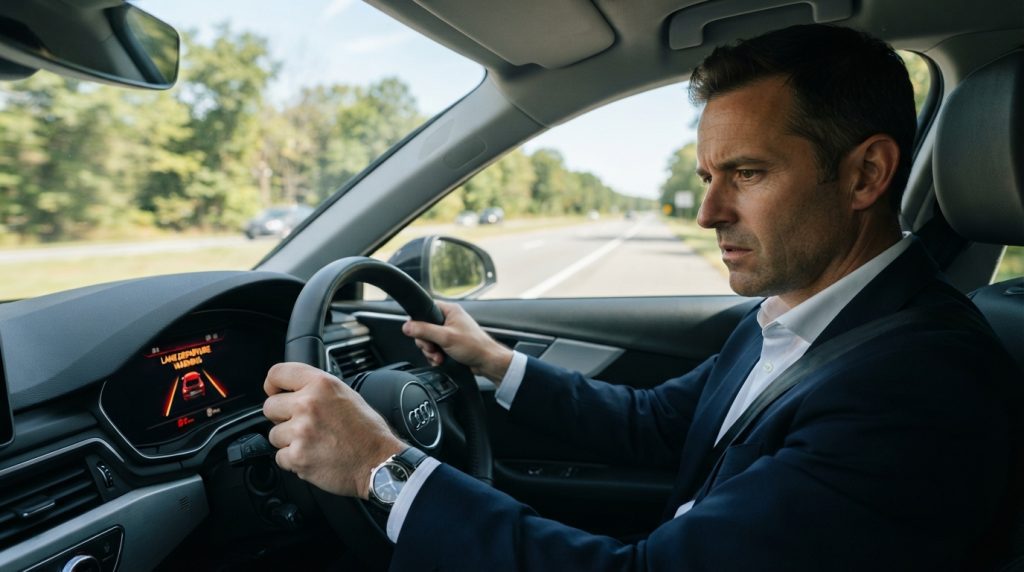
A driver may first notice a problem as a changed warning or an unfamiliar response from a feature. Take a new ADAS message or unusual system behavior seriously after windshield work, but remember that symptoms alone do not identify the cause. Pay attention to what changes.
Dashboard messages can flag a system fault
Your dashboard may show messages such as “Lane Departure Unavailable,” “Forward Collision Warning Disabled,” or “Cruise Not Available.” The wording differs by vehicle, but a new ADAS fault message deserves attention. Check the owner’s manual for its meaning.
A warning message may mean a feature is limited or unavailable. Do not assume the glass work caused it, since other faults can also affect driver aids. Tell the shop what the display says and when it appeared.
Some issues may not create a message, so keep an eye on how features behave. A quiet dash cannot confirm alignment by itself. Compare any new behavior with what you experienced before the service.
Changes in driving behavior can point to misalignment
Lane departure warning might activate while you are centered, or fail to activate when you drift toward a lane line. Either change can feel confusing, especially on a familiar road. Do not rely on the warning as a substitute for checking your position.
Adaptive cruise control may keep an inconsistent distance or change speed in a way you have not seen before. Emergency braking could occur unexpectedly or fail to respond as expected. These examples call for a professional check, not repeated testing in traffic.
Lane-keeping assistance may also pull the steering on a straight road. If a feature behaves differently, describe the setting and conditions to the shop. These signs can point to a calibration issue, but they do not diagnose its cause.
A technician can review the vehicle and check its stored faults and alignment. Record the message or behavior, along with when it happened. Then ask the provider to document the procedure and its result.
How Can You Check That Calibration Was Done Properly?
Before leaving a glass appointment, ask for a clear record of what calibration was required and completed. You should be able to see which procedure the shop used and its result. Clear records make it easier to address a concern later.
Use this checklist with the shop:
- Ask which calibration your vehicle requires.
- Confirm the shop used suitable targets and equipment.
- Ask whether pre-scan and post-scan results are available.
- Request written confirmation of successful calibration.
- Return for a code and alignment check if alerts or unusual behavior continue.
A pre-scan checks for faults before work, while a post-scan checks afterward. These results can help show whether the vehicle had stored or pending codes. Ask the shop to explain any code that remains or returns.
A verification may include checking stored or pending fault codes and comparing alignment with manufacturer specifications. The shop can repeat the required procedure if needed. Suitable conditions may include a level floor, controlled lighting, and enough space for target placement.
An extremely short service time does not prove poor work by itself. If your vehicle needs both static and dynamic calibration, ask how the shop completed both procedures. Match the record to the vehicle’s stated requirements, then keep it with your glass service paperwork.
Ask who performed the check and whether the result was successful. If a warning remains or a feature behaves oddly, report it instead of assuming the issue will clear on its own. Good records also help you understand the service estimate and possible insurance share.
What Affects Calibration Cost and Insurance Coverage?
The final bill depends on the vehicle’s procedure and the way the glass work is paid for. No dependable universal calibration price can be given, because vehicles may require different work. Your estimate should show what the shop plans to do.
| Situation | Possible cost components | What to confirm |
|---|---|---|
| Replacement paid out of pocket | Glass installation and any required calibration | Request an itemized estimate |
| Insurance-covered replacement | Policy terms and deductible may affect your share | Confirm whether required calibration is included |
| Vehicle requiring both methods | Static and dynamic procedures may both be needed | Confirm the quoted scope matches manufacturer requirements |
Calibration cost can depend on the vehicle and whether it needs static calibration, dynamic calibration, or both. Glass type and the work included in the estimate can also affect the total. Ask for an itemized quote that separates glass work from calibration when possible.
Some policies may cover required calibration as part of approved glass work, but coverage is not guaranteed. Your policy terms and deductible can affect what you pay. Call your insurer to confirm what the claim includes before approving work.
Compare the estimate with the vehicle’s required procedure, not just the glass price. Ask whether the quoted amount includes every needed calibration step and any related scan. Confirm the scope and payment details before authorizing the service.
What Should You Do Before Driving Away?
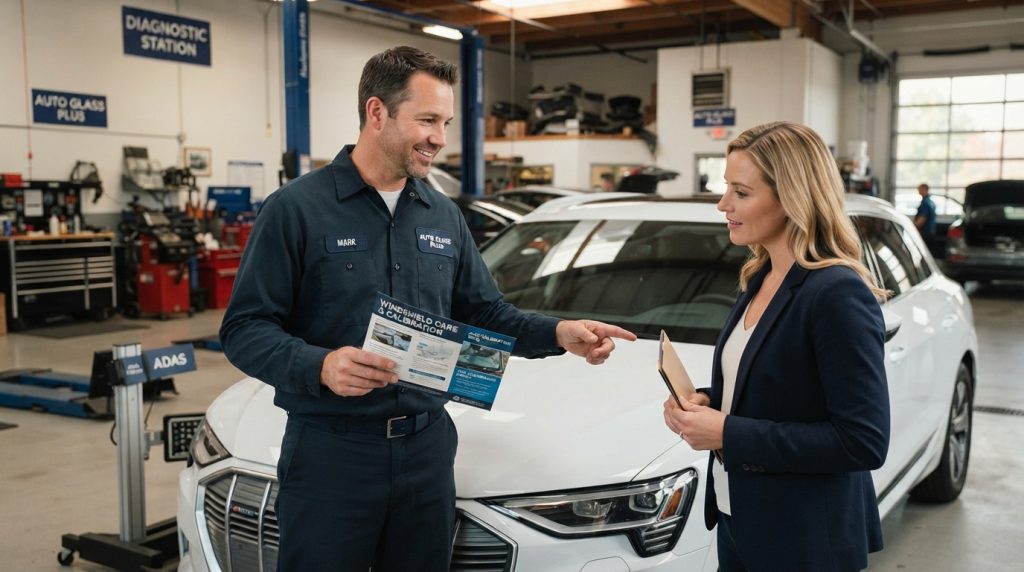
Before you accept the keys, make sure you know whether your vehicle required calibration and how completion was confirmed. Get the vehicle-specific plan and service record before relying on the camera-based features. A few direct questions can clear up what the shop did.
Take these four actions before and after service:
- Share your vehicle’s year, make, and model with the glass provider.
- Ask whether the manufacturer requires calibration and who will perform it.
- Confirm the estimate includes the required work and request documentation.
- Check for warnings or unusual feature behavior afterward, and arrange verification if needed.
Rain immediately after replacement is not, by itself, a reason to recalibrate. Follow the installer’s instructions for safe driving and care after installation. No universal wait time applies to every vehicle or installation.
Keep the service record with your vehicle paperwork, including any scan results or calibration confirmation. If a feature acts differently, report the change and ask the provider to check the vehicle. Do not try to correct camera alignment yourself.
Miracle Auto Glass is at Bandera Rd & Grissom and can be reached at (210) 680-2551. You can hire Miracle Auto Glass to fix windshield or other glass damage and ask for a vehicle-specific service plan. Call with your vehicle details and ask what the work includes.
Conclusion
Treat camera alignment as part of completing glass work, not as an optional guess. If your vehicle’s procedure calls for calibration after windshield replacement, make sure the shop completes and documents it. A missing warning light does not guarantee correct alignment.
Before relying on driver-assistance features, ask what your exact vehicle needs and keep the service record. If the camera or other glass is damaged, contact Miracle Auto Glass and hire the team to fix your windshield or other glass damage.
FAQ
What happens if it rains right after windshield replacement?
Rain alone does not determine whether your vehicle needs calibration after windshield replacement. Follow the installer’s instructions for safe driving and post-installation care, since guidance can vary with the glass and vehicle. Rain does not, by itself, show that the camera shifted or that calibration failed. Contact the installer if you have concerns about the installation or notice a new warning.
How to calibrate a front windshield?
The glass itself is not calibrated; a trained technician calibrates the vehicle’s camera and related systems. The technician uses vehicle-specific diagnostic equipment and may use static targets, a prescribed on-road procedure, or both. The correct method depends on your exact vehicle and the work performed. Ask the shop which procedure the manufacturer requires and request written confirmation of the result.
How long does a windshield claim stay on your insurance?
There is no single length of time that applies to every policy or state. An insurer may keep a claim in its own claim-history records, while any effect on your premium is a separate question. The period and possible rate impact depend on your carrier, policy, and location. Ask your insurer how long it keeps the record and whether the claim could affect your rate.
How much does a windshield replacement and recalibration cost?
No universal price applies to windshield replacement and recalibration. The vehicle, glass, required calibration method, and policy deductible can affect what you pay. Ask for an itemized estimate that states whether the quoted work includes every required procedure. If you plan to make an insurance claim, ask the insurer whether calibration is included in the approved glass work.
Do I need ADAS calibration after windshield replacement?
Many vehicles with a windshield-mounted camera require ADAS calibration after windshield replacement, but not every vehicle follows the same procedure. The exact year, make, model, camera setup, and manufacturer instructions determine what work is needed. Ask the glass provider to check those details and explain the required calibration. Keep the written result with your service record.
A damaged windshield can leave you choosing between glass made to match the vehicle’s original specifications and a replacement made by an independent manufacturer. Your choice can affect fit, features, price, and how soon the auto glass is available. The right option depends on your vehicle and the glass it needs, not just the label on a quote. You may also need to weigh insurance terms and the work required during installation. A clear comparison can help you ask better questions before you approve a replacement. Start with the definitions and direct comparison that make those options easier to distinguish.
Key Takeaways
- OEM glass aims to match original vehicle specifications.
- Aftermarket glass comes from a manufacturer other than the vehicle’s original supplier.
- Some aftermarket glass carries an OEE label, which has no single industry-wide standard.
- Glass features and camera systems can affect fit, cost, and installation.
- Ask your insurer and installer about approved glass and required system checks.
OEM vs Aftermarket Windshield: What Is the Difference?
OEM glass is replacement glass intended to match the vehicle’s original factory specifications. Aftermarket glass comes from a different supplier, and the label alone does not show whether two products came from separate makers.
OEM stands for original equipment manufacturer. The term describes glass made to match vehicle-specific measurements, curves, and specifications. Some companies supply glass to automakers and also sell replacement products under their own names.
What OEM glass means
An OEM windshield aims to match the glass fitted when the vehicle was built. Its specifications may include the shape and features needed for that model. The original equipment label does not always mean the vehicle maker produced the glass itself.
Some manufacturers make glass for automakers, then sell replacement glass using their own brand. The maker and the label can differ, even when the supplier relationship overlaps.
What aftermarket glass means
Aftermarket glass is replacement glass made by a company other than the vehicle’s original supplier. Some sellers call certain products OEE glass. OEE means aftermarket glass marketed as original equipment equivalent, but it is not an officially standardized industry-wide designation.
| Comparison point | OEM glass | Aftermarket glass |
|---|---|---|
| Intended specifications | Matches original vehicle specifications | May vary by product and vehicle fit |
| Manufacturer or supply relationship | Linked to original supplier | Made by another company |
| Branding or label | May carry vehicle or supplier branding | May carry maker or OEE branding |
| Typical cost and availability | Often costs more; sourcing may take longer | Often costs less; may be easier to find |
Searches for “OEM vs aftermarket windshield 2021” or “OEM vs aftermarket windshield 2022” use year-specific wording. The year alone does not decide the right glass. Compare the product’s match to your vehicle and its features. Once you know what the labels mean, the more practical question is how well each option fits and works with your vehicle.
Do OEM and Aftermarket Windshields Fit and Perform the Same?
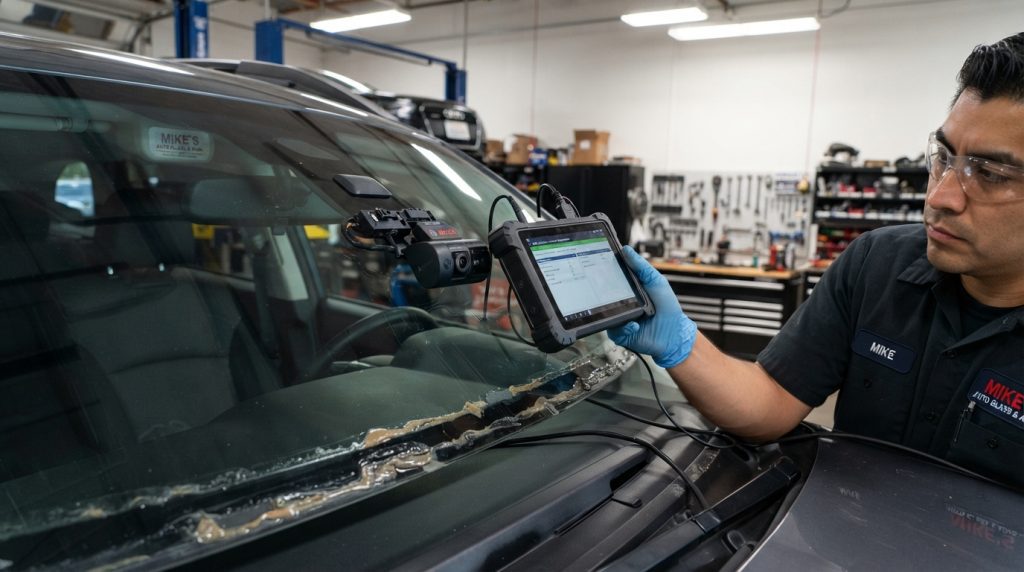
Either type can be a safe replacement when the glass meets applicable requirements and installation is correct, but the options are not automatically identical in fit or features. Safety standards do not guarantee the same clarity, compatibility, or finish across every product.
A windshield helps support the vehicle structure and passenger compartment in a rollover. Airbags can also rely on windshield stability during deployment. Aftermarket quality can vary by manufacturer, so check the exact glass rather than assuming every product performs alike.
Fit, visibility, and structural role
The glass needs to fit the opening and provide a clear view. A poor match or incorrect installation can affect how it sits and seals. Correct bonding helps the windshield do its structural job.
Applicable automotive-glass safety requirements set an important baseline. They do not confirm that each windshield has the same optical quality or has every feature your vehicle needs.
Cameras, sensors, and recalibration
ADAS means advanced driver-assistance systems. Cameras or sensors mounted at or near the windshield can support these safety systems. After replacement, recalibration means adjusting a camera or sensor system to align it with the vehicle.
Before choosing glass, confirm whether your vehicle has:
- A camera or sensor mounted on the windshield
- Lane-assist or automatic-braking features
- A rain sensor
- Heated glass, an acoustic layer, or a head-up display
Correct installation and any required recalibration matter for system operation. OEM glass alone does not ensure that cameras or sensors will work correctly. Those differences matter most when deciding what to order and what your insurance is likely to cover.
What Affects Windshield Replacement Cost and Insurance Coverage?
There is no single price that makes a windshield replacement expensive or inexpensive for every vehicle. The total depends on the vehicle, glass, and work involved. There is no universal dollar amount for OEM vs aftermarket windshield cost.
Vehicle make and model can affect the price and how easy it is to find glass. Special features may call for a specific windshield. Glass availability, installation, and required recalibration can also change the quote.
Why prices vary
OEM glass typically costs more and may take longer to source, especially for newer vehicles. Aftermarket glass often costs less and may be more readily available. Yet the glass price is only part of the replacement cost.
A quote may include installation and recalibration, or list them as separate work. Ask what each line covers before comparing prices. A $500 quote may be reasonable for one vehicle and high for another, based on its glass and included work.
Features such as a camera, rain sensor, or heated glass can affect which part fits. If a replacement needs recalibration, that work can also affect the total. Compare quotes for the same glass features and services.
What to confirm with your insurer
Insurance coverage depends on your policy. Some policies default to aftermarket glass, while OEM coverage may need approval or leave you paying the difference. Your deductible and any approval rules also shape your share of the cost.
Ask whether your policy covers windshield replacement, which glass it approves, and whether you need approval first. Confirm how the deductible applies and whether calibration is included. The insurer can explain the terms that apply to your claim.
Do not assume that a low glass price means a low final bill. Check the quote and coverage together. Once you know the quote and insurance terms, match the glass choice to your vehicle’s actual needs.
Which Option Suits Your Vehicle and Its Features?
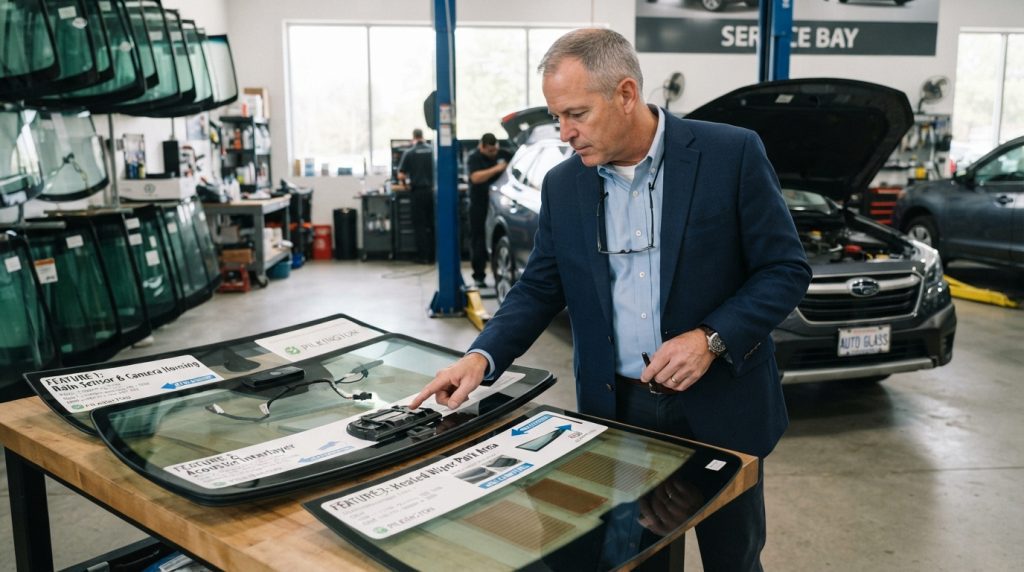
The best choice depends on the equipment in your vehicle and what you need the replacement to preserve. Start with the features in your current windshield. Paying more for OEM is not automatically necessary when suitable aftermarket glass matches the required features.
Newer vehicles may have cameras or other equipment tied to the windshield. A precise match and camera alignment can matter for ADAS. Older vehicles without windshield technology may have more replacement options.
When OEM may be the better fit
OEM glass may suit you when your vehicle needs a close match to original specifications, especially for a complex feature or camera setup. The label by itself does not guarantee that every system will work. Ask the installer to confirm the exact part and any system work.
When aftermarket may make sense
Aftermarket glass can be a practical, lower-cost option for some older vehicles without advanced windshield technology. Check that the product fits your vehicle and preserves its required features. Ask about coverage before authorizing an upgrade.
| Vehicle situation | Main concern | Option to consider | What to verify |
|---|---|---|---|
| Older vehicle without windshield technology | Fit and cost | Aftermarket glass | Exact fit and safety compliance |
| Newer vehicle with ADAS camera | Camera alignment | OEM or matching aftermarket | Camera fit and recalibration plan |
| Vehicle with HUD, acoustic, or heated glass | Feature match | OEM or feature-matched aftermarket | Exact feature and glass specification |
| Vehicle with insurance limits on approved glass | Coverage and extra cost | Approved glass option | Coverage terms before an upgrade |
HUD means head-up display, which projects information onto the windshield. Confirm the exact feature and specification with the installer, especially when your vehicle has this system or heated glass. After narrowing down the glass type, check the product and the shop that will install it.
How Can You Evaluate Aftermarket Glass and a Glass Shop?
A shop should be able to identify the glass it proposes to install and explain how it matches your vehicle’s equipment. Ask for specifics, not just a general quality claim. The maker, exact fit, and safety-compliance details tell you more than the aftermarket label alone.
Aftermarket quality varies among manufacturers. A traceable manufacturer, the right features, and clear compliance information help you assess a product. For aftermarket windshield brands, ask which manufacturer and exact glass specification the quote covers.
Do not rely on a broad ranking to judge windshield brands to avoid. Avoid products when you cannot confirm the maker, required features, or applicable safety compliance. Ask the shop to explain any unclear item before you approve the work.
Use this checklist when you compare a quote:
- Exact glass manufacturer and specification
- Fit for cameras and other listed features
- Information on applicable safety compliance
- Whether recalibration is included or arranged
- Written quote and warranty terms
Clear answers let you compare two quotes on the same basis. Ask the shop to put the glass details and warranty terms in writing. With the product and provider checked, the next step is confirming how installation and any system work will be handled.
What Happens During Windshield Replacement?
A replacement appointment involves more than lifting out one piece of glass and setting another in its place. The shop removes the damaged windshield and installs new glass with the vehicle’s bonding system. Correct fit and bonding are part of a safe replacement.
Work may also include checks for cameras or other systems near the glass. A vehicle with windshield-mounted cameras may need recalibration based on its configuration. The required checks vary by vehicle.
Ask whether recalibration is required, who will perform it, and what the shop will confirm before returning your vehicle. If the shop arranges the work elsewhere, ask how you will learn that it is complete.
How long does windshield replacement take? There is no fixed time for every vehicle. Glass availability, vehicle configuration, installation, and calibration can all affect the appointment.
Before work begins, ask which glass the shop will install and whether the quote includes system checks. After installation, ask what the shop completed and whether any calibration remains. That gives you a clear answer about the work tied to your windshield.
Do not assume that the same appointment time applies to every replacement. A vehicle that needs a special part or camera work may take longer. Once the shop has explained the work and verified any required system checks, you can make the decision with clearer expectations.
Conclusion
Choose the replacement that matches your vehicle’s required features and can be installed and checked correctly. Neither OEM nor aftermarket labels alone guarantee the right result. The glass specification, coverage, and installation plan should fit your vehicle.
For help with windshield or other glass damage, contact Miracle Auto Glass at (210) 680-2551 or visit Bandera Rd & Grissom. Ask the team about your vehicle and the glass it needs.
FAQ
How to tell if a windshield is OEM?
Check the glass markings and replacement paperwork, then ask the installer to confirm the exact product. A logo alone may not prove who made the glass or which specification it follows. Compare the markings with the quote and vehicle details. If the glass has already been replaced, the shop that did the work may be able to identify its product records.
Is $500 a lot for a new windshield?
$500 may be reasonable for one vehicle and high for another. The total can change with the vehicle’s make and model, glass features, availability, installation, and any required calibration. Ask what the quote includes, including system work and any extra fees. Then compare it with another quote for the same glass features and services.
Will my insurance go up if I claim a cracked windshield?
Your premium may or may not change after a windshield claim. The result depends on your policy, insurer, location, and the claim circumstances. Do not assume a glass claim has no effect, or that it will raise your rate. Ask your insurer how filing could affect your policy before you submit a claim.
Who pays when a rock hits your windshield?
You may pay directly or use coverage that applies to your policy, subject to its terms and deductible. A rock hitting your windshield does not automatically make another driver responsible. Check your policy to see whether glass damage is covered and what share you would owe. Your insurer can explain how those terms apply to your situation.
How to get a free windshield from insurance?
A zero-out-of-pocket replacement depends on your policy, deductible, approved glass, and any required calibration. There is no universal free-windshield entitlement. Ask your insurer whether your coverage waives the deductible for this claim and which glass it will approve. Confirm that required system work is covered before authorizing replacement.
Many vehicles with a forward-facing windshield camera need its alignment checked after replacement, even when the new glass looks right. A small change in camera position can affect the safety features that rely on it.
Your vehicle maker’s procedures determine what work your car needs. This guide explains what can trigger a check, how the service works, and what to ask afterward.
Key Takeaways
- Windshield replacement can shift a forward-facing camera or its mount.
- Your vehicle’s requirements depend on its manufacturer’s procedure.
- Calibration checks the camera system’s aim and function.
- Ask the shop for a record of completed work.
- Miracle Auto Glass is at Bandera Rd & Grissom. Call (210) 680-2551.
To understand why alignment matters, start with ADAS and the camera that helps it read the road.
What Is Windshield Camera Calibration and What Does It Do?
A camera near your rearview mirror can detect lane markings for a driver-assistance feature, if its view is aligned. Windshield camera calibration aligns and checks that camera system, not the glass itself.
How ADAS Uses a Windshield Camera
ADAS means advanced driver assistance systems that use cameras, sensors, and vehicle technology to monitor road conditions and support you with alerts or corrective actions. The camera sends information about lane markings, road signs, and conditions ahead to vehicle software for review.
That software may support lane departure warning, collision avoidance, or automatic emergency braking. Adaptive cruise control can also use camera input, along with other vehicle sensors.
Many cameras sit inside the windshield near the rearview mirror. Some vehicles use one forward-facing camera, while Subaru EyeSight uses two.
What Calibration Actually Adjusts
Calibration checks the camera’s position and aim against the vehicle’s specifications. The technician follows procedures for that vehicle and checks whether the system reads its targets or road cues as intended.
The glass itself does not get calibrated. Instead, the service checks the camera system after installation or other work may have changed its view.
Because the camera depends on a clear, fixed view, some service work can disturb its alignment and call for a closer look.
When Is Calibration Necessary After Windshield Replacement?
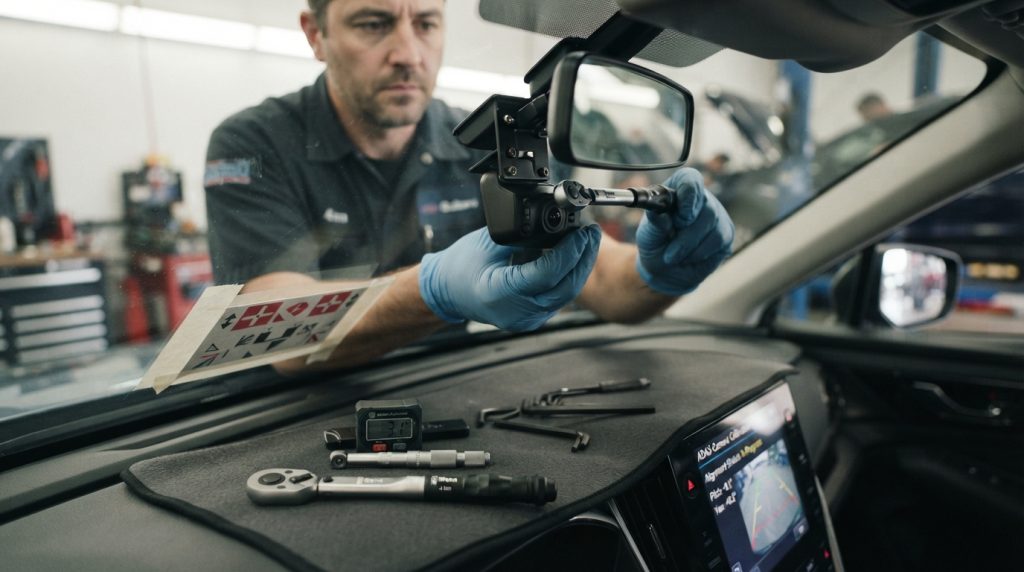
If windshield replacement moves or removes the forward-facing camera or its mount, check the vehicle’s calibration requirements, not assumptions. For most vehicles with forward-facing cameras, calibration is necessary after replacement if the camera’s position is disturbed.
Windshield replacement is a common reason for camera recalibration. The vehicle manufacturer’s procedure sets the requirement, so the answer to “is windshield calibration necessary?” depends on your vehicle and the work performed.
Other service events can affect camera aim or vehicle geometry. Ask the shop whether the manufacturer calls for a check after any work that could change either one.
| Service event | Why calibration may be needed | What to confirm |
|---|---|---|
| Windshield replacement | Camera or mounting position may shift | Whether the vehicle requires calibration |
| Collision | Impact may disturb camera alignment | Whether the manufacturer calls for a check |
| Wheel alignment | Some manufacturers call for recalibration after alignment | Vehicle-specific requirement |
| Suspension change or camera removal/replacement | Vehicle geometry or camera position changes | Required calibration procedure |
A check can help confirm that the camera system meets the vehicle’s requirements after service. The next question is which professional calibration approach the vehicle calls for.
How Is the Camera Recalibrated?
The method depends on the vehicle manufacturer’s procedure, not a universal setting. Some vehicles call for static calibration, some for dynamic calibration, and some for both.
Static Calibration in a Controlled Shop
Static calibration uses specialized equipment and targets in a controlled setting. The technician places targets at specified distances and heights, then follows the vehicle-specific steps.
A windshield camera calibration tool is specialized equipment used with manufacturer procedures. It is not a universal device for do-it-yourself adjustment.
Dynamic Calibration on the Road
Dynamic calibration uses a diagnostic tool while the technician drives under required conditions. The camera reads real-world cues, such as road markings, during vehicle-specific maneuvers.
The shop may need suitable roads, clear lane markings, or other conditions named by the vehicle procedure. Some vehicles need both methods, so the technician should follow the complete instruction set.
Pre-scans and post-scans can identify fault codes and document results. A scan helps the shop record the vehicle’s status, but it does not replace required calibration work.
- Scan the vehicle before calibration.
- Set up the vehicle and targets as required.
- Perform the specified static, dynamic, or combined calibration.
- Scan again and retain the results.
How long does windshield calibration take? Timing varies by vehicle and procedure, so ask the shop for a vehicle-specific estimate rather than a universal promise.
The procedure depends on accurate camera input, which makes replacement-glass specifications another part of the job.
Can Replacement Glass Affect ADAS Calibration?
A camera bracket that sits outside its intended position after a glass change can alter the camera’s view, even if the glass fits. The windshield lies in the camera’s optical path, so its shape and mounting points matter.
Variations in curvature, thickness, tint, or bracket placement can change what the camera sees. Those changes may affect calibration or the way ADAS features operate.
OEM-approved glass is designed to meet the vehicle manufacturer’s specifications. Ask whether the replacement glass is approved for your specific vehicle and camera system.
Not every aftermarket windshield will cause a problem, and OEM-approved glass does not guarantee a successful calibration. Correct fit, the required procedure, and a completed system check all matter.
If the camera cannot meet its expected settings, the shop may need to review the glass fit or service record. You should also know which signs may point to a calibration that needs checking.
What Happens If Calibration Is Missed or Incorrect?
A dashboard warning that appears soon after windshield service may point to an ADAS issue, but it is not proof by itself. Poor calibration can cause false alerts, missed warnings, or driver assistance features that do not work as intended.
Warning Lights and Changes in Feature Behavior
Miscalibration can affect lane departure warning, lane-keeping assist, adaptive cruise control, and automatic emergency braking. Your dashboard might show messages such as “lane departure unavailable,” “forward collision warning disabled,” or “cruise unavailable.”
Watch for changes in how the vehicle responds after service. These four signs deserve a prompt check:
- An ADAS warning appears on the dashboard after service.
- Lane warnings occur while you are centered, or fail during lane drift.
- Adaptive cruise control follows inconsistently or brakes unexpectedly.
- Lane-keeping assist pulls to one side on a straight road.
Unusual behavior can occur without a clear fault code. A clean scan alone may not prove the camera’s aim is correct.
What to Check in the Service Record
Return to the service provider and ask for a scan and calibration verification. Request documentation that shows the pre-scan, post-scan, and successful completion of the required procedure.
A record gives you a clear account of what the shop checked and completed. Before arranging another check, you may also want to ask about the likely cost and insurance coverage.
How Much Does Calibration Cost, and Does Insurance Cover It?
There is no single windshield camera calibration cost that applies to every vehicle, because the work varies. Your quote depends on the vehicle, camera count, required method, and local labor.
Static calibration, dynamic calibration, or both may affect the estimate. The number of cameras and the vehicle’s manufacturer procedure can also change the work involved.
Use these questions to understand a quote before you approve the work:
| Quote factor | Why it changes the estimate | What to ask |
|---|---|---|
| Vehicle make and model | Manufacturer procedure differs | Which procedure applies to your vehicle |
| Number of cameras | More components may need checking | Which cameras are included |
| Calibration method | Static, dynamic, or both may be required | Whether the quote includes every required method |
| Insurance and local labor | Policy terms and labor rates differ | Whether calibration is covered and what documentation is needed |
Insurance coverage is policy-specific. Some insurers cover calibration when it relates to windshield replacement or accident repair.
Ask your insurer about coverage before authorizing work, and ask what paperwork it needs. Then ask a local glass provider what your vehicle’s quote includes.
How Do You Choose a Calibration Provider Near You?
Ask any local glass provider whether it can confirm your vehicle’s calibration requirements, before booking. A suitable provider should explain what the vehicle procedure calls for and how you will receive proof of completion.
Searching “windshield camera calibration near me” can help you find local options. Call a shop to ask about your specific vehicle rather than assuming every location handles the same work.
Use this checklist when you speak with a provider:
- Confirm the shop checks manufacturer-specific requirements.
- Ask whether it performs or arranges required static and dynamic work.
- Ask for scan and calibration documentation.
- Confirm insurance billing or coverage with the shop and insurer.
Miracle Auto Glass is located at Bandera Rd & Grissom. Call (210) 680-2551 and ask what calibration steps your vehicle requires.
Once you know the vehicle-specific steps and how the shop will document them, your next move is simple.
Conclusion
Do not assume the camera is aligned just because new windshield glass is installed. Confirm your vehicle’s calibration requirements after replacement, then get confirmation that required work is complete.
For glass service, call Miracle Auto Glass at (210) 680-2551 or visit Bandera Rd & Grissom. Hire Miracle Auto Glass to fix your windshield or other glass damage.
FAQ
Can I recalibrate my windshield myself?
No, you should not treat windshield camera calibration as a DIY adjustment. Professional calibration uses specialized equipment and vehicle-specific procedures. The shop must follow the steps set for your vehicle, which may include targets, road testing, or both. Ask for a record of the scan and completed calibration when the work is done.
How much to calibrate a windshield camera?
There is no universal price for windshield camera calibration. Your vehicle model, camera count, required static or dynamic work, and local labor affect the quote. Ask the shop to list which procedures and cameras the estimate includes. If insurance may apply, ask your insurer what coverage and records your policy requires.
Do you need to calibrate the camera after windshield replacement?
Usually, you should check the manufacturer’s requirement when replacement moves or removes the forward-facing camera or its mount. The vehicle procedure determines whether calibration is required and which steps apply. Ask the glass provider to confirm the requirement for your car and document any work it completes.
What happens if you don’t calibrate after a windshield replacement?
ADAS features can give false alerts, miss warnings, or fail to work as intended if calibration is missed or incorrect. Lane, collision, or cruise features may behave differently than expected. A fault code is not guaranteed, so ask the service provider to check the system if its behavior changes after replacement.
How long does it take to calibrate a car after windshield replacement?
There is no fixed duration for every vehicle. The required method and whether the car needs both static and dynamic work affect the time. Road conditions can also matter when the procedure includes driving. Ask the shop for an estimate based on your vehicle and its required steps, not a general time promise.
A small, uncomplicated crack may be repairable, but some windshield damage makes replacement the safer choice. The right option depends on the damage and its effect on driving safety.
Laminated safety glass is two sheets of glass bonded around a plastic interlayer, designed to help keep a broken windshield in one piece. A crack can limit driver visibility and weaken the windshield’s role in the vehicle. Road debris can start damage, while weather exposure can make it spread. A visual description alone cannot confirm every repair decision.
Tell the reader that the first step is to check the crack’s size, type, depth, and location.
Key Takeaways
- Some small, uncomplicated cracks may qualify for repair.
- Deep, complex, or poorly placed damage may call for replacement.
- Cracks can affect both visibility and vehicle safety.
- A photo or brief description may not show the full damage.
- Size, type, depth, and location guide the first assessment.
When Is Windshield Crack Repair Appropriate?
A crack no longer than 6.1 cm may fall within stated repair limits, but length alone does not settle the decision. Size, type, depth, and location all matter, and a professional must assess the glass.
Some circular, star-shaped, and straight breaks can be repaired without removing the windshield. Even a short crack may need replacement if it reaches a risky area or extends through both layers.
How size and depth affect repair
Cracks up to 6.1 cm, or 2.4 inches, are within stated permissible repair limits. Local requirements can differ, so that measurement is a guide, not a guarantee.
A technician checks whether the damage stays near the outer glass surface or reaches deeper. Damage that crosses both glass sheets can be harder to repair and may affect the windshield’s strength.
Which crack types can be repaired
Common repairable patterns include circular bullseyes, linear cracks, crack chips, dings, pits, and star-shaped breaks. These names describe how the glass broke, not whether every example is safe to repair.
A professional can inspect the pattern and decide whether repair is suitable. The table gives a starting point for common damage, not a final ruling.
| Damage pattern | Repair outlook | Qualification |
|---|---|---|
| Bullseye | May be repaired | Professional assessment needed |
| Star-shaped break | May be repaired | Professional assessment needed |
| Linear crack | May be repaired | Professional assessment needed |
| Crack reaching the edge | Raises concern | May affect structural integrity |
Where the damage sits matters
The crack’s location can matter as much as its size. A crack near the edge can compromise windshield structural integrity, even when it looks small.
This guidance covers car windshields. Boat windshields may use different materials, shapes, or construction, so a car repair rule may not apply. Ask a glass professional to assess the actual damage before choosing repair.
Damage that may qualify for repair is only one part of the decision. Some conditions make a repair unsuitable.
When Does a Cracked Windshield Need Replacement?
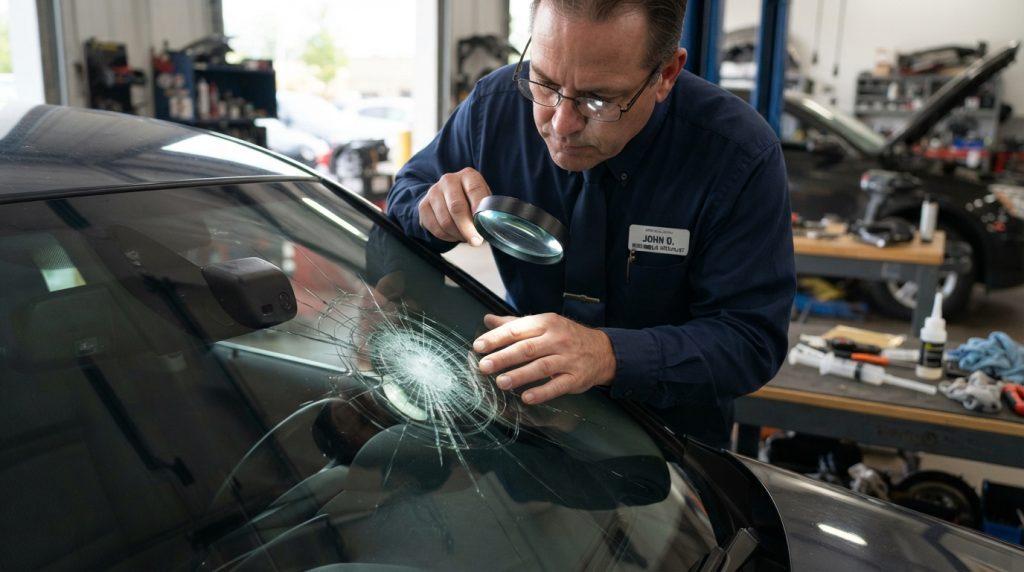
A crack at the edge or damage that reaches both glass layers can be a reason to replace the windshield instead of repairing it. These signs call for a professional assessment, not an automatic legal ruling.
Damage inside the windshield, near sensors, or across a wide area can make repair difficult. Do not judge by appearance alone; the technician may need to check the glass and vehicle systems.
Damage that reaches a critical area
A crack over a rain sensor or internal radio antenna may interfere with repair or the equipment beneath the glass. Damage on the inside surface also needs close review.
When a crack reaches both glass layers, the technician must consider how much strength remains. Edge damage raises a similar concern because it can weaken the windshield’s bond and support.
Cracks too deep, long, or complex to repair
Very long cracks, such as those over 45-60 cm, or 18-24 inches, may not be repairable. Several connected cracks can also make resin repair a poor choice.
Dirt or moisture inside a crack can limit how well repair materials bond. Local requirements may set different limits, so an assessment matters for your car and area.
| Damage condition | Why it raises concern | Likely next step |
|---|---|---|
| Inside or both-layer damage | Damage may be deep | Professional assessment |
| Sensor or antenna area | Equipment sits near glass | Check glass and system |
| Edge damage | May affect structural integrity | Assess for replacement |
| Long, complex, or contaminated crack | Repair may not bond well | Assess repair or replacement |
Boat windshields can have model-specific shapes and construction. Do not apply car guidance to boat glass without a suitable assessment.
Once the damage points toward repair or replacement, it helps to understand what a professional repair does.
How Does Professional Windshield Crack Repair Work?
Professional crack repair fills the damaged area rather than replacing the entire windshield. A technician uses clear resin to bond the break, which can restore strength and improve visibility.
The exact result depends on the damage and the repair materials. The mark may remain visible, even when the repair works as intended.
- The technician uses a vacuum injection pump to remove air from the damaged area.
- Clear adhesive resin enters the crack or chip to fill the open space.
- Ultraviolet light cures the resin and helps it harden in place.
- The technician checks the repaired area’s strength and remaining visibility.
When done properly, the repair restores strength to the damaged area. Clarity can reach 90-95%, though the break may not disappear completely.
Repair improves the glass, but it cannot always return it to its original appearance. That limit matters when you consider an over-the-counter kit.
Can You Use a DIY Windshield Crack Repair Kit?
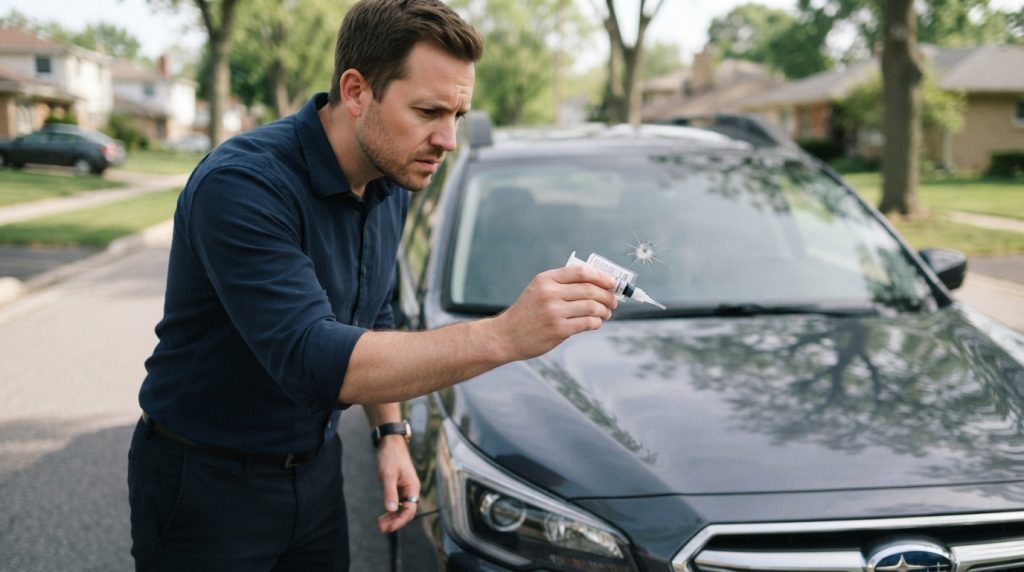
A small, uncomplicated chip may be a candidate for a repair kit, but a kit cannot make unsuitable damage safe. Kit suitability depends on size, depth, type, and location, just as it does with professional repair.
A windshield crack repair kit made for car glass uses repair resin. A windshield crack repair liquid may also contain resin, but the label alone cannot show whether the damage is a good fit.
When a kit may be a reasonable option
A kit may suit a small chip when the damage is limited and easy to inspect. Read the product instructions and compare them with the damage, but do not treat the kit as proof that repair is safe.
If the crack reaches the edge, looks deep, or blocks your view, ask a professional to assess it. A kit may fail to fill the full break, leaving damage that can spread or remain hard to see.
Why glue and cosmetic cover-ups are poor substitutes
Gorilla Glue is not windshield repair resin and should not be used to stop a crack. Household glue is not designed to bond laminated safety glass or restore its strength.
To hide a hairline crack in glass, do not paint over it or cover it as a substitute for assessment. Cosmetic cover-ups can hide changes without fixing the damage. Keep the damaged area visible so a technician can inspect it.
Choose a kit only when its intended use fits the damage, and seek help when the crack is uncertain. Next, consider what affects professional service cost and time.
How Much Does Windshield Crack Repair Cost and How Long Does It Take?
There is no single reliable price for every cracked windshield, and replacement’s installation time is not the same as its safe-drive-away time. You need a vehicle- and damage-specific quote because repair and replacement jobs differ.
Damage extent, vehicle glass requirements, and the choice between repair and replacement affect the estimate. No reliable dollar range is established here, so a general price would not reflect your car’s needs.
What can affect the repair or replacement quote
The quote may change with the size and nature of the damage. A vehicle may also need glass that fits its design or supports built-in equipment.
Ask the provider to explain whether repair or replacement is recommended and what the quote includes. That answer gives you a clearer basis for comparing options than a price alone.
Repair time and replacement cure time are different
Windshield replacement typically takes less than an hour. The vehicle may still need to wait after installation, because the adhesive must bond enough for safe driving.
That wait is the Safe Drive Away Time (SDAT), also called Minimum Drive Away Time (MDAT). Do not drive before the installer’s stated SDAT or MDAT, even if the work itself seems finished.
The required time depends on the adhesive and installation conditions. A common ideal curing environment for glass adhesive is 21°C, or 70°F, and 50% humidity.
Conditions that differ from that ideal can lengthen the cure time. Ask the installer for your vehicle’s safe-drive-away time and what to expect before you leave.
Before booking, ask how the provider assesses damage and explains the quote, appointment, and safe-drive-away instructions.
What Should You Do Before Booking Auto Glass Service?
Before you book, have the crack’s location and your vehicle details ready so the provider can assess the right option. A clear description helps a windshield crack repair professional understand what needs review.
Choosing the best windshield crack repair provider means asking about the assessment and installation safety process. Do not rely only on speed or a low quote.
- Describe where the crack is and how it has changed.
- Share your vehicle’s make, model, and year.
- Ask whether repair or replacement is recommended, and why.
- Confirm the quote, appointment arrangements, and safe-drive-away instructions.
For a local next step, contact Miracle Auto Glass at Bandera Rd & Grissom. Call (210) 680-2551 to discuss your glass damage and ask about arrangements.
Keep the provider’s instructions for your vehicle. The work is not finished until the repaired or replaced windshield is safe for the vehicle to use.
How Do You Know the Windshield Is Safe After Replacement?
A freshly installed windshield may look ready before its adhesive bond is safe for driving. Follow the installer’s SDAT or MDAT before you drive, since appearance cannot confirm bond strength.
Modern glued-in windshields add rigidity to the vehicle. Airbags can push hard against the windshield when they deploy, so the glass must bond well enough to handle that force.
- Follow the installer’s stated SDAT or MDAT.
- Do not drive before that time, even if the glass looks settled.
- Ask about any vehicle-specific restrictions.
Boat windshields may differ because their materials and frames can vary from car installations. Ask a qualified provider to assess uncertain damage instead of ignoring a crack.
Conclusion
If you are unsure whether the crack is repairable, arrange an assessment before it spreads or obstructs your view. Size matters, but damage type and location matter too.
A professional assessment is the practical next step when you are unsure about safety. It can help you decide whether repair or replacement suits your car and its glass.
Contact Miracle Auto Glass to discuss your windshield or other glass damage. Hire Miracle Auto Glass to fix your windshield or other glass damage.
FAQ
Does Home Depot sell a windshield repair kit?
Home Depot may sell a windshield repair kit, but stock can vary by store. Check your local store or its current product listings for availability. A kit’s presence does not mean it suits every crack. Check the kit’s intended use and have uncertain or complex damage assessed before trying a repair.
Can a small crack in your windshield be fixed?
Yes, sometimes a small crack can be fixed, but size is only one factor. Type, depth, and location also affect the decision. Cracks up to 6.1 cm, or 2.4 inches, fall within stated permissible repair limits. That measurement does not guarantee a repair, and local requirements can differ.
What chemical is used to repair windscreen cracks?
Professional repair uses clear adhesive resin to fill windscreen cracks. A technician injects the resin into the damaged area and cures it with ultraviolet light. The resin can improve strength and clarity, though the mark may remain visible. Repair resin is made for glass repair, unlike household glue.
Does AutoZone fix a chipped windshield?
AutoZone is a parts retailer, not a glass repair provider by default. Do not assume a local store performs chipped windshield repairs. Services can vary, so contact the store directly to ask what it offers. If it does not handle repairs, seek an auto glass professional to assess the chip.
How much does it usually cost to fix a cracked windshield?
There is no reliable dollar range that applies to every cracked windshield. Your quote depends on the damage, vehicle glass requirements, and whether repair or replacement is needed. Ask a provider for a vehicle-specific estimate and an explanation of the recommended work. A price without those details may not compare like-for-like.
What is the best liquid to repair cracked car windshield glass?
Windshield repair resin is the relevant material for filling suitable cracked car glass. No single best product can be named here without verified comparisons. The right choice also depends on the damage and the product’s intended use. For uncertain cracks, ask a glass professional rather than relying on liquid alone.
Will gorilla glue stop a crack in a windshield?
No, Gorilla Glue is not windshield repair resin and is not a safe substitute for glass repair. Household glue is not made to restore the strength of laminated safety glass. Applying it may cover part of the crack without repairing the damage. Keep the area visible and arrange an assessment if you are unsure.
What does Safelite use to fill cracks?
Windshield crack repairs generally use clear resin to fill the damaged area. That resin is cured with ultraviolet light as part of the repair process. The specific Safelite product or formula is not confirmed here, so it would be inaccurate to name one. Ask the provider what materials it plans to use for your repair.
A small chip is not automatically a reason to replace your windshield, but its location and severity matter. Windshield chip repair in San Antonio may be an option when a technician finds the damage safe to restore. Repair resin is a clear material injected into a chip or crack to fill and stabilize the damaged area.
A technician must assess the glass before recommending repair or replacement. No universal size cutoff applies to every chip, and no Miracle Auto Glass price is listed here. The right service depends on the damage and your vehicle, so do not count on a particular result before an inspection.
For customers in San Antonio, prompt attention can help keep a small problem from spreading. An appointment gives a glass technician a chance to inspect the damage and explain the available work. Move from that short answer to the damage characteristics a technician checks.
Key Takeaways
- A chip may be repairable, but a technician must assess it.
- Location, depth, and pattern all affect the recommendation.
- Damage that affects your view or glass strength may call for replacement.
- Do not use household glue or liquid on the damaged area.
- Ask for an estimate based on your vehicle and the work needed.
When Is Windshield Chip Repair San Antonio Possible?
A localized chip away from critical viewing areas is more likely to be repairable than damage that reaches the edge or obstructs your view. The pattern matters as much as the visible size, and a glass technician must inspect the damage before choosing windshield repair.
No single size rule determines whether every chip or crack can be repaired. A technician considers how the damage affects the glass and your view, then recommends repair or windshield replacement.
Damage size, location, and pattern
Size and depth help show how far the impact reaches into the windshield. A small surface chip may be easier to restore than a deep break with several branches.
Multiple impact points can make the glass harder to repair. Damage near the windshield edge also matters because the edge helps support the glass. A chip in your direct line of sight may remain distracting even after repair.
For windshield repair in San Antonio, an inspection helps sort these details. A photo may show the surface pattern, but it cannot always show the full depth or condition of the glass.
Signs that replacement may be safer
Replacement may be safer when damage blocks your view, spreads across multiple areas, or compromises the glass. The technician checks whether repair can restore a safe, clear windshield.
Use this comparison to understand the main options. The final choice depends on what the technician finds during the assessment.
| Option | When it may fit | Main consideration |
|---|---|---|
| Chip repair | A localized, repairable chip | Repair must suit the damage and preserve a clear view |
| Windshield replacement | Damage that cannot be safely repaired | The full windshield needs replacement |
| Technician assessment | Uncertain, spreading, or hard-to-see damage | An in-person inspection guides the recommendation |
Once you know why the damage type matters, explain what to do before an assessment so it does not get worse.
What Should You Do Before a Technician Assesses the Damage?
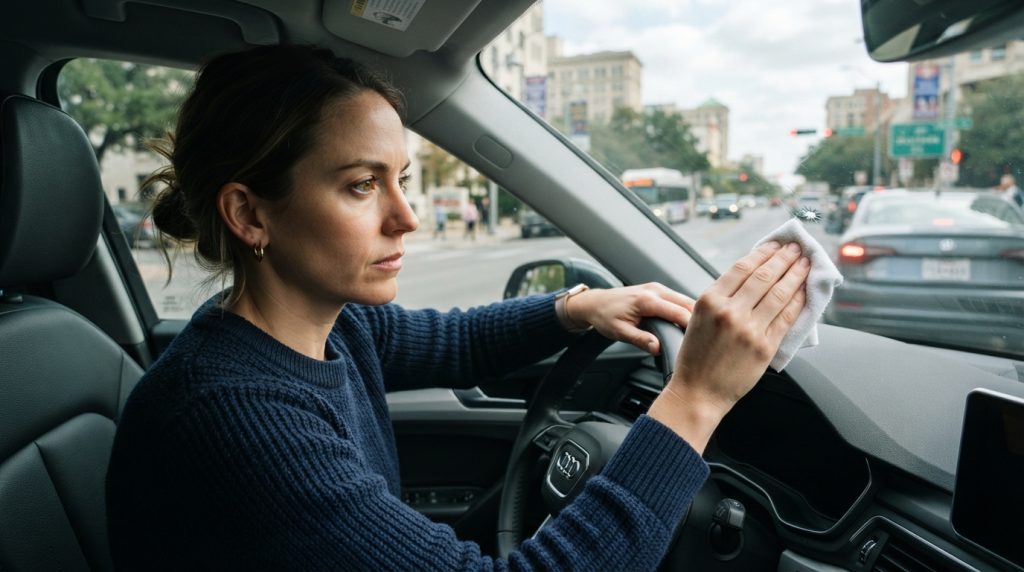
Until a technician can inspect the glass, resist the urge to fill the chip with glue or a household liquid. Keep the area undisturbed and arrange an assessment instead of waiting for the damage to spread.
Super glue is not a windshield repair material and may complicate professional work. A technician can decide whether the damage calls for repair or another service.
Protect the damaged area while you arrange service
Small steps can help limit added dirt or moisture before an inspection. Avoid actions that press on the glass or hide the damage from the technician.
- Avoid pressing or picking at the chip.
- Keep dirt and moisture out where practical.
- Ask a technician before applying household adhesive or a repair product.
- Arrange an assessment rather than waiting for visible spreading.
Try to note when you first saw the damage and whether it has changed. That detail can help the glass technician understand the chip’s condition.
Why household fixes are risky
There is no household liquid to recommend for repairing cracked car windshield glass. Household glue can leave material in the damage and make professional glass repair more difficult.
When a technician finds the chip repairable, the technician uses repair resin. This clear material fills and stabilizes the damaged area as part of a professional repair.
DIY products cannot tell you whether the windshield is safe to repair. Avoid testing a liquid on your own, especially when the damage is spreading or affects your view.
Hand off from temporary care to the safety consequences of driving with damaged glass.
How Can a Damaged Windshield Affect Safe Driving?
A chip matters most when it affects your view or the condition of the windshield itself. Clear visibility matters because damage in your line of sight can distract you or block part of the road.
Moisture entering a crack can damage the vinyl interlayer and weaken the windshield. A car windshield has two glass layers with a vinyl interlayer between them.
The layers work together as one windshield. When moisture reaches the interlayer through a crack, it can damage that layer and weaken the glass assembly.
That risk is separate from whether the damage looks small. A technician can assess the glass and explain whether repair or replacement is the safer choice for your vehicle.
Do not ignore a damaged area that interferes with your view while driving. Arrange a professional assessment and limit driving if you cannot see the road clearly.
Use those safety concerns to understand what a professional repair appointment involves.
What Happens During Professional Windshield Repair?
A technician first inspects the damage rather than assuming every chip can be filled. The assessment comes first, so the technician can decide whether repair suits the glass.
A suitable repair may preserve your existing windshield, while replacement is a separate service. The work depends on the assessment, and no result or completion time is guaranteed in advance.
The usual process moves from inspection to a recommendation, then to work on the damaged area if repair is suitable. The technician applies repair resin when appropriate and checks the finished work.
These four stages show the basic order without promising one provider’s exact method. Ask what the estimate includes before the work begins.
- Assess the damage and the condition of the windshield.
- Choose repair or replacement based on the assessment.
- Prepare the damaged area and apply repair resin when suitable.
- Check the completed work for the agreed repair.
During windshield repair, the glass technician may use tools to reach and fill the damaged area. The process differs from windshield replacement, which involves removing and fitting glass.
A technician can explain the recommended work and any limits before starting. The steps and time can vary with the damage and vehicle.
After explaining the work itself, move to the factors that shape the estimate and payment.
What Affects Windshield Repair Cost in San Antonio?
The cost depends first on whether your windshield can be repaired or needs replacement. The type of work, your vehicle, and the damage all shape the estimate.
No Miracle Auto Glass price is supplied here. Ask for a quote that names the work, materials, and any extra requirements for your vehicle.
What changes the estimate
A repair quote may differ from a windshield replacement quote because the services involve different work. Your vehicle and the extent of damage also affect the price.
Some vehicles may have glass or vehicle-system requirements that change the job. Ask whether the quote includes any related work or equipment needs.
Cheap windshield chip repair in San Antonio is not a useful comparison unless each estimate states the work, materials, and added requirements. Compare windshield repair prices in San Antonio for the same job, not just the lowest number.
For a windshield chip repair cost in San Antonio, request an estimate tied to your vehicle and damage. The quote should say whether it covers chip repair or glass replacement.
“Is Safelite cheaper than a dealership?” cannot be answered without quotes for the same vehicle, glass work, and included services. Ask both providers for itemized estimates before comparing.
| Estimate type | What it covers | What to check |
|---|---|---|
| Chip repair quote | Repair work on a suitable chip | Confirm resin, labor, and any stated limits |
| Windshield replacement quote | Removal and replacement of the windshield | Check glass type and related vehicle requirements |
| Insurance-assisted repair | Repair handled with an insurance claim | Confirm coverage, deductible, and claim steps |
How insurance may affect what you pay
Some insurers may waive a comprehensive deductible for windshield repair. Coverage and claim handling vary by policy, so ask your insurer how your plan treats the repair.
With estimate questions in hand, consider whether a mobile appointment or a shop visit better fits your situation.
Should You Choose Mobile Service or Visit a Shop?
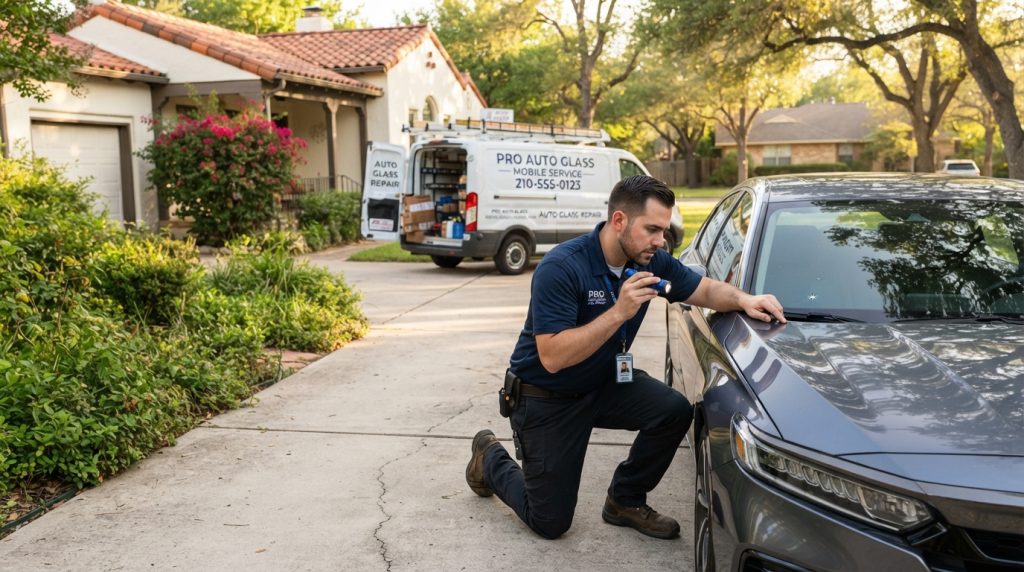
Choose mobile service only after confirming that the provider can handle your vehicle and damage at your location. Availability depends on the provider, so do not assume an at-home appointment is offered.
Mobile windshield chip repair in San Antonio and mobile windshield repair in San Antonio mean service at your location. Confirm availability and the work offered directly with the provider.
A shop appointment means you bring the vehicle to the service location. Ask whether the repair or your vehicle requires equipment that the provider uses at a shop.
Think about where a service vehicle could safely reach your car. A clear, level space may matter for access, and your schedule may make a shop visit easier.
Before booking, describe the damage and your vehicle. The provider can tell you which service format is available for that job.
Do not treat mobile service as a promise from Miracle Auto Glass. Confirm the location, appointment options, and recommended work directly with staff.
Lead into the specific details you need to contact Miracle Auto Glass.
How Do You Arrange Auto Glass Service With Miracle Auto Glass?
If you have a chip or crack, call Miracle Auto Glass to ask what assessment and service options are available. Give staff clear details so they can discuss your vehicle and the damage.
Miracle Auto Glass is located at Bandera Rd & Grissom and can be reached at (210) 680-2551. Confirm appointment availability, recommended work, and any quote directly with the business.
Before you call, gather a few details about the damage and your vehicle. These notes can help staff understand what service you are asking about.
- Your vehicle’s year, make, and model.
- Where the chip or crack is located.
- Its approximate size and whether it is spreading.
- Any insurance details you want to ask about.
Ask whether the business can assess your specific auto glass concern. You can also ask what work it recommends and what the quote includes.
Appointment availability, prices, and service options should come directly from Miracle Auto Glass. This helps you plan without relying on an assumed schedule or service format.
For auto glass service in San Antonio, call (210) 680-2551 or visit Bandera Rd & Grissom. Hire Miracle Auto Glass to fix your windshield or other glass damage.
Conclusion
If you are unsure whether the chip can be fixed, have the damage assessed before deciding on replacement. A timely professional assessment can help determine the right work for your vehicle.
Call Miracle Auto Glass at (210) 680-2551 or visit Bandera Rd & Grissom to ask about service. Hire Miracle Auto Glass to fix your windshield or other glass damage.
FAQ
Is Safelite cheaper than a dealership?
There is no universal answer because prices depend on the vehicle and the work. Compare itemized quotes for the same glass service and included services. Check whether each quote includes materials, labor, and any related vehicle requirements. A lower starting price may not cover the same work, so ask each provider what the total estimate includes.
Can I pass a vehicle inspection in Texas with a broken windshield?
The answer depends on current Texas inspection requirements, so check with an official Texas inspection resource or inspection provider. Do not rely on a general rule for every windshield or vehicle. Separate the inspection question from visibility: if a crack or chip blocks your view, address that safety concern promptly and arrange an auto glass assessment.
How big of a crack can Safelite fix?
There is no single crack length that guarantees Safelite will repair every windshield. Repair limits depend on the crack’s size, location, pattern, and effect on the glass. Safelite must assess the damage and your vehicle before recommending work. Contact the provider with your vehicle details and ask for an inspection if the crack is spreading or affects your view.
Does AutoZone fix a chipped windshield?
Do not assume a local AutoZone store offers windshield repair or installation. Services can vary by location, so contact the store directly to ask what it provides. If you need a decision about whether the damage can be repaired, seek an auto glass assessment. A glass technician can inspect the chip and recommend repair or replacement based on its condition.
What is the average cost to fix a chip in a windshield?
No verified average or Miracle Auto Glass price is available here. The estimate depends on the damage, your vehicle, and whether the work qualifies as repair. Insurance coverage may also affect what you pay. Request a quote that identifies the service and included work, then check with your insurer about your deductible and claim treatment.
Can I fix a chip in my windshield by myself?
A DIY kit may fill a chip, but it cannot determine whether the windshield is safe to repair. Have a technician assess damage in your direct view, near the edge, or with spreading cracks. The technician can check the glass and recommend repair or replacement. Avoid adding household glue or liquid before the assessment, since it may complicate professional work.
How much does Safelite charge to repair a rock chip in a windshield?
No verified Safelite price is available for a rock chip repair. The estimate can depend on your vehicle and the damage, so ask Safelite for a quote tied to those details. Confirm what the price includes and whether any extra work applies. You can compare it with another provider’s itemized quote for the same repair and services.
Will super glue fix a chip in a windshield?
No, super glue is not a windshield repair material. It may leave residue in the chip and complicate a professional repair. Do not apply it before an inspection. A glass technician can assess the damage and use repair resin if the chip is suitable for repair. If the damage is spreading or affects your view, arrange an assessment promptly.
A November 25, 2024, source calls this exposure an overlooked concern. 46 Tints also describes the windshield as a key safety component, not ordinary glass. Small chips, cloudy areas, and edge damage can reduce visibility and may lead to costly repairs.
Professional care can preserve clear vision and help maintain glass strength. If you need UV protection windshield replacement or want to explore a windshield protection film, Miracle Auto Glass can help. You can contact the team for skilled service on your windshield or other vehicle glass.
Key Takeaways
- Sunlight and weather can affect automotive glass over time.
- Your windshield supports safety, visibility, and cabin comfort.
- Small chips may grow when you ignore them.
- Quality film solutions may support long-term glass care.
- Miracle Auto Glass handles windshield and other glass damage.
Why UV Protection Windshield Replacement Matters for Your Vehicle
Sun exposure can affect your vehicle long before you notice a serious problem. Professional care helps preserve safe sight lines, cabin comfort, and the strength of the front glass.
How UV Rays Affect Glass and Interior Materials
UV rays can weaken the plastic interlayer between glass panels. Over time, this change may cause brittleness, yellowing, clouding, or haze. Factory glass blocks much of this energy, but it does not stop every ray.
Added windshield protection, such as a quality film, may help limit heat and slow interior fading. It cannot correct existing damage, however. Proper installation also matters, so you should rely on an expert for product selection and service.
Why Clear Visibility and Glass Strength Matter for Safety
Hazy glass can reduce clarity at night or during rain. Chips may also spread after road debris or another impact. A weakened panel may be more likely to shatter in a crash.
Miracle Auto Glass can inspect your vehicle and explain whether repair or replacement fits the condition. Prompt service supports visibility and helps protect you on every road.
What Your Windshield Protects Besides You

Your car’s glass also helps preserve the comfort and condition of the cabin. A clear windshield can limit direct sunlight while you travel, and the side windows help guard passengers and interior surfaces.
Shielding Your Interior From Heat and Sun Damage
Premium ceramic film can block harmful UV rays and help prevent fading or cracking inside your vehicle. By slowing heat buildup, it may also reduce stress on dashboards, seats, and trim. This added protection can make long drives more comfortable.
Tinted films can block up to 99% of harmful rays and reduce glare from the road. Less heat enters through the windshield, which helps your car stay cooler during hot American summers. The right tinting choice can support comfort without limiting clear vision.
You can also park in a shaded area or place a windshield sunshade behind the window when your car sits outdoors. These simple habits reduce direct exposure. Miracle Auto Glass can review your windshield and windows, then recommend suitable glass care and protection options for your vehicle.
How Factory Glass and Protection Films Block Harmful Rays
Light enters your vehicle through several paths, but the factory glass offers a useful first barrier. It often blocks some UV energy, while added treatments can increase coverage and reduce cabin heat.
A windshield protection film can add another layer without changing your view. Ceramic tinting helps block UV rays and may improve scratch resistance. Metallic tint can also reduce heat, though it may affect electronic signals in some vehicles.
Some coatings make water and road grime bead away during rain. This can support clearer sight lines. Films designed for automotive glass should limit glare, haze, and visual distortion.
Factory glass, ceramic options, and metallic films each offer different benefits. Miracle Auto Glass can inspect your vehicle, compare these choices, and recommend professional services. If existing damage calls for a high-quality windshield replacement, the team can help select and install suitable glass.
| Option | Main benefit | Best consideration |
|---|---|---|
| Factory glass | Built-in basic filtering | Coverage varies by model |
| Ceramic film | Heat control and scratch resistance | Clear optical performance |
| Metallic tint | Strong glare and heat reduction | Signal compatibility |
Benefits of High-Quality Windshield Protection Film

A clear film can add a quiet layer of defense during daily driving. It helps reduce damage while keeping your view sharp. ClearShield WPF offers high-quality windshield protection without changing the look of your vehicle.
Reducing Chips and Cracks From Rocks and Road Debris
ClearShield WPF uses a transparent, self-healing surface that absorbs impacts from rocks and road debris. It may lower the risk of chips and cracks caused by rocks, loose gravel, and highway debris. Heat activation can also help the surface repair minor scratches.
Supporting Optical Clarity and Reduced Glare
Films designed for auto glass should preserve clarity without haze or visual distortion. A smooth surface may reduce glare and support better visibility during changing road conditions. ClearShield WPF adds a clean finish while the windshield remains easy to view.
Improving Durability and Long-Term Peace of Mind
These windshield protection films can support long-term durability, but they cannot hide serious damage. Miracle Auto Glass can fix existing chips, cracks, and other glass problems. The team can also explain whether ClearShield WPF or another high-quality option suits your vehicle today.
When Your Vehicle May Need UV-Protective Windshield Replacement
Cloudy glass can signal that your vehicle needs more than a routine wash. Yellowing, rising glare, spreading cracks, or stubborn chips deserve a professional review. Clear visibility matters most at night and during rain.
A windshield that is 7–10 years old may show age-related changes. Long highway trips, gravel roads, direct sunlight, and repeated impact from rocks or debris can reduce its durability and service life. A technician can check the glass and measure its UV performance with a UV meter.
Do not wait for a small issue to become a major hazard. Miracle Auto Glass can inspect your vehicle, explain the benefits of a protection film, and provide a clear quote. The team can recommend repair or replacement when needed.
- Check for haze, chips, cracks, and glare.
- Ask about ClearShield WPF and proper installation.
- Review tinting options for the window and car windows.
- Contact Miracle Auto Glass for other glass damage.
ClearShield WPF may add another layer of protection while helping water move away from the viewing area. A timely assessment helps you choose the right solution for your vehicle.
What to Expect From Professional Auto Glass Installation
A careful service visit turns a glass upgrade into a clear, lasting result. Miracle Auto Glass starts with an expert review, explains your choices, and gives you a clear quote before work begins. This process helps protect your windshield and supports peace of mind for years.
Inspection, Film Selection, Installation, and Final Clarity Check
The technician checks for chips, cracks, debris, water, and visibility concerns. You can compare ClearShield WPF, ceramic options, tinting, and other films designed for your driving needs. The team will also explain the benefits of each choice.
- Precision installation usually takes a few hours, based on the vehicle and material.
- A trained expert applies the film to limit bubbles, peeling, and visual distortion.
- The final check confirms clarity, clean edges, and proper coverage.
- Wait at least 48 hours before washing the vehicle.
ClearShield WPF may add durable protection while preserving a high-quality windshield view. Miracle Auto Glass also handles repair, replacement, window tinting, and other glass services. Call today to schedule an appointment and learn about available services. A lifetime warranty may also be available for qualifying film work.
| Stage | What You Receive | Typical Timing |
|---|---|---|
| Inspection | Glass and damage review | Before service |
| Film choice | Material and tinting guidance | During consultation |
| Application | Precision fitting with clean edges | A few hours |
| Cure period | Stable finish after installation | Wait 48 hours before washing |
Conclusion
Smart glass care helps you keep clear sight lines and a comfortable cabin. A November 25, 2024, source connects long sunlight exposure with haziness, brittleness, fading, and glass deterioration. Factory glass blocks much of this radiation, while a windshield protection film, coatings, or new glass may offer stronger protection.
Clear Paint Protection Film can absorb impacts from road debris. Ceramic films may repel water and support clearer driving in rain. Tinting can also improve cabin comfort when matched to your window and local laws.
Consider your windshield’s age, visible cracks, spreading chips, glare, and reduced visibility. These signs call for a professional check. Hire Miracle Auto Glass to fix your windshield or other glass damage. You will receive guidance on the right protection film for your vehicle, car windows, and driving needs.
Schedule your inspection today and keep every trip clearer.
FAQ
When should you consider UV protection for a windshield replacement?
Consider it when the glass has chips, cracks, poor clarity, or worn edges. New glass can help restore safety while a protective layer helps limit sun damage, heat, and fading.
How do UV rays affect your vehicle’s interior?
UV rays can fade seats, dashboards, trim, and carpets. They may also dry leather and weaken plastic over time. A quality film helps reduce this exposure while keeping the cabin more comfortable.
Can factory glass block harmful rays?
Some factory glass filters part of the sun’s rays, but performance varies by vehicle. Ask an auto glass professional to review your glass and explain whether an added film would improve heat control and interior care.
Can a windshield protection film help stop chips and cracks?
It can help absorb impacts from rocks and road debris. The film does not make glass indestructible, but it may reduce damage and help extend the service life of your vehicle glass.
Will a clear film reduce visibility or create glare?
A high-quality product should maintain optical clarity when installed correctly. It can also reduce glare in some driving conditions. Your installer should complete a final check for haze, bubbles, and distortion.
Is Clearshield WPF different from window tinting?
Yes. Clearshield WPF is designed for front glass impact resistance and surface defense. Window tinting mainly manages light, privacy, and cabin heat on selected windows. Each product serves a different purpose.
When should you schedule professional installation?
Schedule service when you notice chips, cracks, surface wear, or reduced clarity. Early inspection can help you choose between repair, film installation, or full glass replacement.
What happens during an auto glass installation?
The technician inspects the glass, checks damage, selects the right film, cleans the surface, and applies the material with care. The final step includes a clarity and edge check before you drive away.
How long can a quality film last?
Service life depends on product quality, weather, cleaning habits, and installation. Follow the care instructions, avoid harsh tools, and ask for a written warranty and quote before work begins.
When you get a new windshield, it’s not done just by installing the glass. Even a small move during installation can mess up your car’s safety systems. This is why getting windshield ADAS calibration San Antonio is key for your safety.
Not doing this step can make your safety tech not work right. By focusing on windshield ADAS calibration San Antonio, you make sure your car’s advanced features work as they should. Don’t risk your safety by skipping this important step after your glass is fixed.
Key Takeaways
- Modern vehicles use cameras and sensors to manage critical safety features.
- Replacing your glass can easily disrupt the alignment of these sensitive components.
- Safety systems like automatic braking require precise data to function correctly.
- Professional service is necessary to restore your vehicle’s factory safety standards.
- Completing this process provides peace of mind for every drive you take.
What is Windshield ADAS Calibration?
If you drive a newer car, you likely have advanced safety features on your windshield. These systems watch the road to keep you and your passengers safe.
Most of these cameras and sensors are right behind the glass. Any change to your vehicle can affect how they see the world.
Understanding ADAS Technology
Advanced Driver Assistance Systems, or ADAS, use cameras, radar, and sensors. They power features like lane departure warnings and automatic emergency braking. When your car leaves the factory, these components are set to precise, manufacturer-standard positions.
This technology needs a clear view through the windshield to work right. Even a small change in a camera’s angle can mess up how it sees the road. It is vital to recognize that these systems don’t have tools to warn you if they’re not aligned.
Importance of Calibration
When you replace your windshield or have a collision, the settings can get messed up. This is why ADAS recalibration is key in your vehicle’s maintenance.
Professional ADAS recalibration makes sure every sensor is set right. Without this, your safety features might not work when you need them. Taking the time to calibrate your system is the only way to keep your vehicle’s safety features working.
Why Calibration is Essential for Safety
Your vehicle’s ADAS is like a digital co-pilot that needs regular checks to work right. When it does, it helps keep you safe by steering you back or braking early. Proper calibration makes sure it’s a trusted ally, not a gamble.
Enhancing Driver Assistance Features
Your car uses a forward collision camera to watch the road and spot dangers. If it’s off by a bit, it might miss things or warn you too late. A lane departure warning windshield system also needs to be spot-on to follow the lines right.
When everything is in sync, your car helps you stay safe. But if it’s not, you might get false warnings or not get help when you need it. Keeping these systems sharp is essential for feeling secure while driving.
Reducing Accident Risks
Calibrated sensors cut down on accidents caused by mistakes. They work faster than you can, adding a layer of safety. Emergency braking systems are key here, needing exact data to stop in time.
Systems that aren’t calibrated can be slow or off, making your car unpredictable. Getting them checked by pros keeps your safety tech reliable. Here’s how calibrated and uncalibrated systems compare.
| Feature | Calibrated System | Uncalibrated System |
|---|---|---|
| Collision Alerts | Highly Accurate | Delayed or False |
| Lane Tracking | Precise Centering | Erratic Nudging |
| Braking Response | Immediate Activation | Hesitant Performance |
| Overall Safety | Maximum Protection | Increased Risk |
Signs Your Vehicle Needs Calibration
Spotting system errors early can prevent driving dangers. After a windshield change or a small crash, your car’s tech might be off. Stay alert to keep your safety gear working right.
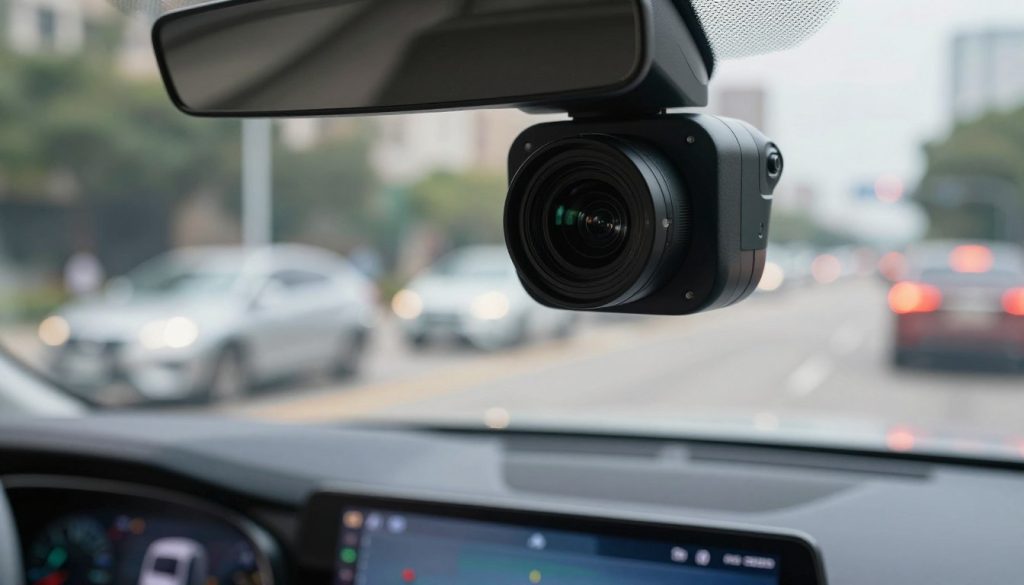
Warning Lights on the Dashboard
A steady warning light on your dashboard is a clear sign. It pops up after a windshield swap or a small crash. Don’t ignore these lights because ignoring them can disable your safety features when you need them most.
Seeing a light for your safety systems? Don’t think it will go away by itself. A pro needs to check if your system is calibrated correctly.
Misaligned Cameras or Sensors
There are other signs too. A forward collision camera is very sensitive. If it’s not just right, your car might not see things it should.
Look out for these signs your sensors need a check:
- False alarms from your safety systems.
- Your car has trouble staying in its lane.
- Your forward collision camera goes off for no reason.
- Your automatic emergency braking system doesn’t work right.
Act fast to avoid losing your safety systems. If you think your sensors were moved, get them checked by a pro.
The Calibration Process Explained
Fixing your car’s safety features needs a precise and highly technical calibration. This makes sure your car’s advanced systems work right. It aligns your lane departure warning windshield sensors so your car can see road markings and obstacles well.
Step-by-Step of Calibration
The first step is a detailed pre-scan to find any system problems. After fixing these, the car is parked on level ground for accurate measurements. This is key for the next steps.
Next, the technician sets up targets in front of the car. They use special tools to align these targets with your car’s factory settings. After this, a final check is done to make sure the system works right.
Tools Used in the Process
Today’s calibration uses advanced computer tools for factory-standard performance. Technicians use lasers and digital cameras for precise sensor calibration. These tools talk to your car’s computer to check sensor placement.
These tools help avoid mistakes. They make sure your safety systems work well every day. Investing in professional calibration keeps your car’s tech in top shape.
How Miracle Auto Glass Handles Calibration
At Miracle Auto Glass, we take your vehicle’s safety very seriously. We know modern cars have complex sensors to keep you safe. We handle each calibration task with the care it needs.
Our goal is to make sure your vehicle is safe and fully functional when we return it to you.
Experienced Technicians
Our team is made up of skilled professionals. They get specialized training in ADAS technology. They know how to work with different car models.
You can trust your car is in good hands. Our technicians put your safety first.
We keep our standards high. Our techs stay up-to-date with the latest in the field. This means we can work with even the most sensitive systems confidently.
When you choose us, you get our deep knowledge and dedication to excellence.
State-of-the-Art Equipment
Our calibration process is all about precision. We use top-notch, computerized tools to adjust sensors with great accuracy. This tech lets us align your cameras and sensors just right.
Our tools help us avoid the uncertainty of sensor alignment. Your car’s features, like lane departure warnings and automatic braking, work perfectly. Here’s why our method is the best:
- Precision Alignment: We use digital targets for perfect sensor placement.
- Manufacturer Compliance: Our tools meet strict OEM standards for every car.
- Comprehensive Testing: We check all systems before giving you back your keys.
- Reliable Results: Our advanced tools ensure consistent, high-quality results for all our customers.
Benefits of Choosing Miracle Auto Glass
When it comes to your car’s safety systems, you need a service that values precision and your time. Trusting your car to experts means every sensor and camera works right. At Miracle Auto Glass, we know your time and safety are important.
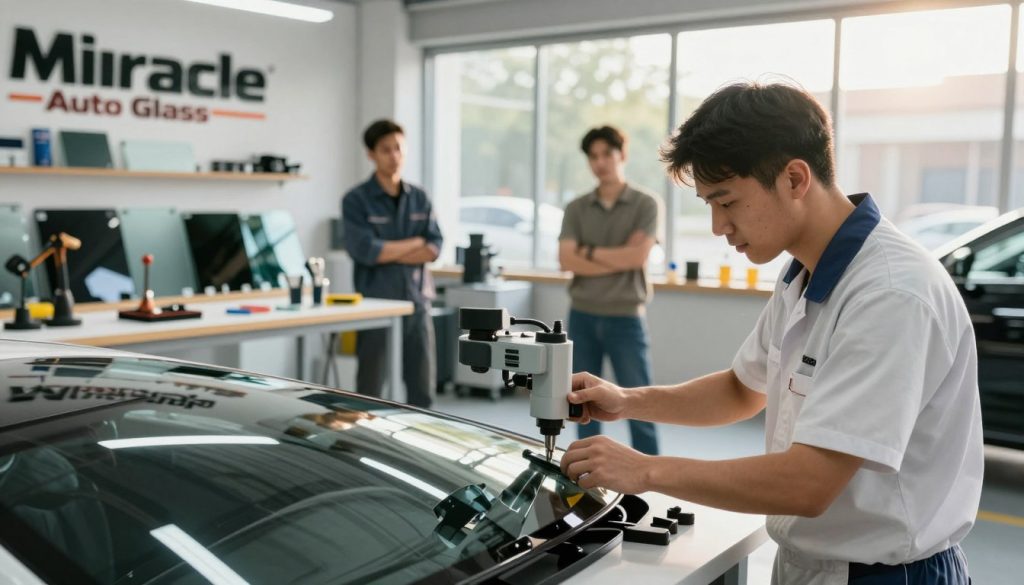
Fast and Efficient Service
Being without your car is a big hassle. Our team works hard to give you streamlined service fast. We use advanced tools to fix your car’s safety features right the first time.
Our techs are quick and accurate with complex calibrations. You’ll get a professional service that fits your busy life and meets top standards. We aim for efficiency so you can get back to your day with confidence.
Customer Satisfaction Guarantee
Your happiness is our main goal. We offer a customer satisfaction guarantee to make sure you feel safe driving. If you have any questions or concerns, our team is here to help.
Choosing a trusted provider is key for your safety on the road. With us, you get:
- Expert technicians for modern safety systems.
- Transparent communication every step of the way.
- Quality checks to ensure ADAS components are perfectly set.
- Support that focuses on your long-term safety and car performance.
Comparing Calibration Methods
Ever wondered why some cars need a shop visit while others just a road test? Ensuring your safety systems work right isn’t the same for everyone. Knowing the difference between static vs dynamic calibration is key for any car owner who cares about safety and precision.
Dynamic Calibration vs. Static Calibration
Static calibration happens in a service center. Technicians use specialized targets at set distances and angles. This lets the car’s computer adjust the camera or sensor as needed.
Dynamic calibration, on the other hand, involves driving on marked roads. The car’s sensors check lane lines and signs. This makes sure ADAS features work well in real driving situations.
When to Choose Each Method
Choosing between these methods depends on your car’s maker. Some cars need just one, but many newer ones require both. This ensures perfect sensor calibration.
Your tech will decide based on your car’s make and model. Following these steps ensures your safety systems work as designed. This gives you peace of mind every time you drive.
| Feature | Static Calibration | Dynamic Calibration |
|---|---|---|
| Environment | Controlled Shop | Public Roadways |
| Primary Tool | Optical Targets | Lane Markings |
| Complexity | High Precision | Real-world Sync |
| Requirement | Manufacturer Specs | Manufacturer Specs |
Common Myths About ADAS Calibration
Many people believe that advanced safety systems don’t need any attention. But, ignoring these systems can cause unpredictable system behavior and safety risks. It’s important to know the truth about sensor maintenance.
Myth: Calibration is Only for New Windshields
Some think ADAS recalibration only happens when you get a new windshield. But, it’s not just about the glass. Any change to your vehicle, like a wheel alignment or a small bumper hit, can mess with your sensors.
If your sensors are off, your car might not see obstacles or lane lines right. Making sure your safety features work well is key. Treat this as part of any big repair job.
Myth: You Can Skip Calibration
Some drivers think they can skip this step to save time or money. But, this is risky. Not getting your ADAS recalibration done means your car’s safety tech might not work right.
Here’s a table showing when you really need a pro to adjust your sensors:
| Maintenance Event | Sensor Impact | Action Required |
|---|---|---|
| Windshield Replacement | Camera misalignment | Full Calibration |
| Wheel Alignment | Sensor angle shift | System Check |
| Bumper Repair | Radar obstruction | Sensor Reset |
| Suspension Work | Vehicle height change | Recalibration |
Local Regulations on ADAS Calibration in San Antonio
When you replace your windshield in San Antonio, local rules and car maker standards are key to your safety. The windshield replacement calibration cost San Antonio might seem like an extra cost. But it’s a must for your safety. Knowing these rules helps you avoid problems with insurance claims later.
Texas State Guidelines
In Texas, car safety rules are set by car makers. Most big car brands say ADAS must be updated right after windshield work. Not doing this can cause big problems with your car’s safety features.
Insurance companies check for proof of calibration when dealing with claims. If you don’t follow these rules, your insurance might not cover you. Knowing the windshield replacement calibration cost San Antonio helps you plan your budget while keeping your car safe and legal.
Importance of Compliance
Following the rules is not just about the law. It’s about making sure your car works right. If sensors are off, your car’s safety features might not work when you need them most. Getting your car calibrated is the best way to keep you and your passengers safe on Texas roads.
It’s a good idea to keep records of your calibration service. This proof shows you’ve met the safety standards. The table below shows why following these rules is important for your car’s health and insurance.
| Factor | Compliant Vehicle | Non-Compliant Vehicle |
|---|---|---|
| Safety Systems | Fully Operational | Risk of Malfunction |
| Insurance Claims | Easily Processed | Potential Denial |
| Manufacturer Warranty | Remains Valid | Risk of Voiding |
| Driver Confidence | High | Low |
How to Schedule Your Windshield ADAS Calibration with Miracle Auto Glass
Your safety on the road depends on your vehicle’s sensors. Make sure your technology works perfectly. This ensures your driving experience is as good as it can be.
Miracle Auto Glass has the skills for complex sensor adjustments. Our team will make you feel safe again with our professional service. We make scheduling your windshield ADAS calibration in San Antonio easy and stress-free.
Streamlined Appointment Scheduling
Visit our website to book your service at a time that works for you. Our online platform makes it easy to schedule an appointment fast. We also give you clear details about the cost of windshield replacement calibration in San Antonio. This way, you know what to expect when you come.
Choose Miracle Auto Glass for your windshield or glass damage repairs today. Our technicians are ready to help with top-notch repairs and precise sensor alignment. Keep your investment and loved ones safe by choosing a team that puts your safety first.
FAQ
What is the typical windshield replacement calibration cost San Antonio drivers can expect?
The cost of ADAS recalibration is usually between 0 and 0. Most insurance policies cover this cost when you replace your windshield.
Can I drive my car safely without ADAS recalibration?
No, it’s not safe. Without calibration, your car’s safety features might not work right. This increases your risk of an accident.
What is the difference between static vs dynamic calibration?
Static calibration uses targets in a bay. Dynamic calibration involves driving the car. Your car’s make determines which method (or both) is needed.
How long does a lane departure warning windshield calibration take?
Calibration usually takes 45 minutes to two hours. At Miracle Auto Glass, we aim to do it quickly while replacing your windshield.
Does every new windshield require ADAS recalibration?
Yes, if your car has ADAS features like a forward collision camera. Any windshield change requires realignment of these sensors.
Why should I choose Miracle Auto Glass over a dealership for calibration?
Miracle Auto Glass offers specialized expertise at a lower cost. We work fast and meet strict OEM standards.
Many drivers find it hard to choose between OEM and aftermarket windshields. Knowing the differences is key. It helps keep your vehicle safe and ensures you’re protected on the road.
Choosing the wrong windshield can risk your car’s safety in an accident. We invite you to hire Miracle Auto Glass for your repairs. They make sure your vehicle stays safe and reliable for every journey.
Key Takeaways
- Cracked glass needs quick attention for your safety.
- Choosing between original equipment and third-party parts affects your car’s structure.
- Professional installation is key for lasting results.
- Miracle Auto Glass offers expert solutions for all your repair needs.
- Quality parts keep your car safe and meet safety standards.
Understanding OEM and Aftermarket Windshields
Exploring the world of car glass can be tough, but knowing your choices makes it easier. When your windshield gets damaged, you want it fixed right. You want it to be clear and strong. At Miracle Auto Glass, we help you choose the best for your car.
Definition of OEM Windshields
OEM stands for Original Equipment Manufacturer. These windshields come from the same makers as your car’s original glass. They fit perfectly and keep your view clear.
Going for OEM parts means you get a match for your car’s exact glass. This is key for cars with special safety features. It keeps your car safe and running right.
Definition of Aftermarket Windshields
Aftermarket windshields come from other makers. They fit many cars and are often cheaper. But, they might not meet the same standards as OEM glass.
Many aftermarket windshields work well, but it’s key to choose quality ones. If you’re not sure, our team at Miracle Auto Glass can help. We focus on your safety and clear view.
| Feature | OEM Glass | Aftermarket Glass |
|---|---|---|
| Manufacturer | Original Factory Source | Third-Party Company |
| Fitment | Exact Factory Match | Universal/General Fit |
| Quality | Premium Standards | Variable/Budget-Friendly |
| Safety Tech | Optimized for Sensors | May Require Calibration |
Key Differences Between OEM and Aftermarket Glass
When your windshield cracks, you might wonder if the price difference between dealer glass vs aftermarket is worth it. It’s important to look beyond the cost to see how these glasses perform. Whether you want the exact fit of factory glass or a more affordable option, knowing the facts is key to keeping your car and passengers safe.
Quality and Durability
The main worry for many is aftermarket auto glass quality. While it meets safety standards, it might not have the same clarity or thickness as OEM glass. This can impact how well systems like lane-departure warnings work.
OEM glass comes from the same makers as your car’s original parts. It fits perfectly and works well in all weather. If keeping your car’s original quality is important to you, OEM is the safer choice.
Cost Considerations
For many in San Antonio, cost is a big factor. Aftermarket glass is cheaper because it’s made in large quantities by different companies. It’s a good choice if you want to save money without sacrificing safety.
But, think about the long-term value of your choice. At Miracle Auto Glass, we help you decide what’s best for your car. Our experts can fix your windshield or other glass issues, keeping your car in great shape.
| Feature | OEM Glass | Aftermarket Glass |
|---|---|---|
| Manufacturing | Original Factory Specs | Independent Standards |
| Fitment | Guaranteed Precision | Generally Reliable |
| Cost | Higher Investment | Budget-Friendly |
| Safety Tech | Optimized for Sensors | May Require Calibration |
Pros and Cons of OEM Windshields
Looking for an OEM windshield San Antonio means you want the best. These windshields are made to fit your car perfectly. They match the exact shape and thickness of the original glass.
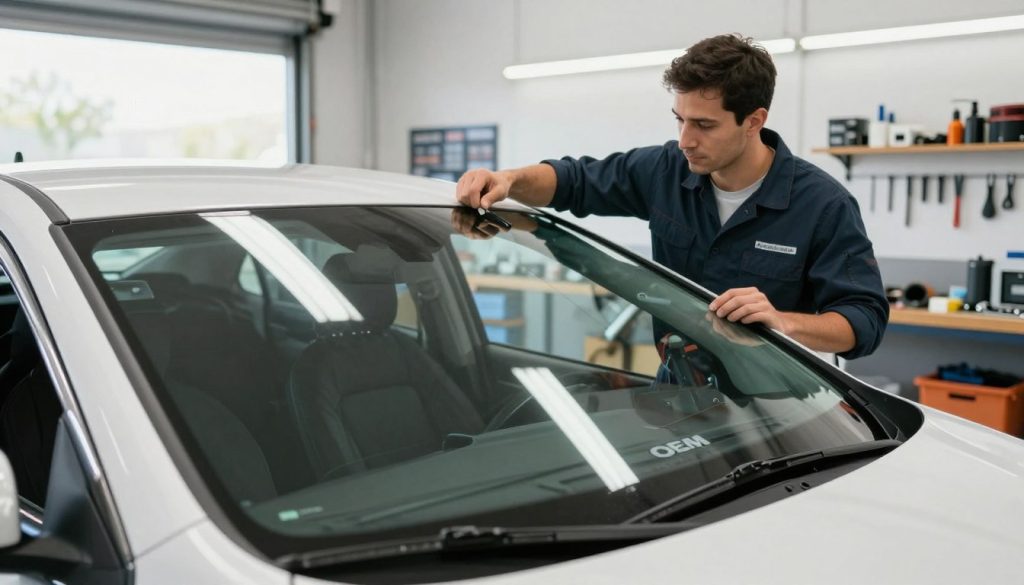
Benefits of Choosing OEM
Choosing OEM ensures your windshield fits perfectly. This is key for cars with advanced safety features. These features rely on the glass to work right.
Precision engineering is what OEM windshields are all about. They’re made by the same companies that made your car’s glass. This means no risk of poor fit or leaks.
Potential Drawbacks
One big thing to think about is the cost. OEM windshields are more expensive than others. They’re made to strict standards, which can raise the price.
Also, finding the right OEM windshield might take longer. This is because they’re made in limited quantities. But, the safety benefits are worth it in the long run.
| Feature | OEM Glass | Aftermarket Glass |
|---|---|---|
| Fitment Precision | Exact Factory Match | Variable |
| ADAS Compatibility | Guaranteed | May Require Calibration |
| Cost | Higher | Lower |
| Warranty | Manufacturer Backed | Varies by Provider |
If you want the best for your car, hire Miracle Auto Glass. We know how important a good fit is. We’ll make sure your windshield is installed right.
Pros and Cons of Aftermarket Windshields
Aftermarket windshields have their good points and not-so-good points for car owners in San Antonio. When your car gets damaged, you want a fix that’s both affordable and quick. Miracle Auto Glass is here to guide you through these options.
Benefits of Going Aftermarket
The main draw of aftermarket glass is its affordability. Made by companies other than the car’s maker, these windshields cost less. They’re also easy to find, making it simple to get them replaced fast.
Also, aftermarket auto glass quality meets federal safety standards. This means the glass is strong enough to keep you safe while driving. Many people see these parts as a good, cheaper choice compared to the original glass.
Possible Downsides
Even though these windshields are safe, they might not fit perfectly like the original glass. You might see small differences in thickness or shape. These small changes can sometimes make installation tricky.
Another thing to think about is glass optical clarity. Sometimes, aftermarket glass doesn’t look as clear as the original. If you’re worried about how these differences might affect your car, Miracle Auto Glass can help fix your windshield or other glass issues.
| Feature | Aftermarket Glass | Consideration |
|---|---|---|
| Cost | Highly Affordable | Budget-friendly choice |
| Availability | Very High | Quick turnaround |
| Specifications | Universal Fit | May vary slightly |
| Safety | Federal Standard | Meets requirements |
Installation Process of Windshields
Your vehicle’s safety depends on how well the windshield is installed. A windshield is more than a window; it’s a critical safety component. It supports the roof and makes sure airbags work right in a crash.
Getting the windshield fitment ADAS right is key for today’s cars. If the glass isn’t installed perfectly, the cameras and sensors might not work right.
Importance of Professional Installation
Choosing a certified tech is the smartest move for your safety and your car’s. They follow strict rules to make sure the adhesive seals everything watertight and secure.
Without a pro, you could face leaks, wind noise, or even the glass popping out in an accident. Certified technicians know exactly what your car needs, keeping all safety features working.
DIY vs. Professional Services
Some repairs you can do yourself, but not windshield replacement. It needs special tools to avoid harming your car’s frame or electronics.
Also, calibrating the windshield fitment ADAS needs special software and a safe place. Trying it at home can lead to expensive mistakes that risk your safety.
So, hire Miracle Auto Glass for your windshield or glass repairs. Our experts ensure your car is safe, reliable, and ready for the road.
Insurance Considerations for Windshield Replacement
It’s important to know how your insurance covers glass replacement. Many policies have rules about the glass they cover. This can affect your repair experience. Always check your policy to see if it covers original equipment manufacturer parts.
Coverage for OEM vs. Aftermarket
Your insurance policy might say if you get dealer glass vs aftermarket parts. Some insurers save money by using aftermarket glass. But, you might have to pay extra for OEM parts. Talk to your agent to avoid surprises.
Choosing between dealer glass vs aftermarket depends on your car’s age and safety features. If your car has advanced safety systems, you might get original glass. Check if your deductible changes based on the glass type.
Filing Claims for Glass Damage
Filing a claim for glass damage is easier with the right help. Take clear photos of the damage before calling your insurance. When you hire Miracle Auto Glass, we help with your claim.
We know the dealer glass vs aftermarket debate well. We can talk to your insurance adjuster for you. We provide accurate estimates and repair records. This way, your claim goes smoothly, and you can drive safely again.
Safety Standards and Certifications
Your windshield is more than just glass; it’s a critical component of your car’s safety. It supports the roof and helps airbags work right in crashes. Keeping it clear is key to spotting dangers on the road.
Industry Regulations for Windshields
Car glass must pass tough tests to handle big forces. In the U.S., makers follow the Federal Motor Vehicle Safety Standards (FMVSS). These rules ensure windshields protect you well.
- Impact resistance during road debris encounters.
- Retention standards to keep the glass in place during a rollover.
- Distortion limits to ensure the driver has a clear view.
Why Quality Matters for Safety
Choosing top-notch glass is not just about looks; it’s about staying safe. Bad glass might not hold up in a crash or could break into sharp pieces. Opting for glass optical clarity and strength means you’re looking out for your safety.
If your windshield has chips or cracks, don’t delay. Miracle Auto Glass offers expert fixes and replacements. Our team will make sure your car meets all safety standards. Let us get your car back to its best today.
Making an Informed Decision
Choosing the right auto glass replacement is about cost, quality, and tech. You need to think about a few things to keep your car safe and working well.
Factors to Consider When Choosing Glass
Think about your car’s age and safety needs. For newer cars, windshield fitment ADAS is key. It makes sure cameras and sensors work right.
Deciding between OEM vs aftermarket windshield depends on your budget and car age. OEM glass fits your car perfectly. But, aftermarket glass might be cheaper.
For cars with advanced safety features, fit is critical. Wrong windshield fitment ADAS can mess up your safety systems.
| Factor | OEM Glass | Aftermarket Glass |
|---|---|---|
| Manufacturer | Original Brand | Third-Party |
| Fitment | Exact Match | Variable |
| ADAS Compatibility | Guaranteed | Requires Verification |
| Cost | Higher | Budget-Friendly |
Consulting with Professionals
Getting expert advice makes choosing easier. Miracle Auto Glass can help fix your windshield or other glass issues.
Our team knows the differences between dealer glass vs aftermarket. They can guide you. By picking Miracle Auto Glass, you get a windshield that meets your safety and value needs.
Miracle Auto Glass: Your San Antonio Experts
Looking for top-notch glass repair in San Antonio? Miracle Auto Glass is your go-to team. We know your car is a big deal, so we handle every repair with utmost precision and care. From small chips to broken glass, our experts will make your car look new again.
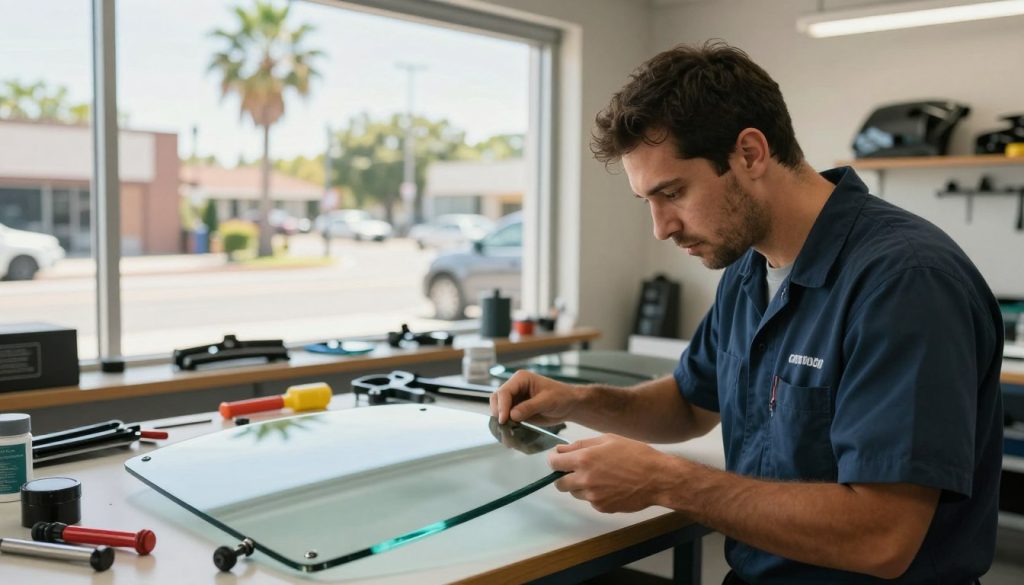
Experience and Customer Commitment
We’ve built a strong reputation in the community over the years. Your safety is our top priority, and we ensure every job meets high standards. With advanced tools and state-of-the-art technology, your glass will fit perfectly every time.
We value clear communication with our customers. Our team will walk you through the process, so you’re confident in our work. We treat your car like our own, providing professional care you can count on.
Services Offered
Our services cover a wide range, including installing a top-quality OEM windshield in San Antonio. Our skilled technicians work with all types of vehicles, ensuring your new glass fits perfectly with your car’s safety features.
We also offer specialized services for any glass damage. Need an OEM windshield in San Antonio that meets factory standards? Our inventory is ready to serve you fast. Contact us today to fix your windshield or other glass issues and see our quality for yourself.
How to Get Started with Your Windshield Replacement
Getting started is easy. You want to see the road clearly and feel safe. We’re here to help.
At Miracle Auto Glass, we’re ready to meet your needs. We care about your time and money. We’ll guide you clearly every step of the way.
Free Estimates and Assessments
Call our San Antonio shop for a detailed check of your glass damage. We’ll look at your car to see if you need OEM parts or high-quality aftermarket glass.
Our team will explain the options to you. We aim for accuracy and strength in every job.
Choose Miracle Auto Glass for your windshield or glass repairs. We ensure your safety with reliable service. Contact us to book your assessment and experience our professional care.
FAQ
Definition of OEM Windshields
OEM parts come from the same makers as your car’s original glass. Brands like Pilkington or PGW make these parts. They meet strict standards for safety and clarity. For expert advice, contact Miracle Auto Glass.
Definition of Aftermarket Windshields
Aftermarket glass is made by other companies. It fits your car but might not match OEM quality. Miracle Auto Glass can help you decide if aftermarket glass is right for you.
Quality and Durability
OEM glass is made to match your car perfectly. Aftermarket glass might vary slightly. For the best clarity, choose Miracle Auto Glass.
Cost Considerations
OEM glass costs more but fits better. Aftermarket glass is cheaper but might not fit as well. Miracle Auto Glass offers the best value for your money.
Benefits of Choosing OEM
OEM windshields fit modern cars perfectly. They ensure your safety systems work right. Miracle Auto Glass ensures a precise fit.
Potential Drawbacks
OEM glass is pricier and might take longer to get. But, it’s worth it for the peace of mind. Miracle Auto Glass can help you decide.
Benefits of Going Aftermarket
Aftermarket glass is cheaper and meets safety standards. It’s a good option for those on a budget. Miracle Auto Glass can help you choose wisely.
Possible Downsides
Aftermarket glass might not be as precise as OEM. It could affect clarity or cause wind noise. Miracle Auto Glass can assess your car’s needs.
Importance of Professional Installation
Professional installation is key for your car’s safety. It ensures ADAS systems work correctly. Miracle Auto Glass offers certified services.
DIY vs. Professional Services
DIY installation can lead to problems. Professionals use special tools for a safe fit. Miracle Auto Glass keeps you and your family safe.
Coverage for OEM vs. Aftermarket
Insurance policies vary in coverage. Some may only cover OEM glass. Miracle Auto Glass can help with your claim.
Filing Claims for Glass Damage
Filing a claim needs accurate info. We work with major insurers for a smooth process. Miracle Auto Glass handles the paperwork.
Industry Regulations for Windshields
All glass must meet federal safety standards. OEM glass often goes beyond these standards. Miracle Auto Glass ensures your safety.
Why Quality Matters for Safety
Your windshield protects you in accidents. It supports the roof and ensures airbags deploy correctly. Miracle Auto Glass guarantees quality.
Factors to Consider When Choosing Glass
Consider your car’s age and features. Think about your safety needs. Miracle Auto Glass offers expert advice.
Consulting with Professionals
Talk to a technician for clarity on glass options. Miracle Auto Glass provides professional guidance.
Experience and Customer Commitment
We’re the top choice for auto glass in San Antonio. We prioritize your safety. Miracle Auto Glass offers professional care.
Services Offered
We do chip repairs, full replacements, and ADAS recalibration. Our advanced tools ensure a safe fit. Miracle Auto Glass meets all your glass needs.
Free Estimates and Assessments
Start with a free assessment to see if you need a repair or replacement. Miracle Auto Glass offers transparent estimates.
What is the primary difference between an OEM windshield San Antonio drivers can buy and an aftermarket one?
OEM windshields are made by the car’s original manufacturer. They ensure a perfect fit. Aftermarket glass meets safety standards but might not match the original’s quality.
When comparing dealer glass vs aftermarket options, why is the price so different?
Dealer glass is more expensive because it’s made to exact specifications. Aftermarket glass is cheaper but may not fit as well.
Why is windshield fitment ADAS a concern for modern cars?
Modern cars have ADAS systems on the glass. If the windshield doesn’t fit perfectly, these systems might not work. Miracle Auto Glass ensures proper fitment.
Does aftermarket auto glass quality meet the same safety standards as OEM?
Yes, aftermarket glass meets federal safety standards. But OEM glass often offers better soundproofing and heat resistance.
Will my insurance company pay for an OEM windshield San Antonio replacement?
It depends on your policy. Some insurers might only cover aftermarket glass. Miracle Auto Glass can help with your claim.
Is it possible to get high glass optical clarity with an aftermarket windshield?
Yes, good aftermarket glass has clear visibility. But, some might have slight distortions. For the best clarity, choose a reputable brand or OEM.
Why should I choose Miracle Auto Glass for my windshield replacement?
Miracle Auto Glass offers years of experience and advanced technology. We ensure a safe and professional installation, whether you choose OEM or aftermarket.