You will learn a clear decision framework used across the industry: type of damage, diameter and depth, location, and time since the break. Most pros use a quarter benchmark—about one inch—as a practical test, but other factors matter.
This is not just cosmetic. The glass is part of your vehicle’s safety system, so choosing between a patch and a replacement affects strength and visibility. Miracle Auto Glass can evaluate your specific damage and tell you whether a fix will hold or a replacement is safer.
Key Takeaways
- Use the quarter test as a quick rule of thumb, but check depth and location too.
- Damage near edges or in the driver’s view often needs replacement.
- Combine diameter, type, and time since impact to decide the next step.
- Miracle Auto Glass offers fast assessments to confirm if a fix will work.
- Safety and structural integrity matter more than cost when you decide.
Why Chip Size Matters for Safety, Visibility, and Structural Integrity
A tiny break may seem harmless, but it can grow quickly under stress. Even minor damage can become a longer crack from road vibration, potholes, or sharp temperature swings.
If you wait, dirt and moisture collect and reduce the chance a resin fix will bond properly. Acting within 24–48 hours improves outcomes and keeps small problems from becoming unsafe ones.
How surface marks can spread into larger cracks
Repeated flexing makes radiating lines lengthen. Edge defects and older marks are most likely to run. Watch for short lines that appear after a cold morning or after hitting a bump.
Why growing damage reduces strength and view
As the damaged area grows, the glass loses its ability to help support the roof and to work with airbag deployment. Larger breaks also bend and refract light, harming your visibility and increasing distraction.
| Risk Factor | Why It Matters | Early Signs | Recommended Action |
|---|---|---|---|
| Minor damage near edge | Edges spread faster and threaten structural integrity windshield | Short radiating lines, darker appearance | Contact Miracle Auto Glass within 24–48 hours |
| Stress from road use | Vibration and bumps extend cracks | Lines lengthen after driving | Avoid rough roads; get prompt service |
| Contamination over time | Dirt and moisture block bonding for resin fixes | Repair looks cloudy or fails to hold | Book service quickly to preserve options |
| Large or branching breaks | Reduces overall integrity; affects safety and visibility | Multiple branches or a long crack | Professional assessment; replacement may be needed |
You’re not guessing for fun. Spotting early spreading behavior and acting fast lowers risk and helps you choose the right fix based on measurable factors.
Know What You’re Looking At: Common Types of Windshield Damage
Knowing how breaks differ helps you judge risk and describe the issue accurately.
Types fall into three clear groups. Each behaves differently and affects fixability.
Chips from rocks and debris impacting the glass surface
Chips are localized impacts where debris removes glass and leaves a small crater.
They may show tiny legs or be a clean round pit. A compact chip often holds better than one with long splits.
Cracks and hairline line damage that can extend across the windshield
Cracks are linear breaks that start small and can run with temperature or stress.
Hairline cracks may look faint at first but can grow quickly after driving or a cold start.
Combination breaks like bull’s-eye and star patterns (chip crack)
Combination breaks mix a central impact with radiating lines or rings.
A star pattern spreads faster than a compact bull’s-eye even if the same apparent diameter.
- Visual cues: dark separation lines usually mean a real break; a tiny white nick may be surface-level.
- Describe the mark (chip vs crack vs combination) when you book service so Miracle Auto Glass can set accurate expectations.
- Miracle Auto Glass can confirm the type quickly from a clear photo or in person to help you avoid waiting until the damage spreads.
Windshield Chip Size Repair: The Practical Size Limits You Can Use
A neat rule of thumb helps you tell which small breaks can be fixed and which need closer inspection. Use a quick coin test, then check depth, branches, and cleanliness before you decide.
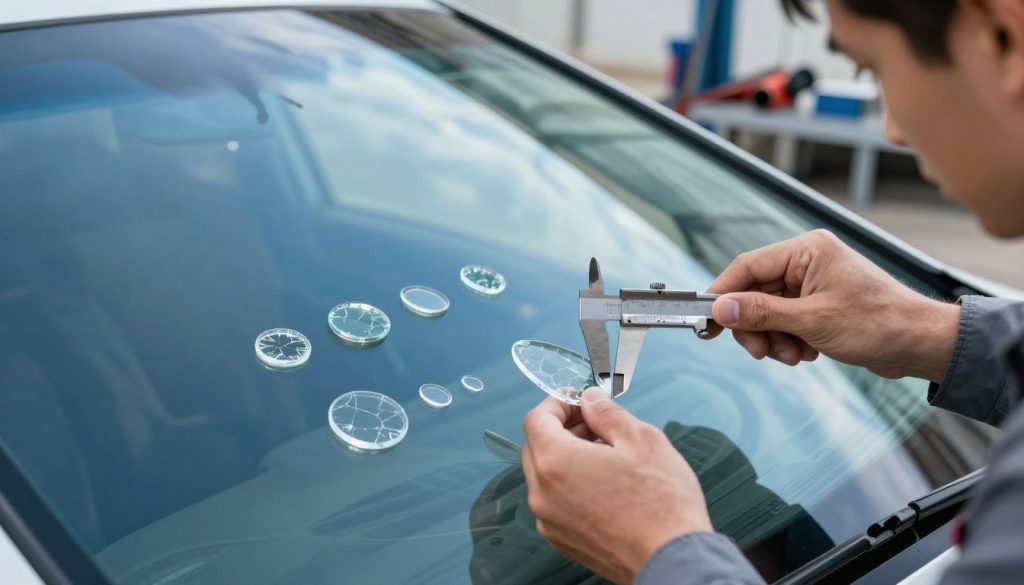
Quarter-size baseline
If the mark fits under a quarter (about 1 inch), most services can fill it when the location and depth cooperate. That gives a fast, practical threshold for many common fixes.
Bull’s-eye and star impacts
Round impacts with radiating legs can sometimes be treated up to about 1.5 inches. The length and number of legs matter more than the outer circle alone.
Depth, surface, and resin results
- Shallow pits accept resin more easily; deep breaks that reach inner layers are harder to fill fully.
- Grime, loose glass, or moisture blocks resin flow and lowers clarity and strength.
- Larger or dirty damage rarely disappears completely after work; expectations should be realistic.
| Threshold | Typical Outcome | When to Call a Pro |
|---|---|---|
| Under quarter (~1 inch) | Good chance of successful resin fill | Book evaluation if near edge or driver view |
| Up to 1.5 inches (bull’s-eye/star) | Often repairable, depends on legs | Inspection recommended before service |
| Over 1.5 inches | Harder to fully fill every microfracture | Consider replacement or specialist assessment |
Miracle Auto Glass can confirm whether your damaged area falls within these practical limits. If you’re unsure, get a quick evaluation via this guide: windshield chip size repair.
Crack Length Guidelines That Influence Repair vs. Windshield Replacement
Long cracks behave like slow-moving tears that pry open under normal driving stress. Length matters differently than a pit. A long line can spread with bumps and temperature change. That makes outcomes less predictable.
Most providers set a practical cutoff at about 3 inches. Beyond that, success rates for a standard repair drop as the line gains microfractures or branches.
- Why length matters: a long crack can unzip with daily vibration and reduce glass strength for your vehicle.
- Common service cutoff: many shops stop standard fixes around 3 inches to protect safety and clarity.
- Special techniques: in select cases, a single clean crack up to about 12 inches can be treated if it’s stable and out of the driver’s view.
- When replacement is likely: over 12 inches, intersecting lines, or active branching usually mean replacement is safer.
| Crack Length | Typical Outcome | Recommended Action |
|---|---|---|
| Under 3 inches | High chance of successful standard repair | Book service; measure and photograph the line |
| 3 to 12 inches | Possible with specialized repair, depends on location | Professional inspection; consider treatment if stable |
| Over 12 inches | Often weakens glass; harder to restore | Plan for windshield replacement for safety |
Next step: Measure the crack in inches and call Miracle Auto Glass for a yes/no recommendation. Tell them the length and where it sits so they can advise whether a repair or a windshield replacement is best for your vehicle.
Location Rules That Can Override Size (Even for Small Chips)
Where a mark sits can be more important than how big it is. You may have a tiny mark that still needs a full replacement if it sits in a critical area. Location can trump measurements when safety and clarity matter.
Primary vision area: defined practically as roughly 6 inches left and right from the steering wheel center and inside the driver-side wiper sweep. Damage here often carries stricter rules because it affects your view directly.
Why line-of-sight repairs are risky
Resin fills can alter optical clarity slightly. That distortion may distract you or bend headlights at speed. For that reason, many shops discourage fixes that sit in the driver line or close to center line sight.
Edge damage and structural concerns
Marks near the perimeter spread faster because the pane flexes more at the edge. Edge cracks longer than about 2 inches often push technicians toward replacement to protect integrity windshield and overall structural integrity.
- Rule of thumb: small marks in the driver line or wiper path may require replacement, even if the mark is otherwise minor.
- Tell Miracle Auto Glass exactly where the damage sits (center, passenger side, near edge, within wiper sweep) so you get a safety-first recommendation.
Timing, Dirt, and Moisture: When Waiting Makes Repairs Harder
Acting quickly gives you the best chance to restore clarity and strength after a fresh break. Fresh damage is cleaner, so resin can flow in and bond more effectively.
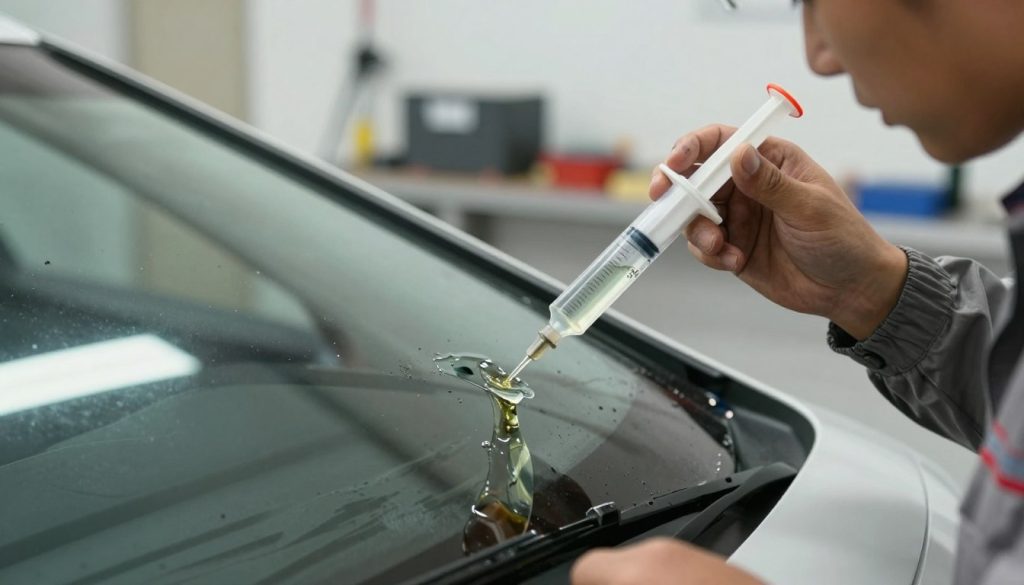
Fresh damage vs. older marks
Within 24–48 hours, a new crack is the easiest to treat. Clean glass takes resin well and yields better clarity.
Over time, debris and moisture settle into tiny gaps. That contamination blocks bonding and can turn a good repair candidate into a poor one.
Simple steps before you book
Avoid slamming doors and sudden temperature swings. Keep the area dry and cover it if you park under sprinklers.
If you can’t get immediate service, do these small things to slow spread and limit dirt.
When a shop may recommend replacement
Older damage often means reduced repair quality and shorter longevity. In those cases, a technician may advise replacement to restore safety.
Book service with Miracle Auto Glass as soon as you notice new damage to improve results and reduce the chance of more costly work later.
How to Assess Your Windshield Damage at Home Before You Book Service
Grab a quarter and a white sheet of paper to run a quick check. These simple tools help you estimate whether a mark is likely fixable or needs closer attention.
Quarter test: step-by-step instructions
Place a quarter over the damaged area and compare the widest points to the coin. If the mark stays within the coin boundary, it often falls under the one-inch common guideline.
If the damage clearly extends beyond the coin, especially with legs or branching lines measured in inches, you may need a pro inspection or replacement option.
White paper check and spotting hidden cracks
Tape a white sheet behind the mark inside the car. The contrast will reveal faint cracks that look like dark or silver lines from outside.
How to tell a nick from a small crack and prior repairs
A nick is usually a tiny white surface spot and may be optional to fix. Any visible line running from that spot is a small crack and is smart to address.
Previously repaired areas often look clearer where cured resin sits and spotty elsewhere. Re-repairs are often not possible because cured resin blocks new resin from penetrating.
| Test | What to look for | Quick decision |
|---|---|---|
| Quarter test | Mark within coin ≈ 1 inch | Likely repair option; photo for confirmation |
| White-paper | Hidden lines visible | Treat or book service soon |
| Visual check | Clear cured resin or surface nick | Seek pro advice; rework may be limited |
Practical rule: fix any mark with legs, any small crack, or any glare. Monitor tiny surface nicks outside critical view areas as an option.
Take a clear photo with white paper behind the damaged area and share measurements with Miracle Auto Glass so they can confirm whether a same-day visit or a replacement is best for your car.
What a Professional Windshield Repair Looks Like Today
A modern fix uses targeted tools and clear steps to restore strength without guessing. You’ll see technicians use vacuum-assisted gear to pull trapped air out of a break so resin can reach the tiniest paths.
How vacuum-assisted tools help
In plain terms, a vacuum removes air bubbles from the crack so the resin fills tight gaps. That improves bond and makes the work stronger long term.
Core steps you’ll see
- Clean the area to remove dirt and moisture.
- Create a seal, then apply vacuum to clear trapped air.
- Inject resin and use a UV lamp to cure it.
- Polish the surface and perform a final inspection.
Each step is designed to restore structural strength in the glass and reduce visibility of the mark. Some results look nearly invisible; others leave a faint trace depending on contamination and depth.
Time expectations: most chip and small crack repairs take about 30–60 minutes. For clear communication and quality work, choose Miracle Auto Glass so you get honest instructions, a safety check, and a final confirmation before you drive away.
When Replacement Is the Safer Option Than Repair
When damage goes beyond a small blemish, replacement often becomes the safest call. You should treat this as a safety decision, not a cosmetic one. If the glass no longer meets strength or visibility standards, a full replacement restores original performance.
Clear triggers for replacement
If a mark exceeds a quarter, spreads quickly, or several chips sit close together and weaken the same area, replacement is usually recommended. Multiple impacts can act like a single larger flaw and reduce the pane’s load-bearing capacity.
Why intersecting cracks and complex patterns fail fixes
Intersecting cracks and branching patterns are poor candidates for resin fixes. Resin often can’t penetrate every branch, and untreated microfractures can keep moving after a repair attempt.
Deeper-layer damage and optical risks
When a break reaches the laminated layers or shows clear separation, replacement restores structural integrity and long-term performance. Likewise, any mark in your driver line or primary line sight may require a swap even if the apparent size looks repairable. Optical distortion there can endanger your driving.
| Trigger | Why replacement is safer |
|---|---|
| Chips larger than a quarter or clustered chips | Weaken the same area; lowers strength |
| Intersecting cracks or complex patterns | Resin may not stabilize all branches |
| Damage in driver line or primary view | Any distortion can impair visibility |
Previously worked areas often cannot be fixed again. A failed attempt usually leads to windshield replacement to ensure safety for your vehicle and everyone in your car.
When in doubt, contact Miracle Auto Glass. We’ll confirm whether replacement is the safer option and perform windshield replacement to restore clarity and integrity.
Conclusion
Before you schedule service, use these quick rules to judge risk and urgency.
Measure impact diameter with a quarter, note bull’s-eye or star patterns (often treatable up to ~1.5 inches), and measure any linear break in inches. Most standard fixes work well under about 3 inches; select cases extend to 12 inches.
Watch for overrides: damage in your primary view, near the edge, contamination from waiting, or prior work can push you toward replacement even if the mark seems small.
Do the coin and white-paper checks at home to collect clear info before you call. Then hire Miracle Auto Glass to repair windshield or perform a full replacement and handle other auto glass needs so you can drive with confidence.
FAQ
How big can a windshield chip be before it needs replacement?
You should consider replacement when damage exceeds about a quarter in diameter (roughly 1 inch) or when multiple defects weaken a large area. Size alone isn’t the only factor—depth, location, and whether the glass has begun to delaminate or spread are critical. If the break crosses both layers of laminated glass or reaches the edge, replacement is usually the safer choice.
Why does the damage size matter for safety, visibility, and structural integrity?
Larger and deeper defects reduce the laminated panel’s strength and can distort your view. A small surface nick may be cosmetic, but as the affected area grows it can compromise the glass’s ability to support roof loads in a rollover and can interfere with driver sight lines. Repair is aimed at restoring strength and optical clarity; when those goals can’t be met, replacement protects safety.
How does minor damage spread into larger cracks?
Temperature changes, road vibration, and impacts from debris can force a small flaw to expand into long fissures. Moisture and dirt entering the nick weaken adhesion and create stress points. Prompt attention limits propagation; delaying service raises the chance you’ll need a full panel swap.
What common types of damage should you know about?
Impacts from rocks and highway debris often produce round or star-shaped marks. Hairline fractures run across the surface and can extend rapidly. Combination breaks, like bull’s-eye with radiating lines, combine a central pit and spokes that complicate restoration and may require replacement if extensive.
What’s the quarter-size rule of thumb for small nicks?
A quick at-home check uses a quarter: if the damage fits within the coin (about 1 inch), many repair shops can restore strength and clarity. That rule assumes the flaw is shallow and not on the edge or in the driver’s main sightline. Always have a pro inspect to confirm repairability.
When can bull’s-eye or star-shaped marks still be repaired?
Those patterns are often repairable when under about 1.5 inches in diameter, shallow, and free of heavy contamination. Technicians assess crack depth, resin flow, and surrounding glass condition. If the center is shattered or the break penetrates multiple layers, replacement is likely.
How do depth and surface condition affect resin fill and results?
Deep or jagged breaks trap air and debris, preventing resin from fully filling and bonding. Surface pits that hold moisture reduce adhesion. Clean, shallow flaws allow resin to restore both strength and appearance; damaged areas with contamination or extensive cracking may not accept resin evenly.
Why do many services cap repairs around 3 inches for cracks?
Beyond roughly 3 inches, it becomes difficult to fully stabilize and bond the fracture using standard injection tools. Long fractures carry stress differently and may not regain adequate structural performance after filling. For those longer defects, technicians often recommend replacement for reliability.
Are there techniques that allow repair of longer fissures?
Specialized methods—like creating multiple injection points, using advanced resin formulations, or performing staged repairs—can sometimes address lines up to about 12 inches. Success depends on glass condition, access, and whether the fracture stays relatively straight and clean.
How does the location of damage override size rules?
Flaws directly in the driver’s sight line or within a few inches of the perimeter pose higher risks. Optical distortion in front of the driver can make replacement necessary even when the defect is small. Edge defects spread more quickly because the bonded area is weaker near the frame, often prompting replacement regardless of diameter.
Why does waiting make repairs harder?
Old flaws collect dirt and moisture, which block resin from penetrating and bonding effectively. Temperature cycles can enlarge cracks, and chips that have been exposed to the elements often need more extensive work or replacement. Fast action improves the odds of a successful restoration.
How can you assess damage at home before booking service?
Do a coin test with a quarter to estimate diameter; if the mark stays inside the coin, call a pro. Place a white sheet of paper behind the area to reveal faint lines. Look for signs of previous fixes—discoloration, filling lines—or for moisture inside the laminate; those reduce re-repair options.
Which tiny nicks might be optional to fix versus recommended?
Very small surface nicks away from the driver’s view and not growing can be monitored. However, repairs are wise for any defect on a commute vehicle that might enlarge. Restoring even small damage prevents spread, maintains structural integrity, and avoids a costly replacement later.
What does a professional repair process look like today?
Technicians typically clean the area, seal the perimeter, use vacuum-assisted tools to remove air, inject specialized resin, cure it with UV light, then polish and inspect. Modern equipment helps restore strength and optics faster and more reliably than older methods.
How long does a typical repair take?
Most small repairs finish within 30 to 60 minutes. Complex or multiple breaks may take longer. Replacement takes more time—often an hour or more including vehicle preparation and curing time depending on adhesive specifications.
When is replacement safer than repair?
Choose replacement if defects exceed roughly 1 inch in critical locations, if multiple impacts weaken the area, if cracks intersect or extend deeply, or if previous attempts prevent an effective bond. Any distortion in the driver’s forward view usually requires replacement to ensure safety and compliance.
Can previously repaired areas be fixed again?
Often, no. Prior fillings can leave voids or weakened glass that prevent a second, reliable bond. A technician will evaluate the old work; in many cases replacement becomes the practical solution when re-repair won’t restore adequate strength or clarity.
Key Takeaways:
- Auto glass repair and replacement are both viable options when your auto glass gets damaged.
- Repair is a cost-effective solution for minor damages such as cracks and chips.
- Replacement becomes necessary for severe damage or when safety concerns arise.
- The choice between repair and replacement depends on factors like the extent of the damage, the location of the crack or chip, and cost-effectiveness.
- Consulting with a professional auto glass repair and replacement service is recommended to determine the best course of action for your specific situation.
Understanding Auto Glass Repair
Auto glass repair is a smart way to fix small damages like cracks and chips. It’s important to act fast when your windshield or other glass is damaged. This keeps you safe while driving.
Cracks and chips weaken the glass, which is dangerous on the road. Auto glass repair uses special resins. These resins bond with the glass, stopping the damage from getting worse.
Choosing auto glass repair saves you time and money. It’s faster than replacing the whole piece of glass. Plus, many insurance plans help pay for these repairs.
Fixing small cracks and chips makes your glass last longer. Quick action prevents big issues and costly replacements. Auto glass repair not only fixes the look but also the safety of your windshield.
The Advantages of Auto Glass Replacement
If a windshield is seriously damaged or shows a crack or chip in a key spot, replacing it is vital for safety. A full glass replacement brings many benefits. The main one is fixing your car’s proper structure. This makes sure your windshield guards you best in a crash.
Getting a new windshield allows for the use of top-notch, OEM (Original Equipment Manufacturer) glass. This glass is high-quality, meeting top standards for better visibility and lasting strength. It stays strong against all weather, making your car safer for you and your riders for a long time.
The Safety Factor
Choosing to replace a damaged windshield, instead of just a fix, is crucial for safety. A broken windshield can cause serious issues with your car’s frame. Swapping it out ensures it fits securely, erasing any safety risks.
Whether you’re dealing with a big crack or a significant chip, picking a new windshield ups your car’s safety game. It brings peace of mind, knowing you’re driving with the best protection for all in your car.

Auto glass replacement is best left to pros like those at Miracle Auto Glass. Their experts know how to swap out glass with care and accuracy.
With a professional job, your new windshield is fitted right. This reduces the chance of future problems, making sure the glass sits perfectly without leaks. Trusting experts means your car’s glass will work perfectly, keeping you safe on the street.
- Superior structural integrity
- High-quality, OEM glass
- Enhanced visibility
- Long-lasting durability
- Professional installation
Knowing these pluses helps you wisely choose auto glass replacement. Safety should be your top concern. Opting for skilled service makes sure your car’s windshield is its best shield against harm.
Factors to Consider
When choosing between fixing or changing auto glass, think about key points. Look at how bad the damage is, where it is, and what’s best for your wallet.
Extent of Damage
If the crack or chip is small, you might be able to fix it. But if it’s big or deep, a replacement could be needed. Fixing small issues early can stop them from getting worse, saving you from a big replacement bill.
Location of the Damage
Where the damage is on your windshield matters a lot. If it’s in the driver’s view or at the edges, it may need replacing for safe driving. Talking to a pro can help you figure out what to do based on the damage’s spot.
Cost-Effectiveness
Thinking about cost is key. Repairing is usually cheaper than replacing. Repair costs are linked to how bad the damage is. Replacing can be more expensive with costs for the glass type and the work needed.
So, keep in mind the damage’s size, its spot, and what makes sense financially. This helps in making a choice that keeps both your car and budget in good shape.
Cost Comparison
The cost to repair or replace your auto glass is a big factor in deciding what to do. Usually, auto glass repair is cheaper than getting a whole new piece.
Fixing auto glass depends on how big and deep the damage is. Often, fixing small cracks or chips is much cheaper than replacing the whole piece. This not only saves money but also keeps your car’s glass in its original shape.
But, getting your auto glass replaced might be needed if the damage is very bad or in a critical spot. Replacing the glass can be much more expensive than just fixing it.
For example, say you have a small crack or chip in your window. It’s usually best to repair it. This is because the cost to fix it is much less than the cost to replace it. Repairing small damages keeps your car safe and saves you money.
At Miracle Auto Glass, we get the importance of saving money. Our team will check out the damage and give you the best advice. We’re proud to have fair prices and top-notch service for your safety and happiness.
Think about both the cost and the damage when deciding about repair or replacement. Don’t be afraid to contact us for a professional opinion and advice. We’re here to guide you to the best choice for you and your wallet.

Safety Considerations
When fixing or changing a car’s glass, staying safe is key. Small cracks or chips can often get repaired easily. But, sometimes, the damage is too big for a fix. Then, replacing the windshield is the only way to keep the car strong.
A broken window affects how safe your car is. It won’t shield you well in a crash, risking harm to you or anyone in the car. So, think about how bad the damage is. Then, choose what’s safest for you and your passengers.
Choosing to replace the windshield brings many safety upsides. It makes the car’s frame strong again. Plus, your view while driving gets clear, helping you avoid accidents. The new glass, made to top standards, adds even more protection.
Preserving Structural Integrity
Damage to the car’s glass can hurt its strength. A bad windshield might make your car not protect you as it should in a crash. So, if the damage is big or in a key spot, like where you look, getting a new windshield is best. It keeps your car’s structure safe and strong.
Ensuring Optimal Visibility
Seeing clearly while driving is essential. Even small cracks can hide hazards and cause accidents. A new windshield means a clear view, without anything in the way. This helps you drive safely and avoid dangers on the road.
Putting safety first means getting a new windshield when needed. Then, you can relax, knowing your car’s glass is tough and clear. It keeps you and your passengers safe as you drive.
Making the Right Choice
Choosing between fixing your auto glass and getting a new one depends on a few things. How big the damage is, where it is, the cost, and safety are important. They help figure out what’s best for your car.
If you have small cracks or chips, getting them fixed is usually cheaper. This can save you money and stop the cracks from getting worse. At Miracle Auto Glass, our experts use special materials to repair the glass. This makes it strong again.
But, if the damage is big or in a spot that’s unsafe, you need a new glass. A new glass means your view and the car’s strength will be as good as new. It’s all about keeping you safe and making sure your car is strong.
Choosing the right way to fix your car’s glass is important to us at Miracle Auto Glass. Our team will look at your car and give advice. We’ll tell you if a fix or a new glass is better.
Trust Miracle Auto Glass when choosing to repair or replace your auto glass. Call us for a talk about what’s best for your car. Let’s make sure your car stays safe and strong.
Conclusion
When your car’s glass gets damaged, deciding to repair or replace it can be tough. Think about the damage’s size, where it is, if it’s cost-effective, and if it’s safe. These factors will help you make the best choice.
Small damages can usually be fixed, saving you money. But if the damage is big or affects safety, replacement is the way to go. This ensures your car is safe and you can see clearly.
For the best advice, talk to experts like those at Miracle Auto Glass. They can check your car and recommend what’s best for you.
When it comes to fixing your car’s glass, choose us. At Miracle Auto Glass, we focus on getting your life back on track, safely and without breaking your wallet.
FAQ
What is auto glass repair?
Auto glass repair is for small damages like cracks or chips. It uses special resins to fix the broken part. This restores the glass’s strength.
When is auto glass replacement necessary?
When the damage is big, or in a key spot of the windshield, it needs replacing. This fixes the integrity and uses top-quality glass for clear vision.
What factors should I consider when deciding between repair and replacement?
Think about how big and deep the damage is. If it’s in the driver’s view or near the edges, it might need replacing for safety.
Which option is more cost-effective, repair, or replacement?
Usually, fixing the glass is cheaper than getting new glass. The price of fixing or replacing changes based on the damage and the glass type.
Are there any safety considerations when choosing between repair and replacement?
Choosing the right option is vital for your safety. Small fixes are okay, but big problems might make your car less safe. In these cases, new glass wins for a stronger car.
How do I make the right choice between auto glass repair and replacement?
Your decision should consider the damage, cost, and safety. For small issues, fixing it is smart and cheaper. But if it’s big or in a danger zone, replacing it keeps you safer.