How Weather Changes Can Worsen Windshield Cracks
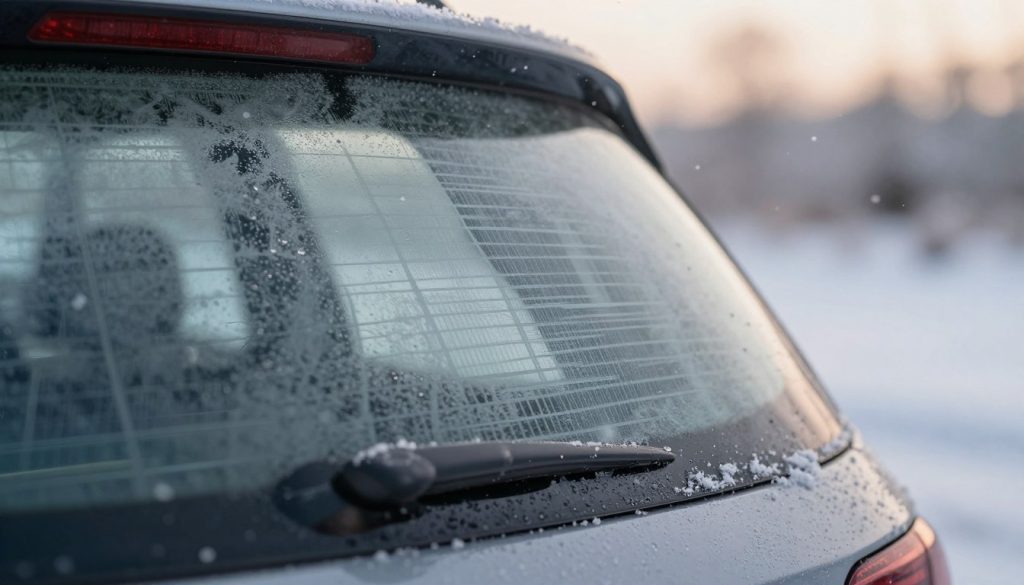
Have you ever climbed into your car on a frosty morning and found the back window stubbornly fogged or frosted? That sudden loss of clear sight feels alarming. It makes lane changes and backing up risky, and it wastes time while you scrape or wait for heat to catch up.
This short guide helps you troubleshoot the problem and decide if you can fix a small issue yourself or should call a pro. You will learn how the system works, how to spot a broken grid line or a detached side tab, and how to choose a fix that restores conductivity without harming the surface.
We focus on rear glass defroster repair for grid-line breaks and tab problems — not on replacing the full window unless damage is severe. Sometimes the whole unit goes dead because of a power, circuit, or tab fault. Other times only a strip fails when a grid line breaks.
If you prefer to skip DIY troubleshooting, Miracle Auto Glass is mentioned here as a trusted option to get a clean, durable fix the first time. Read on to follow a simple workflow: understand, diagnose, and restore.
Key Takeaways
- Fog or frost that won’t clear harms visibility and safety.
- Start by checking grid lines and the side tab for obvious damage.
- Follow a three-step workflow: understand, diagnose, choose a fix.
- Minor fixes can restore conductivity; major damage may need pros.
- Miracle Auto Glass can handle durable, professional fixes if you prefer not to DIY.
How Your Rear Window Defroster Works and What “Stopped Working” Usually Means
Understanding how the system functions helps you spot real problems fast. The heating assembly is a printed grid of thin horizontal conductors on the inside face of the pane. When current flows, those lines warm and evaporate moisture so you can see clearly.
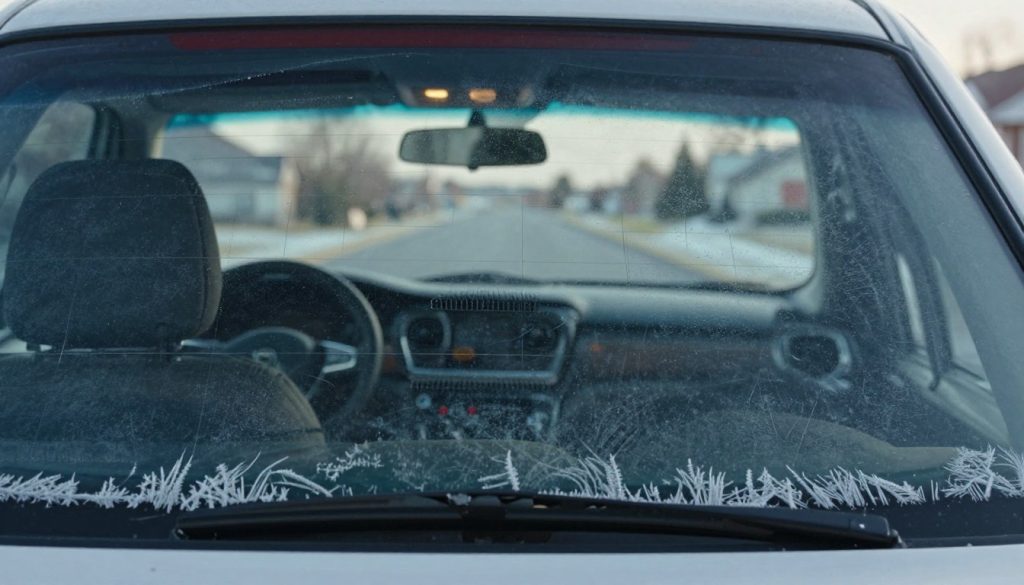
How the parts form a circuit
The horizontal lines connect to wider vertical bus bars at each side. One side receives positive current and the other completes the circuit to ground through the vehicle.
Signs of full versus partial failure
“Stopped working” usually means one of two things.
- Full failure: nothing heats and the entire pane stays foggy.
- Partial failure: some bands clear while other areas remain cold and cloudy.
Why a single scratch matters
Each horizontal trace heats a specific strip of the surface. A single cut can open that path so current won’t flow in that line. Multiple breaks make warming uneven and leave cold patches across the glass.
| Cause | Effect | Likely Fix |
|---|---|---|
| Broken horizontal line | Partial clearing, cold bands | Spot conductive restoration |
| Detached side tab | Full shutdown of the system | Reattach tab or replace connector |
| Scraping or abrasion | Single or multiple breaks | Local repair or professional evaluation |
If you prefer not to work on the rear window yourself, Miracle Auto Glass can diagnose and often fix localized issues without replacing the entire pane.
Rear Glass Defroster Repair Starts With the Right Diagnosis
A clear, stepwise check saves time and pinpoints the fault. Start with a close visual inspection in bright light. Look for nicks, missing segments, or scrapes along the heating grid on the glass.
Quick visual and power checks
Turn the system on and verify power at the two side bus bars. You should read roughly 12–14 volts across them. If you see that, the circuit is being energized.
Finding a break with a multimeter
Probe along a horizontal line while the system runs. When the probe crosses a break, the voltage reading shifts sharply. Move one probe toward the center; a mid reading near 6V usually means the scratch is not between probes, while ~12V suggests it is.
Simple alternative and connection checks
If meters stress you, use a 12V test lamp with an alligator clip to find the exact stop point. Also inspect the tab and wiring leads—one loose tab can shut the whole system down instantly.
| Test | What to read | Result |
|---|---|---|
| Bus bar voltage | ~12–14 V | Circuit energized |
| Probe along line | Sharp voltage change | Pinpoints break location |
| 12V test lamp | Lights until break | Quick, visual locate |
| Inspect tab | Loose or detached | Possible full failure |
Work slowly and avoid scratching the grid during tests. If electrical checks are not your place or time, consider a professional diagnosis from Miracle Auto Glass.
DIY Repair Options: Fixing Grid Breaks and Defroster Tabs Safely
A few simple tools and a quality kit let you restore conductivity on isolated grid cuts.
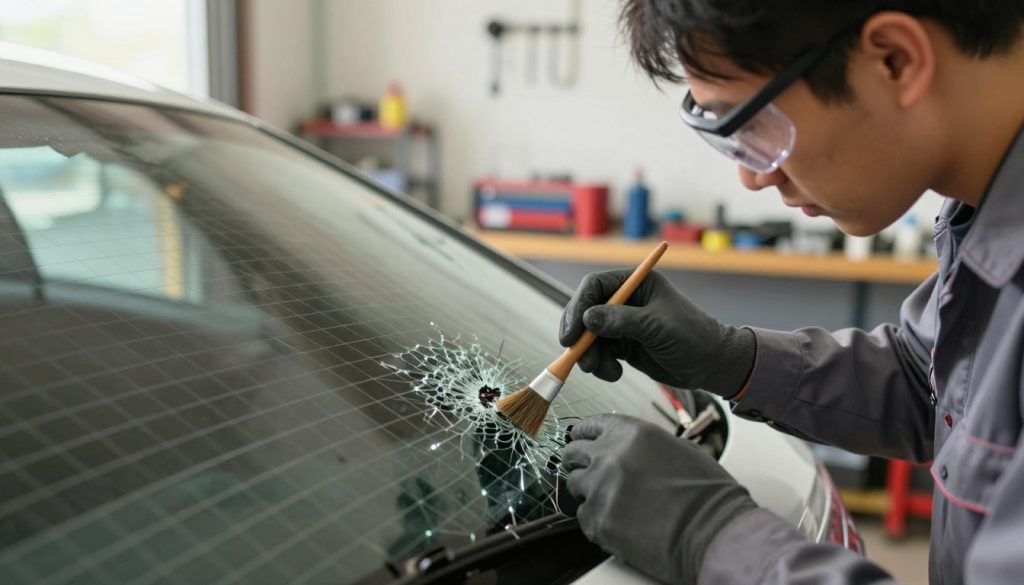
Neat line fixes and what makes them work
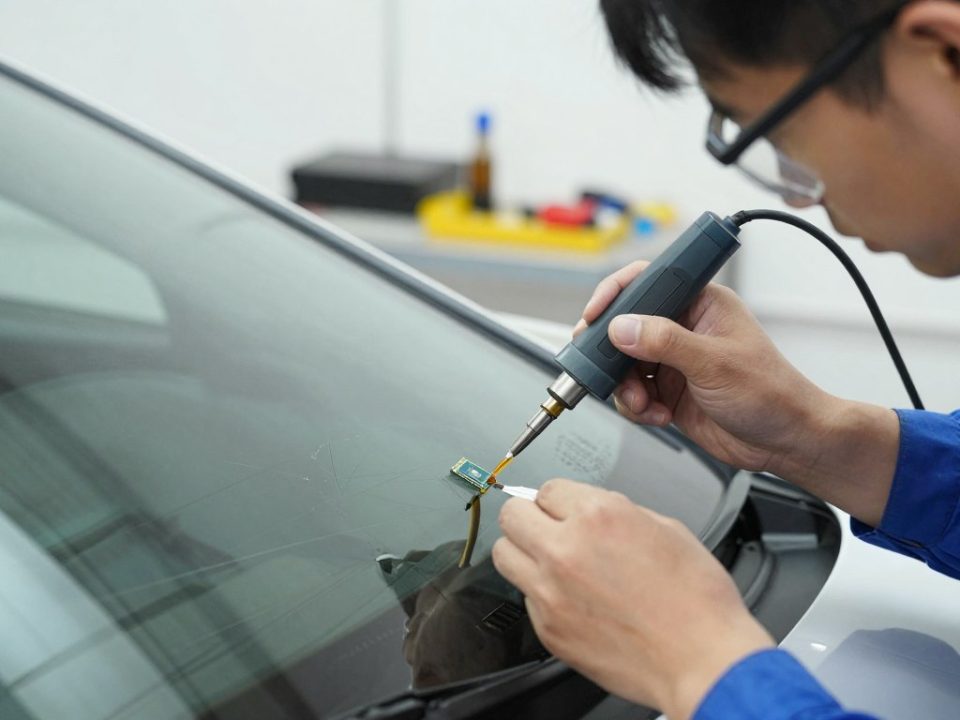
Mask the damaged strip with the included tape, then brush on a high-silver coating. This keeps the line narrow and close to the original width.
Why it works: high-silver formulas and conductive epoxy restore electrical continuity across the break so the strip heats again.
Cure methods and realistic limits
Some coatings air-dry in about 10 minutes above 70°F. Many allow a heat-assisted flash cure: run the system after initial dry for roughly 10–20 minutes.
Most kits cover ~35 inches total and handle local breaks up to 3–5 inches each.
Tab reattachment and prep
Clean with alcohol, apply activator, mix the epoxy fully, press the tab for ~2 minutes, then wait 24 hours before use.
A gentle warm cycle (≈52°C for 30 minutes) can re-liquefy crystallized epoxy from cold storage.
| Task | Typical time | Best material |
|---|---|---|
| Grid line patch | 10–30 minutes | Silver coating or conductive epoxy |
| Tab bond | 2 minutes set, 24 hours full cure | Two-part epoxy with activator |
| Flash cure | 10–20 minutes | Defroster heat or controlled heat source |
- Avoid over-sanding bus bars and rushing cure time.
- Secure wiring to reduce pull on tabs for long-term durability.
- If damage is extensive or uncertain, consult Miracle Auto Glass for professional work.
Conclusion
Finish troubleshooting by confirming ~12–14V at the bus bars and deciding whether the issue is a loose tab or a cut trace on the grid.
Quick checks save time. If the unit is fully dead, inspect the tab and connections first. If only some bands clear, use a multimeter or a 12V test lamp to find the break before you apply conductive material.
Small trace damage can often be fixed neatly with a quality kit and careful masking. A detached tab needs proper surface prep, two-part epoxy and patience—allow about 24 hours for full cure before use.
Keep surfaces clean, use fresh materials (not old store stock), and protect wiring so the fix lasts. If you prefer a pro, hire Miracle Auto Glass for a clean inspection and fast service on your windshield or other glass damage.