
Car Side Window Replacement: What to Do After Your Window Breaks
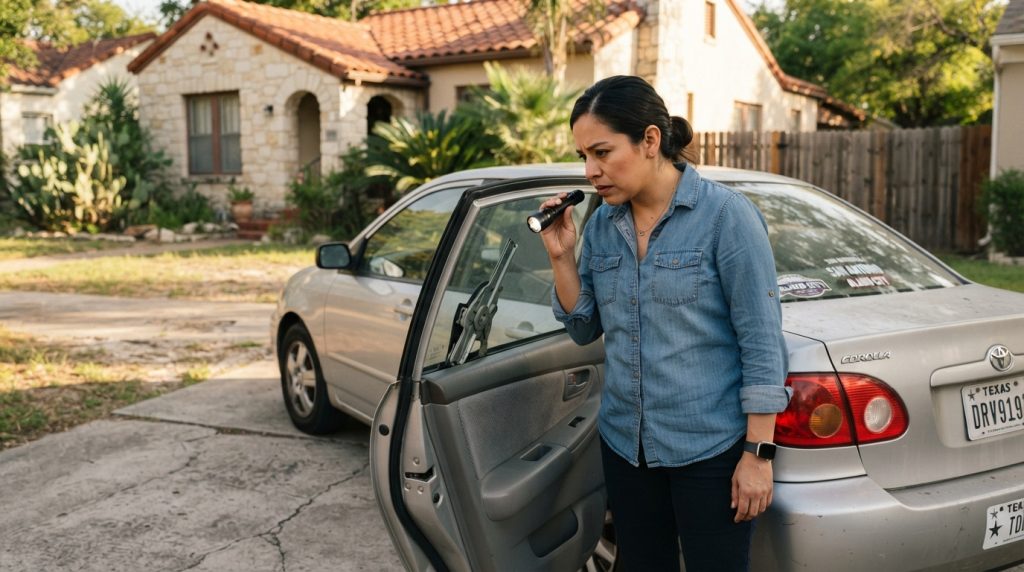
You press the switch, but your car window stays partly open in a San Antonio parking lot. That can leave your car exposed to rain, heat, and unwanted entry, while making each drive less convenient.
A stuck window can have a mechanical or electrical cause, and the symptom alone cannot identify it. Power window repair San Antonio service starts with finding the fault, not guessing at a part. Your next step depends on what a technician finds.
You can learn what commonly stops a window, what to do while it is stuck, and what may affect a repair estimate. You will also find ways to compare local service options and ask useful questions before booking.
The key is to identify whether the fault lies in the window mechanism, electrical system, or glass. That gives you a clearer path to getting the window working again.
Key Takeaways
- A stuck window may have a mechanical or electrical fault.
- The glass and the parts that move it are different components.
- Do not force the glass or keep pressing an unresponsive switch.
- A repair estimate depends on the diagnosed fault and your vehicle.
- Ask a provider what it can inspect and repair before booking.
What Does Power Window Repair San Antonio Involve?
Power window repair addresses the mechanism or electrical controls that move the glass, not automatically the glass itself. The distinction matters because intact glass can stop moving when another part fails.
A window that will not move does not, by itself, mean you need glass replacement. The repair may involve a motor, a regulator, or electrical controls, depending on what diagnosis finds.
A window regulator is the mechanism inside a vehicle door that moves the window glass up and down. The glass is the pane you see, while the regulator and related parts guide its movement.
Those parts sit inside the door, so the glass can look fine even when the window stops working. A malfunctioning automatic window may need a motor or regulator replacement instead of glass work.
The switch is another part of the power window system. Pressing it sends an electrical signal that should start the motor and move the regulator.
If the window stays still, the symptom cannot show which part has failed. A technician may need to inspect the door and test the system before recommending repair.
That check helps separate a problem with the mechanism from an electrical issue. It also helps avoid replacing glass that remains intact and does not need that work.
Repair can mean fixing or replacing a part that no longer works as intended. The right work depends on the cause, so a stuck window alone cannot settle the decision.
Once the window’s glass and moving parts are considered separately, the next question is which parts can interrupt its movement.
Which Parts Can Stop a Power Window From Moving?
A switch can activate while the glass stays still if a lifting part has failed. The motor may run without moving the pane, or the window may not respond at all.
A technician should confirm the fault before recommending replacement. Several parts inside the door can cause similar signs, so the symptom alone does not name the failed component.
How the Regulator, Cable, and Track Move the Glass
The regulator lifts and lowers the glass along a guided path. A cable and track help carry and guide that movement as you use the switch.
A failed regulator cable, motor, or track can prevent a window from rolling up or down. A cable may break or slip, while a track may stop guiding the pane smoothly.
If a lifting part fails, the motor’s effort may not reach the glass. The window can stop partway, move unevenly, or remain inside the door.
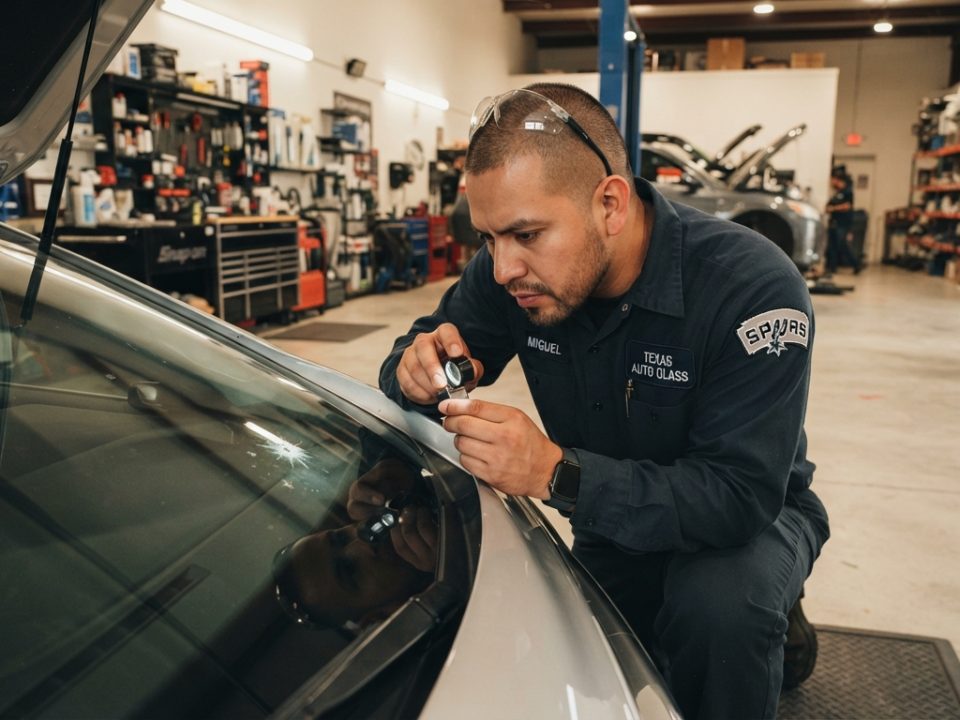
A technician can inspect the door and check how the parts move. That hands-on service can help show whether a regulator part needs repair or replacement.
When the Motor or Electrical Controls May Be Involved
The motor supplies the force that moves the regulator. If it fails, the window may not move even when the switch receives power.
Electrical controls can also interrupt the signal between the switch and motor. A fault may involve a switch, wiring, or another part of the vehicle’s electrical system.
A technician should test the system before naming a failed part. Replacing a regulator without checking the motor or controls may not address the cause.
Auto glass technicians may inspect the door and window system as part of a repair visit. Ask what the service includes, and share what happened when you pressed the switch.
The parts involved give you a useful starting point, but visible clues only help narrow the problem. They do not confirm a diagnosis on their own.
How Can You Tell What Is Wrong With the Window?
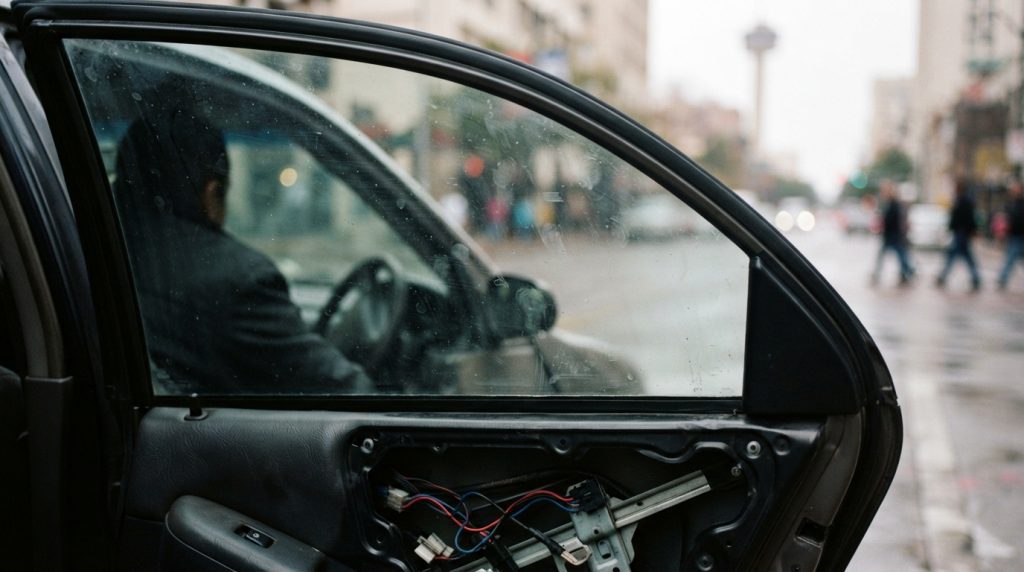
You hear an unusual noise, but the glass stays still. That sound is a useful clue, though it cannot confirm which part inside the door has failed.
A window that will not open or close, falls inside the door, or makes unusual noises may have a regulator problem. A professional service can inspect the cause instead of relying on sound alone.
Clues That Point to a Regulator or Track Problem
If the glass drops into the door, a lifting part may no longer hold or guide it. That can point toward the regulator or track, but other faults may still need checking.
Grinding, clicking, or scraping sounds during operation can also suggest a problem inside the door. Note when the noise starts and whether the glass moves at all.
Auto glass damage is different from a movement fault. If the pane looks intact, tell the repair shop what you heard and saw rather than assuming the glass needs replacement.
What Silence or One-Way Movement Can Suggest
No sound and no movement may suggest an electrical issue, a motor problem, or a fault in the lifting mechanism. It does not prove that one specific part has failed.
A window that moves in only one direction also needs diagnosis. Share whether it goes up, down, or neither way, and whether another door’s window works.
Your experience with the controls gives a technician helpful details. It does not replace inspection, since similar symptoms can come from different parts.
| Symptom | Possible area to inspect | What you can observe | Next step |
|---|---|---|---|
| Window falls inside the door | Regulator or track | Glass sits below its normal position | Arrange a professional inspection |
| Unusual noise during operation | Lifting parts or motor | Clicking, scraping, or grinding | Describe when noise occurs |
| Window does not move | Motor, controls, or regulator | No movement after switch use | Ask for system diagnosis |
| Window moves in one direction only | Controls or moving parts | Glass travels up or down, not both | Report the direction that works |
These clues can help you explain the problem clearly, but none proves a specific cause. With the window stuck, focus next on safe steps that protect you and your vehicle.
What Should You Do When a Window Won’t Roll Up?
Stop operating the switch repeatedly if the window does not respond. Repeated attempts may add strain without helping you find the cause.
Do not force the glass or reach into the door to raise it. Manual procedures differ by vehicle, and the wrong move can create a safety risk or cause more damage.
Use these steps to protect yourself and limit exposure while you arrange service:
- Stop pressing the switch after the window fails to respond.
- Keep your hands clear of the door opening and the glass path.
- Shield the interior from weather without blocking your view while driving.
- Avoid slamming the door or trying to force the glass upward.
- Contact a repair provider and describe the symptom and any noise.
A cover can help keep rain out while the vehicle is parked. Do not attach anything in a way that blocks your view or interferes with safe driving.
Some vehicles have a manual procedure, but there is no universal fix. Check your owner’s manual for vehicle-specific guidance, and do not reach inside the door.
Do not try to hold the glass in place by pushing on it while someone presses the switch. The pane can shift suddenly, and hands can enter a pinch point.
When you call a service provider, explain whether the glass is partly open, fully down, or moving in one direction. Mention any sounds you heard and when they happened.
That account helps the provider understand the situation before the visit. The next useful decision is learning what can affect the estimate for diagnosis and repair.
What Affects Power Window Repair Cost in San Antonio?
The price depends on which component failed and what your specific vehicle requires. There is no single cost that fits every window repair.
No reliable local price or price range is available here, so a specific number should not be invented. Ask for a vehicle-specific estimate after the problem has been checked.
How the Failed Part Changes the Work
Diagnosing a regulator problem can require access to parts inside the door. If the regulator needs replacement, the work differs from a check of the motor or electrical controls.
A motor fault may call for testing and motor replacement. An electrical issue may require checking the switch or wiring instead of changing the regulator.
The vehicle model can affect access and the parts needed. A technician can explain what the inspection found and why the proposed work fits that fault.
Auto glass repair and mechanism repair are separate kinds of work. If the glass is intact, ask whether the estimate covers the window system rather than glass replacement.
What to Confirm Before Accepting an Estimate
Ask which part the estimate covers and whether the listed labor includes diagnosis and installation. Request a clear description of the quality and type of part included.
Ask whether the quote could change after inspection. A provider may need to update it if diagnosis finds a different fault than the one first suspected.
Make sure you understand what the estimate includes before approving the repair. Ask about any added work or parts that could affect the total.
A useful estimate connects the diagnosed fault to the work being proposed. Once you understand the likely work, consider whether mobile service or a shop visit fits your needs.
Should You Choose Mobile or In-Shop Auto Glass Service?
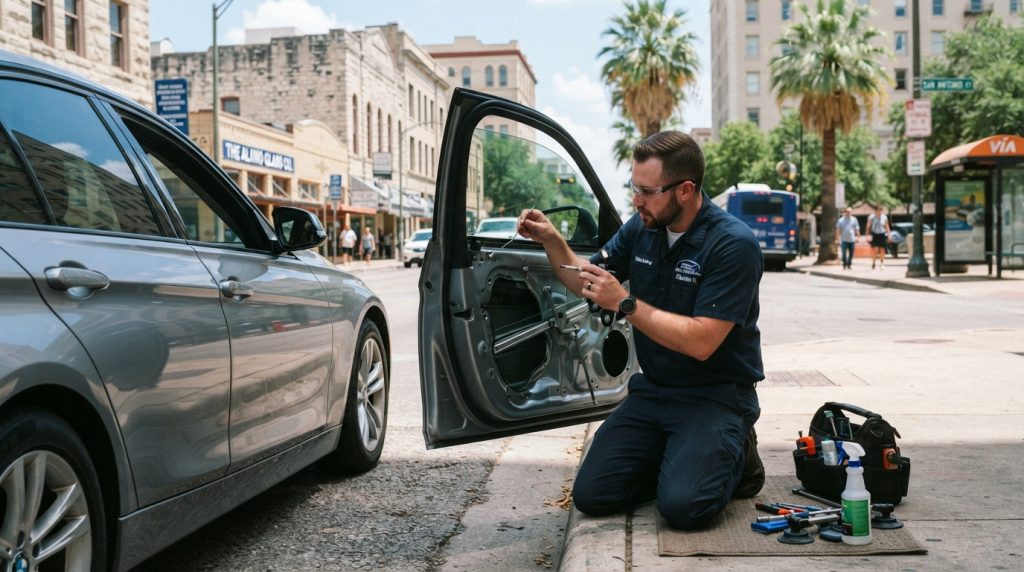
A vehicle with a stuck-open window may be unsafe or inconvenient to leave parked. Mobile service can help in some cases, but not every provider handles every power window fault at your location.
Some auto glass providers offer mobile service by appointment, and same-day availability depends on the provider, parts, and scheduling. Ask what the provider can do before setting a time.
Can Mobile Power Window Repair in San Antonio Come to You?
Mobile power window repair San Antonio service may suit you if the vehicle cannot be driven or the open window feels insecure. First confirm the provider can inspect your specific fault at the vehicle’s location.
Mobile auto glass repair San Antonio options vary by provider and appointment. Ask whether the service area includes your location and whether the technician can diagnose the window system there.
A mobile visit can save you a trip, but a provider may need to bring a part or arrange further work. Explain the vehicle and symptoms when you call.
Is Same-Day Auto Glass Repair in San Antonio Available?
Same day auto glass repair San Antonio service may be available in some cases, but it is not guaranteed. Parts and scheduling can affect when the provider can come or begin work.
Ask whether a same-day appointment is open and whether the needed part is available. A visit for diagnosis may not mean the full repair can happen that day.
When an In-Shop Visit May Be More Practical
A shop visit may suit a repair that needs particular equipment or better access to the vehicle. The provider can explain whether the fault can be handled on-site or requires the shop.
Before booking, ask:
- Does your service area include my location?
- Can you diagnose the window fault at the vehicle?
- Are the needed parts available for my vehicle?
- What appointment times are open?
The answers can clarify where and when service may happen. Once you know the service format, separate a movement problem from damage to the glass itself.
When Is Window Repair Enough, and When Is Glass Replacement Needed?
A stuck window with an intact pane differs from visibly cracked or shattered glass. The pane’s condition matters because the mechanism may need diagnosis even when the glass looks sound.
A small chip or crack may be repairable, while broken side or back glass can require replacement. An inspection helps determine which service fits the damage.
Situations Where Glass Repair May Be Possible
A small windshield chip or crack caused by road debris can sometimes be repaired. The size, location, and condition of the damage need assessment before choosing repair.
A spreading windshield crack may need a different response from a small chip. Do not assume every crack can be repaired or that every damaged pane needs replacement.
If door glass looks intact but will not move, the issue may lie in the mechanism. Ask for a window system diagnosis instead of assuming glass work will fix it.
When Damaged Side or Back Glass Needs Replacement
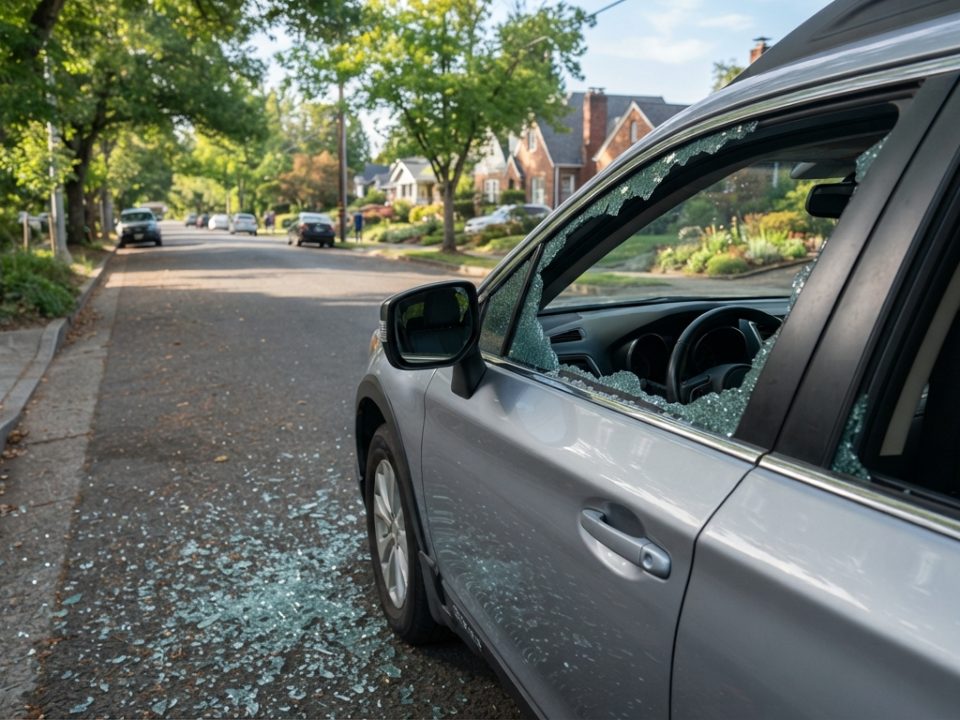
Shattered or broken side glass and back glass may call for replacement. Auto glass services can include windshield, side glass, and back glass work.
If you search for cheapest windshield replacement San Antonio, compare what each quote covers, not price alone. Confirm the glass, labor, and any related work included in the estimate.
A quote should match the type and location of the damage. Ask the provider to explain why repair or replacement is the suggested choice.
| Damage or problem | Possible service | What to confirm | What not to assume |
|---|---|---|---|
| Small windshield chip | Chip repair may be possible | Whether damage suits repair | Every chip can be repaired |
| Spreading windshield crack | Assessment for repair or replacement | How crack size and location matter | A crack always needs replacement |
| Broken side or back glass | Glass replacement may be needed | Which pane and work are included | Mechanism repair will replace glass |
| Intact door glass that will not move | Window mechanism diagnosis | Whether glass is truly undamaged | The pane itself caused the fault |
Before booking, check how the provider diagnoses the problem and what its service includes. That gives you a sound basis for choosing a local shop.
How Do You Choose a San Antonio Auto Glass Repair Shop?
Ask how the shop will identify the fault before you approve a replacement. A clear answer should link the test to the work, not jump straight to a part change.
Choose a provider that explains its diagnosis, estimate, and service options in plain terms. That helps you compare quality and workmanship without relying on broad claims.
What Should Power Window Repair San Antonio Reviews Tell You?
Read power window repair San Antonio reviews for details about communication, diagnosis, and completed work. A specific account can tell you more than a star rating alone.
Look for comments that explain what the shop checked and whether staff described the repair clearly. Vague praise does not show how the provider handled a window problem.
Reviews can offer clues, but they cannot promise the same experience for your vehicle. Ask direct questions about the service you need and listen for clear answers.
How to Find the Best Power Window Repair in San Antonio
The phrase best power window repair San Antonio can guide your search, but “best” depends on the work your vehicle needs. Compare providers by asking what they diagnose and what the estimate covers.
Use this checklist when you contact a shop:
- Ask whether the shop diagnoses power window mechanisms.
- Request an itemized estimate for the proposed work.
- Confirm which parts and labor the estimate covers.
- Verify mobile or in-shop availability for your vehicle.
- Ask what happens if diagnosis finds a different fault.
Miracle Auto Glass is located at Bandera Rd & Grissom. Call (210) 680-2551 to ask about availability and request a quote for your vehicle.
Explain whether the pane is stuck, noisy, or damaged when you call. That gives the shop a clearer starting point and lets you confirm whether it handles the work you need.
After comparing how providers explain diagnosis and service, the clear next step is contacting the shop you choose.
Conclusion
Identifying the fault before approving work can prevent treating a mechanism problem as a glass problem. Start with a diagnosis before agreeing to replace parts, since several faults can stop a window.
Visible chips, cracks, or broken panes need a separate assessment. A stuck window with intact glass may call for a check of the window system instead.
For help with damaged glass, hire Miracle Auto Glass to fix your windshield or other glass damage.