How Side Window Seals Protect Your Car From Water and Wind Noise
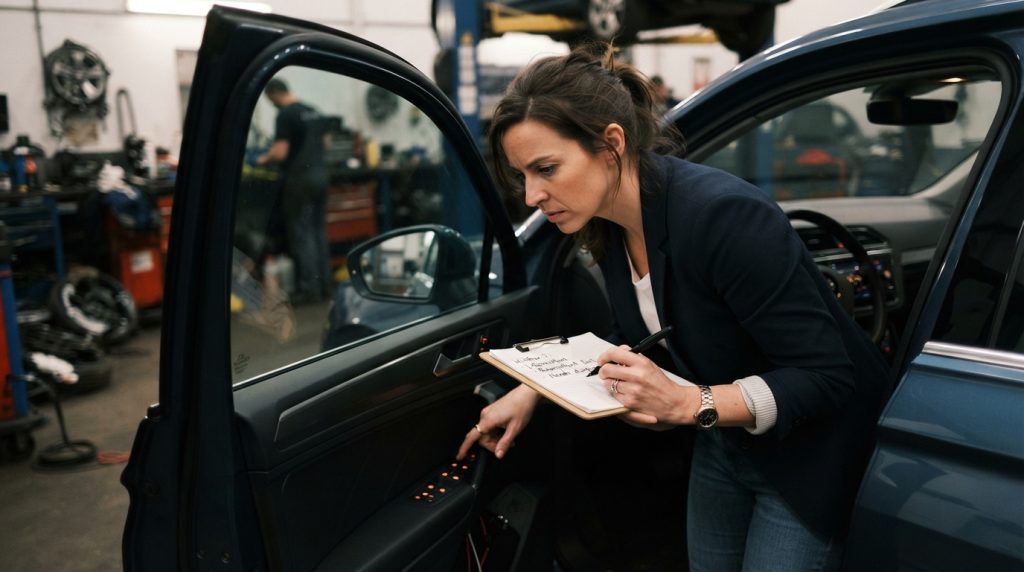
A window that works on one press and fails on the next can leave you unsure. Intermittent power window problems may stem from a control, a wire, or the moving assembly. The same window might respond later, which makes the fault hard to pin down.
Before replacing parts, you need to find what interrupts its operation. Note whether one window or several windows fail, and whether the symptom changes with time or use. The affected side and the other windows’ behavior are useful clues.
The window regulator is the mechanical assembly that guides the window glass as it moves up or down. The window motor moves that assembly, while electrical controls send the command. A fault can involve one part or more than one.
Make a note of which windows are affected and when the behavior changes. Then use those patterns to narrow down what may be happening.
Key Takeaways
- One affected window points attention to its parts or wiring.
- Several affected windows may share a control or circuit.
- A click, slow movement, or door movement can offer clues.
- Check the fault before replacing a switch, motor, or regulator.
- Get help if live testing or door-panel work feels unsafe.
What Intermittent Power Window Problems Can Tell You
If only one window acts up, start by comparing how that window behaves with the others. The pattern matters, but no single symptom proves which part has failed. One affected window points toward its own parts or wiring, while several can involve shared controls or circuits.
Note whether the power window is silent, slow, or noisy, and whether the symptom changes when the door moves. These details help you narrow the fault before inspecting parts.
| Observed pattern | What it may suggest | Useful next clue |
|---|---|---|
| One window is silent | Local switch, wiring, motor, or regulator fault | Try that window from both controls |
| One window moves slowly | Motor strain or resistance in the moving parts | Listen for strain and watch the glass |
| Click or hum without movement | Power reaches part of the system, but movement fails | Note whether the glass shifts at all |
| Operation changes when the door moves | Loose or damaged door wiring | Record which door position changes it |
Windows working on one side but not another can help separate a local fault from a shared one. If several windows stop working together, look beyond a single window’s parts.
A 2004 Chevrolet Venture had a faulty driver-side motor, passenger-side motor, and master switch. That case shows that several parts can fail at once, not that this is a common pattern.
Use the pattern as a starting clue, then examine the controls that send the command.
Could the Switch or Master Switch Be Failing?
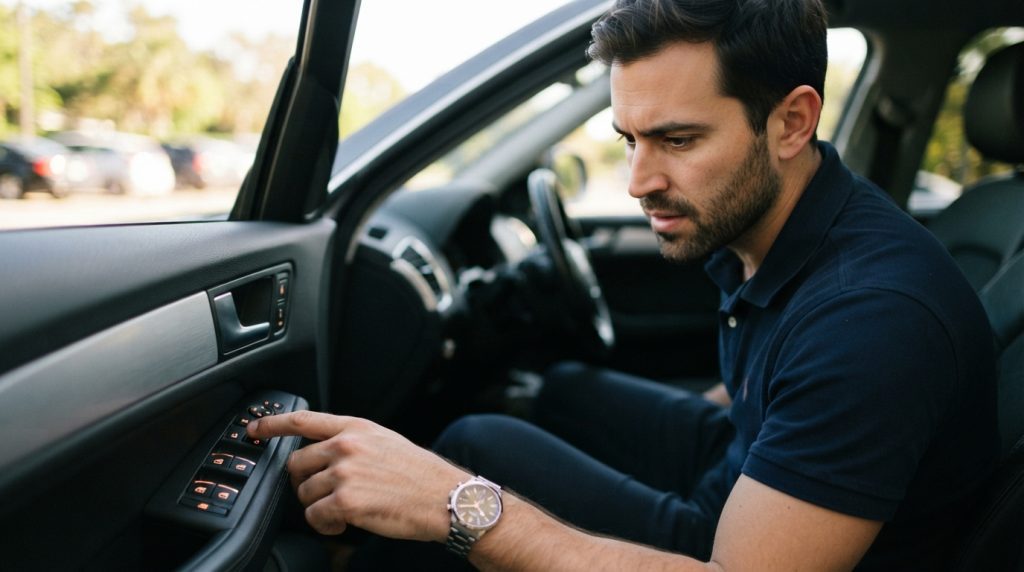
If a window works from one control but not another, the switch path deserves attention before you buy a motor. Control differences can help tell a local window switch from a master switch fault. A problem at one switch does not always mean the window’s motor has failed.
Compare the driver side and passenger side controls, then note which windows respond to each one. A switch may work only sometimes as its contacts wear or become contaminated.
When One Window’s Switch Stops Responding
If the passenger window works from the driver door but not its own switch, focus first on that window switch. If neither control operates it, the fault may lie elsewhere in the same window’s circuit or moving parts.
Moisture can enter a switch or its connector through the door panel. Damp or dirty contacts may interrupt the command, even if the window works again later.
Some vehicles let you replace an individual power window switch. Others use a master switch panel that must be replaced as one unit, so the vehicle design affects the repair.
When the Driver’s Master Switch Affects Other Windows
If several windows fail from the driver’s master switch, check whether each works from its own switch. If local controls work, the master switch or its connections deserve closer attention.
If the driver-side window fails from both controls while other windows respond, the fault may be limited to that window. A master-switch issue becomes more likely when several controls share the same failure pattern.
These patterns help narrow the control fault, but they do not prove a switch is bad. If the switch pattern does not explain the fault, consider whether the electrical supply is being interrupted elsewhere.
Are Wiring, Grounds, or Control Circuits Interrupting Power?
A window that changes behavior when its door moves can point to wiring that is making and losing contact. Movement is a clue, especially when the symptom changes as you open or close the door. A good switch cannot overcome a broken or weak electrical path.
The wire harness passes through a flexible area near the door jamb. Repeated door opening and closing bends those wires, which can wear the insulation or damage a conductor.
Broken Wires in the Door Jamb
A damaged wire can make contact only in certain positions. That can explain why a window works after the door moves, or fails when the vehicle hits bumps.
Damaged insulation may expose the conductor and cause a short. Look for cracks, pinching, or wear where the harness bends, but avoid pulling on wires you cannot identify.
Weak Grounds and Damaged Connections
A ground gives current a return path through the circuit. Corrosion at a ground contact can weaken that path, while loose or damaged connections can make power come and go.
A fault in one door may affect one window. A problem at a shared connection can affect more than one control or accessory.
Fuses and Electronic Control Modules
A blown fuse can stop a power window circuit from working. Some vehicles also route switch signals through a computer called the body control module (BCM).
| Possible fault | Clue | What to inspect |
|---|---|---|
| Broken door-jamb wire | Symptom changes with door movement | Flexible harness and wire insulation |
| Weak ground or corroded connection | Intermittent power or several affected functions | Ground contact and nearby connections |
| Blown fuse or control-module fault | Window circuit loses power or fuse blows again | Specified fuse and circuit diagnosis |
Use only the fuse’s specified amperage, which you can find in the owner’s manual. If a new fuse blows again, the circuit needs diagnosis for an overload or short. Never fit a higher-amperage fuse to keep it from blowing.
A faulty BCM is a less common cause and may need professional diagnosis. Once the supply path has been considered, separate electrical interruption from a motor or regulator that cannot move the glass.
Could the Window Motor or Regulator Be the Problem?
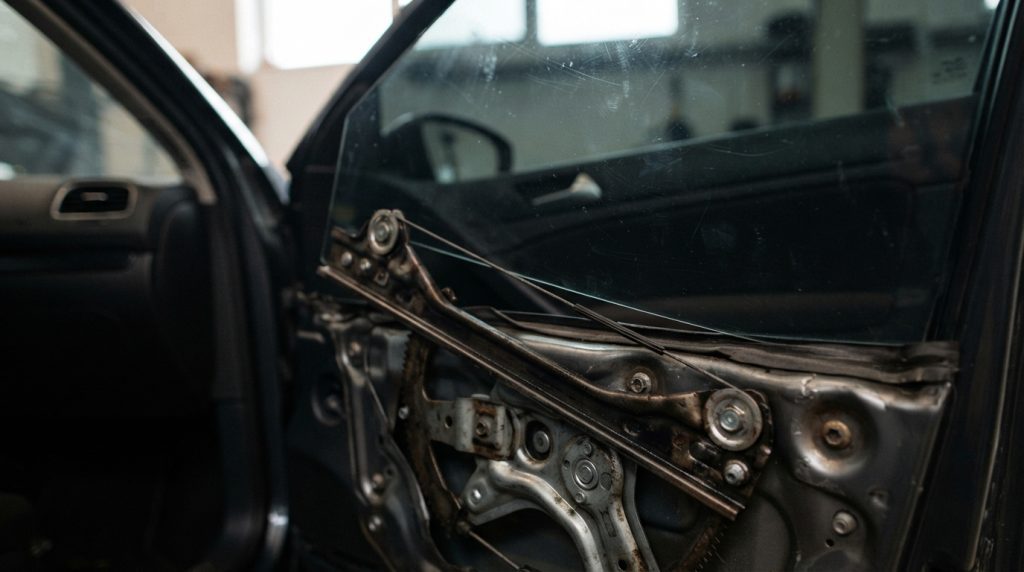
A window that slows down, strains, or stops moving may have a problem in the motor, the regulator, or both. Movement gives clues, but symptoms alone cannot name the failed part. The window motor supplies movement, while the window regulator guides the glass.
A window that becomes unreliable may have an electrical fault or a mechanical one. Listen and watch how the glass moves, but do not assume a sound confirms a diagnosis.
A Window Motor That Is Wearing Out
A failing window motor may respond only intermittently, then work again after a pause. A poor ground can also interrupt its operation, so a weak response does not always mean the motor itself is worn.
If the glass moves slowly or stops under strain, the motor may be working harder than it should. Misaligned glass or a regulator that binds can add extra load to the motor.
A Regulator That Binds or Breaks
The regulator guides the glass along its path. If it binds or breaks, the glass may move unevenly, tilt, or drop into the door instead of staying in place.
A motor can still make a sound when a damaged regulator prevents the glass from moving. Check for signs of misalignment or binding before deciding to replace the motor alone.
Some vehicles sell the motor and regulator as one assembly, while others have separate parts. Check your vehicle’s parts configuration and diagnosis before you replace motor regulator parts together or replace motor alone.
Use the symptoms to form a hypothesis, then test the circuit before ordering replacement parts.
How Can You Diagnose the Fault Before Replacing Parts?
Before buying a switch or motor, compare what happens at each control and confirm whether power reaches the circuit. A few careful checks can help you avoid guessing. Use your owner’s manual for vehicle-specific fuse information, and do not treat general checks as a final diagnosis.
A test light or voltmeter can show whether power reaches a connection. Live electrical testing can be risky if you are unfamiliar with the tools or access points.
- Try each affected window from its own switch and from the master switch. Record which controls work.
- Check the owner’s manual for the correct fuse, then test that fuse for a break.
- Listen for a click or hum when you press a switch, and note which window makes the sound.
- With suitable care, check for power entering and leaving the switch connector.
- If you can safely access the motor connector, check for voltage there while pressing the switch.
A reading around 12 volts at the switch input usually means power is reaching it. The exact reading can vary with the vehicle and test conditions.
If power enters but does not leave the switch, the switch may be at fault. Power leaving the switch shifts attention toward the wiring or motor, while no power at the switch points back toward the switch or incoming wiring.
These checks can narrow the problem, but they do not confirm a vehicle-specific diagnosis by themselves. If access to the wiring or live testing feels uncertain, stop and get qualified help.
When Is It Time to Call a Professional?
Stop DIY testing if reaching the fault would require work you cannot do safely or confidently. Knowing your limits can prevent damage to the door, wiring, or vehicle. Seek help when the fault is hard to reach, unclear, or tied to several electrical systems.
A mechanic can inspect the circuit and door parts without relying on guesses. BCM diagnosis may need specialized tools that many home users do not have.
- You are not comfortable removing the door panel or testing a live circuit.
- Wiring damage is extensive or difficult to reach safely.
- Several electrical accessories fail together, or tests suggest a BCM issue.
- The diagnosis remains unclear after basic checks.
A window stuck down exposes the interior to rain, dust, and other weather. It also raises a security concern, especially if the vehicle must remain parked outside.
Arrange an inspection soon if you cannot close the glass. A mechanic can check whether the fault affects the wiring, controls, or moving parts, then explain the repair needed.
Do not keep forcing a window that binds or drops. Extra strain may damage more parts, and an open door panel can expose sharp edges or moving components.
When you request an inspection, describe which windows fail, what sounds you hear, and whether door movement changes the symptom.
Conclusion
The most useful next step is to match the repair to the fault your checks actually found. Diagnosis comes first, because replacing a part without evidence can leave the same problem behind. An intermittent fault can involve more than one component.
Write down which window failed, which controls worked, and what you heard. Share those details with a repair shop if the cause remains unclear or the work feels unsafe.
Power-window repairs and auto-glass repairs are different services. A faulty switch, window motor, or regulator affects how the glass moves, while a cracked windshield or damaged side glass needs glass service.
For windshield or other glass damage, contact Miracle Auto Glass at Bandera Rd & Grissom. Call (210) 680-2551 to ask about fixing your auto glass.