
Why Your Power Window Works Sometimes but Not Others
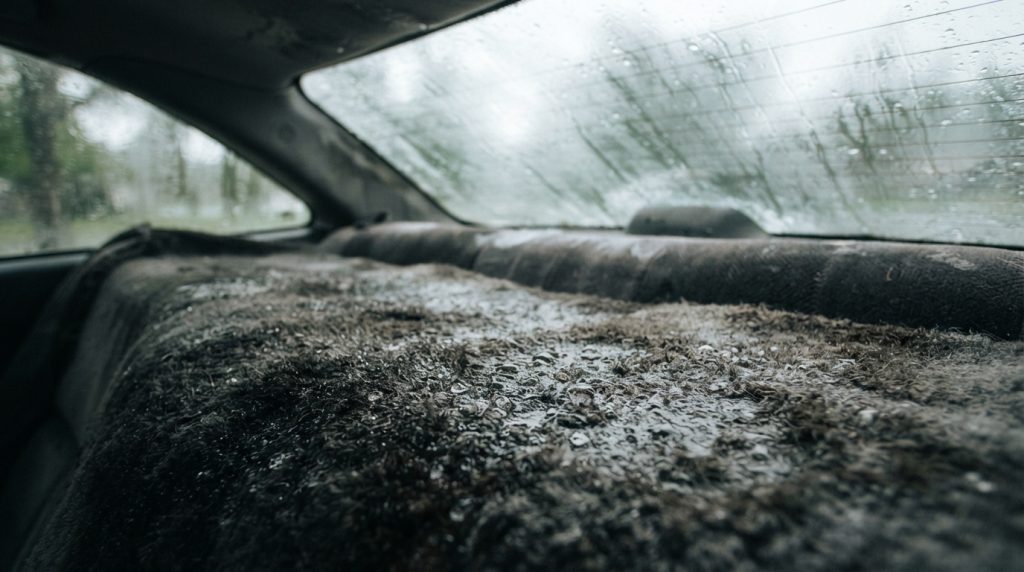
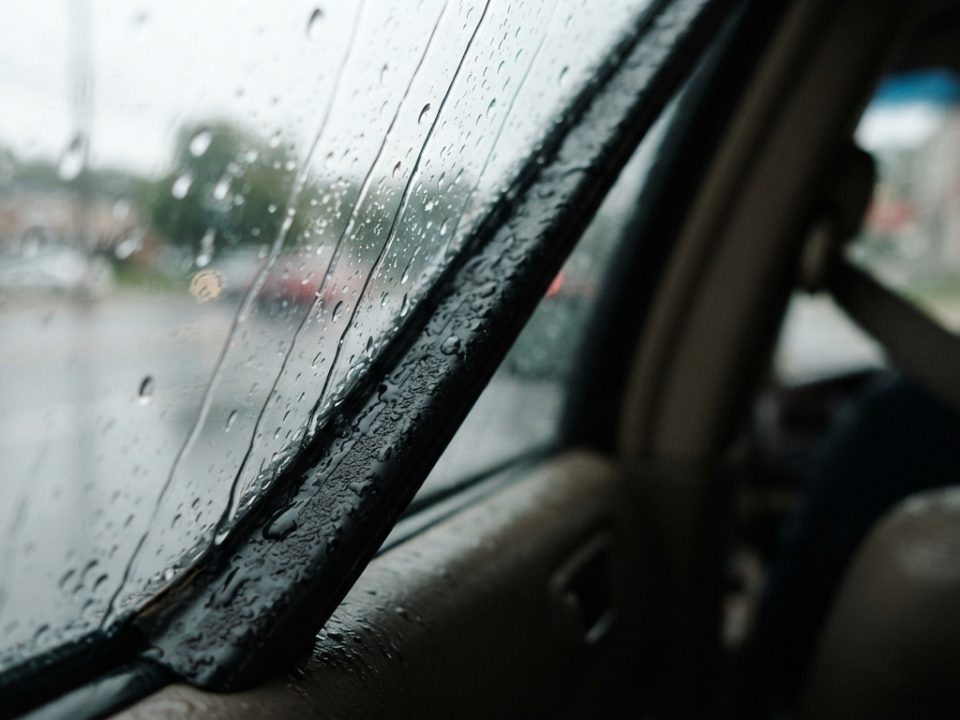
A damp rear carpet after rain can point to a rear-glass leak, but it is not proof of one. A failed seal can let rain enter the car, yet water pooling near the back may have traveled from elsewhere. Trace the water before choosing a fix.
That distinction matters because water can move beneath carpet and appear far from its entry point. A careful check can help you avoid sealing the wrong place or missing damage hidden below the surface.
Key Takeaways
- Wet flooring does not prove the glass is leaking.
- Water can travel under carpet before it pools.
- Check nearby roof and body openings as well.
- Use gentle tests to trace fresh water.
- Ask an auto glass technician to assess a failed bond.
- Drying the cabin helps limit further damage.
Move from that initial caution to the signs that can help you confirm whether water is entering the vehicle.
How Can You Tell If the Rear Windshield Is Leaking?
A musty odor or damp rear carpet is a reason to investigate, not enough on its own to identify the entry point. Several clues together can suggest a windshield leak, but none proves the source. You can tell if a windshield is leaking by looking for signs of moisture inside the car.
Pay attention after rain or a car wash, and note which areas feel damp. A wet floor alone cannot show where water entered.
- A musty odor that lingers after the cabin dries.
- Fogged windows or lasting humidity inside the car.
- Wet upholstery or carpet, especially near the rear.
- Water stains or streaks on trim and fabric.
- Mold or rust on interior surfaces or metal parts.
Some signs stay subtle until the weather turns wet again. Fluid without an odor may still be water, so note its appearance and where it gathers.
If you cannot identify an unknown fluid, an auto glass technician or mechanic can help check it. Do not rely on smell alone.
Once you have signs to look for, narrow down where the water might be entering.
What Causes a Rear Windshield Water Leak?
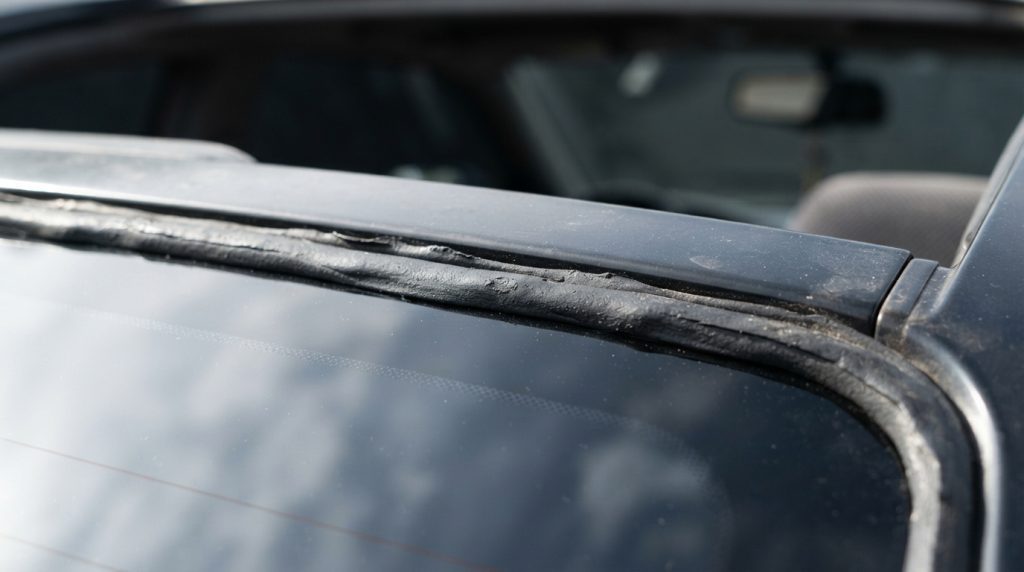
A gap in the glass seal can let rain enter even when the rear windshield looks intact. Small flaws in the bond or seal may be hard to see from inside. Many newer vehicles use urethane, the adhesive that bonds windshield glass to the vehicle frame and helps form a watertight seal.
A leak may start with uneven coverage, a missed spot, or a damaged bond. The glass can look normal while water slips through a hidden gap.
Failed Urethane Bonds and Poor Installation
Many newer cars rely on urethane rather than a separate rubber seal. If a replacement was installed poorly, water can pass through gaps in the adhesive.
Missed spots beneath the molding can leave a path into the cabin. A small pinhole may be enough, even if most of the edge looks sealed.
Damage to the glass edge or vehicle frame can also weaken the bond. The problem may sit beneath trim, where you cannot judge it from the interior.
Worn Rubber Gaskets and Pinholes
Some older vehicles use a rubber gasket around the glass. Rubber can dry out, shrink, or crack over time, leaving a space for water.
A gasket leak differs from a failed urethane bond, so the right repair depends on the seal type. Adding sealant over an old, worn edge may hide the path without fixing it.
Because similar water trails can start elsewhere, check nearby roof and body openings before deciding the glass is at fault.
Where Else Could Water Be Entering?
Water pooled in the rear footwell or cargo area may have traveled from an opening several feet away. Top-edge water is not automatically proof of a windshield fault. Water can move beneath carpeting and collect away from its entry point.
Roof drains, lights, antennas, and body seams can all send water toward the rear. Use nearby clues to compare possible sources before testing.
Roof Drains, Brake Lights, and Antennas
A clogged or misaligned drainage channel can send water into the vehicle instead of outside. On some trucks and SUVs, the high-mounted third brake light or roof antenna can leak near the same area.
| Suspected source | Clue to check | Why it can look like a rear-glass leak |
|---|---|---|
| Rear windshield edge | Water at the glass edge | Poor glass seal |
| Roof drain or sunroof drain hose | Water near roof opening or suspected clogged drain | Blocked drainage |
| Third brake light or roof antenna | Dampness near the light or antenna | Failed surrounding seal |
| Body seam | Water tracing along a damaged seam | Damaged or poorly sealed seam |
Body Seams and Water Trails
Water may enter through a seam where body panels join, then follow trim or wiring toward the floor. Look for a trail, not just the final wet spot.
A leak can also spread under carpet before pooling in a different area. If the carpet feels wet far from the glass, the path may be hidden underneath it.
After considering the alternative entry points, use a careful test to trace the water rather than sealing the first damp spot you find.
How Can You Test for a Leak Safely?
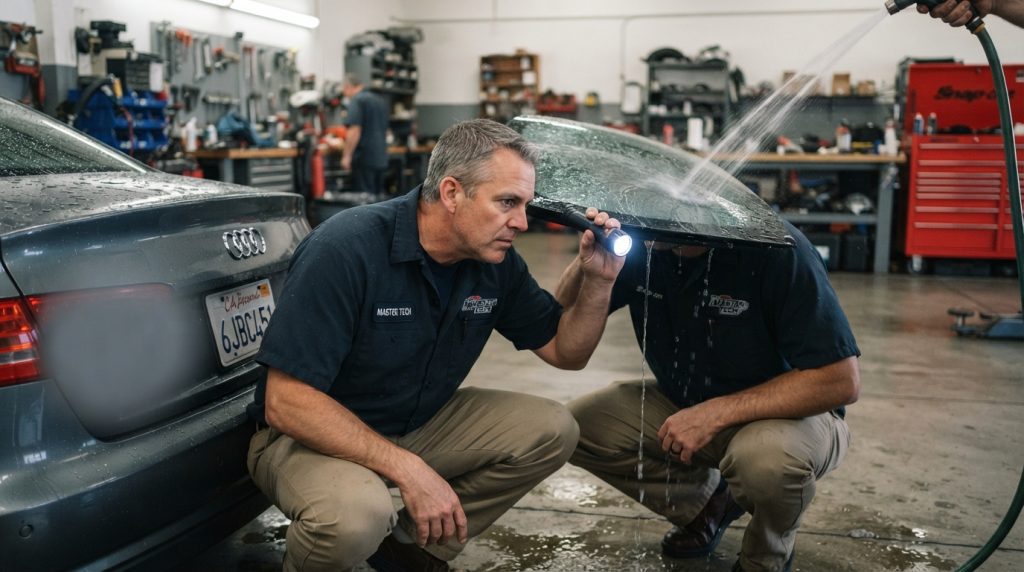
Start by drying the cabin, since existing moisture can hide the point where fresh water enters. A dry interior makes new water trails easier to spot. Use a gentle flow, not high hose pressure, to reveal the leak.
Ask another person to watch inside while you wet one small area at a time. Stop if water reaches electrical parts or the test feels unsafe.
Trace Interior Stains Before Testing
Check the carpet, trim, and headliner for stains or trails before adding water. A flashlight can help you follow a mark toward its highest visible point.
Use a Gentle Hose or Soap Test
Work through these steps in order, and give each area time to show a response:
- Dry the interior and inspect stains or water trails.
- Have a helper watch inside with a flashlight.
- Gently shower the exterior, starting low and moving upward.
- Apply mild soapy solution at the glass edge, blow air from inside, and watch for bubbles.
During the hose test, begin below the suspected area and move upward. High pressure can make water bounce away instead of showing where it enters.
With the air-and-soap test, bubbles at the glass edge can point to a gap. Keep the solution mild, and avoid directing air at loose trim.
A test may help locate a leak, but it does not establish the correct repair. Once you have a likely entry point, match the repair to the actual seal or opening involved.
Which Repairs Can Stop the Leak?
A repair that only covers the visible edge may fail if the water is getting under a damaged bond. The source matters more than the wet spot. To fix a rear windshield water leak, repair the confirmed source, and have a technician remove and reseal the glass when its bond has failed or corrosion is present.
A small, accessible gap may allow temporary protection while you arrange an inspection. A lasting repair depends on the condition of the seal, glass, and metal beneath it.
Temporary Measures Versus a Lasting Repair
Tape can help keep rain out for a short time, but it is not a permanent seal. A sealant should be made for automotive glass and used only when it suits the confirmed leak.
Do not use silicone or household coatings such as Flex Seal. Silicone can interfere with proper sealant adhesion and make later auto glass repair harder.
| Condition | Suitable response | Who should handle it |
|---|---|---|
| Minor accessible gap | Temporary measure only | Temporary protection while arranging inspection |
| Degraded rubber gasket | Replace the gasket | Auto glass technician |
| Failed urethane bond or rust beneath glass | Remove glass, prepare surface, and reseal or replace | Auto glass technician |
When the Glass Must Be Removed
A failed urethane bond often needs professional glass removal. The technician can inspect the frame, prepare the surface, and apply the right bonding material.
Rust beneath the glass can affect the bond and may need attention before installation. Replacing the glass may make more sense if the glass or surrounding area has damage.
If the source or extent of damage is uncertain, a professional inspection can prevent a temporary patch from becoming the whole repair plan.
What Can a Leak Damage if You Leave It Untreated?
Water left under carpet or trim can keep damaging the interior after the surface feels dry. Hidden moisture can remain trapped where air cannot reach. Do not assume that dry carpet means the area beneath it is dry.
Ongoing water intrusion can affect more than upholstery. Check the cabin after a leak, and arrange help if moisture reaches wiring or glass bonds.
- Damp carpet and upholstery can hold moisture for a long time.
- Mold and mildew may develop and trigger allergic reactions.
- Moisture can cause rust or harm interior parts and sensors.
- A compromised windshield bond needs prompt professional assessment because glass is a safety component.
Weather can keep adding water before the cabin fully dries. A musty smell or new stain may signal that moisture remains under trim.
With the risks clear, the next step is to understand what an inspection and repair quote can depend on.
What Affects the Repair and Replacement Cost?
There is no single price for resealing a windshield because the work depends on what the inspection finds. Vehicle details and the leak’s extent shape the quote. The windshield seal replacement cost depends on your vehicle, location, damage, and whether repair or replacement is appropriate.
No reliable universal price applies without the vehicle and an inspection. A shop may find that replacing the glass is more practical than repairing its seal.
Ask the auto glass shop whether the glass must come out and whether rust or installation damage is present. Those details can change the labor and parts needed.
Also ask what the quote includes, such as removal, surface work, and replacement glass. A clear estimate helps you compare the work, not just the total.
Check your insurance policy before booking service. Comprehensive coverage may apply to water damage from specified natural events or falling or flying objects, while maintenance-related leak repairs are typically not covered.
Use those cost factors to ask for a diagnosis and estimate from a qualified local glass professional.
Conclusion
If water keeps returning after rain, arrange an inspection instead of relying on a surface patch. Trace the entry point before choosing a sealant, since water can come from the glass or a nearby opening.
Get professional help if the bond may have failed or the source remains unclear. A proper check can help protect the vehicle and guide the right auto glass repair.
Hire Miracle Auto Glass to fix your windshield or other glass damage. Visit us at Bandera Rd & Grissom, or call (210) 680-2551 to arrange service.