
Auto Glass Maintenance Checklist for Long Lasting Visibility

How Much Does Windshield Calibration Cost in San Antonio
Many drivers choose to add a dark film to their car glass. This modification can offer privacy and reduce glare. However, specific rules govern how dark you can go.
The state first enacted regulations for this vehicle modification in 2009. With a population of over 29 million residents, clear rules are essential for road safety.
Understanding these regulations is crucial for your daily driving. It helps you avoid fines during a routine traffic stop. Your vehicle must allow a safe amount of light to enter.
This guide breaks down the current standards. We’ll help you determine if your car’s setup is compliant. You can maintain a legal and safe vehicle while enjoying the benefits.
Key Takeaways
- Texas has specific rules for vehicle window tinting, established in 2009.
- The primary concern is safety, ensuring enough light enters the vehicle.
- Non-compliance can lead to fines during traffic stops.
- Regulations are designed to be consistent across the state, from Houston to San Antonio.
- Knowing the law helps you enjoy the benefits of tint while staying legal.
- Your current window film may need inspection to verify it meets standards.
- Staying informed is the best way to avoid unnecessary penalties.
Introduction to Texas Window Tint Regulations
The rules for applying film to your vehicle’s glass are built around a core scientific measurement. These regulations exist to ensure safety for everyone on the road.
Your modification must allow a specific amount of light into your car. This standard is consistent across the state.
Understanding the Role of Visible Light Transmission (VLT)
Visible Light Transmission (VLT) measures the percentage of light allowed through your film and glass. It is the primary number enforcement officials check.
Lower VLT percentages mean a darker appearance. This can significantly limit your view, especially at night.
- VLT is the key metric for measuring legal compliance.
- You must measure the combined light transmission of your factory window and the added film.
- Understanding how visible light interacts with the film is crucial for safety.
A Brief History of Texas Tinting Laws
Comprehensive state standards for window tint were established in 2009. This created a uniform set of rules for all drivers.
The goal was to improve road safety with clear, enforceable guidelines. These rules help officers verify your vehicle meets the required light transmission levels.
tinted windshield laws Texas – Key Requirements and Standards
Compliance hinges on two main areas: the windshield’s top section and the front side windows. You need to know the exact rules for each. This ensures your vehicle meets state legal to tint your windshield standards.
Windshield Tinting: AS-1 Line and Top 5-Inch Guidelines
You can apply film to your windshield only above the manufacturer’s AS-1 line. This is a marking etched near the top of the glass.
If your car lacks this line, the film must end within the top five inches. This rule keeps the driver’s primary view clear.
| Vehicle Area | Key Requirement | Measurement |
|---|---|---|
| Windshield | Film Placement | Above AS-1 line or top 5 inches |
| Front Side Windows | Minimum Light Transmission | More than 25% VLT |
| Front Side Windows | Maximum Reflectivity | 25% or less |
Front Side Windows and Reflectivity Rules
Your front side windows must allow more than 25% of light to pass through. This is measured as Visible Light Transmission (VLT).
It ensures you have adequate visibility day and night. Additionally, these windows cannot be more than 25% reflective.
This limit prevents excessive glare for other drivers. It’s a safety feature for everyone on the road.
These standards help officers see inside during stops. They balance your comfort with public safety.
Regulations for Different Vehicle Types
Vehicle type plays a crucial role in determining how dark you can make your windows. The rules for your car’s rear and side glass depend on its classification.
Sedans, SUVs, and vans follow similar core principles. Your mirror setup is a key factor for compliance.
Requirements for Sedans
For sedans, the back side windows can have any level of darkness. There are no specific VLT restrictions for these side windows.
Your rear window has more specific rules. You can apply very dark window tint if your vehicle has dual side mirrors.
These mirrors must provide a clear view of at least 200 feet behind your car. Without them, the rear glass must allow at least 25% of light through.
Guidelines for SUVs, Vans, and Other Vehicles
The same standards apply to SUVs, vans, and similar vehicles. Your back side windows can also be tinted to any darkness you prefer.
The rule for the rear window is identical. Dark tint is permitted only with a proper dual side mirror setup.
Always check your mirrors before applying film to the back side. This simple step helps you pass your vehicle’s safety inspection.
These consistent rules ensure all vehicle types meet the same safety goals across the state.
Certification, Stickers, and Medical Exemptions
Beyond light transmission percentages, state regulations require specific labels and paperwork for your vehicle’s window tint. This paperwork proves your modification follows the rules.
You need to handle two key areas. These are product certification and medical exemption documentation.
Certification of Window Tint Film and Labeling Requirements
You must ensure your installer uses certified film. Manufacturers test their products to verify they meet state standards.
A mandatory sticker must be placed between the film and glass on your driver side window. This label identifies the installer and the specific product used.
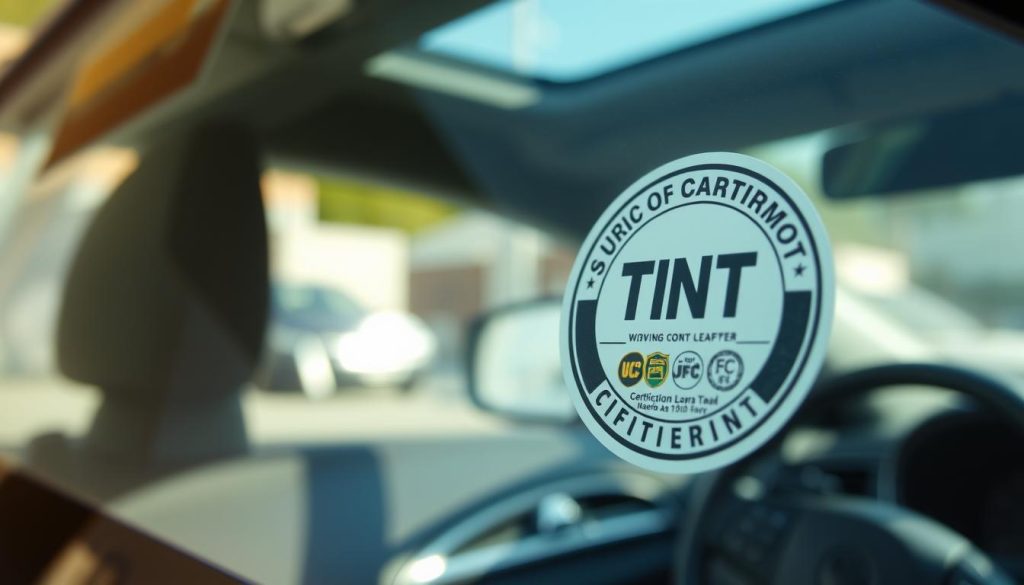
This sticker provides vital information during a traffic stop. It helps enforcement officials quickly confirm your film is legal.
How to Obtain a Medical Exemption
The Texas Department of Public Safety stopped issuing official exemption certificates in 2019. A new process is now in place.
If you require a medical exemption, you must carry a signed statement from a licensed physician or optometrist. Keep this document in your vehicle at all times.
You will need to present this medical documentation in two key situations:
- To law enforcement during any traffic stop.
- To the technician conducting your annual vehicle inspection.
Proper paperwork is your best defense against a violation. Always verify your film and your documents are in order.
Additional Considerations Under Texas Tint Laws
Specific color restrictions and enforcement methods are critical parts of compliance. Your vehicle’s modification must follow rules beyond just darkness levels.
Understanding these details helps you avoid unexpected penalties. It ensures your car meets all safety and legal standards.
Restricted Tint Colors and Enforcement Policies
The state’s tint laws explicitly ban red, blue, and amber colors on any window. This prevents confusion with emergency vehicle lighting.
Your choice of film hue is just as important as its darkness. Always verify the color with your installer before application.
Local law enforcement officers use calibrated meters to check your car. They measure the Visible Light Transmission during any routine traffic stop.
This enforcement tool provides an objective reading of how much light passes through your window tint. It is the primary method for verifying compliance.
If your vehicle violates these regulations, you could face a fine. First-time offenses typically range from $20 to $200.
Always seek accurate information about local policies. Interpretations of these tint laws can sometimes vary by jurisdiction.
Tips for Staying Compliant and Finding a Trusted Installer
A key step in maintaining a legal vehicle is partnering with an installer who understands the nuances of local regulations. This ensures your window tinting project enhances comfort without risking penalties.
Choosing an Installer: Miracle Auto Glass at 6730 Poss Rd, San Antonio, TX 78238
For professional window tinting, consider Miracle Auto Glass. Their experts use compliant materials and understand the current tint law.
They will place the mandatory compliance sticker correctly on your driver side window. This proves your film glass meets all standards during an inspection.
Practical Advice to Avoid Violations and Ensure Safety
Remember, your window tint law compliance is based on the combined film glass and factory window. A reputable installer measures this for you.
High-quality window tint reduces interior glare and heat. This makes your car much more comfortable.
If you are unsure about darkness, choose a lighter tint. Always verify your side mirrors provide a clear rear view.
Proper dual side mirrors are essential if you have dark tint on the back windows. This simple check helps you avoid violations.
Following these tips keeps your driver safe and your car within the window tint law.
Conclusion
A clear understanding of the rules transforms a simple car modification into a safe, legal enhancement. Knowing the specific VLT requirements and relying on a professional installer are your best defenses.
These regulations exist to ensure road safety for everyone. They maintain clear visibility for you and officers on patrol. Always keep your medical paperwork handy if you have an exemption.
Also, verify your installer provides the mandatory certification sticker. Staying informed about the law lets you enjoy the benefits of window tint. You get added privacy and reduced glare without the risk of a citation.