
Rock Chips on Your Windshield: Repair or Replace

What to Do Immediately After Your Car Window Is Broken
Have you ever driven and wondered if a tiny chip could become a big safety problem by the time you notice it?
This short how-to guide shows you a quick, at-home method to scan your car glass for subtle harm. You’ll learn what hidden damage looks like: faint cracks, tiny chips, light pitting, and slight distortion that hide in plain sight.
Start with a simple scan of the surface, check edges and seals, and use angled light to reveal flaws. These steps rely on attention to detail rather than special tools. Regular checks during cleaning, after storms, or post-road trips can stop small problems from growing into safety hazards.
When you find damage or want a professional assessment, Miracle Auto Glass offers reliable repair and clear advice on whether to repair or replace. Hire Miracle Auto Glass today for a trusted evaluation and peace of mind.
Key Takeaways
- Do a quick check during routine cleaning or after rough drives.
- Look for tiny chips, faint cracks, and subtle distortion in the glass.
- Use angled light and inspect edges and seals for hidden damage.
- These checks need care, not special equipment.
- Regular scans improve visibility and overall safety.
- If you find damage, contact Miracle Auto Glass for a professional plan.
Why windshield inspections matter for road safety and vehicle protection
Small chips and faint lines in your car glass can quietly reduce safety long before you notice a problem. You might think a clear view means the glass is fine, but subtle flaws affect strength and function.
How the glass supports roof strength and airbag performance
The front glass plays a critical role in holding the roof in place during a rollover. A compromised panel raises the risk of collapse and harms overall vehicle crash performance.
Airbags rely on a stable anchor. If the glass is weakened by chips or cracks, airbag timing and direction can be affected.
How chips and cracks affect visibility and shatter risk
Even small chips can bend light, cause glare, and reduce your ability to read the road. That makes driving harder, especially at night or in rain.
Damaged glass is more likely to shatter on impact, which raises the danger of passenger harm in otherwise minor collisions.
| Damage Type | Visibility Effect | Structural Risk | Recommended Action |
|---|---|---|---|
| Bullseye/Chips | Local glare or distortion | Low to moderate if near edge | Repair quickly to stop spread |
| Star/Line Cracks | Lines that catch light | High—can weaken anchor points | Assess for replacement |
| Pitting/Hazing | Reduced clarity overall | Moderate—long-term weakening | Polish or replace as needed |
When hidden windshield damage is most likely to show up
Damage often shows up in the days after a rock strike, when stress and motion let a tiny flaw spread fast.
How temperature and weather make small chips grow
Hot days and freezing nights force glass to expand and contract. These temperature changes increase stress around a small chip and can turn it into a crack quickly.
Sudden defrosting, heat waves, hail, and high winds all count as risky weather conditions. They speed up spread and raise the chance of new windshield damage.
Why roads, debris, and construction matter
Rough roads and potholes flex your car body and shake already-weakened glass. Driving fast over rough roads raises the risk a chip will split into cracks.
Construction zones send more flying debris at highway speeds. Keep distance and slow down near work sites to cut impact risk.
- Check right after you hear a ping, after a storm, or following a long trip.
- Act early: small chips often expand with vibration and changes in temperature.
To learn how to avoid impacts from road debris, see our guide to avoid debris damage. Staying aware at the right time helps you prevent bigger problems.
Windshield inspection tips you can do at home in minutes
A quick, routine scan can spot small glass flaws before they grow into real problems. Start after a light cleaning so dirt won’t hide marks.
Scan the full surface
Walk around and view the entire pane from outside and inside. Look for chips, star cracks, or combo damage that show multiple impact points.
Check edges and seals
Pay special attention to the perimeter. Stress points near the edge let cracks spread faster. Press gently around the molding to confirm the seal feels tight.
Use angled light
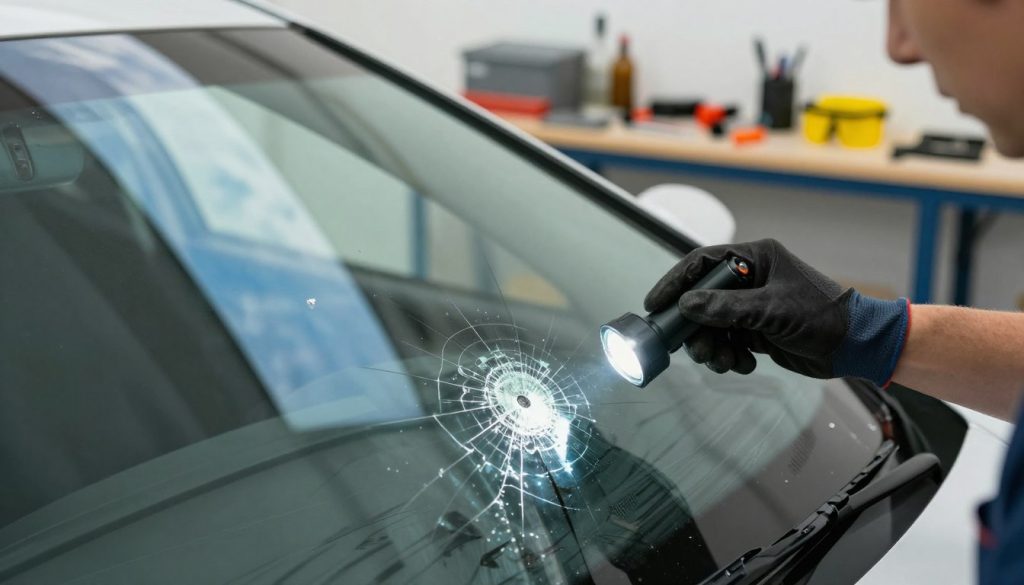
Move a flashlight or use angled sunlight to reveal distortion, pitting, and subtle warping. Shine from different positions until any hidden flaws appear.
Inspect wipers and driver sight line
Examine wipers for cracking or tearing. Worn blades can streak and eventually scratch the glass.
Sit in the driver’s seat and check your central line of sight. Even a small mark in that area can cause glare or block critical view.
- Quick routine: clean light dirt, then scan.
- Edge focus: slow down near the perimeter.
- Light test: use angled illumination to reveal hidden issues.
- Wiper check: replace worn blades to avoid scratches.
| Step | What to look for | Immediate action |
|---|---|---|
| Full-surface scan | Chips, star cracks, combo damage | Note location and size; monitor or seek repair |
| Edges & seals | Perimeter cracks, loose molding, gaps | Press perimeter; seal issues need professional care |
| Angled light test | Distortion, pitting, subtle warping | Document with photo; compare over time |
| Wipers & sight line | Worn blades, streaking, sight obstruction | Replace blades; avoid driving until view is clear |
Remember: a small-looking mark can still be important if it sits in your critical viewing area. Act early to avoid larger damage later.
How to tell whether you need windshield repair or replacement
A few clear measures — how big, how deep, and where the flaw sits — determine the right repair path.
Size matters: small chips under about one inch often respond well to professional repair. Short cracks, roughly 14 inches or less, may also be fixed if they are shallow and isolated.
Depth is crucial. If the break reaches inner layers or the laminate is compromised, a repair may fail. Deep damage weakens the whole part and usually points to replacement.
Location changes the outcome. Edge breaks spread faster. Damage near sensors, cameras, or in the driver’s primary view often needs replacement to avoid glare or distorted sight.
- Multiple hits or intersecting cracks lower repair success.
- Complex areas on modern vehicles require careful handling.
- When in doubt, get a trained technician’s assessment.
| Factor | Repair Likely | Replacement Likely |
|---|---|---|
| Size | Chip ≤1 inch; crack ≤14 in | Large holes; long cracks |
| Depth | Surface or shallow laminate | Inner-layer penetration |
| Location | Center, small, non-critical | Edge, near sensors, driver view |
Common windshield damage types you should recognize during an inspection
Recognizing damage types lets you decide how fast to act and what to tell a technician. Below are the most common patterns you’ll see during a quick scan.
Bullseye and half-moon chips
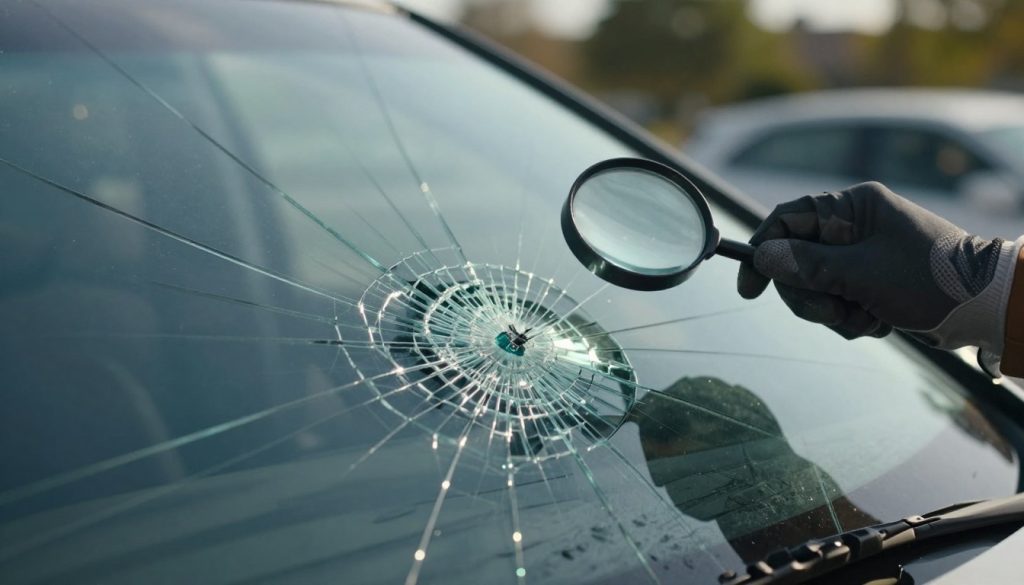
Bullseye chips show a ring with a central impact point. They often come from small rocks and are usually easy to describe when you call for service.
Partial bullseye/half-moon chips look similar but show an incomplete circle. These can split unpredictably, so note size and location.
Star cracks and spreading line cracks
Star cracks radiate short lines from a center point. The length of the crack affects repair options.
Line cracks run across the glass and can be slow to grow or rapidly expand with vibration and temperature swings. Spreading line cracks need faster attention.
Combo chips and multiple impact areas
Combo chips combine rings, stars, and lines in one spot. That mix lowers repair success.
If you find multiple impact areas, the glass has taken repeated hits and replacement is often the safer choice.
- Name the pattern when booking service to speed diagnosis.
- Note size, depth, and location—these guide repair vs replacement.
| Type | Look | Quick action |
|---|---|---|
| Bullseye | Ring around impact | Repair may work |
| Star / short cracks | Radiating lines | Assess length for repair |
| Line / spreading | Long lines that grow | Address quickly |
| Combo / multiple | Mixed damage, many hits | Replacement likely |
What to do if you find damage today
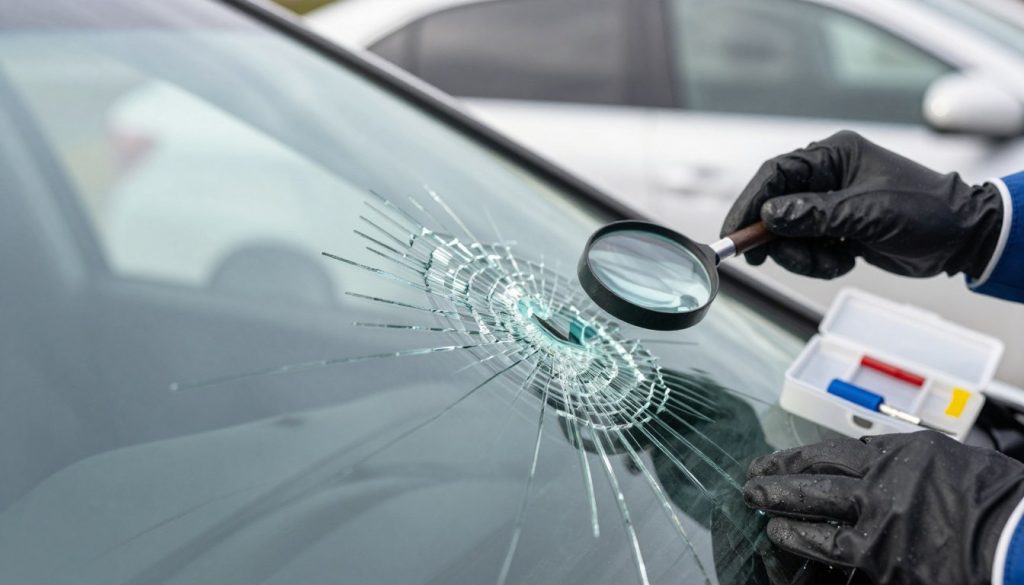
If you spot a chip or thin crack today, take quick, practical steps to limit further harm. Photograph the area from both sides and note the date and driving conditions. Keep the photos for records and to share with a technician.
Why fixing chips and cracks ASAP matters
Normal driving vibration and rapid temperature swings can turn a small flaw into a long crack within days. Acting fast often keeps repair options open and reduces the chance of full replacement.
Why DIY repair kits can miss deeper issues
At-home kits can fill surface breaks but they cannot assess laminate depth, sensor areas, or structural risk. A missed inner-layer problem may fail later and force a costly replacement.
Immediate next steps:
- Document the mark with clear photos and notes.
- Avoid rough roads, rapid heating, or cold blasts while you wait.
- Schedule a pro evaluation quickly so repair can stop spread and restore safety.
You can learn more about how fast cracks can spread and what to expect at how long before a crack spreads. Fast action often lowers total cost and prevents bigger auto glass problems down the road.
How to reduce future windshield damage with simple maintenance habits
Protecting your car’s glass starts with easy, repeatable maintenance you can do at home. These small actions lower the chance of chips, cracks, and glare over time.
Clean correctly to avoid hazing and micro-damage
Use a soft microfiber and a mild, automotive glass cleaner. Wipe in straight strokes and rinse away stuck dirt before you polish.
Avoid ammonia- or alcohol-based household cleaners. They can haze or weaken the surface and may cause tiny fractures over years of use.
Replace worn wipers before they harm the glass
Check wipers every few months and swap blades at the first sign of cracking or streaking. Old wipers can scratch or press unevenly on the glass.
Regular replacement keeps clear vision and reduces long-term wear from dragging or chattering blades.
Smart parking and driving habits that cut risk
Park in shade when possible to lower heat stress and reduce sudden expansion and contraction of the pane. Avoid parking under loose branches or near construction sites.
Keep a safe following distance from large vehicles and slow down on rough roads. That reduces debris strikes and lowers the chance of new chips.
- Cleaning: microfiber + mild glass cleaner, remove grit first.
- Wipers: inspect monthly; replace worn blades promptly.
- Parking: shade and distance from hazards extend glass life.
- Driving: avoid tailgating and use caution in construction zones.
| Action | Benefit | When |
|---|---|---|
| Gentle cleaning | Prevents micro-scratches and haze | Weekly or after dirty trips |
| Wiper replacement | Stops streaking and scratches | Every 6–12 months |
| Shade parking | Reduces heat-related stress | Hot days and long parking periods |
In winter, chip away ice with a plastic scraper and never pour boiling water on frozen glass. Quick, simple care preserves clarity and saves you time and money later.
Conclusion
A short, regular check of your glass can stop a small flaw from turning into a costly safety problem. .
Remember: your front panel is structural gear, not just clear material. It supports visibility, roof strength, and airbag performance.
Use the simple home flow you learned: scan the surface, check edges and seals, try angled light, check wipers, and confirm your sight line.
If a chip is large, deep, spreading, or sits in your driving view, choose professional repair or replacement for lasting protection.
Don’t wait. Request a quote and schedule expert service today. Hire Miracle Auto Glass to fix your windshield or other auto glass and get back to safe driving with confidence.