
How to Choose the Best Auto Glass Repair Shop

Why Clear Windshields Are Critical for Road Safety
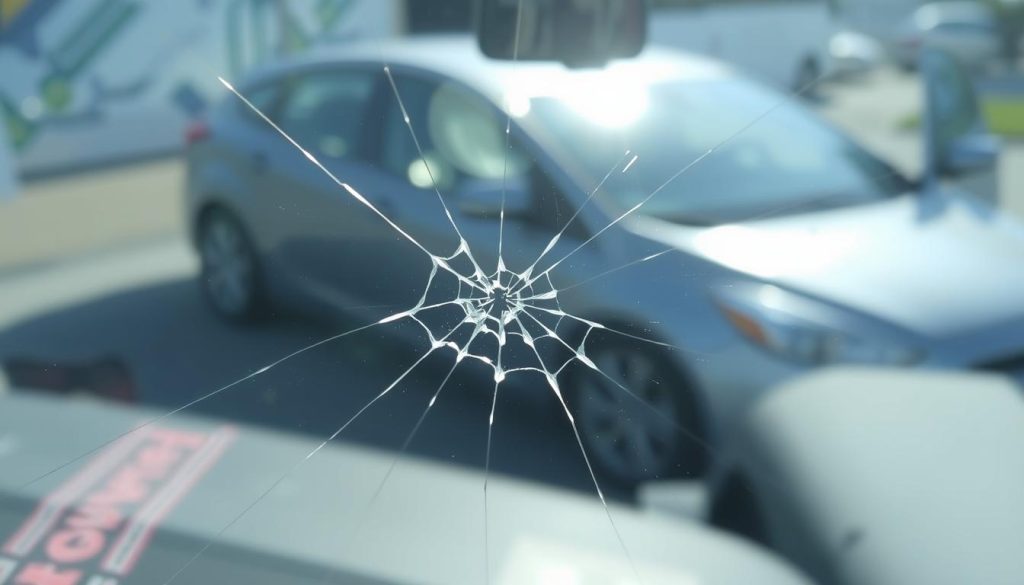
You want a clear, practical answer fast. Minor glass damage can often be fixed if you act early. In this post, you’ll learn how size, location, and type of damage determine whether to choose repair or replacement.
Weather and road stress matter. Temperature swings in the United States make what looks minor spread quickly. That raises costs and safety risk.
Miracle Auto Glass can assess your situation and set expectations for next steps. You’ll see the core difference between resin-based repair and full replacement, and when a DIY kit is reasonable versus when professional work is required.
Follow the blog’s simple path: notice damage → check it → choose a fix → schedule service. By the end, you’ll know when a repair will do and when replacement is the safer choice.
Key Takeaways
- You’ll learn how to tell repairable issues from those needing full replacement.
- A decision framework covers size, location, type of damage, and safety.
- Acting quickly limits spread from temperature and road stress.
- Resin repairs restore clarity and strength for many cases; replacements restore full safety.
- DIY can save money, but professionals like Miracle Auto Glass ensure proper results.
Why you should act fast when you notice a crack or chip
Acting quickly when you notice glass damage saves money and prevents safety risks. What starts as a small impact point from gravel or road debris can grow fast as you drive. Vibration and body flex add stress that turns a chip into longer cracks over time.
How road debris and impact damage typically start small
Most problems begin with a rock, pebble, or loose debris hitting the glass. That tiny mark may look harmless but it is a weak spot that collects moisture and dirt.
Why minor cracks can spread with time and moisture
Water enters the break and can fog or obstruct your view. Moisture also interferes with resin bonding and makes repairs harder.
How rapid temperature and weather changes make damage worse
U.S. temperature swings—from hot days to cold nights or sudden defrosting—force glass to expand and contract. That movement lets the defect travel quickly.
- Act fast: early repair is usually cheaper than replacement.
- Call Miracle Auto Glass for a quick assessment so the problem doesn’t get worse.
Repair vs. replacement basics for windshield glass damage
Deciding between repair and replacement starts with understanding what each service actually does.
Repair commonly uses a resin injection that fills the damaged area like caulk. A trained technician injects resin to stabilize the glass and slow or stop spread. This restores structural continuity and can return clarity, though a faint mark may remain.
The alternative is replacement, which removes the old pane, preps the frame, and bonds new glass with urethane. Proper curing and alignment are essential to restore full safety and fit.
What repair does
- A technician injects resin into the break to seal and stabilize the area.
- This method improves strength and prevents further progression in many cases.
- Expect improved visibility but possibly a faint residual mark.
When replacement is necessary
Replacement is required when structural integrity is compromised. If the damage affects mounting areas, sensor locations, or the frame, repair cannot reliably restore safety.
Ask Miracle Auto Glass to evaluate depth, contamination, and location so you get the right fix. Ask about eligibility, expected appearance, timeline, and safety impact before you schedule service.
Small Crack Windshield quick checks you can do right now
A quick size check often tells you whether repair is worth considering. Use two simple, visual tests to screen damage before you schedule service.
The quarter-size chip rule for repairability
Quarter-size rule: if a chip is about an inch across (roughly the diameter of a quarter), it is often a candidate for repair.
This fast screen helps you decide whether to think “repair first” or start planning for replacement.
The dollar-bill crack test for deciding repair vs. replacement
Dollar-bill test: lay a dollar bill over the break. If the bill fully covers the crack, repair is more likely. If the damage extends beyond the bill, replacement becomes more probable.
- You perform a quick size-based screening to guide next steps.
- These checks are useful, but they are not guarantees — depth and location matter.
- If the damage is actively spreading, schedule service immediately.
- Send photos or book an inspection with Miracle Auto Glass to confirm eligibility before you commit.
Bottom line: Use the quarter and dollar tests as a fast filter, then let Miracle Auto Glass confirm the best path for safe, lasting results.
Identify the type of crack so you choose the right fix
Start by naming what you see on the glass — the type of break guides the fix. A clear identification helps you avoid costly errors and ensures safety.
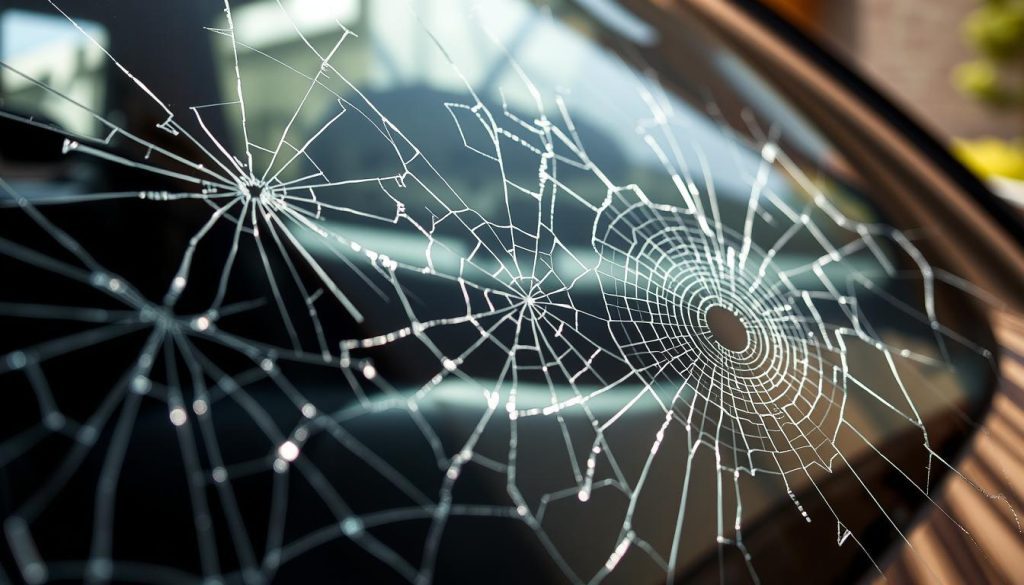
Impact damage from rocks, gravel, and debris
Impact marks from road debris and small stones often begin as a chip and stay repairable if treated early.
Tip: If the spot is contained and clean, a technician can usually inject resin and restore clarity.
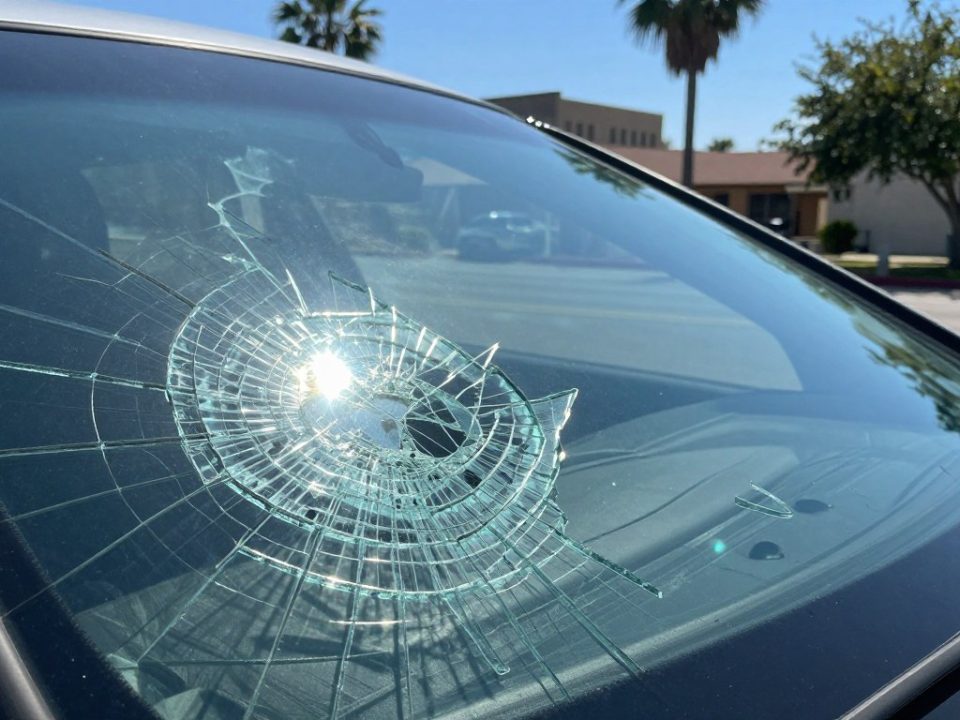
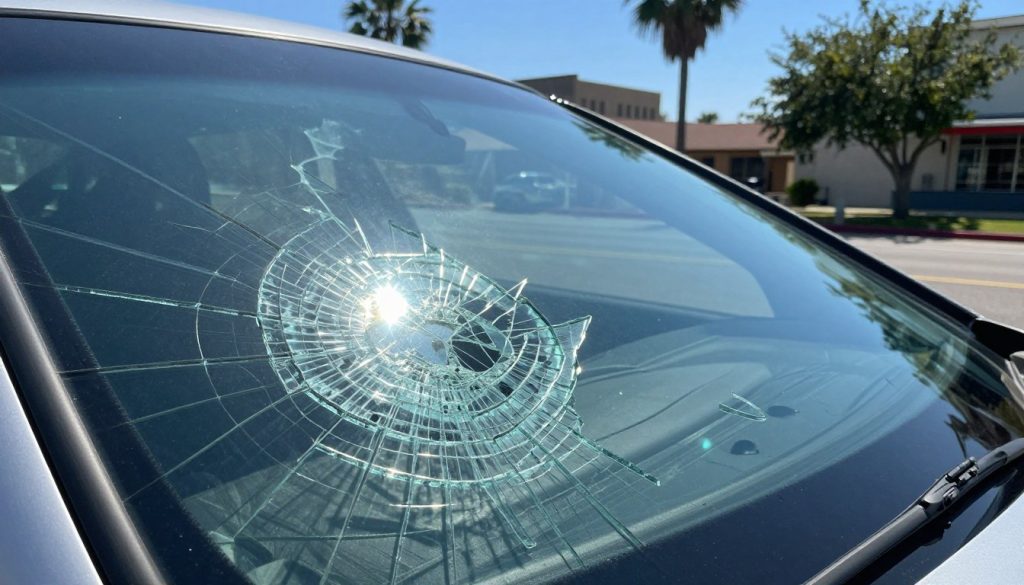
Star breaks, bull’s-eye, and half-moon patterns
These named patterns are common after a direct hit. Certified techs often stabilize them with resin because the damage is localized.
Long cracks from temperature swings and sudden changes
Linear cracks longer than about 15 cm usually mean the glass has split under thermal stress. These often exceed repair limits.
Edge cracks tied to pressure and installation issues
Cracks that start at the perimeter spread quickly. They weaken the mounting area and commonly require full replacement.
Stress cracks that often require immediate replacement
Stress fractures on older glass show weakened structure. In many cases you should move to replacement right away for safety.
- You learn to classify what you see so you don’t guess about repair vs. replacement.
- If you’re unsure, call Miracle Auto Glass — they’ll confirm the type and recommend the right service.
Location matters as much as size
Where the damage sits on your pane can matter more than how big it looks. Placement affects visibility, safety, and the recommended fix.
Damage in your line of sight
If a mark lies directly on the driver’s line, even an expert repair can leave a faint distortion.
That residual mark may interfere with night glare or quick decision-making.
When clarity is essential, professionals may advise replacement to restore unobstructed view.
Cracks near the edge and why they spread quickly
Perimeter flaws sit where the windshield meets the frame. The edge endures stress while the car flexes.
Those cracks can run fast and weaken mounting points. For structural reasons, replacement is often safer.
- You learn why two similar marks can get different recommendations based on location.
- Book a location-based assessment with Miracle Auto Glass so you don’t rely on size alone.
How deep, wide, or multiple cracks change the recommendation
Not all visible breaks are equal—what lies beneath the surface guides the right fix.
When depth or width prevents reliable bonding: if the break penetrates deeply through the laminate layers or if the gap is too wide, resin cannot form a solid bond. That limits the effectiveness of any repair and increases the chance of failure under stress.
Why depth and contamination matter
Dirt, water, or oil inside the split reduces adhesion. Even a short defect can be unrepairable when contaminated. You should treat any spreading or widening as an urgent problem.
When spidering or multiple breaks point to replacement
Spidering patterns and multiple cracks signal broader stress in the glass. They weaken the whole pane and often start at edges or mounting points. In these cases, replacement is usually the safer choice.
- You learn what makes a break “unrepairable” beyond length—depth and width limit bonding.
- Contamination and widening can stop a repair from holding, even if short.
- Spidering or multiple damage points typically point toward replacement for safety.
Choose safety: when bonding reliability is questionable, opt for replacement. Have Miracle Auto Glass evaluate the full damage footprint so you get the right outcome for your vehicle.
Safety considerations before you keep driving
A damaged pane can do more than blur your view — it can affect how safety systems perform in a crash. Treat any visible harm as a potential threat to you and your passengers.
How the windshield supports airbag deployment and vehicle structure
The windshield is an active structural element. It helps position the airbag and acts as a backstop during deployment.
In rollovers, a strong pane helps the roof resist collapse and protect occupants. That means a compromised windshield can reduce overall crash protection.
When you should avoid driving and schedule service immediately
If the mark obstructs your view, spreads quickly, starts at the edge, or shows spidering, don’t drive. These signs point to structural risk, not just a cosmetic issue.
Reduce risk until professional help arrives: avoid slamming doors, skip extreme temperature blasts from defrosters, and drive slowly over bumps and potholes.
- Why act now: prompt repair or replacement preserves safety and protects your life and passengers.
- When to call: any rapid spreading, edge-origin failures, or vision obstruction—book Miracle Auto Glass service immediately.
- Short-term steps: limit vibrations and temperature swings; transport the car only if absolutely necessary.
Bottom line: prioritize a safety-first inspection. Contact Miracle Auto Glass for a fast, safety-focused evaluation rather than risking a longer drive with compromised glass.
DIY windshield repair kits and when they make sense
A DIY repair kit can be a practical stopgap when the damage is fresh and limited.
Best-case for a home fix: a fresh chip under a quarter in diameter, away from your direct line of sight, is the ideal candidate. In that way you can often restore clarity and slow spread without a shop visit.
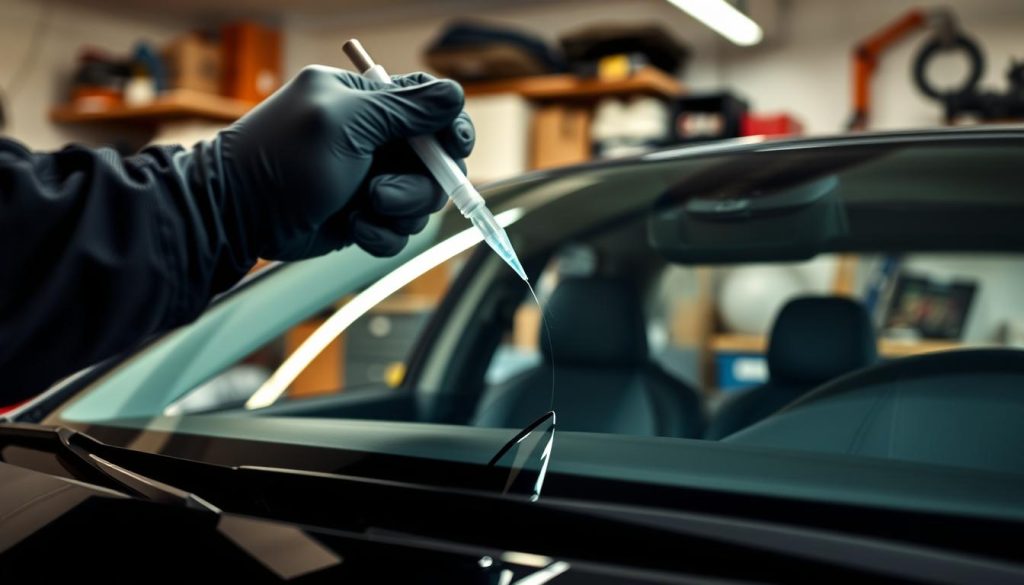
High-level DIY steps: clean the chip and surrounding glass with rubbing alcohol on a microfiber cloth (do not spray cleaner into the damage). Apply the adhesive patch or pedestal, inject the resin, allow a full UV cure, then scrape and polish off excess.
Weather and moisture tips: if the chip is damp, remove moisture with a hair dryer before you apply resin. UV kits need bright sunlight; poor weather adds cure time and can hurt adhesion.
- You learn when DIY makes sense: fresh, contained chips under a quarter-size and out of the sightline.
- You get the safe process: clean, patch, inject, cure, then finish.
- Know the limits: chips larger than a quarter, multiple chips, or any crack longer than a few inches should go to a pro.
If you want reliable results or the damage is borderline, contact Miracle Auto Glass for professional service rather than risking a failed repair.
What to expect from professional glass repair services
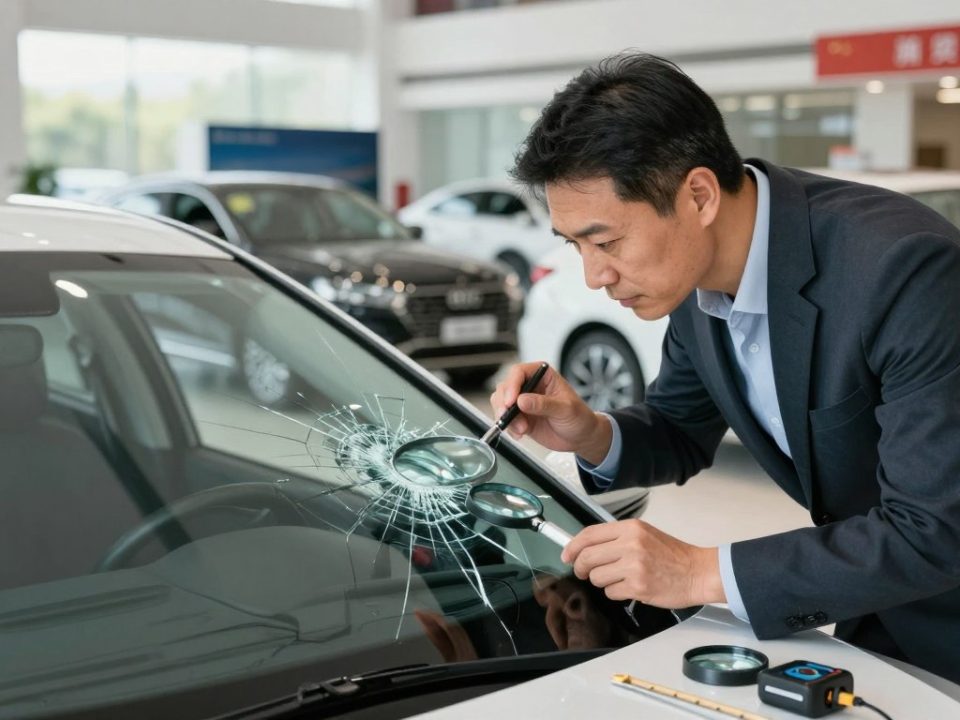
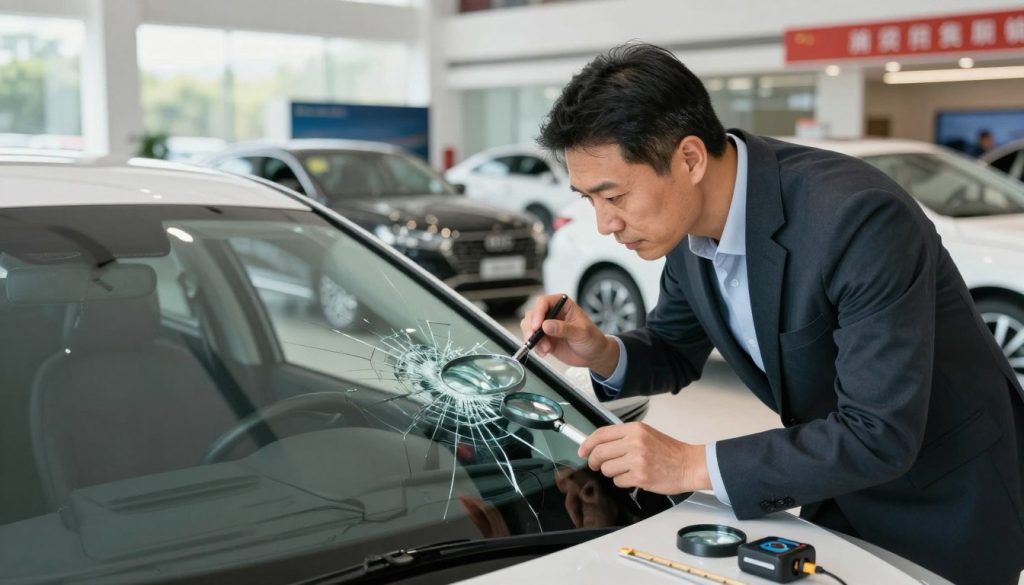
When you bring your vehicle in, a trained evaluator will inspect the pane and set clear expectations. The goal is to decide if a repair will restore strength or if replacement is safer. You get facts, not pressure.
How a technician evaluates repair vs. replacement on your vehicle
The technician checks size, depth, contamination, crack direction, and exact location. Each factor affects safety and performance.
They look beyond appearance and assess whether structural integrity is at risk. This helps you choose the right path for your windshield and overall safety.
Why professional tools and controlled technique improve results
Pros use vacuum and pressure systems to remove air and pull resin into the break. That reduces trapped bubbles and improves clarity.
Controlled technique also increases durability so the damage is less likely to spread after repairs. Expect a stabilized area, better appearance, and a clear recommendation.
- You learn what a professional evaluation looks like: measured checks on size, depth, contamination, and location.
- Technicians decide based on structural risk, not just how the pane looks.
- Professional tools give better fill quality and longer-lasting results.
Choose Miracle Auto Glass when you want consistent workmanship and honest services from skilled professionals. Their team will explain outcomes so you can make a safe, informed decision.
Choosing mobile service vs. an auto glass repair shop
Deciding between a mobile visit and a shop drop-off depends on your schedule, local weather, and the complexity of the job.
When mobile repair at your home or work saves time
Mobile technicians come to your home or workplace and often finish minor repairs in under an hour.
Choose mobile service when you need convenience, can wait nearby, and the damage is contained. Mobile work minimizes interruption to your day and keeps you productive.
When a shop environment is better for curing adhesives and specialized vehicles
Shops offer controlled conditions that help urethane and resin cure reliably. That matters in extreme hot, cold, or windy area weather.
Bring your vehicle to the shop when parts access is needed, when glass is unique, or when sensors and mounts require careful handling.
- You learn when mobile service fits: convenience, quick on-site repair, minimal time lost.
- Typical mobile timing: many repairs finish in under an hour, ready to drive after a short cure.
- Shop benefits: stable cure conditions, broader parts availability, and better handling for specialized cars.
- Consider local area conditions—wind, rain, and temperature affect where work should be done.
- Ask Miracle Auto Glass which option suits your situation so you get reliable results without wasted time.
Insurance claims and how to avoid windshield repair fraud
Get clear photos and a written quote before you call your insurer. This simple step makes filing easier and limits disputes later.
How to contact your insurer, understand deductibles, and pick a provider
After you document the damage, call your insurance company to confirm coverage and deductible amounts.
Ask whether you must use a network shop or if you can pick another provider. Compare a written quote from Miracle Auto Glass with the insurer’s option before you decide.
Red flags: “free repair” offers, incentives, and unauthorized claims
Be wary of unsolicited offers for a “free repair” or heavy incentives. Scammers use these to get your policy details and file false claims.
Never sign forms from a stranger or allow them to submit paperwork without your consent.
How to verify accreditation and protect your personal information
Confirm business accreditation and the technician’s credentials before you schedule service.
- Ask for a written quote and itemized work order.
- Verify the shop with your insurer and check online reviews.
- Do not share policy numbers, DOB, or claim details with unsolicited callers.
Choose trusted professionals like Miracle Auto Glass to reduce fraud risk and ensure your claim and repairs are handled correctly for your car.
Conclusion
Before you guess, run a short size-and-location check to pick the right fix.
Identify whether you have a chip or a crack chip, use the quarter and dollar-bill tests, then factor in location—driver line of sight and edge breaks matter most.
Act now: road debris damage often starts small but time, moisture, temperature, and weather changes let it spread fast and raise risk to life and safety.
Repairs stabilize with resin to restore strength and clarity; replacement is safer when structural integrity, spreading cracks, edge-origin flaws, or distortion threaten performance.
Protect your vehicle and passengers — schedule an inspection instead of guessing. For a fast, honest evaluation or same-day service, hire Miracle Auto Glass to repair or replace your windshield and other auto glass. Learn more about repair limits here: chip size limits.